Choosing the right Ceramic Heater supplier requires more than comparing prices, wattage, and glossy product photos. The U.S. Energy Information Administration’s 2020 Residential Energy Consumption Survey reported that space heating represented about 42% of household energy consumption. That figure makes efficiency, durability, and safety important purchasing factors. A low-cost unit may become expensive when failures, returns, and energy waste accumulate.
Reliable sourcing starts with evidence. Ask suppliers for test reports, material specifications, production photographs, and traceability records. Check whether products meet relevant requirements, such as IEC 60335-2-30 or UL 1278, depending on the target market. Certifications should be verified through the issuing organization, not accepted as attractive PDF attachments. Request details about ceramic composition, heating-element insulation, thermal protection, plug configuration, and temperature-control accuracy. Small details matter.
Factory capability matters too. A supplier should explain its quality-control process, including incoming inspection, temperature testing, aging tests, and final sampling. Grand View Research and other market analyses continue to identify energy efficiency and product reliability as major influences in electric heating demand. However, market reports do not replace factory verification. They offer direction, not proof.
The difficult lesson is simple: a professional presentation can still hide weak production controls. Request a sample before placing a large order. Measure its surface temperature, noise, response time, and performance after repeated use. Review warranty terms and replacement procedures carefully. The best supplier is not always the cheapest. It is the partner that communicates clearly, documents performance, and accepts responsibility when something goes wrong.
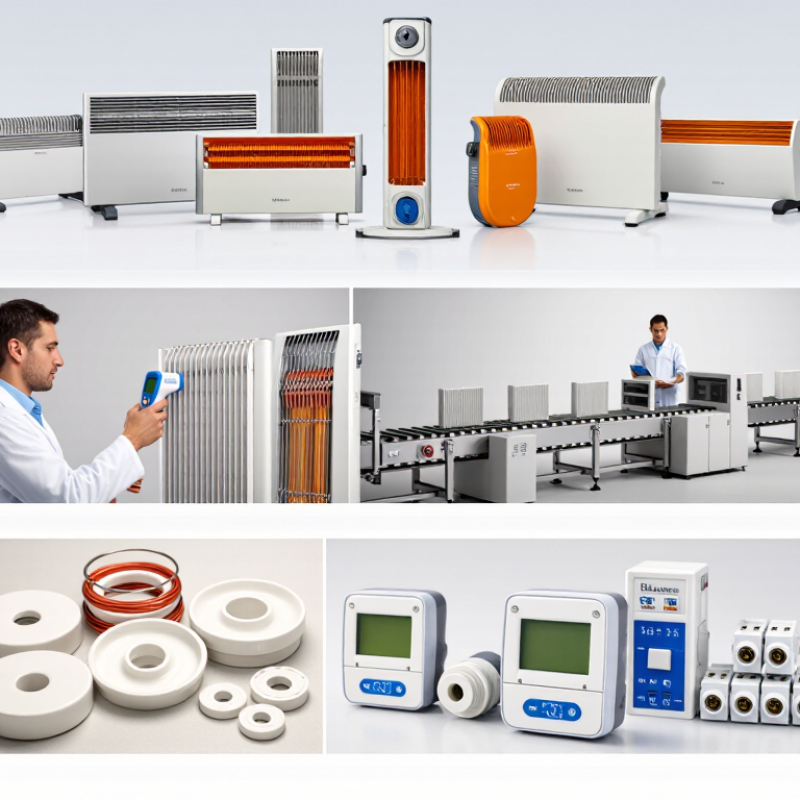
Understanding Ceramic Heater Types and Heating Applications
How to Choose the Best Ceramic Heater Supplier?
Understanding Ceramic Heater Types and Heating Applications
Ceramic heaters are not one uniform product.
PTC ceramic elements regulate resistance as temperature rises, making them suitable for compact air heaters and cabin heating. Ceramic infrared elements transfer heat directly to surfaces, people, or parts. Thick-film ceramic heaters offer fast response in sensors, medical equipment, and industrial assemblies. Each type needs a different supplier capability.
Application details should guide the purchase.
A workshop air heater may require strong airflow, aluminum fins, and stable operation near dust. A laboratory chamber may need uniform surface temperature within a narrow tolerance. For heated seats or battery enclosures, flexible geometry and low wattage matter more. Ask for thermal maps, resistance curves, cycle-test results, and insulation ratings. A polished sample can still hide weak connections.
Industry data supports careful selection.
The UNEP Global Status Report for Buildings and Construction 2023 attributes 34% of global energy demand to buildings. This makes heater efficiency and control design commercially important. The U.S. Department of Energy states that electric resistance heaters convert nearly all incoming electricity into heat at the point of use. However, operating cost still depends on tariffs, insulation, airflow, and control accuracy. I have seen specifications focus on peak wattage while ignoring heat distribution. That is a mistake worth challenging. Request production traceability, test methods, and failure data before comparing prices. Supplier claims should survive a practical test: repeated starts, blocked airflow, vibration, and real installation conditions.
Defining Technical, Safety, and Performance Requirements
Choosing a ceramic heater supplier starts with defining the heating task, not comparing catalog prices. State voltage, wattage, operating temperature, dimensions, response time, and expected service life. Describe the airflow, mounting space, and surrounding materials. A heater for a laboratory chamber needs different controls from one used in a compact dryer. Measure twice. I have seen projects fail because “fast heating” had no agreed test point. Ask suppliers for performance curves, tolerance ranges, and test conditions. A credible supplier should explain limits plainly.
Safety requirements deserve equal attention. Request insulation ratings, over-temperature protection, grounding details, and resistance testing records. Confirm that the ceramic element remains stable during repeated heating cycles. Ask how the supplier handles cracks, loose terminals, and abnormal temperature rise. Traceable batch records matter when a fault appears months later. Certifications should match the target market and actual product configuration, not just a generic certificate. Independent test reports can strengthen confidence, although paperwork alone cannot prove field reliability. Inspect samples and challenge the assumptions.
Evaluate temperature uniformity, energy consumption, warm-up time, and control accuracy under realistic loads. Request samples from production, not only polished prototypes. Check communication speed, engineering support, change-control procedures, and replacement availability. A supplier who admits a design limitation may be safer than one promising everything. I would also run a small pilot and record failures, noise, surface temperature, and installation time. The first test may expose an overlooked requirement. That is useful. Choose evidence over confident claims, and keep every specification measurable.
Evaluating Supplier Quality, Certifications, and Production Capacity
How to Choose the Best Ceramic Heater Supplier?
Supplier quality should be checked on the factory floor, not only in a sales folder.
During an audit, inspect ceramic plates, heating wires, insulation, and terminal connections. Ask for batch records and thermal-cycle results.
A reliable supplier should test overheating protection, surface temperature, and abnormal operation.
IEC 60335-2-30 covers safety requirements for room heaters, but a certificate alone is not enough. Its scope, issuing laboratory, and product model must match your purchase.
Certifications can support trust when verified carefully. The ISO Survey 2023 recorded more than 1.26 million ISO 9001 certificates worldwide. This shows broad adoption, not guaranteed product quality.
Check whether the supplier’s ISO 9001 scope includes heater production and final inspection. Environmental controls also matter. Look for documented material traceability, calibration records, corrective actions, and controlled storage. Small gaps can become expensive failures.
Production capacity needs evidence.
Request monthly output, equipment lists, staffing levels, peak-season schedules, and recent delivery records. A factory claiming 100,000 units monthly should show molding machines, assembly stations, testing benches, and warehouse space.
Compare stated capacity with actual utilization. Too much capacity may indicate idle equipment; too little may create delays.
The U.S. Energy Information Administration reported that space heating used 42% of household energy in its 2015 RECS, increasing the cost of unreliable performance.
I would also leave room for doubt. A clean audit day cannot reveal every weakness. Random inspections and pilot orders remain necessary.
Comparing Pricing, Customization, Delivery, and Support
Choosing a ceramic heater supplier requires more than comparing the lowest unit price. A useful quotation should separate material cost, tooling, testing, packaging, and freight. It should also state minimum order quantities and payment terms. Hidden tooling fees can change the real price quickly. The U.S. Department of Energy notes that electric resistance heating converts nearly 100% of incoming electricity into heat at the point of use. Therefore, efficiency claims still need clear test conditions.
Customization deserves technical attention. Ask whether the supplier can adjust wattage, voltage, dimensions, lead length, insulation, and mounting holes. Request drawings, tolerance limits, sample records, and safety-test documents. MarketsandMarkets’ 2024 ceramic heaters market analysis identifies industrial equipment, appliances, and automotive uses as important application areas. Different applications need different thermal cycles. A heater designed for a small enclosure may fail in continuous industrial operation. A sample is not enough. Test production parts under your actual voltage and airflow.
Delivery reliability depends on capacity, raw-material planning, and quality controls. Request a realistic production schedule, not only a shipping date. The World Bank’s Logistics Performance Index 2023 shows major differences in customs, tracking, and delivery capability across markets. Support matters after arrival. Confirm response times, replacement procedures, failure analysis, and spare-part availability. I would score suppliers using total cost, verified quality, delivery history, and technical support. Price still matters. It should not dominate the decision. That is where many comparisons become misleading.
How to Choose the Best Ceramic Heater Supplier
This procurement benchmark compares the factors commonly used when evaluating ceramic heater suppliers. Delivery reliability and quality consistency often receive the highest priority, while pricing, customization capability, and technical support remain essential for controlling total purchasing risk.
Verifying Supplier Reliability Through Testing and Communication
Choosing the best ceramic heater supplier requires more than comparing prices or polished product photos. Reliability becomes visible through testing and communication.
Request samples made with the same materials and process used for mass production. Test resistance, insulation, surface temperature, and heating response under controlled conditions. Run repeated heating cycles to reveal cracks, unstable readings, or slow performance changes. Check dimensions with a caliper, especially around mounting holes and connection points. Keep test records with dates, sample numbers, and equipment details. Small details matter.
A dependable supplier should explain its testing methods clearly. Ask who performs each inspection and how often instruments are calibrated. Request production records, tolerance data, and corrective action reports when defects occur. Communication speed also matters. Can the supplier answer technical questions without vague promises? Can it confirm drawing revisions in writing? During development, send a detailed application scenario, including voltage, operating time, airflow, and installation space. Their questions may reveal real expertise.
Silence is a warning.
Still, supplier verification is not perfect. A strong sample can hide inconsistent production, and a confident salesperson can misunderstand a technical requirement. Arrange follow-up testing from a later batch, not only the first shipment. Review packaging, labeling, and response quality after delivery. One missed detail may not prove poor capability, but repeated confusion deserves attention. Trust should grow from evidence, honest discussion, and measurable improvement.
FAQS
State voltage, wattage, temperature, dimensions, response time, and service life. Describe airflow, mounting space, and nearby materials. “Fast heating” needs a measurable test point.
Request insulation ratings, grounding details, over-temperature protection, and resistance-test records. Ask about cracks, loose terminals, and abnormal temperature rise. Paperwork alone is not enough.
Measure warm-up time, temperature uniformity, energy use, and control accuracy. Test under the actual voltage, airflow, and thermal load. A laboratory result may mislead.
Yes. Request production samples, not only polished prototypes. Run repeated heating cycles and inspect cracks, readings, noise, and surface temperature. Keep dated records.
Confirm adjustable wattage, voltage, dimensions, lead length, insulation, and mounting holes. Request drawings, tolerances, sample records, and safety-test documents. Small hole changes can delay installation.
Separate material, tooling, testing, packaging, freight, minimum orders, and payment terms. Hidden tooling costs can change the final price quickly. The lowest quote may not be cheapest.
Request a realistic production schedule, capacity details, and quality-control information. Confirm response times, replacement procedures, failure analysis, and spare-part availability. Shipping dates can be optimistic.
A reliable supplier answers technical questions clearly and confirms drawing revisions in writing. Ask who performs inspections and how instruments are calibrated. Silence is a warning. Still, one missed detail does not prove failure.
Conclusion
Choosing the best Ceramic Heater supplier begins with understanding the different heater types and matching them to the intended application, such as industrial equipment, household appliances, or specialized heating systems. Buyers should clearly define technical requirements, including voltage, power, temperature range, dimensions, response time, energy efficiency, and operating environment. Safety features, durability, and compliance with relevant standards are equally important for dependable performance.
A reliable supplier should demonstrate consistent product quality, appropriate certifications, modern production facilities, and sufficient manufacturing capacity. When comparing suppliers, consider not only pricing but also customization options, minimum order quantities, lead times, packaging, warranty terms, and after-sales support. Before making a final decision, request samples, review test data, and evaluate communication throughout the inquiry process. Prompt, transparent responses and a willingness to discuss design details can reveal a supplier’s professionalism and reliability. A careful evaluation helps ensure the selected supplier can provide safe, efficient, and consistent Ceramic Heater solutions over the long term.

