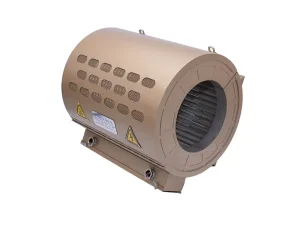
Primary Industrial Oil Furnaces & Thermal Generation Systems
Engineered for high-temperature precision (+350°C), low-pressure safety, and continuous industrial duty cycles across international production plants.



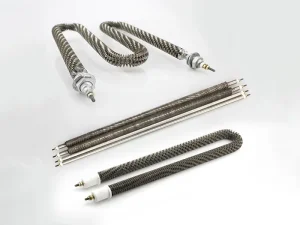



Industrial Oil Furnaces: Thermodynamic Superiority Over Saturated Steam
Why modern global processing plants are replacing high-pressure steam boilers with closed-loop liquid-phase thermal oil furnaces to drive safety, efficiency, and micro-temperature control.
Low-Pressure High-Temperature Regime
Traditional saturated steam requires extreme operating pressures exceeding 15.0 MPa to reach 340°C, introducing severe explosion hazards, heavy-wall pipe requirements, and stringent jurisdictional boiler certifications. In contrast, industrial heat-conducting oil furnaces achieve temperatures upwards of 350°C to 400°C under modest liquid-phase circulation pressures of less than 0.4 to 0.6 MPa. This fundamentally mitigates catastrophic blowout risks while drastically reducing the capital expense of piping, valves, and expansion chambers.
Uniform Isothermal Precision
In high-capacity chemical syntheses, polymer extrusion, and calender lamination, localized hot spots cause resin coking and chemical degradation. Industrial oil furnaces utilize continuous forced turbulent liquid circulation (Reynolds numbers > 10,000) within helical multi-start coils. Combined with PID/PLC cascade control loops, thermal fluid systems deliver precise surface temperature repeatability within ±1°C across large multi-zone heating platens, jackets, and chemical vessels.
Zero Flash Evaporation & Corrosion Free
Unlike steam boiler plants that suffer from continuous blowdown losses, condensate flash steam wastage, scale calcification, and aggressive oxygen-pitting corrosion, closed-loop thermal oil heaters operate as completely closed hermetic loops. Mineral thermal fluids or synthetic diphenyl-oxide aromatics circulate without corrosive scale deposition, maintaining design heat transfer coefficients over decades and eliminating expensive chemical water-treatment systems.
The Yancheng Industrial Heating Cluster: Manufacturing & Cost Superiority
Understanding how localized metallurgy, automated tube-bending robotics, and tight vertical integration give Chinese thermal fluid furnace manufacturers an unmatched global delivery advantage.
Raw Metallurgy Integration
Yancheng Laier Heating leverages raw procurement channels for seamless 20G boiler steel, 15CrMoG alloy tubing, and high-nickel Incoloy 800/840 alloys directly from certified domestic mills. Full heat-treatment tracing and mill test certificates (MTC 3.1) guarantee zero micro-fracturing during tight-radius coil coiling.
Automated CNC Coil Fabrication
Multi-axis automated CNC tube bending machinery ensures strict diameter consistency and zero tube wall thinning across double- and triple-concentric helical coils. This maintains uniform boundary film velocities and stops fluid stagnating, preventing localized oil cracking and carbon coking inside heating zones.
Radiographic & Hydrostatic NDT
Every single oil furnace coil assembly undergoes 100% X-ray radiographic inspection on circumferential butt-welds followed by hydrostatic pressure testing at 1.5 to 2.0 times maximum working pressure. Helium mass spectrometry leak detection is deployed for hazardous area and synthetic aromatics specifications.
Integrated Skid Construction
Instead of dispatching loose sub-components, Chinese factories deliver fully engineered, pre-wired, pre-piped, and pre-insulated skid packages. Expansion tanks, deaerators, high-temperature canned motor circulation pumps, valves, and explosion-proof control cabinets arrive factory-commissioned.
Enterprise Buyer Framework: Total Cost of Ownership (TCO) & Safety Verification
A rigorous specification audit checklist for EPC contractors, plant operations directors, and corporate procurement engineers evaluating oil furnace proposals.
Thermal Fluid Degradation Protection
Thermal fluid degradation occurs when film temperatures exceed the maximum allowable film limit (typically 370°C for synthetic fluids). Quality manufacturers maintain fluid velocities between 2.0 to 3.5 m/s across heater tubes. This guarantees a Reynolds number well above critical turbulence, suppressing the stagnant boundary layer and maintaining low film temperatures that safeguard the oil charge from thermal cracking.
Expansion Tank & Cold-Seal Design
At operating temperatures of 300°C+, hot mineral oil reacts violently with atmospheric oxygen, forming acidic sludge and heavy polymers that destroy heat transfer surfaces. Enterprise procurement must specify a dedicated cold-seal buffer tank or an automatic nitrogen blanketing system (N₂ cushion at 0.02 MPa). This keeps the thermal fluid in the expansion vessel below 60°C, isolating the hot system charge from oxygen contact.
Instrumentation & Safety Interlocks
Catastrophic coil burnouts occur if circulation fails while elements or burners remain energized. Tier-1 equipment integrates triple-redundant safety interlocking: dual differential pressure switches (ΔP across furnace inlet/outlet), magnetic liquid level sensors in expansion vessels, high-limit skin thermocouples on tube surfaces, and exhaust stack over-temperature detectors connected to SIL-2/SIL-3 rated PLCs.
Global Compliance Architecture & Localized Commissioning Hubs
Overcoming jurisdictional hurdles: how certified Chinese factories achieve ASME, CE-PED, UL, and ATEX approvals while providing on-site global field service.
Procuring capital thermal equipment across borders requires navigating strict regional pressure vessel codes and explosive atmosphere directives. Leading manufacturers like Yancheng Laier Heating Technology implement dedicated international engineering divisions that draft calculations, weld procedure specifications (WPS), and procedure qualification records (PQR) in strict alignment with regional mandates:
North America: ASME & UL
ASME Boiler and Pressure Vessel Code Section I (Power Boilers) and Section VIII Div 1 (Pressure Vessels) with "S" and "U" stamps. Electrical systems comply with UL 499, NFPA 86 (Ovens and Furnaces), and NEC Class I, Division 2 hazardous location classifications.
European Union: CE-PED & ATEX
Full conformance with the Pressure Equipment Directive (PED 2014/68/EU) Modules B+D or Module H/H1 with notified body oversight. Electrical control enclosures comply with ATEX Directive 2014/34/EU and EN 60079 standards for Zone 1 and Zone 2 gas atmospheres.
Eurasia & Middle East: EAC & SASO
TR CU 032/2013 (Safety of Pressure Equipment) and TR CU 012/2011 (Explosion-Proof Equipment) certifications for the Eurasian Economic Union. SASO certification and SABER registration for continuous deployment in Saudi Arabian industrial cities.
Localized Commissioning Hubs
Factory-trained mechanical and electrical field engineers deploy for overseas site commissioning, oil boiling dehydration supervision, and cold-run hydro checks. Regional spare-parts consignments (circulation pump seals, high-density elements, valve rebuild kits) eliminate downtime.
Emerging Trends: The Electrification, Hybridization & Digitalization of Thermal Heat
The transition from fossil-fired burners to zero-emission electric thermal oil systems and edge-computed predictive maintenance architecture.
Direct Electric Thermal Oil Electrification
Driven by strict corporate ESG scopes and localized carbon taxes, energy-intensive plants are replacing fuel-oil and natural gas burners with clean electric thermal oil heaters. Incorporating high-density Incoloy immersion flanged elements with surface watt densities engineered as low as 1.2 to 2.2 W/cm², electric oil furnaces eliminate carbon dioxide, sulfur oxides, and nitrogen oxide emissions at the point of use while delivering thermal efficiencies exceeding 98%.
Edge AI & Real-Time Fluid Degradation Telemetry
Industrial IoT gateways integrated into the furnace control cabinet monitor continuous fluid viscosity changes, pressure fluctuations across filter baskets, and acoustic ultrasonic pump cavitation signatures. Embedded machine learning algorithms evaluate oil degradation curves in real time, alerting maintenance managers months before fluid acidity reaches the neutralization threshold (TAN > 0.5 mg KOH/g), eliminating unplanned shutdowns.
Dual-Fuel & Hybrid Thermal Switching
To combat volatile energy markets, leading manufacturers design hybrid systems combining electric heating matrices with modulating gas burners. During peak grid tariff hours, the system dynamically switches to natural gas or biogas; during off-peak hours or when onsite rooftop solar output surges, the furnace leverages clean electrical immersion coils, optimizing kilowatt-hour operational costs.
Localized Precision Application Scenarios
How specialized engineering configurations adapt to the specific thermodynamic demands of global industries.
Plastics, Polymers & Extrusion Lines
In high-output twin-screw polymer compounding, blown film extrusion, and PVC-O pipe orientation lines, maintaining barrel and die head temperatures within tightly held parameters is essential to avoid polymer shear burning or structural weakness. Industrial oil furnaces circulate synthetic thermal oil through multi-zone cast-aluminum jackets and internal barrel spiral channels, absorbing massive mechanical shear heat through secondary heat exchangers while instantly injecting heat during line startups.
Chemical Reactors & Resin Synthesis
Exothermic chemical synthesis demands continuous shifting between rapid heating and controlled cooling. Oil furnace skids engineered for chemical plants incorporate dual-circuit closed-loop thermal systems: one circuit circulates hot oil at 280°C to initiate polymerization, while the automated diverter valve modulates fluid through a plate-and-shell oil cooler to capture and dissipate runaway exothermic reactions safely, preventing thermal runaway.
Textile Stenter Frames & Calendering
Textile finishing, non-woven thermobonding, and continuous paper calendering require massive radiant heat transfer over wide roller spans without deflection. Liquid-phase thermal oil furnaces pump heated oil through central rotating unions into internally baffled hollow rolls, ensuring zero radial temperature drop across roller widths exceeding 5 meters, which prevents uneven cloth shrinkage or coating bubbling.
Thermodynamic Technology Comparison
Objective technical assessment of thermal fluid heating versus legacy steam generation and direct combustion systems.
| Evaluation Parameter | Electric Thermal Oil Furnace | Fuel/Gas Fired Oil Furnace | Saturated Steam Boiler |
|---|---|---|---|
| Operating Temperature | Up to 350°C (Synthetic: 400°C) | Up to 350°C (Synthetic: 400°C) | 100°C – 200°C (300°C requires 8.5 MPa) |
| Operating Pressure | Low (0.2 – 0.5 MPa pump head) | Low (0.3 – 0.6 MPa pump head) | Extremely High (1.0 – 10.0+ MPa) |
| System Efficiency | >98.5% (No chimney stack losses) | 88% – 93% (With economizer) | 65% – 75% (Severe blowdown & flash loss) |
| Corrosion & Scale | Zero (Non-aqueous closed loop) | Zero (Non-aqueous closed loop) | High (Requires constant deaeration & chemical dosing) |
| Temperature Control | Continuous Precision ±0.5°C | Modulating Burner ±2.0°C | Pressure Dependant ±5.0°C to 10.0°C |
| Direct Carbon Footprint | Zero Onsite Emissions | Flue Gas CO₂, NOx Emissions | Flue Gas CO₂, NOx Emissions |
| Boiler Room Attendant | Unattended Automatic (PLC) | Periodic Inspections Required | Mandatory 24/7 Licensed Stationary Engineer |
Engineering Questions & Detailed Operational Answers
In-depth troubleshooting, sizing recommendations, and chemical safety guidelines from Yancheng Laier's lead thermal systems engineers.
How is the required thermal fluid pump flow rate and head calculated for an oil furnace?
Formula: $Q = \frac{P}{\rho \times C_p \times \Delta T} \times 3600$
Total dynamic head (TDH) must account for frictional pressure loss across the furnace coil internal passages, external distribution piping, process vessel jackets, valves, and strainers at operating viscosity. Crucially, the pump must maintain a minimum velocity of 2.0 to 3.0 m/s inside the furnace tube coils to prevent fluid stagnant films and element overheating.
What causes thermal fluid cracking and coking inside an oil furnace, and how is it prevented?
Prevention strategies include: (1) Sizing electrical elements with low watt densities (≤ 2.0 W/cm²); (2) Ensuring constant forced turbulent flow across all heat transfer zones; (3) Incorporating a post-shutdown circulation delay timer (cooling cycle) that runs the pump for 15–30 minutes after elements de-energize to dissipate refractory residual heat; and (4) Implementing automated high-limit skin thermocouples welded to tube walls.
Why is the "oil boiling" (dehydration) commissioning phase critical before full production?
A professional dehydration protocol holds furnace temperatures at 105°C–115°C for 24 to 48 hours with the expansion tank vent open. Only when pump pressure stabilizes, differential pressure ($\Delta P$) needle fluttering ceases, and exhaust vents release zero steam vapor does the control system authorize ramping to operating temperatures above 200°C.
When should an enterprise specify a synthetic aromatic fluid over mineral thermal oil?
How does nitrogen blanketing extend thermal fluid operating life?
A nitrogen blanketing unit maintains an inert gas blanket (typically 0.02 to 0.05 bar gauge pressure) inside the head space of the expansion tank. By displacing atmospheric oxygen, nitrogen blanketing prevents hot thermal oil from oxidizing, extending fluid functional lifespan from 2–3 years to upwards of 8–10 years under continuous high-temperature duty.
What are the key differences between ASME Section I and CE-PED certified oil furnaces?
In the European Union, thermal fluid furnaces fall under the Pressure Equipment Directive (PED 2014/68/EU). Depending on fluid classification (Group 1 hazardous or Group 2 non-hazardous) and the product of maximum pressure and volume ($PS \times V$), the equipment is categorized from Category I to IV. Compliance requires Notified Body design verification, welding qualification (EN ISO 15614/9606), and CE marking with the Notified Body's identification number. Yancheng Laier fabricates dual-certified units meeting both ASME and CE-PED criteria for multinational global operations.
Auxiliary Thermal Equipment, Industrial Ovens & Heating Systems
Complementary precision heating equipment, cleaning furnaces, industrial fans, and precision thermal hardware manufactured directly by our Yancheng production facility.