

Product Architecture
Featured Industrial Heating & Thermal Systems
Directly manufactured in our Yancheng production facility according to CE standards, certified for mission-critical industrial extrusion, molding, and fluid heating processes.

Best Heating/Cooling Integrated System Exporter
Explore Product
China High Density Heating Element Manufacturers
Explore Product
CE Certification Precise Cooling & Heating System
Explore Product
CE Certification Explosion Proof Electric Heater
Explore Product
High-Quality Cleaning Furnace Manufacturer & Exporter
Explore Product
Best Efficient Portable Ceramic Heaters for Industry
Explore Product
High-Quality Portable Ceramic Heaters - Reliable Series
Explore ProductManufacturing Dominance
Why Tier-1 Global Procurement Teams Source Infrared Heaters in China
The structural transition from legacy convection heaters to high-efficiency infrared systems is anchored by China's comprehensive thermal engineering supply chain, continuous alloy innovations, and rapid custom prototyping.
Complete Component Clustering
Factories in Yancheng leverage full vertical integration: from high-purity fused silica, steatite ceramic blocks, and Swedish Kanthal resistance coils to CNC automated sheet laser bending, slashing lead times by 65% compared to Western competitors.
Optimal Total Cost of Ownership
Scale-driven manufacturing provides high-precision commercial infrared units at 30-50% lower capital outlay without compromising insulation resistance or dielectric breakdown thresholds under harsh industrial conditions.
Rapid OEM/ODM Prototyping
With integrated CAD/CAM tooling and real-mold sampling protocols, bespoke infrared designs—including customized wattage profiles, specialized mounting flanges, and multi-zone thermocouples—reach field testing within 7-10 working days.
Rigorous International Standards
Export-oriented facilities strictly adhere to ISO 9001 quality matrices, CE directives (EN 60335-1, EN 60519-1), RoHS hazardous substance limitations, and ATEX/IECEx explosion-proof certifications for hazardous chemical process zones.
Engineering Benchmark
Technical Specification Matrix: Selecting Optimal Infrared Technology
Commercial and industrial applications require exact thermal impedance matching, wavelength synchronization, and mechanical resilience. Below is an engineering comparison of standard industrial solutions.
| Technology Category | Core Mechanism | Operating Temp Range | Max Watt Density | Energy Savings vs Convection | Primary Industrial Use-Case |
|---|---|---|---|---|---|
| Nano Infrared Band Heater | Ceramic polymer coating + Quartz radiant element | Up to 750°C (1382°F) | 8.0 - 12.0 W/cm² | 35% - 45% Reduction | Plastics extrusion, blow molding, thermoforming lines |
| Engineered Ceramic Heater | Steatite ceramic core with NiCr resistance ribbon | Up to 650°C (1202°F) | 6.5 - 9.0 W/cm² | 20% - 30% Reduction | Extruder barrels, pipe orientation ovens, autoclaves |
| Cast Aluminum/Copper | Tubular heating element cast in metal alloy | 350°C (Al) / 650°C (Cu) | 4.0 - 7.0 W/cm² | 15% - 22% Reduction | Heavy-duty extrusion, fluid manifold heating, rubber molds |
| Precision Mica Band | Phlogopite mica plate wrapped with resistance wire | Up to 380°C (716°F) | 3.5 - 4.5 W/cm² | Baseline Reference | Injection molding nozzles, packaging heat-sealing jaws |
| Electromagnetic Induction | Eddy current magnetic field direct barrel excitation | Up to 500°C (932°F) | 10.0 - 15.0 W/cm² | 40% - 50% Reduction | Zero-contact high-temp plasticizing cylinders |
Macro Perspectives
Future Industry Trends: Decarbonization & Intelligent Heating
Commercial and industrial heat accounts for roughly 50% of total industrial energy consumption. Next-generation infrared systems act as key drivers of corporate carbon neutrality.
Electrification of Industrial Heat
Global mandates against on-site fossil combustion are pushing factories toward medium-wave infrared systems and electromagnetic steam generators. By converting renewable grid electricity directly into target-absorbed photons, overall thermal process losses fall below 5%.
AIoT Multi-Zone Loop Control
Modern infrared heater installations feature embedded digital bus communication (Modbus RS-485 / Profinet) alongside PID solid-state relay arrays. Real-time predictive thermal modeling prevents zone overshoot and maintains thermal accuracy within ±0.5°C across all barrel zones.
Wavelength Absorption Optimization
R&D efforts focus on matching infrared emitter wavelengths precisely to the fundamental vibrational absorption bands of target substrates (such as C-H and O-H bonds at 2.5–3.5 µm for polymers). This eliminates unabsorbed energy loss in surrounding air.
Field Deployments
Localized Application Scenarios & Heavy-Industry Solutions
Kangpu infrared heating elements and integrated thermal loops operate continuously in over 5,000 plants worldwide across diverse operating environments.
Plastics Extrusion & Blow Molding
High-output single and twin-screw extruders handling engineering resins (PEEK, PTFE, PVC-O, Polyamides) rely on nano-infrared bands paired with integrated cooling jackets to keep melt temperatures stable across fluctuating mechanical screw loads.
Industrial Curing & Coating Lines
Automotive paint shops, lithium-ion battery electrode drying ovens, and textile curing lines utilize high-density ceramic infrared emitters for deep penetrative heating, reducing solvent drying cycles by over 40% compared to conventional hot-air recirculators.
Hazardous Chemical & Tank Heating
Explosion-proof ATEX/CE-certified heating units and silicone flexible heating jackets wrap around complex piping, chemical fluid vessels, and thermal oil systems to maintain critical fluid viscosities in sub-zero operational environments.
Zero-Defect Quality Assurance
From Blueprint to Serial Production: The 7-Stage Customization Protocol
Industrial downtime costs thousands of dollars per hour. Our structured qualification protocol ensures every exported heater meets your mechanical, electrical, and thermal specifications.
01. ID & Geometry Design
Mechanical engineers evaluate machine barrel clearances, terminal box orientations, cutout positions, and clamp tensions to generate an optimized manufacturing layout.
02. Thermal Matching
Watt density, phase balancing (220V/380V/480V, 3-Phase Delta/Star), and insulation thickness are modeled using finite element thermal simulation software.
03. Real-Mold Tooling
Unlike workshops using makeshift manual prototypes, we cut real stamping dies and casting molds for sample pieces to guarantee identical quality in volume runs.
04. Client Pilot Approval
The prototype is mounted directly to your test rig or production barrel to confirm dimensional tolerances, thermal response speed, and ease of assembly.
05. Tolerance Iteration
Any adjustments in lead configuration, spring-loaded latch positions, or thermocouple slot depths are incorporated immediately into updated engineering schematics.
06. Hi-Pot & Endurance Lab
Before releasing tooling, the sample undergoes 2,000V dielectric breakdown testing, insulation resistance checking (>100MΩ cold), and thermal cycle burn-in testing.
07. Mass Production & Tracing
Batches receive a permanent laser-etched serial ID tied to raw material lot certificates, finished with export-grade moisture-sealed packaging.
5-Year Extended Warranty
Every commercial infrared unit is backed by our direct 5-year replacement commitment, supporting long-term line stability and reduced total cost of ownership.
Procurement Knowledge Base
Frequently Asked Questions for Commercial Infrared Exporters
Clear engineering insights addressing international logistics, quality compliance, custom design tolerances, and OEM manufacturing agreements.
What makes Kangpu (Yancheng Laier) infrared heaters superior to conventional mica and ceramic band heaters?
Our specialized nano-infrared band heaters utilize high-purity quartz radiant tubes backed by multi-layer aerogel insulation barriers. Unlike legacy conductive band heaters that rely purely on direct physical metal contact (which loses efficiency when thermal expansion creates air micro-gaps), infrared energy transfers directly into the barrel substrate via radiation. This yields 30%–45% verified electrical savings, drops heater shell surface temperatures to under 50°C (122°F), and dramatically reduces ambient cooling loads in production workshops.
How can overseas buyers verify factory authenticity and avoid unvetted trading companies?
Always inspect factory physical assets, operational history, and primary business filings. Yancheng Laier Heating Technology Co., Ltd. was established in 1986, operating dedicated production plants in Jiangsu, China, covering automated metal laser fabrication, ceramic casting kilns, and computerized testing laboratories. Direct video audits, CE/ISO third-party documentation, and bill of lading (B/L) history confirming continuous shipments to over 100 countries verify true tier-1 manufacturing capabilities.
What engineering information is required to generate a precise custom manufacturing quote?
To provide an engineered quote within 12 business hours, our technical team requires:
1. Physical Dimensions: Inside diameter (ID), axial length/width, and total radial clearance.
2. Electrical Specifications: Working voltage (e.g., 230V, 400V, 480V), target wattage or desired watt density (W/cm²).
3. Mechanical Clearances: Cutouts for thermocouples, air cooling ducting brackets, or extruder barrel clamping bolts.
4. Terminal Style: Ceramic terminal block, armored wire leads, European plug, or explosion-proof terminal box.
5. Application Process: Target operating temperature, processed material (e.g., HDPE, PA66, rubber), and ambient workshop conditions.
How does the 5-year warranty work for international export clients?
Every heater produced carries a permanent laser-etched serial code mapped to its specific batch material inspection certificate and electrical test report. In the rare event of premature heating element degradation or dielectric failure within the 5-year warranty window, clients submit digital diagnostic data and thermal imaging. Kangpu immediately builds and air-freights replacement units under root-cause engineering reviews to prevent repeat issues on the client's production line.
What international regulatory certifications do your industrial heaters hold?
Our products hold full CE compliance certifications under Low Voltage Directive (LVD) 2014/35/EU and Electromagnetic Compatibility (EMC) 2014/30/EU. We comply with EU RoHS environmental standards (Directive 2011/65/EU and amendment 2015/863), and supply ATEX / IECEx certified explosion-proof models for hazardous industrial heating environments in pharmaceutical, oil and gas, and volatile chemical plants.
Factory Catalog Extension
Comprehensive Industrial Heating Components & Auxiliary Units
From hot-runner coil elements and air duct HVAC systems to heavy-duty boilers and curing ovens, explore our full manufacturing range.

High-Quality Electromagnetic Steam Boiler Manufacturers
Explore Product
High-Quality Portable Ceramic Heaters for Industry
Explore Product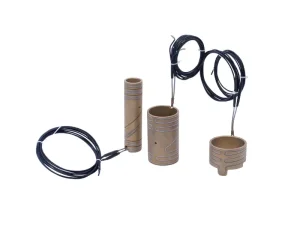
High-Quality (Hot-runner) Spring Heater / Coil Heater
Explore Product
High-Quality Industrial Thermocouple Exporter & Factory
Explore Product
China Portable Ceramic Heaters: Efficient Thermal Series
Explore Product
CE Certification Efficient Air Duct Heaters for HVAC
Explore Product
CE Certification Industrial Ovens Manufacturer & Exporter
Explore Product