
Precision Engineering Series: Batch I
Custom-fabricated thermal solutions manufactured to custom machine mechanical prints, application voltages, and thermal watt densities. Verified under stringent dielectric load conditions.

CE Certification Cast Aluminum/Copper Heater Manufacturer, Exporter
Configure Specification
High-Quality Cleaning furnace Manufacturer, Exporter
Configure Specification
High-Quality Portable Ceramic Heaters for Industry - Reliable Temperature Control from China Suppliers
Configure Specification
Best Efficient Portable Ceramic Heaters from China Suppliers - Ideal for Industrial Heating in Factories
Configure Specification
Best Durable Heat Insulation Covers Manufacturer, Exporters
Configure Specification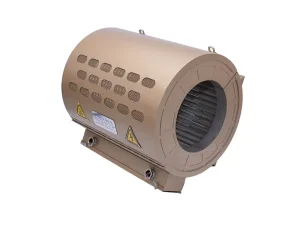
CE Certification Nano infrared electric band heater Manufacturer, Manufacturers
Configure Specification
China Efficient Portable Ceramic Heaters for Industry | China Suppliers & Factory Exporters
Configure Specification
High-Quality Electromagnetic steam boiler Manufacturers, Factories
Configure SpecificationIndustrial Thermal Engineering & Manufacturing Excellence
Operating as Kangpu Heater under Yancheng Laier Heating Technology Co., Ltd., we provide advanced custom thermal technologies engineered directly from physical application requirements, avoiding generic compromises.
In modern high-throughput processing environments—ranging from continuous high-molecular extrusion and reaction synthesis to precision semiconductor cleanroom packaging—thermal failure carries severe collateral costs. Sourcing from a premier customized electric heater factory requires deep metallurgical validation, rigorous thermodynamic modeling, and absolute dimensional adherence.
Established in 1986 in Yancheng, Jiangsu, China, Kangpu Heater has spent four decades refining resistive, infrared, cast-in, and induction thermal architectures. As industrial machinery operates under faster cycle speeds and heightened thermodynamic loads, off-the-shelf catalog heating bands suffer premature failure due to dielectric breakdown, localized overheating hot-spots, and inadequate mechanical clamping. Our custom-engineered approach designs thermal solutions around your unique barrel metallurgy, process shear dynamics, operating voltage parameters, and environmental ingress criteria.
Backed by our corporate development philosophy of "People-oriented, leading technology" and supported by an exhaustive 5-year warranty with end-to-end production lot traceability, our engineering department collaborates directly with OEM system builders, plant maintenance engineers, and global procurement departments. We bridge the critical gap between conceptual thermodynamics and continuous operational reliability.
Global Enterprise Procurement Requirements
Strategic purchasing criteria for Tier-1 OEMs and global processing plants seeking total reliability, operational continuity, and documented engineering excellence.
Design for Manufacturability (DFM)
Global procurement teams demand active technical reviews rather than passive quotation handling. Our engineering team conducts Finite Element Analysis (FEA) thermal dissipation gradient mapping to identify watt-density concentrations and verify expansion clearances before tooling commitment.
Full Metallurgical Traceability
Preventing premature heater burnout requires complete material verification. Every production batch of resistance ribbon (Ni80Cr20), electrical-grade fused MgO, and outer sheath alloy (SUS304, 316L, Incoloy 800) is certified with metallurgical inspection and test tracking numbers.
Total Cost of Ownership (TCO)
While the purchase price of an electric heating element is a minor line-item in machine assembly, unscheduled thermal failure can halt production lines costing tens of thousands of dollars per hour. Our design principles prioritize element longevity and heat transfer efficiency over low-grade compromises.
The Yancheng Industrial Heating Cluster Advantage
Unmatched supply chain integration, raw material access, and precision tooling dynamics delivered directly from China's primary industrial electric heating manufacturing core.
Raw Material Ecosystem
Direct supply line integration with high-purity electro-fused crystalline magnesium oxide manufacturers and continuous drawing mills for high-grade Nickel-Chromium resistance wires guarantees consistent raw inputs without third-party distributor markups.
Rapid Real-Mold Prototyping
Unlike factories relying on generic subcontracted tooling shops, Kangpu maintains internal CNC pattern making, die tooling, and foundry casting bays. We deliver functional real-mold prototypes in 5 to 7 days, significantly faster than typical international turnarounds.
Patented Innovation Depth
Our dedicated R&D engineering division holds over 100 core proprietary patents, including our signature integrated air/liquid cooling systems for high-output extrusion cylinders that mitigate temperature overshoot during high-shear operations.
Scale Economies & Batch Testing
With thousands of units flowing through our automated rolling, winding, and hydraulic pressing bays monthly, clients benefit from high consistency and rigorous testing (flash testing, megohm insulation resistance, and dimensional CMM checks).
International Compliance & Regional Engineering Support
Ensuring cross-border machinery deployments satisfy local statutory codes, electrical certifications, and plant safety mandates.
Machinery exports face strict regional safety frameworks. Supplying industrial electric heaters to global machine builders demands absolute alignment with target country directives. Kangpu heaters are engineered, assembled, and tested to meet international statutory criteria:
European Union (CE, LVD & RoHS)
Full conformance to European Low Voltage Directive (LVD) 2014/35/EU and Electromagnetic Compatibility (EMC) Directive 2014/30/EU. All insulation and resistance components comply strictly with RoHS Directive 2011/65/EU and REACH (EC 1907/2006) regulations, free of hazardous heavy metals.
North America (UL 499 & CSA Standards)
Engineered for compliance with UL 499 standards for electric heating appliances and CSA C22.2 No. 72. We accommodate North American operational requirements including standard 240V, 480V, and 600V 3-phase delta/wye wiring layouts, NEMA 4X terminal enclosures, and high-temp ceramic blocks.
Explosion-Proof & Hazardous Locations
For chemical and petrochemical applications, our custom explosion-proof circulation heaters and junction heads align with ATEX Directive 2014/34/EU and IECEx specifications for Zone 1 and Zone 2 gas/vapor hazards, utilizing flameproof enclosures (Ex d) and temperature classification controls.
Emerging Trends Shaping Industrial Electric Heating
Strategic advancements in thermodynamic efficiency, process electrification, and automated real-time thermal monitoring.
Nano-Infrared Energy Retrofitting
Traditional mica and ceramic bands lose significant energy to convective air currents around the machine barrel. Nano-infrared band heaters combine directional radiant infrared heat transfer with high-performance aerogel micro-porous insulation blankets. This delivers energy savings between 30% and 50%, dramatically lowering external casing temperatures to under 50°C and improving workplace safety.
Electrification & Direct Induction
Global net-zero mandates are accelerating the phase-out of fossil-fueled steam boilers and gas-fired thermal oil systems. Our high-efficiency electromagnetic steam boilers and electric thermal fluid circulation furnaces offer clean, zero-combustion industrial heating on demand, easily paired with renewable factory microgrids.
Embedded Smart Thermal Sensing
Modern closed-loop industrial processes require sub-degree thermal stability. We integrate dual grounded or ungrounded Type J/K thermocouples or PT100 RTD resistance sensors directly inside the heater's active core. This eliminates response latency and provides real-time data to Industry 4.0 control platforms for predictive maintenance.
Proven High-Stress Application Scenarios
Engineered for dependable continuous operation in the world's most demanding manufacturing settings.
Plastic Extrusion & Injection Molding
High-shear extrusion screws generate inconsistent frictional heat. Our cast aluminum and cast copper barrel heaters feature precision-machined internal liquid cooling coils or external blowers to manage heat profiles accurately, preventing resin thermal degradation during polymer processing.
Biaxially Oriented PVC-O Pipe Systems
Manufacturing molecularly oriented PVC-O pipe requires tight temperature windows to align polymer chains effectively. Our custom PVC-O conditioning ovens provide balanced laminar airflow and uniform multi-zone heating, maximizing circumferential pipe tensile strength.
Chemical, Petrochemical & Hot Oil Circulation
In reaction kettles, bitumens, and process heating loops, our explosion-proof circulation heaters and thermal oil systems ensure stable temperature profiles without fluid degradation, supported by certified ASME/CE pressure vessel shells.
Die-Casting, Packaging & Hot-Runner Systems
Precision hot-runner coil heaters and spring heaters fit smoothly into compact injection manifolds. Swaged to high mechanical density, they withstand cycling pressures and mechanical vibration without internal shorting.
Air Handling, HVAC & Drying Tunnels
Industrial finned tubular duct heaters supply continuous high-volume hot air for curing and food dehydration. Elements are engineered to match airflow velocity and prevent element overheating during system transitions.
Semiconductor & Cleanroom Equipment
Ultra-clean environments require heating components free of outgassing and particle shedding. Our electro-polished flexible silicone heaters and sealed tubular elements support semiconductor handling, vacuum chambers, and medical tooling.
7-Stage Custom Engineering & Qualification Protocol
A structured, stage-gated engineering process to guarantee that custom designs perform seamlessly on the factory floor before volume production begins.
Reviewing physical geometry, cutouts, leads, and mounting clamps.
Balancing operating voltage, wattage, and surface watt density.
Machining dedicated production-grade dies for representative prototypes.
On-machine mounting evaluation by your engineering team.
Modifying clamp mechanics, lead exits, or wiring terminations.
Dielectric withstand, insulation resistance, and thermal imaging verification.
Final mass production with lot traceability and secure export packaging.
Technical Selection Guide: Industrial Heater Architectures
An engineering reference comparing performance boundaries, maximum operating temperatures, and best-fit industrial use cases.
| Heater Classification | Max Operating Temp | Typical Watt Density | Primary Industrial Application | Key Engineering Advantage |
|---|---|---|---|---|
| Mica Band Heaters | Up to 350°C (662°F) | 2.5 - 4.0 W/cm² | Injection molding nozzles, small blow molders | Thin cross-section profile, low cost, fast thermal response |
| Ceramic Band Heaters | Up to 700°C (1292°F) | 4.0 - 7.5 W/cm² | Extruder barrels, heavy compounding, hot runner manifolds | Built-in thermal insulation layer reduces energy consumption |
| Cast Aluminum Heaters | Up to 350°C (662°F) | 3.0 - 5.0 W/cm² | Extrusion barrels, blown film dies, laminar sheet dies | Excellent thermal conductivity; accommodates liquid/air cooling lines |
| Cast Bronze/Copper Heaters | Up to 650°C (1202°F) | 5.0 - 9.0 W/cm² | High-temperature resin extruders (PEEK, fluoropolymers) | Exceptional thermal transfer and mechanical strength under high stress |
| Nano Infrared Band Heaters | Up to 500°C (932°F) | 4.0 - 8.0 W/cm² | Energy-saving retrofits for plastics machinery | Low external shell temps (<50°C), cuts radiant energy loss by 30-50% |
| Flexible Silicone/Kapton Heaters | Up to 200°C (392°F) | 0.5 - 1.5 W/cm² | Tanks, drums, aerospace surfaces, clinical medical analytical instruments | Flexible, lightweight, cut to conform to complex 3D profiles |
| Electromagnetic Steam Boilers | Up to 180°C (Steam) | High-Frequency Induction | Clean-in-place (CIP), sterilization, food & chemical reactors | Zero direct emissions, eliminates fossil fuels, high operational efficiency |
Frequently Asked Questions (Engineering & Procurement FAQ)
Detailed technical answers addressing design tolerances, electrical parameters, and production operations.
Precision Engineering Series: Batch II
Heavy-duty process thermal elements, specialized heaters, and auxiliary fluid systems manufactured for international machine builders and high-throughput processing lines.
High-Quality Portable Ceramic Heaters for Industry - Efficient Heating Solutions from China Suppliers
Configure Specification
High-Quality Heat-conducting oil furnace Manufacturer, Exporter
Configure Specification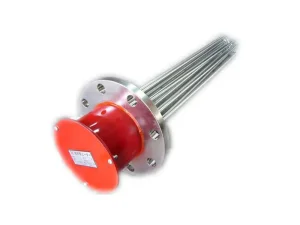
CE Certification Explosion Proof Electric Heater Exporter, Factory
Configure Specification
Best Pipeline Heater Manufacturers, Factory
Configure Specification
CE Certification Fan Manufacturer, Factory
Configure Specification
China Portable Ceramic Heaters for Industry Manufacturers, Exporter
Configure Specification
High-Quality (Hot-runner)Spring heater/Coil heater Manufacturers, Factory
Configure Specification