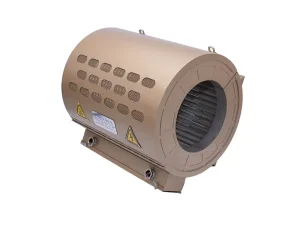
High-Temperature Industrial Heating & Sensor Solutions
Explore heavy-duty heating elements, specialized thermocouple wiring, and high-temp furnaces engineered for seamless extrusion, molding, and thermal control installations.





Commercial Status & Industrial Demand for High Temperature Insulation Cables
A rigorous examination of electrical dielectric stresses, structural thermal resilience, and electrification demands reshaping harsh environment infrastructure.
In modern industrial manufacturing, electrical thermal management has moved from passive containment to an active performance parameter. High temperature insulation cables represent the indispensable nervous system of extreme-heat environments—spanning chemical reactors, semiconductor wafer annealing, automotive test benches, metallurgy furnaces, and polymer extrusion systems. Conventional PVC or standard XLPE jackets undergo molecular chain degradation and catastrophic breakdown above 105°C. High temperature insulation cables engineered with fluoropolymers (PTFE, PFA, FEP), silicone elastomers, composite mica tapes, and fiberglass braided armoring sustain structural and dielectric stability across ranges from -65°C to upwards of +1100°C.
Global demand is propelled by three macro factors: industrial electrification under global decarbonization directives, high-density power requirements in EV powertrain manufacturing, and continuous heavy-duty automated processing where a single cable burnout costs tens of thousands of dollars per hour in production downtime. Industrial plant operators, original equipment manufacturers (OEMs), and tier-one EPC contractors now enforce rigorous standards for flame retardancy, chemical inertness, and thermal longevity.
Thermal Dielectric Integrity
Maintains uninterrupted volume resistivity and dielectric breakdown voltage over 5000V AC under severe continuous operating heat. Resists insulation shrinkage, brittleness, and thermal runaway.
Chemical & Corrosive Defense
Impervious to hot industrial oils, plasticizer vapors, aromatic hydrocarbons, cryogenic fuels, concentrated acids, and alkaline solvents encountered in processing facilities.
Mechanical & Flame Resistance
Meets zero-halogen, low-smoke, flame-retardant standards (IEC 60331, IEC 60332, UL 94 V-0). Resists outer abrasion through dense multi-strand fiberglass and stainless steel exterior wire armoring.
Why Global Buyers Depend on Top Chinese High-Temperature Cable Factories
Analyzing the strategic convergence of raw material clusters, precision vertical extrusion lines, and rigorous batch quality assurance.
In high temperature insulation cabling, China's precision manufacturing clusters have achieved substantial technical scale. Rather than competing strictly on baseline unit cost, Tier-1 Chinese high-temperature cable exporters provide advanced material formulation, tight metallurgical purity controls, and vertically integrated supply chains spanning copper refining, nickel electro-plating, precision fluoropolymer extrusion, and automated multi-spindle braiding.
Operating from industrialized hubs like Jiangsu and Zhejiang, top manufacturers deliver exceptional efficiency advantages:
Conductor Metallurgical Purity
Utilization of high-purity Oxygen-Free High Conductivity (OFHC) copper, electro-plated with uniform nickel or silver coatings to avert core oxidation, inter-granular corrosion, and resistance spikes at continuous 450°C+.
Vertical Extrusion Precision
High-temperature melt extruders handle PFA and FEP with automated laser outer-diameter gauge systems, keeping wall thickness tolerances within ±0.015mm and eliminating concentricity micro-flaws.
Continuous In-Line Spark Testing
100% in-line high-frequency spark inspection from 3kV to 15kV ensures zero pinholes, micro-voids, or dielectric weak points along uninterrupted 5,000-meter continuous spoolings.
Agile OEM Customization
Rapid lead times for custom conductor stranding, non-standard cross-sections, high-flex configurations, and specialized color-coding for extreme industrial environments.
Localized Industrial Application Scenarios Across Global Markets
From injection molding barrels to aerospace test chambers, high-temperature cables preserve signal precision and high-voltage transmission.
Plastics & Rubber Processing
Installed directly on extruder barrels, injection nozzles, ceramic heating bands, and hot-runner manifolds. Cables face continuous 250°C–450°C heat cycles, plasticizer outgassing, and localized mechanical vibration without insulation cracking.
Metallurgical & Heat Treatment Furnaces
Supplying power leads to industrial melting furnaces, vacuum brazing systems, and annealing kilns. Employs multi-layer phlogopite mica wrapping with treated fiberglass outer sheathing capable of surviving direct radiation up to 1000°C.
E-Mobility & Battery Thermal Systems
Applied in EV motor stators, onboard DC fast-charging connections, and high-voltage distribution units (HVDUs). Cable insulation resists repeated thermal shock cycles (-40°C to +200°C) alongside harsh battery electrolyte chemistry.
Aerospace & Avionics Engine Bays
Engine telemetry, exhaust gas recirculation monitoring, and auxiliary power unit wiring. Demands lightweight, thin-wall fluoropolymer cable structures with high resistance to vibration stress and synthetic jet fuel mist.
Oil Refining & Petrochemical Plants
High-temperature instrumentation, trace heating hookups, and pipeline telemetry in flare stacks and catalytic cracking units. Built with corrosion-resistant armored sheathing rated for hazardous Zone 1/2 environments.
Commercial Kitchen & Food Equipment
Commercial convection ovens, deep-fryer temperature sensors, and conveyor toasters requiring food-grade silicone or non-toxic fluoropolymer insulation compliant with FDA and RoHS specifications.
High Temperature Cable Insulation Material Comparison
A technical evaluation of core dielectric compounds to align procurement specifications with site operating conditions.
| Insulation Compound | Working Temp Range | Dielectric Strength | Flexibility Rating | Chemical Resistance | Primary Industrial Use Case |
|---|---|---|---|---|---|
| Silicone Rubber (SIR) | -60°C to +200°C | 20–25 kV/mm | Outstanding (Class 5/6) | Moderate (Oils/Steam) | Furnace doors, dynamic machinery leads, HVAC |
| Fluorinated Ethylene Propylene (FEP) | -100°C to +205°C | 50–60 kV/mm | Good (Semi-rigid) | Excellent (Universal acids/fuels) | Downhole sensors, chemical probes, automotive |
| Polytetrafluoroethylene (PTFE) | -190°C to +260°C | 60–80 kV/mm | Moderate | Near-total inertness | Aerospace wiring, precision instrumentation, RF |
| Perfluoroalkoxy (PFA) | -200°C to +260°C | 65–85 kV/mm | High mechanical creep resistance | Superior in hot liquid states | Semiconductor cleanrooms, severe chemical pumps |
| Fiberglass Braided + Silicone Varnish | -60°C to +450°C | 1.5–3 kV/mm | Moderate | Fair (Varnish burns clean) | Extruder heater bands, cartridge heaters, ovens |
| Mica Tape + Glass Yarn (Ni-Conductor) | -40°C to +650°C / +1000°C | 1.0–2.5 kV (Fire Survival) | Rigid / Fixed installation | Dry heat / Flame impervious | Steel foundry wiring, blast furnaces, emergency power |
| Mineral Insulated (MI) Cable | Up to +1100°C continuous | Inorganic MgO matrix | Malleable metal sheath | Hermetic barrier (Liquid-tight) | Nuclear instrumentation, kiln cores, power mains |
Strategic Conductor Metallurgy: Copper vs. Nickel-Plated Copper vs. Pure Nickel
A frequent root cause of cable failure in extreme environments is conductor oxidation rather than insulation breakdown. Bare electrolytic tough-pitch copper begins oxidizing around 150°C, increasing resistance and generating hot spots. For continuous temperatures up to 200°C, high-grade tin-coated copper suffices. From 200°C to 450°C, engineers specify nickel-plated copper (NPC) with minimum 27% nickel cladding by weight, preventing oxygen diffusion into the copper core. When operating above 450°C, pure Grade A Nickel 200 or Nickel 201 stranded conductors are essential to resist mechanical creep and thermal embrittlement.
Emerging Technology Paradigms in High Temperature Cables
Anticipating the next decade of material science innovations driven by clean energy, miniaturization, and harsh environment telemetry.
Ceramifiable Polymeric Hybrids
New silicone formulations convert into rigid, insulating ceramic SiO2 matrices under direct flame contact up to 1000°C, guaranteeing emergency circuit integrity (AS/NZS 3013, BS 6387 CWZ) without toxic ash residue.
Aerogel Nano-Composite Insulation
Integrating silica aerogels into braided jackets delivers unprecedented thermal conductivity reductions (λ < 0.018 W/m·K). This enables 40% thinner insulation layers, supporting tighter bends in compact automation cells.
Integrated Fiber-Optic Core Telemetry
Hybrid high-temp cables embedding distributed fiber Bragg grating (FBG) sensors. Enables real-time, distributed thermal mapping along furnace and kiln wiring runs to predict thermal hotspots before cable insulation fails.
Global Enterprise Sourcing Criteria: Navigating QA, Testing & Compliance
A practical checklist for industrial procurement directors, systems integrators, and OEM sourcing leads auditing cable manufacturers.
Mandatory Certifications
Confirm UL Appliance Wiring Material (AWM) styles (e.g., UL 5107, UL 5128 for 450°C mica/glass, UL 1332 for FEP), CE low voltage directives (LVD), and RoHS/REACH SVHC declarations for lead-free compliance.
Thermal Ageing Verification
Request accelerated thermal life documentation (Arrhenius plots according to IEC 60216). This verifies elongation-at-break retention and tensile strength after 10,000+ hours at rated continuous temperatures.
Supply Chain Traceability
Validate spool-level barcode tracking linking finished cables back to primary copper billets, specific fluoropolymer compound resin lots, and automated spark-testing certificates.
Procurement Summary Checklist: What to Submit for Precise Quotes
Frequently Asked Questions: High Temperature Insulation Cables
Direct engineering answers addressing critical design choices, service life expectations, and export logistics.
What is the practical difference between silicone and fluoropolymer insulation?
Silicone rubber cables offer superior flexibility, remaining pliable across -60°C to +200°C with excellent resistance to corona discharge. However, silicone is softer and more vulnerable to severe abrasion and oil penetration. Fluoropolymers (PTFE, FEP, PFA) provide extreme chemical inertness, high mechanical cut-through toughness, and compact wall profiles up to 260°C, though they have larger minimum bend radii and higher stiffness.
When must I specify pure nickel conductors over nickel-plated copper?
Nickel-plated copper (NPC) operates reliably up to continuous ratings of 450°C. Above this temperature threshold, copper atoms migrate through the nickel plating via solid-state diffusion, oxidizing rapidly and causing wire embrittlement. For continuous service from 450°C to 1000°C (such as kiln heating elements or furnace leads), pure Nickel 200/201 conductors are mandatory.
How does fiberglass outer braiding perform in moist or oily environments?
Dry fiberglass braid provides high thermal and abrasion protection up to 450°C–500°C, but it is naturally porous. In settings with water spray, steam, or cutting fluid, untreated fiberglass absorbs fluids, causing leakage currents or short circuits. For moist applications, specify double-extruded fluoropolymer jackets (FEP/PFA) or silicone-impregnated closed-weave fiberglass.
What is the standard sampling and OEM lead time from a Chinese factory?
Standard catalog constructions (e.g., UL 3239, UL 5107, standard 2.5mm² to 16mm² high-temp hookup leads) typically ship from ready buffer inventory within 3 to 7 days. Custom OEM orders requiring unique stranding, specialized jacket striping, or combined multi-conductor shielding run on a 2-to-3-week manufacturing cycle, inclusive of complete metallurgical batch testing.
Precision Heaters, Thermal Ovens & Electromagnetic Systems
Complementary thermal hardware engineered to integrate with high-temperature insulation cabling assemblies.