
Engineered Thermal Systems & Pipeline Heating
Explore precision-engineered elements built for polymer processing, petrochemical transmission, and continuous thermal regulation in demanding production environments.

Best Pipeline Heater Manufacturers, Factory
View Specifications
Best Infrared Ceramic Heaters for Efficient Heating Manufacturers, Exporters
View Specifications
High-Quality Portable Ceramic Heaters for Industry - Reliable Temperature Control from China Suppliers and Factory Exporter, Factory
View Specifications
High-Quality Thermocouple Exporter, Factory
View Specifications
CE Certification Precise Cooling and Heating System Manufacturers, Exporters
View Specifications
CE Certification Nano infrared electric band heater Manufacturer, Manufacturers
View Specifications
China High density heating element Manufacturers, Factories
View Specifications
CE Certification PVC-O Ovens for Precision Heating Manufacturer, Manufacturers
View SpecificationsThermodynamic Leadership Since 1986
Deploying precision thermal physics and solid-state manufacturing to resolve complex heat dissipation, surface watt-density balance, and longevity problems across modern manufacturing plants.
In high-capacity manufacturing, thermal stability determines product yield, scrap reduction, and operational safety. Founded in 1986, Kangpu Heater (Yancheng Laier Heating Technology Co., Ltd.) has spearheaded high-precision electrical thermal engineering for 40 years. Through sustained research in materials metallurgy, ceramic dielectric formulation, and automated induction coil placement, our manufacturing campus delivers precision thermal components across 100+ nations to over 5,000 industrial end-users.
Industrial electric heating technology operates at the confluence of thermodynamic physics and materials science. Achieving an ultra-stable thermal gradient demands strict control over resistance alloy microstructure, MgO dielectric compaction density, and sheath oxidation resistance. By combining real-mold tooling with systematic thermal FEA modeling, Kangpu provides an absolute standard of operational reliability, ensuring your production machinery delivers maximum uptime, minimal thermal deviation, and reduced total ownership costs.
Competitive Advantages of Chinese Industrial Heater Manufacturing
How Yancheng’s comprehensive industrial cluster combined with advanced automation unlocks high performance, rapid iteration, and direct economic value for global buyers.
Localized Material Supply Clusters
Yancheng serves as a primary global center for electro-thermal component manufacturing. Our facility sources high-purity fused magnesium oxide (MgO), advanced steatite ceramics, and certified nickel-chromium alloys directly within an integrated regional supply perimeter, eliminating raw material bottlenecks.
End-to-End Vertical Integration
From metallurgical wire coiling and ceramic block sintering to casting foundries (aluminum, copper, cast iron) and automated final assembly, every stage is contained in-house. This prevents margin stacking by middlemen and shortens prototype lead times down to 3-5 working days.
Tier-1 International Compliance
Our direct export operations align strictly with ISO 9001:2015 frameworks, CE certifications, and RoHS environmental directives. Products intended for hazardous environments are built to explosion-proof classifications with full dielectric breakdown voltage validation before dispatch.
Global Industry Trends & Macro Thermal Engineering
Examining energy transitions, radiant heat recovery, and automated smart process integration reshaping industrial heating equipment worldwide.
Decarbonization & Direct Electrification
Heavy industry is aggressively phasing out fossil-fuel combustion chambers and low-efficiency gas burners. Electrification via clean electromagnetic induction steam boilers and circulation pipeline heaters delivers up to 98% thermal transfer efficiency, instantly eliminating scope-1 direct factory emissions.
Nano-Infrared Radiation Breakthroughs
Traditional conduction heaters lose substantial energy through outer surface radiation. Modern nano-infrared band heaters deploy aerogel composite insulation jackets alongside specialized high-emissivity radiation matrices, cutting external barrel surface temperatures to below 50°C and reducing power draws by 20% to 35%.
Coupled Heating-Cooling Synergy
High-shear extrusion requires fast, accurate heat removal as well as energy input. Patented integrated heating and air-cooling modular zones eliminate thermal overshoot during exothermic compounding cycles, securing melt integrity across medical polymers and multi-layer film extrusions.
| Thermal Technology | Operating Limit | Max Watt Density | Primary Industrial Vector | Key Performance Attribute |
|---|---|---|---|---|
| Ceramic Band Heaters | Up to 700°C | Up to 8 W/cm² | Extrusion Barrels, Blow Molding | High insulation resistance, lower convective energy loss |
| Cast-in Aluminum Heaters | Up to 400°C | Up to 5 W/cm² | Plastics Extrusion, Food Packaging | Exceptional heat conduction uniformity, custom cooling tubes |
| Cast-in Copper/Bronze | Up to 650°C | Up to 9 W/cm² | High-temperature polymers (PEEK, PTFE) | Extreme mechanical shock and chemical corrosion resistance |
| Nano Infrared Bands | Up to 500°C | Up to 10 W/cm² | Energy retrofit projects, Extruders | 30%+ energy savings, cool outer touch envelope (<50°C) |
| Mica Band Heaters | Up to 350°C | Up to 4.5 W/cm² | Injection Nozzles, Small Dies | Low profile, fast response, cost-effective replacement |
| Circulation Pipeline Heaters | Up to 600°C | Application specific | Oil & Gas, Chemical Processing | Pressure vessel rated, 100% continuous fluid heat transfer |
Localized Industrial Applications & Global Procurement Requirements
How our industrial heaters are configured to meet precise plant requirements, line constraints, and localized operational metrics across global industries.
Polymer Extrusion & Advanced Pipe Orientation
Modern PVC-O and high-diameter polyolefin extrusion lines require stable, narrow heating bands along the barrel. Temperature swings alter melt rheology, leading to inconsistent wall thicknesses. Our heating-cooling systems and automated PVC-O ovens create a stable thermal environment, optimizing bi-axial molecular orientation and maintaining structural pipe integrity.
High-Cycle Injection Molding Workcells
For injection molding systems operating 24/7, nozzle heater failures lead to freeze-offs and lost production time. Kangpu mica and spring coil heaters use hermetically sealed terminal transitions, precision thermocouple wells, and close-tolerance clamping bands, preventing plastic leakage ingress and extending operating service life.
Petrochemical, Pipeline & Process Fluid Circulation
Viscous oils, heavy hydrocarbons, and hazardous gases require regulated, uniform heat transfer to maintain safe transport viscosities. Our flanged pipeline circulation heaters provide balanced watt densities across every square centimeter, preventing media scorching, coke formation, and sheath degradation over years of continuous runtime.
Global Procurement Criteria: Risk Elimination
Procurement teams at international OEMs and chemical processors evaluate total cost of downtime rather than unit price alone. Our seven-stage customization procedure—spanning ID 3D-modeling, physical real-mold sample builds, factory burn-in trials, and full traceability—gives engineers confidence before placing volume purchase orders.
Structured 7-Stage Customization & Quality Governance
A defined, stage-gate manufacturing framework that guarantees dimensional accuracy, thermal safety, and electrical consistency from first drawing to series mass production.
01. ID Engineering & Clearances
Comprehensive CAD/CAM review of physical space constraints, sheath clearances, terminal junction locations, and mounting clamp requirements to ensure a clean drop-in installation.
02. Thermodynamic Matching
Wattage, operational voltage (110V to 690V), resistance tolerance, and maximum permissible surface watt-density (W/cm²) are calculated to avoid hot spots and premature wire breakdown.
03. Real Production Tooling
Unlike workshop prototypes, our validation units are cast and formed using dedicated production-grade tooling, ensuring the evaluation unit matches the dimensions and finish of series production runs.
04. On-Site Fit Validation
The client tests the sample directly on the intended equipment. Fit, physical seating against the barrel wall, terminal orientation, and ambient thermal stability are confirmed first-hand.
05. Design Optimization
Any necessary design adjustments—such as lead wire rerouting, flexible armor shielding, or clamping spring adaptations—are refined quickly by our engineering team.
06. Full Electrical Testing
Components undergo high-voltage hipot testing, cold/hot insulation resistance checks, and thermal imaging profile validation to lock in technical parameters.
07. Batch Manufacturing
Production proceeds under ISO-monitored procedures. Final assemblies are packaged for international transport, fully labeled with batch identifiers, and covered by a 5-year warranty.
5-Year Batch Traceability
Every industrial unit carries a permanent laser-etched serial code. If a field issue occurs, our quality team can trace the original alloy coil, dielectric batch, and shift records to identify and resolve root causes.
Frequently Asked Questions for Plant Engineers & Buyers
Answers to common technical, material selection, and procurement questions to help you specify the right industrial heating element.
What primary parameters must be specified for a custom industrial band heater?
We require the inner barrel diameter (ID), axial width, desired operational voltage, target wattage, operating surface temperature, clamping style (e.g., barrel nut, flange screw, spring latch), and lead orientation. Providing drawings or machine models helps us verify terminal box clearances and prevent installation interference.
How does Kangpu support its 5-year warranty for overseas shipments?
Our 5-year warranty is backed by comprehensive serial tracking and strict production controls. Every heater is laser-marked with a traceability code linking it to raw material batches, winding tension logs, and dielectric tests. In the rare event of a component failure, we review operational data, supply expedited replacements, and identify the root cause to prevent recurrence.
When should a facility specify Cast-In Aluminum versus Ceramic Band Heaters?
Cast-in aluminum heaters offer excellent thermal conductivity and mechanical strength, making them ideal for heavy extrusion equipment up to 400°C—especially when integrated liquid or air-cooling tubes are needed. Ceramic band heaters are suited for applications requiring up to 700°C, providing built-in thermal insulation that helps reduce radiant energy losses without cooling circuits.
How do Nano-Infrared Band Heaters lower electrical consumption?
Standard resistive bands rely primarily on thermal conduction, which radiates significant excess heat into the workshop. Nano-infrared bands transfer thermal energy via specialized long-wave radiation directly into the cylinder, paired with high-performance aerogel thermal insulation. This construction reduces outer surface temperatures to below 50°C and cuts operating energy draw by 20% to 35%.
What safety certifications and explosion-proof ratings do you provide?
Our products comply with relevant European CE standards and ISO 9001:2015 frameworks. Pipeline heaters, duct heaters, and immersion elements intended for petrochemical and flammable dust environments can be supplied to meet ATEX and IECEx explosion-proof classifications, featuring certified terminal enclosures.
Heavy-Duty Clean Furnaces, Duct Heaters & Insulation Systems
A selection of industrial-grade thermal equipment, including high-capacity cleaning furnaces, explosion-proof fluid warmers, flexible covers, and hot-runner coil heaters.
High-Quality Portable Ceramic Heaters for Industry - Efficient Heating Solutions from China Suppliers and Factory Exporter, Exporters
View Specifications
High-Quality Cleaning furnace Manufacturer, Exporter
View Specifications
CE Certification Explosion Proof Electric Heater Exporter, Factory
View Specifications
CE Certification Efficient Air Duct Heaters for HVAC Manufacturer, Factory
View Specifications
China Portable Ceramic Heaters for Industry Manufacturers, Exporter
View Specifications
Best Efficient Portable Ceramic Heaters from China Suppliers - Ideal for Industrial Heating in Factories Manufacturers, Exporters
View Specifications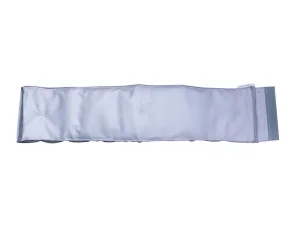
Best Durable Heat Insulation Covers Manufacturer, Exporters
View Specifications
High-Quality (Hot-runner)Spring heater/Coil heater Manufacturers, Factory
View SpecificationsRequest Custom Engineering Review & Quotation
Our technical engineering group directly reviews application specifications, dimensional CAD models, and existing thermal line performance. Connect with our export engineering office for direct-from-factory pricing and sample scheduling.