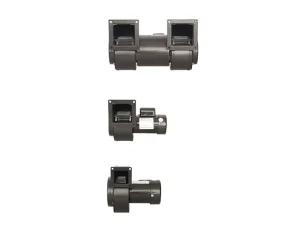
Primary Lineups
High-Efficiency Industrial Heating Systems
Engineered for maximum thermal conductivity, continuous operations under extreme mechanical fatigue, and optimized power consumption.






Industrial Landscape
Global State of Industrial Process Heating Solutions
Decarbonization, electrification, and real-time thermodynamic stability define the modern industrial processing environment.
Thermal Decarbonization Mandate
Global manufacturing facilities are accelerating the transition from fossil-fueled direct combustion to high-precision electric thermal conversion. Electric elements, cast heaters, and high-efficiency electromagnetic boilers eliminate localized Scope 1 greenhouse gas emissions while delivering thermal efficiencies exceeding 96% directly at point-of-use.
Supply Chain Resiliency & OEM Standards
Processing plants across North America, the European Union, and Southeast Asia demand zero-defect tolerance. Unscheduled downtime caused by thermal loop failure in multi-zone extrusion or fluid transmission can trigger massive polymer degradation and financial losses. Reliable exporters operate as technical partners with ISO-traceable metallurgical validation.
Regulatory Strictness & CE Standardization
Compliance directives including CE, UL, RoHS, and explosion-proof certifications (ATEX/IECEx) are baseline entry parameters. Tier-1 manufacturing factories must guarantee that every cast-in aluminum heater or explosion-proof electric unit withstands severe thermal cycles, dielectric breakdown voltages, and ambient mechanical stresses without operational drift.
Engineered Frameworks
Macro-Level Industrial Heating & Cooling Paradigms
Balancing thermal kinetics across heavy polymer extruders, pharmaceutical reactors, and complex fluid dynamics.
Integrated Extrusion Barrel Thermal Management
Modern polymer processing requires both high thermal output during start-up and immediate, uniform dissipation when internal screw shear creates exothermic surges. Kangpu integrates cast-in cooling passages and multi-fin blowers with precision band heaters to maintain melt temperatures within ±1.0°C tolerance windows.
Thermal Fluid Circulation & Closed-Loop Systems
For applications where direct element contact is infeasible, our heat-conducting oil furnaces distribute precise calories through jacketed vessels, calendar rolls, and continuous autoclaves. High-temperature circulating pumps combined with low watt-density immersion elements prevent fluid cracking and carbonization.
Conditioned Industrial Air & HVAC Duct Heating
Engineered for paint booths, drying ovens, and large volume air handling systems. Tubular elements fitted with stainless steel or alloy fins ensure optimum heat exchange to dynamic air currents without excessive pressure drops or localized element burnout.
Engineering Matrix
Technical Specification & Material Selection Guide
A reference architecture for mechanical engineers, plant directors, and OEM system designers.
| Heating Core Technology | Max Operating Temp (°C) | Max Watt Density (W/cm²) | Primary Industrial Substrates | Core Application Suitability |
|---|---|---|---|---|
| Mica Band Heaters | Up to 350°C | 3.5 - 4.5 W/cm² | Stainless steel, high-grade mica core | Injection molding nozzles, shallow barrels, low-mass dies |
| Ceramic Band Heaters | Up to 700°C | 6.0 - 8.5 W/cm² | Steatite ceramics, NiCr 80/20 resistance coil | High-throughput extrusion barrels, blow molding lines |
| Cast-in Aluminum Elements | Up to 400°C | 4.0 - 5.0 W/cm² | Foundry-grade Al-alloy casting, Incoloy sheath | Continuous profile extruders, heavy compounding lines |
| Cast-in Bronze/Copper | Up to 650°C | 6.0 - 9.0 W/cm² | Phosphor/Manganese bronze, high-nickel alloys | Corrosive environments, extreme pressure and temperature lines |
| Nano Infrared Radiators | Up to 500°C | Up to 8.0 W/cm² | Aerogel composite insulation, reflective quartz | High-efficiency retrofits aiming for 30%+ energy reduction |
| Immersion Oil Furnaces | Up to 320°C (Fluid) | 1.5 - 2.5 W/cm² (Prevent Cracking) | Carbon steel / 304 / 316L vessel fabrication | Laminators, jacketed chemical reactors, calendar heating |
Deployment Scenarios
Localized Factory Applications & Case Contexts
Demonstrated thermodynamic performance across challenging industrial operating parameters worldwide.
High-Molecular PVC-O Pipe Extrusion
Bi-axial orientation in PVC-O pipe manufacturing requires hyper-precise thermal conditioning of pre-forms before physical expansion. Our CE-certified PVC-O ovens and integrated barrel jackets deliver consistent volumetric heating, eliminating crystalline variance and ensuring burst pressure specifications are met reliably.
Automotive Injection Molding Cells
Tier-1 automotive parts manufacturers run continuous injection molding lines for structural dashboard and under-the-hood components. Using our quick-response mica nozzle bands and precision thermocouple probes, factories prevent runner freezing and thermal degradation during raw polymer injection sequences.
Hazardous Area Process Fluid Heating
Chemical processing installations require explosion-proof terminal boxes and high-integrity flange seals. Kangpu's explosion-proof electric heaters provide safe heat generation in environments with volatile flammable gases and mists, fully compliant with international explosive zone safety standards.
Factory Authority & Trust
Engineering Precision Driven by Yancheng Laier Heating Technology
Founded in 1986, Kangpu Heater has operated continuously for four decades, engineering bespoke thermal elements from raw metallurgical wire to finalized, tested assemblies.
1986
Established Year
40+
Years Engineering Expertise
100+
Global Export Markets
5,000+
Global Industrial Clients
5-Year
Comprehensive Warranty
Rigorous Protocols
The 7-Stage Custom Engineering Process
From initial design parameters to mass-scale production, every custom heating element passes through strict verification milestones.
Stage 01: ID & Thermal Modeling
Thermal engineers analyze technical drawings, operational environment, and machine mechanical constraints to create optimized industrial CAD and heating schematics.
Stage 02: Electrical Customization
Voltage, wattage, watt density, dielectric insulation thickness, clamping mechanics, and junction terminal configurations are fully finalized.
Stage 03: Precision Mold Tooling
Unlike rapid hobby prototypes, we open actual production tooling for initial samples, ensuring the physical prototype has identical metallurgical grain structure to mass runs.
Stage 04: Client Fit Confirmation
The prototype undergoes physical mounting tests directly on the target machine to confirm clamping fit, lead cable clearance, and thermal sensor alignment.
Stage 05: Engineering Iteration
Any localized thermal profile adjustments, clamp revisions, or terminal box enhancements requested by customer engineers are integrated immediately.
Stage 06: Severe Lab Testing
Elements endure continuous burn-in cycles, insulation resistance tests under extreme humidity, and dielectric breakdown checks at high voltages before sign-off.
Stage 07: Mass Manufacturing
Scalable serial fabrication begins under strict ISO quality control, complete with batch-traceable raw materials and shockproof overseas packaging.
Lifecycle Support: 5-Year Warranty
Continuous traceability ensures replacement elements can be remanufactured identically years later using our archived design master records.
Future Horizons
Technology Roadmap: The Future of Industrial Solutions
Predicting industrial heating requirements through IoT integration, material science, and predictive thermal management.
IoT-Enabled Predictive Heating Elements
Next-generation thermal bands incorporate integrated micro-sensor arrays directly into ceramic insulative blocks. Real-time micro-impedance and internal temperature monitoring predict element oxidation and potential failure weeks before shutdown, allowing scheduled preventative maintenance during planned machine changeovers.
Advanced Ceramic & Graphene Composites
R&D investments are focused on integrating nanostructured refractory matrices that provide double the thermal conductivity of traditional steatite ceramic cores while maintaining 10kV dielectric isolation. This enables thinner heater cross-sections and instant thermal responsiveness to drive automated extrusion control loops.
Induction & Ultra-Low Loss Hybrid Systems
Bridging the gap between surface conduction and direct electromagnetic excitation, hybrid systems deliver instantaneous volumetric core heat to large extruder barrels with zero external surface heat loss. Combined with advanced aerogel jackets, working environments stay cool while overall facility electrical loads drop dramatically.
Knowledge Base
Frequently Asked Questions on Industrial Heating Procurement
In-depth technical answers addressing specifications, lead times, warranties, and customization protocols.
Can Kangpu manufacture industrial electric heaters directly to custom engineering drawings?
Yes. Customization is the foundational core of our manufacturing facility. Simply transmit your mechanical drawings, legacy sample specifications, or equipment model numbers. Our engineering department verifies diameter clearances, clamping methods, watt densities, terminal block locations, and internal resistance alloy specifications. We construct real-mold test samples for your review and empirical validation prior to serial batch production.
What specific terms are included in Kangpu’s 5-Year After-Sales Warranty?
Our comprehensive 5-year warranty covers all structural, material, and electrical integrity defects under specified industrial operation parameters. Every element carries a laser-engraved batch serial code linked to metallurgical records, wire winding tension profiles, and dielectric safety check data. If an anomaly occurs, our technical service identifies root causes to eliminate issues permanently.
When should engineers choose ceramic band heaters over mica band heaters?
Mica band heaters provide rapid heat transfer, have a thin profile, and offer economical value up to 350°C, making them ideal for injection molding nozzles and light barrels. Ceramic band heaters incorporate grooved steatite ceramic blocks that withstand temperatures up to 700°C and watt densities up to 8.5 W/cm², while providing integrated insulation that reduces external radiant heat loss on heavy-duty extruders.
How does the sampling and approval timeline operate for overseas OEM procurement?
Our 7-stage custom workflow proceeds systematically: ID thermal design (1–2 days), custom configuration sign-off (1 day), production-grade mold tooling and physical sampling (5–7 days), customer dispatch, and testing approval. Once the client validates fit and operational stability on machine barrels, full mass-production begins with guaranteed batch-to-batch repeatability.
Which global regions and industrial sectors does Kangpu export to regularly?
Kangpu products are exported to over 100 countries across Europe, North America, South America, the Middle East, and Southeast Asia. We supply major plastics machinery manufacturers, pipe and profile extrusion plants, automotive Tier-1 part moulders, chemical processing plants, and food packaging machinery integrators.
What certifications guarantee compliance for dangerous or high-stress environments?
Our products maintain CE certification and conform to RoHS environmental directives. For explosive, petrochemical, or combustible dust atmospheres, our explosion-proof electric heaters feature certified flameproof enclosures designed to contain internal sparks or high surface temperatures, fully compliant with international explosive zone safety standards.
Industrial Catalog
Complete Thermal Equipment & High-Density Elements
Explore specialized industrial processing machinery, duct heating assemblies, and temperature sensor components.