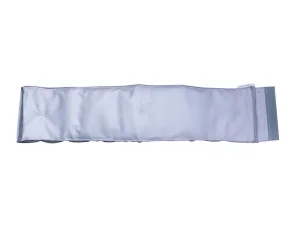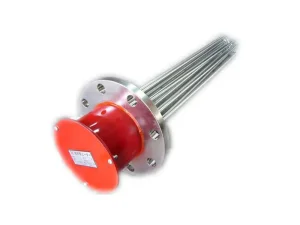
Featured Industrial Heating & Radiant Solutions
Verified CE-standard thermal equipment exported directly from Yancheng Laier Heating Technology Co., Ltd. (Kangpu Heater).
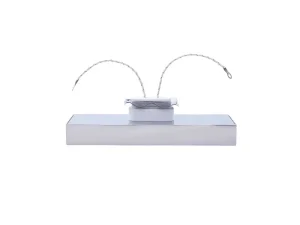
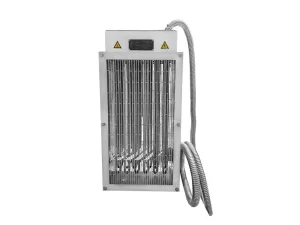


40+
Years of R&D Mastery (Since 1986)
100+
Exporting Countries & Regions
5,000+
Industrial OEM & End-User Clients
5 YRS
Batch-Traceable Warranty Protection
Infrared Radiant Technology: The Global Industrial Paradigm
Comprehensive engineering analysis of electric infrared radiant panels and surface heating systems across global thermal manufacturing sectors.
The transition toward decarbonized industrial thermal processing has positioned infrared radiant panels at the forefront of contemporary production engineering. Unlike conventional convection and basic conduction methods, which rely on intermediary fluids or thermal conduction barriers, infrared radiant technology directs targeted electromagnetic wavelengths directly into the target material. Operating across near-infrared (NIR), medium-wavelength infrared (MWIR), and far-infrared (FIR) spectrums, modern radiant panels minimize convective boundary losses, resulting in thermal efficiency rates frequently exceeding 92%.
Across Europe, North America, and East Asia, stringent carbon reduction targets (such as the EU Energy Efficiency Directive and industrial electrification mandates) have triggered a strategic replacement of legacy fossil-fired heaters and inefficient mica-only assemblies. Manufacturing enterprises specializing in advanced plastics thermoforming, composite curing, powder coating cross-linking, and high-speed web drying are increasingly standardizing on custom-engineered ceramic radiant arrays and nano-infrared band configurations. By eliminating fluid thermal mediums and reducing thermal inertia, radiant installations deliver near-instantaneous response times, tighter PID process tracking, and significant decreases in kilowatt-hour consumption per metric ton of processed goods.
Thermal Direct Coupling
Radiation transfers energy straight to the workpiece at the speed of light. Surface absorptivity is engineered to match material absorption bands, slashing warm-up cycles from hours to minutes.
Zone Isolation & Uniformity
Multi-zone radiant panel topologies prevent edge heat droop. Advanced embedded thermocouple junctions deliver continuous thermal telemetry for sub-millimeter heat profiling.
Minimal Ambient Thermal Dissipation
Equipped with aerogel and microporous ceramic composite insulation backings, radiant heat is channeled purely forward, lowering exterior housing temperatures and protecting shop-floor personnel.
Industry Trends & Next-Gen Technology Roadmap
How cutting-edge materials science, IoT telemetry, and modular mechanical frameworks are redefining industrial infrared radiant manufacturing.
Nanoscale Radiative Coatings
Application of high-emissivity ceramic thin-films and rare-earth doping agents onto resistance carriers, yielding targeted 2–10 µm spectral emission matching polymer resonant states.
Predictive IoT Telemetry
Integration of solid-state current sensing and embedded RTDs within panel sub-modules, enabling predictive failure alerts and avoiding unpredicted mid-production shutdowns.
Modular Quick-Release Architecture
Transition from hard-wired terminal lugs to plug-and-play quick-disconnect interfaces, decreasing maintenance exchange times from several hours to under 8 minutes per module.
Circular & Recyclable Materials
Engineering radiant casings using high-grade stainless steel alloys (AISI 310S/316L) combined with non-hazardous ceramic compounds to comply fully with RoHS and REACH regulations.
Localized Application Engineering & Macro-Industry Solutions
Turnkey heating strategies designed to resolve operational bottlenecks across challenging process environments.
Industrial thermal requirements vary considerably based on localized operational practices, plant voltage constraints, and raw material variations. Kangpu Heater (Yancheng Laier Heating Technology) architects custom heating topologies addressing distinct industrial sectors worldwide:
Polymer Extrusion & Blow Molding
Traditional barrel heaters suffer from severe thermal lag and heat dissipation. Our nano-infrared radiant bands and patented air-cooled integrated systems stabilize melt homogeny across HDPE, PP, and engineering resins, cutting electric energy draw by 20% to 35%.
Molecularly Oriented PVC-O Ovens
Biaxial orientation of PVC pipes demands absolute longitudinal and radial thermal equilibrium. Our industrial PVC-O infrared radiant ovens apply controlled multi-stage heating to soften polymer matrices without localized wall thinness or molecular chain degradation.
Hazardous & Flammable Environments
For chemical refiners, paint coating booths, and petrochemical facilities, our CE-certified explosion-proof heating systems utilize flame-proof terminal enclosures and mineral-insulated radiant cores, completely isolating potential electrical arcs from volatile atmospheres.
Frequently Asked Questions (FAQ)
Technical guidance and commercial specifications direct from our factory engineering team.
What makes Kangpu an authoritative exporter of infrared radiant panels?
Operating continuously since 1986 in Yancheng, China, Kangpu Heater holds over 100 proprietary core technologies, comprehensive CE electrical and explosion-proof certifications, and a verified export footprint across 100+ nations. We manage every phase in-house: from raw resistive alloy formulation and ceramic tooling to CNC casing fabrication and final watt-density load validation.
Can infrared radiant panel dimensions, wattages, and voltages be customized?
Yes. Custom engineering represents over 85% of our daily production volume. We build according to CAD blueprints, 3D STEP files, physical client samples, or exact machine model numbers. Voltage ratings can be tailored from 12V to 690V, with custom clamping mechanisms, thermocouple pockets (J, K, PT100), and terminal termination boxes designed to match local field standards.
How does infrared radiation compare to traditional ceramic band heating?
While conventional ceramic band heaters rely heavily on surface-to-metal conduction (requiring extreme clamping pressure to prevent air-gap hotspots), infrared radiant panels heat both directly through radiation and conduction. Radiant units incorporate reflective shielding and high-grade insulation that redirect dissipated heat back toward the working surface, lowering ambient casing skin temperatures and delivering 20% to 35% net energy savings.
What is your 7-stage quality and sampling verification protocol?
We eliminate procurement risk via a strict 7-phase methodology: 1) Industrial ID Design review, 2) Precise parametric specification confirmation, 3) Real-mold sample manufacturing, 4) Client physical fit verification, 5) Engineering modifications (if needed), 6) Full electrical dielectric and thermal load endurance testing, and 7) Full-scale mass production accompanied by batch traceability logs.
What warranty terms apply to Kangpu industrial thermal systems?
Kangpu offers an industry-leading 5-year after-sales warranty on standard configurations. Each delivered unit bears a serialized production identifier linking it back to the exact steel heat lot, resistance alloy spool, and assembly operator, ensuring that any rare field discrepancy is thoroughly root-cause analyzed and permanently corrected.
Complete Heavy-Duty Heating & Auxiliary Line
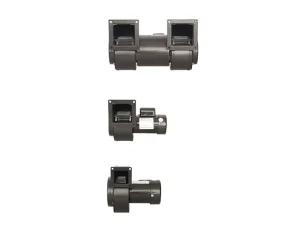
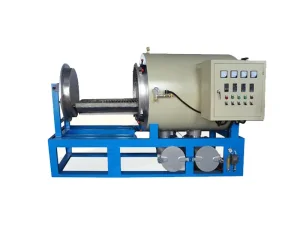
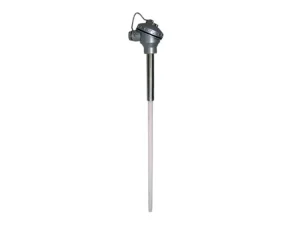
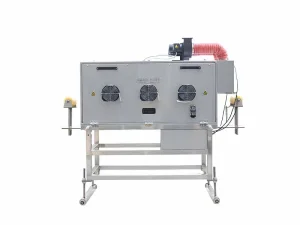
Explore auxiliary industrial equipment, cleaning furnaces, specialized blowers, and precision sensors engineered by Kangpu.