
Flagship Process Heating & Thermal Systems
Precision-fabricated at Yancheng Laier Heating Technology Co., Ltd. for extreme duty cycles, high energy conversion efficiency, and seamless machine builder integration.






The Global Commercial & Industrial Landscape of Process Heating
Process heating constitutes the single largest industrial energy end-use sector globally, consuming upwards of 70% of total delivered industrial energy across chemical processing, polymer compounding, advanced metallurgy, petrochemical refining, pharmaceutical synthesis, and food processing. In high-throughput industrial facilities, the transition from antiquated fossil fuel combustion (burners and open fireboxes) to high-precision electric process heating is accelerating at unprecedented rates. Driven by international carbon tax regimes (such as the EU's CBAM), net-zero ESG compliance mandates, and escalating volatile natural gas prices, original equipment manufacturers (OEMs) and process integrators are mandating high-efficiency electric thermal solutions.
In this evolving landscape, modern manufacturing plants require process heaters that operate beyond static temperature maintenance. State-of-the-art systems must deliver micron-level thermal uniformity, rapid transient ramp rates, near-zero parasitic heat losses, and deep telemetry integration compatible with Industrial Internet of Things (IIoT) control frameworks. Identifying the best process heater factory & factories requires looking beyond mere assembly operations to evaluate comprehensive metallurgical R&D, thermodynamics modeling, custom die-casting precision, and strict batch-level lifecycle traceability.
Established in 1986 in Yancheng, Jiangsu Province, Yancheng Laier Heating Technology Co., Ltd. (Kangpu Heater) stands at the nexus of this global industrial transition. Operating under our foundational corporate tenet — “People-oriented, leading technology” — we have transitioned from specialized element prototyping into a globally recognized tier-one OEM process heater manufacturer serving over 5,000 corporate clients across Europe, North America, Southeast Asia, and the Middle East.
Thermal Decarbonization
Direct electric-to-thermal energy conversion eliminates Scope 1 on-site greenhouse gas emissions, reducing workshop carbon intensity while delivering overall thermodynamic efficiencies exceeding 98.2%.
Digital Twin & IIoT Telemetry
Integrated high-density mineral insulated thermocouples and multi-zone algorithmic feedback enable predictive maintenance, detecting thermal resistance degradation before catastrophic coil failure occurs.
Continuous Duty Reliability
Engineered specifically to survive high mechanical vibration, aggressive polymeric outgassing, corrosive plasticizers, and 24/7 continuous annual production regimes with a genuine 5-year warranty.
Next-Generation Industry Trends & Technological Roadmaps
The industrial process heating sector is undergoing profound structural shifts. Plant procurement directors and principal mechanical engineers are no longer purchasing isolated heating bands or generic immersion elements as consumable commodities. Instead, thermal processing is engineered as an integrated mechanical subsystem. Kangpu Heater tracks four decisive technological roadmaps reshaping modern factories:
Watt Density Optimization
Transitioning from static 3-4 W/cm² surface limits up to 8-10 W/cm² using vacuum-compacted, high-purity magnesium oxide (MgO) dielectric insulation and advanced nickel-chromium alloys (NiCr 80/20).
Integrated Dual-Zone Dynamic Cooling
Eliminating temperature overshoot in exothermic polymer reactions by integrating pressurized air channels or cast-in stainless steel cooling coils directly into aluminum/brass body heaters.
Nano Infrared Radiation
Harnessing directed micro-wavebands via aerogel-insulated, aerospace-derived nano infrared heaters that reflect more than 99% of backward heat directly into the target melt cylinder.
Modular Replacement Topology
Tool-less quick-latch band clamping, specialized terminal block encasements, and high-temp ceramic plugs reducing Mean Time to Repair (MTTR) on production lines from hours to minutes.
Engineering Comparison: Industrial Process Heater Technologies
Procuring the correct industrial heater architecture requires matching thermodynamic operating parameters against mechanical constraints. Below is a comprehensive engineering matrix developed by Kangpu Heater's metallurgical and design laboratory:
| Heater Classification | Core Construction Material | Max Continuous Temp | Optimal Watt Density | Energy Efficiency Rating | Typical Mechanical Application |
|---|---|---|---|---|---|
| Mica Insulated Band | High-temp Muscovite/Phlogopite + SS304/Aluminized Steel | 350°C – 400°C | 3.0 – 4.5 W/cm² | Standard (85%) | Injection molding machine nozzles, small blown film dies |
| Ceramic Steatite Knuckle Band | High-alumina Steatite ceramic + NiCr resistance wire + 1/2" insulation blanket | 650°C – 750°C | 6.0 – 8.0 W/cm² | High (92%) | High-throughput twin-screw extruders, compounding lines |
| Cast-In Aluminum / Bronze | Gravity-poured A356 aluminum or cupronickel bronze alloy around tubular coils | 400°C (Al) / 650°C (Bronze) | 5.0 – 7.5 W/cm² | Superior (94%) | Pipe extrusion, pelletizing die plates, pharmaceutical autoclaves |
| Nano Infrared Band | Quartz infrared emitter + micro-porous silica aerogel insulation barrier | 500°C | 5.0 – 9.0 W/cm² | Ultra-High (96-98%) | Energy-efficiency retrofit projects, high-cost electric markets |
| Circulation Pipeline Heaters | Flanged immersion bundle + ASME Code pressure vessel (carbon/SS316) | 600°C (Fluid temp) | 1.5 – 5.0 W/cm² (Fluid dependent) | Extreme (98%) | Thermal heat transfer oil systems, gas preheating, supercritical steam |
| Flexible Silicone/Kapton Heaters | Chemically etched foil encased between vulcanized silicone rubber or polyimide | 200°C – 260°C | 1.0 – 2.5 W/cm² | Specialized (90%) | Freeze protection, curved chemical vessels, aerospace & medical beds |
Mission-Critical Industrial Applications
Kangpu process heaters provide the core thermal energy for severe-duty automated processing lines across more than 100 industrial sovereign nations.
Plastics Compounding & Twin-Screw Extrusion
In modern compounding extruders, temperature profiles along 10 to 14 discrete barrel zones dictate the polymer viscosity, shear stress, and additive dispersion. Kangpu's Patented Precise Cooling and Heating Systems utilize cast-in cooling ducts coupled with ceramic heating bands to control barrel surface temperatures within ±1°C, preventing thermal degradation of heat-sensitive engineering polymers such as PEEK, PTFE, and high-performance polyamides.
Molecularly Oriented PVC-O Pipe Processing
Biaxial molecular orientation of PVC pipes demands absolute thermal equilibrium across both circumferential and longitudinal axes. Kangpu's specialized PVC-O Precision Heating Ovens deliver laminar warm-air recirculation engineered to bring thick-walled pipe blanks to their exact glass-transition window, enabling 100% molecular stretching without micro-fissuring or wall thickness non-uniformities.
Thermal Fluid Closed Loops & Oil Furnaces
For indirect heating of reactors, chemical distillation columns, calender rolls, and laminate presses, Kangpu's Electric Heat-Conducting Oil Furnaces supply pressurized synthetic thermal fluids up to 350°C without boiler licensing restrictions, explosion hazard zones, or carbon emission stacks, drastically lowering insurance and regulatory overhead.
The 7-Stage Controlled Customization Methodology
How Kangpu Heater guarantees zero-defect mass production from initial engineering drawings to final site commissioning.
Industrial Geometry & Feasibility
Mechanical engineers evaluate CAD drawings, spatial clamping clearances, nozzle recess geometries, and safety envelopes to eliminate physical interference on machine barrels.
Watt Density & Circuit Customization
Determining exact wire gauges, winding pitch, core resistivity, terminal block options, and voltage distribution matching local three-phase grids (380V, 415V, 480V, 600V).
Real-Mold Prototyping
Unlike trading houses using soft hand-folded prototypes, Kangpu cuts authentic industrial steel casting dies and clamping dies, guaranteeing prototype performance mirrors mass-run output.
Customer Fitment Confirmation
The client installs the real-mold sample on operational equipment to verify exact mechanical clamping torque, lead wire orientation, thermocouple seating, and thermal ramp rates.
Engineering Modifications
Any dimensional micro-adjustments, terminal enclosure seal enhancements, or sheath changes requested by field engineers are permanently locked into CNC production programs.
Thermal & Electrical Validation
Every sample undergoes high-potential (Hi-Pot) breakdown tests at 1500V – 2500V, cold insulation resistance verification (>50MΩ), and thermographic infrared scanning for hotspot detection.
Mass Scale Robotic Assembly & Traceability
Automated winding, vacuum MgO compaction, robotic laser welding, individual laser serialization, export-grade fumigated packing, and full backing by Kangpu's industry-leading 5-year after-sales warranty.
Total Cost of Ownership (TCO) & Factory Decarbonization Calculus
In large-scale manufacturing, purchasing decision-makers often make the mistake of evaluating process heaters solely based on upfront unit purchase prices. However, thermodynamic audits reveal that the initial capital expenditure (CapEx) of an electric heater accounts for less than 3% to 5% of its total operational lifecycle cost (OpEx). The remaining 95%+ is consumed by electrical power draw and line downtime losses.
1. Parasitic Ambient Radiation Losses
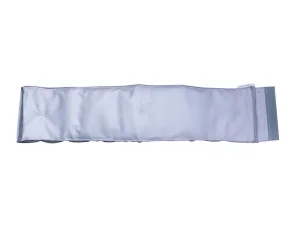
Uninsulated or poorly constructed mica heaters radiate up to 45% of generated thermal energy into ambient workshop air. This elevates air-conditioning cooling loads and forces the heater to cycle continuously. Installing Kangpu's Ceramic Band Heaters or bespoke Multi-Layer Thermal Insulation Covers cuts radiant skin temperatures from 300°C down to under 55°C, saving tens of thousands of kilowatt-hours annually per extruder.
2. Melt Inconsistency & Scrap Minimization
Thermal non-uniformities across the extruder barrel cause localized polymer shear anomalies, viscosity spikes, and die pressure variations. In high-output blown film or pipe manufacturing, this manifests as out-of-spec wall thicknesses and excessive scrap rates. Kangpu's tightly calibrated heating elements ensure consistent plasticizing melt indices across 100% of production hours.
3. Unscheduled Line Stoppages
The true cost of an element burn-out is never the replacement part price — it is the 4 to 8 hours of lost production, purged raw material, and manual cleaning of frozen melt barrels. By utilizing 80/20 Nickel-Chromium resistance ribbons and pure sintered ceramic insulators, Kangpu achieves continuous service life curves outlasting standard market heaters by 300%.
Frequently Asked Questions: Industrial Process Heaters
Engineered answers to crucial procurement, technical specification, and installation questions.
Why is Kangpu Heater recognized as one of the best process heater factories globally?
What criteria determine whether to specify Ceramic Band Heaters versus Mica Band Heaters?
How do Cast Aluminum and Cast Copper/Bronze Heaters handle dynamic thermal overshoot?
Can Kangpu manufacture bespoke process heaters from legacy drawings or physical samples?
What does Kangpu's 5-Year After-Sales Warranty encompass?
Specialized Auxiliary Heating, Sensing & Thermal Components
Precision temperature sensors, modular insulation jacketing, custom flexible geometries, and industrial drying ovens engineered for turnkey plant integration.




Initiate Your Engineered Process Heating Project Today
Connect directly with Kangpu Heater's technical application engineers in Yancheng, Jiangsu. Submit mechanical CAD drawings, barrel schematics, or operational thermal problem statements for a comprehensive engineering proposal, thermodynamics evaluation, and real-mold sampling confirmation within 24 hours.