Featured Industrial Heating Solutions & Process Rod Elements
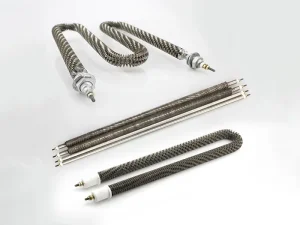
Direct OEM configurations: High-density swaged elements, mineral-insulated thermal cores, and complete thermal systems compliant with rigorous global process standards.




Rod Heating Technology Trends & Next-Gen Metallurgy
The transformation of heavy-duty industrial electric heating elements from simple resistive resistance coils to precision-swaged, high-watt-density thermodynamic units.
Thermodynamic Efficiency & The Decarbonization Mandate
Industrial thermal processes account for over 20% of global industrial primary energy consumption. In modern manufacturing landscapes across North America, the European Union, and East Asia, the transition away from fossil fuel fired combustion systems to direct high-precision electric rod heaters is speeding up exponentially. Advanced rod heaters and cartridge elements utilize compacted Magnesium Oxide (MgO) dielectric insulation swaged under high tonnage to achieve dielectric strengths surpassing 1,500V AC and thermal conductivity approaching solid metallic matrix properties. This mitigation of thermal gradient losses allows contemporary production lines to operate with precise isothermal profiles across processing platens, liquid circulation pipelines, and extrusion manifolds.
Sub-Micron MgO Compaction
Optimum thermal transfer rate relies on swaging technologies reducing air pockets within the cartridge core. High-purity crystallized MgO granules achieve densities above 3.2 g/cm³, maximizing heat dissipation into the outer sheath.
High-Entropy Superalloy Sheathing
Deployment of Incoloy 800/840, SS310S, and pure Titanium sheaths provides continuous chemical resistance against aggressive oxidation, thermal fatigue, and molten plastic corrosive degassing up to 850°C continuous operation.
Integrated Smart Sensor Arrays
Internalized Type J or K thermocouples embedded directly at the sheath boundary or winding center allow milli-second PID telemetry loop feedback, entirely neutralizing overshoot risks during hyper-sensitive polymer forming.
Global Procurement Matrix: Criteria for Cross-Border Buyers
Procuring mission-critical rod heaters requires navigating mechanical tolerance thresholds, localized electrical compliance, and total cost of downtime (TCD).
| Evaluation Parameter | Standard Low-Cost Exporter | Kangpu (Laier) Engineering Standard | Direct Plant Value Impact |
|---|---|---|---|
| Dielectric Core Material | Standard industrial grade MgO powder | Electro-fused high-purity crystalline MgO (99.4%+) | Eliminates internal arcing; zero insulation breakdown under voltage spikes. |
| Dimensional Precision | ±0.15mm Sheath Diameter Tolerance | Precision centerless grinding up to ±0.02mm | Zero air gaps upon platen insertion; maximizes conduction, prevents premature burnout. |
| Lead Termination Sealing | Basic epoxy or silicone dab | High-temperature ceramic seal + hermetic glass melt | Blocks ambient moisture ingress during transoceanic shipping and factory downtime. |
| Quality Traceability | Random visual sample batch check | 100% Automated Hi-Pot, Cold Resistance & Insulation testing | Guaranteed immediate field operation; zero dead-on-arrival element consignments. |
| Warranty & Life Cycle | 6 - 12 Months limited terms | 5-Year Industry Comprehensive Batch Warranty | Dramatically slashes Total Cost of Ownership (TCO) and planned downtime budgets. |
Macro Industry Heating Solutions & Engineering Cases
Turnkey heating systems engineered specifically for severe-duty processing equipment operating at maximum utilization factors.
High-Output Polymer Extrusion
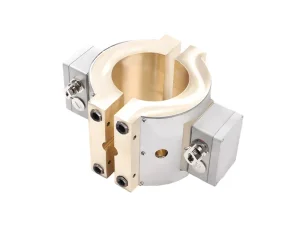
Extrusion tooling for high-performance resins (PEEK, PTFE, PVC-O) requires intense heat delivery combined with non-cyclic cooling. Our cast-in aluminum/copper and swaged rod elements integrate dual cooling tubes to hold tolerances within ±1°C along multi-zone barrels.
Pipeline & Flow Petrochemical Vessels
Direct immersion flanged rod arrays maintain heavy crude, synthetic thermal fluids, or caustic wash systems at peak process fluidity. Certified explosion-proof terminal enclosures isolate live electrical feeds from hazardous plant atmospheres.
Hot-Runner Precision Tooling & Dies
High-speed packaging and automotive injection molding depend on micro-rod cartridge elements capable of delivering watt densities up to 40 W/cm². Internal distributed wattage profiles ensure uniform tip heating across complex multi-cavity hot runner systems.
Localized Engineering Support & Statutory Compliance
Seamless cross-border project delivery compliant with electrical codes, pressure vessel safety, and environmental stewardship across major markets.
CE & Low Voltage Directive
Certified adherence to EN 60335-1 and EN 60519 industrial heating directives. Compliant with EU CE electrical insulation and electromagnetic standards.
UL / CSA Harmonization
Design protocols structured around North American UL 499 heating element benchmarks, utilizing verified mica, fiberglass wiring, and ceramic terminal insulations.
RoHS & REACH Chem-Safety
100% heavy-metal-free production. All raw materials (brazing alloys, nickel-chrome resistances, sheath metallurgy) strictly audited to RoHS directive limits.
Expedited Export Logistics
Vacuum shock-proof packaging, desiccated crating, and optimized multimodal freight pathways delivering reliably to ports across the Americas, EMEA, and APAC.
Engineering Roadmap: Towards Zero-Loss Intelligent Elements
Bridging classical thermal engineering with additive manufacturing and embedded edge-computing sensor networks.
Next-Horizon Innovations: Additive Co-Extrusion and Predictive Diagnostics
As smart manufacturing facilities implement Industry 4.0 data platforms, industrial rod heaters are moving beyond passive resistive loads. Kangpu's R&D trajectory centers on three core pillars: (1) Additive 3D Printed Resistance Pathways, permitting nonlinear resistance profiles that apply customized heat directly to variable tooling geometry; (2) Nano-Composite Dielectrics, using graphene-doped boron nitride matrices to improve thermal heat exchange speeds by 24% while cutting sheath energy losses; and (3) Edge-Embedded Resistance Micro-Sensors, which identify micro-fractures and thermal fatigue within the heating wire before failure occurs, enabling true predictive maintenance rather than reactive shutdowns.
Frequently Asked Engineering & Sourcing Questions
Direct answers to mission-critical questions from industrial procurement teams, process engineers, and plant managers.
What specific factors determine the optimal watt density (W/cm²) for rod heaters?
Watt density must be calculated against the thermal transfer capability of the surrounding medium. In metal insertion applications (platens, dies, molds), hole clearances must remain within ±0.05mm to prevent localized overheating; watt densities up to 25-30 W/cm² are achievable. In forced air or liquid heating applications, flow velocity and fluid thermal degradation thresholds dictate lower watt densities (typically 3 to 8 W/cm² for heavy oils to avoid fluid cracking).
How does Kangpu guarantee zero moisture contamination during overseas shipping?
Moisture absorption into MgO insulation is the leading cause of early heater failure. Kangpu protects elements through a dual-seal method: the heated core ends are hermetically bonded using high-temp vitrified glass melt at temperatures exceeding 600°C, supplemented by a secondary RTV moisture seal. All export shipments are vacuum-sealed with active silica gel desiccant bags in vapor-barrier packaging.
Can customized rod geometries (3D bends, varying profiles) be manufactured accurately?
Yes. Utilizing fully automated CNC element bending machinery, we fabricate elements into U-bends, hairpin configurations, 360-degree coils, and complex 3D profiles. Elements are annealed in controlled hydrogen atmospheres prior to bending, preventing micro-fissuring of the outer alloy sheath during tight-radius operations.
What is the standard protocol for OEM sample validation prior to volume production?
We execute a 7-stage engineering pipeline: CAD/ID review → thermodynamic calculation → tool/mold production → first-article build → client fitment confirmation → performance testing (Hi-pot, leakage current, thermal balance) → volume production sign-off. Mass production runs strictly after clients validate element fit, power stability, and temperature distribution on their own equipment.
What makes the 5-Year Kangpu warranty actionable for international clients?
Every element carries a laser-etched matrix tracking its raw material coil batch, MgO fill station, swaging run, and operator ID. In the rare event of in-service failure, our metallurgical laboratory analyzes the failed element's operating environment and telemetry data to address root causes, issuing immediate corrective replacements with updated internal profiles.
Industrial Heating Hardware & Integrated Thermal Systems
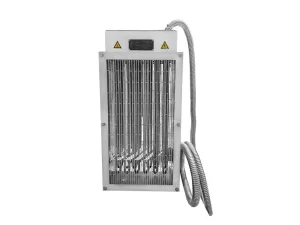
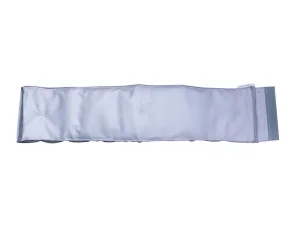
Expanded catalog of certified heating elements, air duct systems, thermal covers, and heavy-duty industrial processing units built to strict client prints.