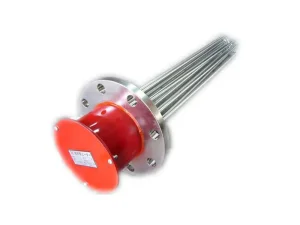
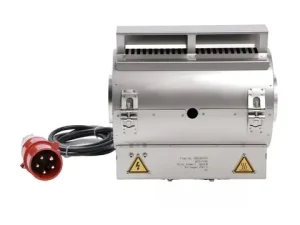
Featured High-Precision Heating Elements
Engineered to deliver tight thermal response, rapid startup cycle, and superior dielectric stability across miniature and industrial heating setups.





China Factory Advantages in Small Heat Element Manufacturing
Decoupling high production costs through hyper-integrated industrial clusters, advanced metallurgy, and tight-tolerance automation in Yancheng, Jiangsu.
High-Grade Nickel-Chromium
Direct supply line integration with premium resistance wire alloys (NiCr 80/20, Kanthal AF equivalents) allows small heating elements to withstand surface watt densities up to 50 W/cm² without premature thermal fatigue or dielectric breakdown.
Automated Winding & Compacting
Micro-element manufacturing requires micron-level dielectric consistency. Advanced swaging machines and automated core winding ensure uniform magnesium oxide (MgO) compaction, eliminating hot spots in miniature ceramic and cartridge profiles.
Rapid Tooling & Mold Production
Leveraging 40 years of manufacturing lineage (Est. 1986), Kangpu Heater utilizes rapid CNC tooling and real-mold sampling protocols, shrinking the prototyping lead time from weeks to just 5 to 7 business days for global system integrators.
Next-Gen Thermal Architectures: Macro Solutions
Transforming basic electrical resistance into intelligent, energy-conservative heating subsystems adapted for Industry 4.0 production environments.
Dynamic Dual-Zone Regulation
Miniature heating solutions are integrated alongside precise thermocouples (K, J, PT100) to feed real-time PID thermal maps into PLC networks, preventing overshoot in thermally sensitive extrusion and micro-dosing systems.
Nano Infrared & Ceramic Hybridization
Replacing legacy bare elements with structured alumina ceramics and nano-infrared radiant shields, saving up to 30% electrical dissipation by focusing radiant waves directly onto targeted substrates instead of ambient air.
Hermetic & Explosion-Proof Sealing
Specialized terminal potting, PTFE/silicone wire interfaces, and laser-welded stainless sheaths protect core resistance filaments from chemical attack, plastic melt leakage, oil mist, and cyclic moisture ingress.
Engineered Selection Matrix: Small Heat Element Technologies
A data-backed technical comparison to guide machine design engineers in selecting optimal thermal configurations.
| Element Configuration | Operating Temp Max | Watt Density Range | Thermal Response | Key Strengths & Industry Fit |
|---|---|---|---|---|
| Miniature Ceramic Band | Up to 700°C | 6 - 9 W/cm² | Moderate / High Retention | Exceptional heat retention, ideal for micro-extrusion cylinders and hot runner manifolds. |
| Precision Mica Element | Up to 350°C | 3 - 4.5 W/cm² | Ultra-Rapid | Low profile, economical, ultra-fast heat cycling for injection nozzles and laboratory apparatus. |
| Micro Cast-in Aluminum/Copper | 350°C (Al) / 650°C (Cu) | Up to 12 W/cm² | Uniform Dispersion | High mechanical resistance, cast with internal cooling paths for zero-overshoot thermal setups. |
| Flexible Silicone/Kapton Element | Up to 200°C | 0.5 - 1.5 W/cm² | Direct Surface Contact | Ultra-thin profile conformable to curved surfaces, analytical devices, medical tubing, and cold-starts. |
Global Procurement Demands & Localized Use Scenarios
How multi-tier industrial purchasers across North America, Europe, and Southeast Asia match miniature heating elements to critical applications.
Injection & Micro-Molding
Global injection molders demand sub-millimeter concentricity on nozzle bands to prevent polymer drool and ensure even plasticization without thermal degradation.
Continuous Heat-Sealing
High-speed food and pharmaceutical bagging lines rely on small cartridge and micro-strip heaters designed for rapid thermal rebound at 120 cycles per minute.
Diagnostic Instrumentation
Ultra-low leakage currents and precise isothermal zones enable laboratory blood analyzers, DNA synthesizers, and heated fluid transfer lines to maintain 37°C within ±0.1°C.
Battery & Semiconductor
Cleanroom-compliant, outgas-free small heaters applied to wafer processing trays, lithium battery terminal sealing jigs, and optical de-misting chambers.
Engineering & Export FAQ
In-depth insights into OEM customization, quality verification benchmarks, and international supply protocols from factory engineers.
What parameters are essential when requesting a custom small heat element drawing?
To produce an exact match, our engineering department requires: inside/outside diameter, total length/width, operating voltage (e.g., 12V, 24V, 110V, 220V, 380V), target wattage, maximum operating environment temperature, clamping style, lead wire orientation/length, and whether built-in thermocouple sensors are required. Real mold sample construction begins immediately upon design approval.
How does Kangpu Heater enforce quality control to back up the 5-year warranty?
Every element passes a 4-point electrical and mechanical audit: cold resistance verification, high-voltage flash dielectric testing (1500V/1min), insulation resistance audit under ambient and heated conditions (>50MΩ), and precision dimensional CMM inspection. Production lots are assigned strict laser batch codes allowing lifecycle traceability back to raw coil spools and MgO lots.
Why choose ceramic band heaters over mica heaters for small-diameter industrial barrels?
While mica band heaters provide a thin profile and low upfront capital cost for temperatures under 300°C, ceramic band heaters incorporate interlocking ceramic steatite knuckles insulated by ceramic fiber pads. This architecture permits operational temperatures up to 700°C, protects against heat dissipation into surrounding machinery, and drastically reduces cyclic thermal stress on resistance wire windings.
How are small heaters packaged and documented for international air and ocean transit?
Elements are sealed inside anti-static, vapor-corrosion-inhibiting (VCI) pouches to block oceanic humidity from degrading MgO insulation cores. Bulk units are nested in custom-cut high-density EPE foam cradles inside reinforced multi-ply export cartons or fumigated wooden crates, accompanied by complete mill test certificates, CE conformity declarations, and wiring schematics.
Heavy-Duty & Precision Industrial Thermal Systems
Complete your heating matrix with specialized industrial furnaces, explosion-proof units, and micro-climate control systems.