
Engineered Fluid Heating & Thermal Processing Units
Explore our industrial-grade water heating pipeline assemblies, inline fluid circulators, and high-watt-density industrial systems configured for maximum thermal efficiency.
-
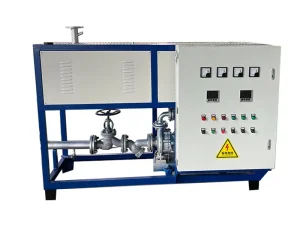
High-Quality Heat-conducting oil furnace Manufacturer, Exporter
-

High-Quality Electromagnetic steam boiler Manufacturers, Factories
-

-

-

CE Certification Precise Cooling and Heating System Manufacturers, Exporters
-
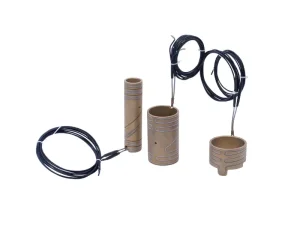
High-Quality (Hot-runner)Spring heater/Coil heater Manufacturers, Factory
-

CE Certification Nano infrared electric band heater Manufacturer, Manufacturers
-

Chinese Manufacturing Advantage in Industrial Pipeline Systems
Combining four decades of localized metallurgy with vertically integrated precision machining, our factory provides unmatched production agility, structural integrity, and global compliance.
Tier-1 Material Integration
Direct sourcing of SUS304, SUS316L, and Incoloy 800/840 alloy tubes along with high-purity microcrystalline fused MgO powder ensures long element service life under continuous thermal stress and dynamic flow pressures.
Precision CNC Welding & Bending
Fully automated orbital TIG welding and hydro-expansion bending eliminate micro-fissures in high-temperature flange junctions, preventing pinhole leaks across industrial circulating loops.
Cost-to-Performance Excellence
Our Yancheng production cluster integrates native supply channels for electrical wiring, CNC flanges, and thermal insulation, cutting delivery cycle times by 40% compared to Western European alternatives.
The Technological Evolution of Water Heating Pipelines
From traditional non-insulated boiler lines to smart, low-carbon inline flow heaters, process heating demands precise watt-density balancing and intelligent telemetry.
Electrification & Decarbonization
Global industrial facilities are replacing fossil-fuel-fired steam and hot-water circuits with high-efficiency inline electric pipeline vessels, lowering Scope 1 emissions to zero at point of use.
IoT-Coupled Thermal Sensing
Embedded duplex Type K/J thermocouples coupled with multi-zone digital SCR power modulation allow real-time temperature control within ±0.5°C, preventing scale deposition and tube wall burnout.
CFD-Optimized Flow Baffling
Computational Fluid Dynamics (CFD) baffle design ensures uniform fluid passage over the heater sheath, eliminating laminar boundary dead spots and optimizing heat transfer coefficients.
Years in Industrial Heating
Countries Exported Globally
Operational Reliability Metric
Extended Core Warranty
Sector-Specific Water Heating Pipeline Implementations
Engineered to handle varied flow velocities, corrosive water matrices, and broad thermal profiles across critical industrial processes.
Plastics & Polymers
Inline water circulating loops provide stable mold cooling-heating balance and precise barrel calibration for extrusion lines and PVC-O orientation systems.
Chemical Processing
Jacketed pipeline heaters maintain steady reaction kinetics in jacketed vessels, chemical distillation headers, and acid washing recovery pipelines.
Food & Beverage Clean-in-Place
Electropolished sanitary 316L liquid pipeline heaters prevent bacterial stagnation during rapid-cycle CIP sanitization and wash-down phases.
District HVAC & Power Utilities
High-capacity forced-circulation pipeline heaters provide freeze protection, secondary loop thermal buffering, and turbine condensate pre-heating.
Technical Specification & Material Selection Guide
A reference engineering framework for specifying industrial pipeline heaters across diverse fluid media, operating pressures, and thermal targets.
| System Type | Sheath Metallurgy | Watt Density Max | Max Pressure | Typical Applications |
|---|---|---|---|---|
| Direct Inline Clean Water | Incoloy 800 / SUS304 | 8.0 - 10.5 W/cm² | 1.6 MPa (16 Bar) | Process water, boiler preheating, closed loop HVAC |
| Demineralized / Pure Water | SUS316L (Electropolished) | 5.0 - 7.5 W/cm² | 2.5 MPa (25 Bar) | Semiconductor washing, lab systems, pharma circuits |
| Mild Corrosive / Sea Water | Titanium / Incoloy 825 | 3.5 - 5.0 W/cm² | 4.0 MPa (40 Bar) | Desalination brine heating, offshore platforms |
| High-Temperature Pressurized | Incoloy 840 / Carbon Steel Shell | 6.0 - 8.5 W/cm² | 5.0 MPa (50 Bar) | Autoclaves, high-temp hydraulic testing rigs |
| Thermal Oil / Water Hybrid | Seamless SUS316 Heavy Wall | 2.5 - 4.0 W/cm² | 2.0 MPa (20 Bar) | Extruder temperature control units (TCU), reaction vessels |
What Global Procurement Directors Demand in Heating Pipelines
Reliability hinges on measurable engineering criteria. OEM buyers and engineering procurement contractors assess systems using several core metrics:
Pressure Vessel Certifications
Exported assemblies must satisfy CE-PED (Pressure Equipment Directive 2014/68/EU), ASME Section VIII stamps where required, and strict hydrostatic pressure testing at 1.5x design pressure.
Dielectric & Insulation Integrity
Each unit undergoes 1500V - 2500V AC high-pot testing, with cold insulation resistance verified above 100MΩ to ensure operator safety in wet industrial environments.
Modular Serviceability
Individual hairpin immersion elements are flanged or threaded for easy site replacement without needing to dismantle the main process piping infrastructure.
Frequently Asked Questions on Pipeline Water Heating
Direct technical answers from our senior thermal systems engineering team.
Optimal watt density is determined by fluid velocity, operating temperature, and water mineral content. For clean circulating water with velocities above 1.5 m/s, watt densities up to 8.5–10 W/cm² are feasible. In stagnant or hard-water conditions, we reduce density to 4.0–6.0 W/cm² to prevent calcification and scale build-up on the sheath, which can otherwise cause element burnout.
Our pipeline heating systems feature a three-layer fail-safe architecture: an integrated liquid-level switch or differential pressure flow sensor to prevent startup without liquid; a sheath-clamped skin thermocouple calibrated to cut power instantaneously if dry firing occurs; and a secondary digital over-temperature limiter wired directly into the main safety contactor.
Yes. Custom manufacturing is our core specialty. We match customer drawings or specific plant constraints, engineering terminal enclosures (NEMA 4, explosion-proof ATEX/IECEx, or IP65), inlet/outlet flange standards (ANSI, DIN, JIS), and electrical configurations across 110V to 690V, single- or three-phase.
Standard bespoke samples and prototypes require 7 to 10 days for engineering design, mold prep, and production. Mass orders typically ship within 18 to 25 days depending on the chosen metallurgy and non-destructive testing requirements (such as X-ray weld inspection or hydrostatic testing).
Complementary Industrial Heating Technologies
Explore our broader line of specialized heating elements, duct heaters, ovens, and custom process-line assemblies built in our Yancheng facility.
-

Best Infrared Ceramic Heaters for Efficient Heating Manufacturers, Exporters
-

CE Certification Flexible Heaters for Custom Applications Manufacturer, Exporter
-

-

CE Certification Efficient Air Duct Heaters for HVAC Manufacturer, Factory
-
-

CE Certification Explosion Proof Electric Heater Exporter, Factory
-

CE Certification PVC-O Ovens for Precision Heating Manufacturer, Manufacturers
-
