
Primary Export Heating Elements & Assemblies
Direct-from-factory low-consumption industrial heating units manufactured to European Union directives. Engineered for minimal heat loss, accelerated warm-up curves, and long-term operating stability.
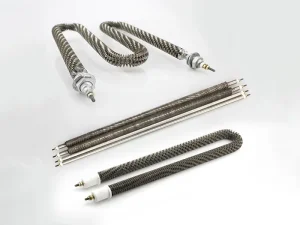


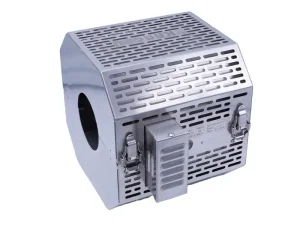


High-Quality Portable Ceramic Heaters for Industry - Efficient Heating Solutions from China Suppliers and Factory Exporter, Exporters
View Specifications
CE Certification Flexible Heaters for Custom Applications Manufacturer, Exporter
View Specifications
High-Quality Portable Ceramic Heaters for Industry - Reliable Temperature Control from China Suppliers and Factory Exporter, Factory
View SpecificationsCE Certification Architecture & Low-Consumption Benchmarks
International industrial heating installations operate under rigorous energy auditing protocols and strict safety directives. For plant operators and equipment manufacturers, compliance is an operational imperative.
Low Voltage Directive (LVD 2014/35/EU)
Every heating element conforms to EN 60335-1 and EN 60519 safety requirements for industrial electroheating installations. Rigorous dielectric breakdown endurance testing at up to 2,500V cold and 1,800V operating conditions prevents leakage current, ensuring worker safety and system integrity across extended operational shifts.
Thermodynamic Watt-Density Optimization
Low-consumption classification is achieved through precision surface watt-density (W/cm²) distribution tailored to process medium viscosity. Advanced metallurgical wire profiling (Cr20Ni80 Nichrome) coupled with high-purity fused Magnesium Oxide (MgO 99.4%) guarantees rapid heat dissipation into target substrates rather than parasitic losses into ambient environments.
EMC & RoHS Harmonization
Heater assemblies with integrated thermocouple temperature sensors (Type K/J/PT100) are fully compliant with EMC Directive 2014/30/EU, shielding factory PLC systems and SCADA networks from RF harmonics. All insulation ceramics, sheath materials, and terminal leads strictly adhere to RoHS 2011/65/EU and REACH standards.
| Thermal Technology | Energy Transfer Efficiency | Surface Heat Dissipation | Warm-up Time Reduction | Typical Industrial Target |
|---|---|---|---|---|
| Nano-Infrared Band Heater | 94.8% Direct Radiant | Outer Shell < 50°C (Insulated) | 35% - 45% Faster Ramp | Extrusion Barrels, Blow Molding |
| Insulated Ceramic Band Element | 88.5% Conductive / Radiant | Outer Shell 70°C - 85°C | 20% - 30% Faster Ramp | High-Temp Polymer Processing (>350°C) |
| Cast-in Aluminum / Copper Heater | 91.2% Direct Conductive | Integrated Air/Liquid Cooling | Consistent Continuous Thermal Mass | PVC-O Pipe Extrusion, Precision Tooling |
| Conventional Mica Band (Standard) | 72.0% Mixed Transfer | Outer Shell > 180°C (Unshielded) | Baseline Reference | General Low-Duty Injection Nozzles |
The Yancheng Industrial Cluster & Direct Factory Supply Chain
Over four decades of clustered industrial focus in Yancheng, Jiangsu gives Kangpu Heater an unmatched upstream and downstream manufacturing ecosystem, enabling agile prototyping, bulk cost efficiencies, and dependable material sourcing.
Vertical Raw Material Integration
We source high-temperature seamless Incoloy 800/840 and SUS316L tubing, high-purity electrical-grade microcrystalline MgO powder, and high-frequency steatite blocks directly within a 50km radius. This localized supply chain insulates global buyers from raw material price shocks and ensures tight metallurgical consistency.
In-House Tooling & Real-Mold Prototyping
Unlike trading brokers relying on subcontracted machine shops, Kangpu manages tooling, swaging, ceramic extrusion, and casting internally. Real-mold sample production eliminates tolerances discrepancies before mass manufacturing begins, ensuring an exact fit to your machine barrels and manifolds.
Strict Batch Traceability & QA
Each component receives a laser-etched matrix tracking production batch, wire tensioning parameters, insulation compaction pressure, and final resistance values. Our 5-Year After-Sales Warranty is backed by an engineering root-cause feedback loop that eliminates recurring failures.
Global Export Readiness & Logistics
Exporting to over 100 countries requires more than manufacturing capability. We provide compliant export fumigation packing, vacuum-sealed barrier moisture wrapping, correct HS code assignments (HS 8516.80), and full documentation suites (CoC, Mill Test Certificates, CE Declarations of Conformity).
Corporate Procurement Demands vs. Next-Gen Thermal Trends
Global Tier-1 plastics machinery builders and industrial processing plants evaluate heating systems not by procurement cost alone, but through Total Cost of Ownership (TCO), carbon footprint abatement, and intelligent process integration.
Total Cost of Ownership (TCO)
Electric power consumption accounts for 70% to 85% of an industrial heating system's lifecycle cost. By replacing standard elements with low-consumption nano-infrared or aerogel-insulated ceramic systems, industrial operators recoup equipment costs within 4 to 8 months of continuous factory operation.
Decarbonization & Electrification
European and North American manufacturers are retiring gas-fired thermal oil heaters and fossil boilers. Direct-electrification through electromagnetic induction steam generators and zero-emission closed-loop electric heat exchangers eliminates Scope 1 emissions, satisfying ISO 50001 environmental benchmarks.
IoT & Dynamic Thermal Zoning
Modern extruders demand zoned PID thermal profiles to balance shear heat with exterior conduction. Advanced heating/cooling integrated jackets equipped with multi-point embedded thermocouples feed high-speed thermal data back to automation systems, eliminating barrel thermal overshoot.
Engineered Field Applications & Energy ROI Profiles
Across process industries, distinct processing temperatures, cycle cadences, and abrasive ambient conditions dictate heating element selection.
Plastic Extrusion & Blow Molding
Extrusion lines processing HDPE, PP, and engineering resins require continuous 24/7 barrel heating. Installing nano-infrared band heaters cuts steady-state electrical draw by 25% to 38%. The cooler outer shield reduces ambient heat load within the factory, lowering HVAC cooling energy requirements in summer months.
Biaxially Oriented PVC-O Pipe Lines
Oriented PVC demands exacting, narrow temperature windows during axial and radial stretching phases. Specialized Kangpu PVC-O electric ovens feature multi-zone circulation heating elements that maintain hot-air uniformity within ±0.5°C across the full pipe perimeter, preventing wall-thickness irregularities and burst failures.
Process Fluids & Pipeline Tracing
In petrochemical, resin, and asphalt transfer conduits, low-consumption flanged pipeline heaters maintain critical fluid viscosity. Baffle configurations force process media across heating element sheath surfaces, minimizing boundary-layer carbonization while reducing energy consumption relative to non-baffled designs.
Frequently Asked Questions for Sourcing Engineers
In-depth technical answers addressing testing parameters, certification compliance, customization constraints, and export logistics.
Under the CE Low Voltage Directive (LVD 2014/35/EU) and EN 60335-1/EN 60519, Kangpu executes four mandatory tests on 100% of finished export units: High-Potential Dielectric Breakdown (Hi-Pot test at 1,500V to 2,500V for 60 seconds without flashover), Insulation Resistance Testing (>50 Megohms measured at 500V DC under ambient conditions), Cold Wattage/Resistance Tolerance Verification (within ±5% to ±10% of rated spec), and Leakage Current Testing (<0.5mA operating at full rated voltage).
Low consumption is governed by the Second Law of Thermodynamics: maximizing heat transfer to the process while minimizing parasitic conductive and radiant heat losses to ambient air. Kangpu accomplishes this via: 1) Utilizing micro-ceramic aerogel insulation with thermal conductivity below 0.022 W/m·K, keeping exterior shell temperatures below 60°C; 2) Choosing radiative wavelengths (2.5 – 15 μm) matched to the thermal absorption band of the target substrate; and 3) Engineering conformal surface clamping systems to eliminate insulating air gaps.
Yes. Custom OEM and replacement production accounts for over 70% of our daily output. Our technical engineering division reviews 3D models (STEP, IGES, SolidWorks) or 2D technical drawings (DWG, DXF, PDF). We confirm inner diameter, width, cutout locations for sensors and mounting bolts, terminal connection styles (ceramic blocks, Euro-plugs, braided leads), operating voltage (110V up to 690V 3-phase), and total wattage before casting or bending.
Every manufactured heater is laser-engraved with an internal serial tracking ID corresponding to raw material coil heats, MgO density logs, and assembly operator verification. If an anomalous premature failure occurs during warranty coverage, our engineering team requires photos, resistance readings, and application parameters. We issue an 8D Root-Cause Corrective Analysis report and provide air-freighted replacements while adjusting assembly parameters at the factory.
Ceramic band heaters are ideal for high-temperature extrusion (up to 450°C – 600°C), offering rapid radiant heat exchange and simple field installation. Cast-in Aluminum heaters (rated up to 350°C) provide rugged mechanical durability, superior thermal mass stability, and allow integration of cooling tubes (liquid cooling) or external finned shrouds (forced air cooling) to regulate high shear heat in PVC, polyolefin, and masterbatch compounding.
Prototyping and real-mold sample fabrication takes 5 to 7 working days. Once the engineering sample is approved by the client, mass production runs take 12 to 18 working days depending on quantity and terminal custom configurations. Urgent MRO maintenance shutdowns are accommodated via priority CNC manufacturing slots dispatched via express air freight (DHL, FedEx, UPS).
Advanced Industrial Heating, Ovens & Thermal Auxiliaries
Explore the rest of our CE-compliant product line. Built for seamless mechanical compatibility with European, American, and Asian machinery specifications.

China Efficient Portable Ceramic Heaters for Industry | China Suppliers & Factory Exporters, Factories
View Specifications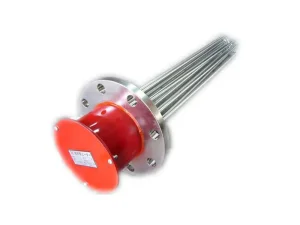


China Portable Ceramic Heaters from China Suppliers: Efficient Heating Solutions for Factories and Industries Manufacturer, Exporters
View Specifications
Request Custom Engineering Schematics & Energy Audit
Send your machine drawing, target operating temperature, and voltage requirements. Our thermal engineering team delivers a tailored 2D/3D specification drawing and low-consumption efficiency proposal within 24 business hours.