

Primary Engineering Lines
Featured Industrial Heating & Frost Protection Systems
High-performance electric heating units manufactured in Yancheng Laier Heating Technology facilities. Custom-built for tight tolerances, high thermal conductance, and harsh climate resiliency.

CE Certification PVC-O Ovens for Precision Heating Manufacturer, Manufacturers
View Specifications
High-Quality Electromagnetic steam boiler Manufacturers, Factories
View Specifications
High-Quality (Hot-runner)Spring heater/Coil heater Manufacturers, Factory
View Specifications
CE Certification Flexible Heaters for Custom Applications Manufacturer, Exporter
View Specifications
China Efficient Portable Ceramic Heaters for Industry | China Suppliers & Factory
View Specifications
Best Pipeline Heater Manufacturers, Factory
View Specifications
China Portable Ceramic Heaters: Efficient Heating Solutions for Factories
View Specifications
Technical Whitepaper: Volume I
Macro Industry Solutions: Combating Sub-Zero Thermal Vulnerabilities
In industrial fluid transmission, polymer processing, offshore energy, and automated manufacturing, frost exposure causes catastrophic hydraulic locks, pipeline ruptures, mechanical embrittlement, and unbudgeted plant shutdowns.
Fluid Rheology & Solidification Defense
When temperatures plummet below zero degrees Celsius, hydraulic oils, aqueous chemicals, coolants, and heavy hydrocarbons experience exponential increases in dynamic viscosity. Kangpu's CE-certified pipeline frost protection and immersion systems deliver steady-state watt density to prevent crystallization, paraffin precipitation, and volumetric freezing expansions that split heavy-gauge alloy piping.
Intelligent Closed-Loop Temperature Regulation
Traditional frost protection relied on continuous, uncontrolled resistance heating, resulting in high energy overheads and thermal localized burnout. Modern industrial installations deploy PT100/Type-K thermocouple feedback linked to solid-state relays (SSR) and PID algorithms. Our electric frost prevention arrays deliver exact maintenance temperatures (typically +5°C to +15°C) with zero over-temperature deviation.
Mechanical Structural Integrity in Cryogenic Surges
Sub-zero air infiltration creates thermal shock across cast-iron pump housings, valves, and extrusion tooling. By implementing custom-engineered cast aluminum/copper heaters and form-fitting silicone flexible frost blankets, heat is conducted uniformly throughout structural metalwork, maintaining ductile mechanical properties and safeguarding pressure boundaries.
Global Economic Analysis
Industrial Freeze Downtime: Economics & Operational Risk
Thermal failure in sub-ambient commercial climates is an existential operational threat. Quantitative analysis proves that industrial freeze-prevention capital expenditures represent less than 1.8% of the net financial exposure incurred during a single unmitigated freezing incident.
40+
Years Engineering Heritage (Since 1986)
100+
Global Export Destinations
5,000+
Industrial Facilities Protected
5 YRS
Comprehensive Factory Warranty
Direct Downtime Cost Mitigation
In petro-refining, plastic compounding, and continuous manufacturing lines, an unheated frozen control valve or crystallizing pipeline causes complete unit halts averaging $45,000 to $180,000 per hour in idle production, environmental flaring, and restart line purging.
Energy Optimization via Nano-Infrared
Deploying nano-infrared band arrays and dense aerogel/ceramic insulation blankets reduces parasitic thermal dissipation by up to 34% compared to obsolete bare mineral-insulated trace wires, generating rapid ROI within the first winter operating quarter.
Insurance & Environmental Compliance
Frozen lines in chemical processing risk environmental spills and fugitive toxic emissions. Facilities engineered with certified, redundant heating loops gain substantial underwriting reductions and eliminate regulatory clean-up liabilities.
European & International Standards
CE Certification & Technical Compliance Framework
Procuring industrial heating elements for international integration requires rigorous conformity to European Directives. Kangpu heaters undergo comprehensive laboratory type-testing, dielectric breakdown evaluations, and high-temp endurance qualification.
| EU Directive / Standard | Technical Scope & Focus | Kangpu Engineering Implementation | Compliance Status |
|---|---|---|---|
| LVD 2014/35/EU Low Voltage Directive |
Electrical safety across 50–1000V AC operating ratings, insulation clearance, creepage distances, and earth continuity. | Triple-insulated silicone wiring, sealed terminal terminal boxes, double-layer mica/ceramic barrier, verified dielectric withstand up to 2500V. | CE Full Type Certified |
| EMC 2014/30/EU Electromagnetic Compatibility |
Prevention of high-frequency interference on external instrumentation and PLC automation controllers. | Balanced inductive coil architectures, non-reactive resistance winding, and zero-crossing solid-state switching integrations. | Harmonized Standard Passed |
| EN 60335-1 / EN 60519 Safety of Electroheating Inst. |
Mechanical stability, ingress protection (IP65/IP67), corrosion resistance in condensation conditions, and burn hazard limits. | Laser-welded stainless steel (SS304/SS316L) jacketing, silicone vulcanized borders, and hermetically sealed lead glands. | Laboratory Verified |
| ATEX 2014/34/EU (Optional) Atmospheres Explosibles |
Explosion-proof operation in Zone 1 / Zone 2 environments subject to volatile gaseous hydrocarbon vapors. | Flameproof terminal enclosures (Ex d), intrinsic temperature monitoring limiters, and specialized thermal barrier casting. | Available upon Drawing Spec |
| RoHS 2011/65/EU Hazardous Substances |
Restriction of lead, mercury, cadmium, hexavalent chromium, and polybrominated flame retardants in heating assemblies. | 100% green-compliant materials: high-purity Ni-Cr 80/20 resistance ribbons, non-toxic steatite ceramic blocks, eco-insulation. | Compliant & Documented |
Industrial Deployment Matrix
Localized Application Scenarios & Case Architectures
From Arctic drilling stations to high-altitude injection molding workshops, our thermal heating devices adapt to geometric and environmental extremes.
Process Piping & Manifolds
Circulating water, condensate return lines, and liquid fuel feed networks. Clamped pipeline heaters and flexible heater jackets protect valve manifolds and flange couplings from freezing blockages during winter shutdown cycles.
Extrusion & Injection Nozzles
Plastics processing plants operating in unheated factories during winter. Mica and ceramic band heaters prevent plastic crystallization in nozzle tips and barrel heads, eliminating machine cold-start screw breakage.
Thermal Storage Tanks & IBCs
Outdoor storage of lubricants, emulsions, resins, and chemicals. Flexible silicone silicone rubber blankets and custom heat insulation jackets maintain critical fluid flow viscosities at external ambient temperatures down to -45°C.
HVAC & Industrial Intake Air
Industrial ventilation air duct heaters preheat freezing atmospheric intake volumes before entering cleanrooms, drying kilns, and plant workshops, protecting heat-exchange coils from destructive ice build-up.
Engineering Excellence
7-Stage Manufacturing & Quality Traceability
Kangpu Heater / Yancheng Laier Heating Technology enforces a closed-loop quality protocol. From technical review of CAD drawings to high-voltage immersion testing, zero defect units are guaranteed.
Stage 01
Industrial Design & CAD
Thermal loss calculations, geometric 3D drafting, terminal enclosure clearances, and clamping method design tailored to your equipment.
Stage 02
Thermal Customization
Watt density sizing (W/cm²), precise voltage selection (110V to 480V, single/three phase), and lead termination selection.
Stage 03
Production Tooling & Mold
Instead of manual prototyping, genuine steel production dies are prepared, ensuring sample components reflect mass-production dimensional consistency.
Stage 04
Client Sample Approval
Sample delivered to your engineers for dimensional trial fitting, mechanical clamping verification, and bench electrical sign-off.
Stage 05
Design Iteration
Immediate integration of mechanical adjustments, thermocouple pocket relocation, or cable gland orientations if field trials request revision.
Stage 06
Electromechanical Testing
Rigorous dielectric insulation resistance testing (megohmmeter at 500VDC > 100MΩ), high-pot testing, and continuous thermal run cycles.
Stage 07
Batch Mass Production
CNC element winding, automatic stamping, batch serial stamping for 5-year traceability, heavy-duty export packing, and logistics dispatch.
Future-Ready Innovation
Technology Roadmap: Next-Gen Smart Frost Mitigation
The future of industrial frost protection transitions from passive resistance heating to active, edge-computing predictive thermal platforms.
IoT Telemetry & Remote Predictive Alarms
Integration of embedded wireless micro-sensors transmitting real-time heat flux, amperage fluctuations, and sub-surface temperature profiles directly to central SCADA systems, predicting failure states before ice crystals nucleate.
Self-Limiting Carbon-Nanotube Matrix
R&D investments into semiconductive PTC polymer and carbon-nanotube conductive films. As local temperature drops, molecular pathways expand to generate instant heat; as target thresholds are attained, resistance spikes naturally, eliminating runaway risks.
Aerogel Hybrid Insulation Composites
Coupling ultra-thin hydrophobic silica aerogels with nano-infrared band heaters, reducing thermal conductance to less than 0.015 W/(m·K) while tolerating continuous surface exposure of up to 500°C without volumetric shrinkage.
Engineering Knowledgebase
Frequently Asked Technical Questions (FAQ)
Authoritative answers addressing engineering selection, electrical installation, thermal calculation, and CE certification standards for heater frost protection equipment.
How do you calculate the required wattage for pipeline and vessel frost protection?
Heat loss is calculated through Fourier's Law of Heat Conduction: Q = [2·π·k·L·(Tm - Ta)] / ln(Do / Di), where 'k' represents the thermal conductivity of the insulation material, 'L' is line length, 'Tm' is the maintenance temperature (typically +5°C to +10°C to prevent freeze-up), 'Ta' is minimum ambient design temperature (e.g., -30°C), and 'Do/Di' are the outer and inner diameters over insulation. A safety margin factor of 1.25 to 1.30 is applied to cover wind velocity and convective heat dissipation.
What is the distinction between CE certified frost heaters and standard non-certified units?
CE certification guarantees compliance with European Low Voltage Directive (LVD 2014/35/EU) and Electromagnetic Compatibility (EMC 2014/30/EU). Certified units feature high-integrity dielectric barriers, verified ground leakage limits below 0.75mA, flame-retardant terminal leads, and guaranteed creepage distances. Non-certified heaters carry severe risks of insulation dielectric breakdown, ground faults, electrical arc flashovers, and short lifetimes in freezing condensation conditions.
When should an engineer specify Ceramic Band Heaters versus Mica Band Heaters for frost prevention?
Mica band heaters have low thermal mass, rapid response, and compact profiles (thickness ~3.5mm-5mm), making them ideal for injection nozzles, small manifolds, and moderate operating temperatures up to 280°C. Ceramic band heaters incorporate high-purity steatite ceramic blocks that retain heat, handle elevated watt densities, tolerate temperatures up to 500°C–700°C, and provide high built-in thermal insulation against severe sub-zero ambient winds.
Can Kangpu manufacture frost protection heaters to custom drawings and OEM specifications?
Yes. Complete bespoke manufacturing is our primary production mode since 1986. You provide 2D/3D mechanical drawings, sample pieces, or operating parameters (pipe diameter, clamp mechanism, terminal box orientation, voltage, wattage, and lead length). Our engineering department validates watt density and fit, creates production tooling, and supplies pre-production samples for physical verification.
What testing procedures do your heaters undergo prior to factory departure?
Every production batch undergoes five mandatory inspections: (1) Cold resistance tolerance verification (±5%), (2) High-voltage dielectric withstand testing (1500V to 2500V for 60 seconds without flashover), (3) Insulation resistance test (>100MΩ at 500VDC), (4) Dimensional verification via CMM/calipers against approved CAD drawings, and (5) Leakage current testing at thermal equilibrium.
What coverage is provided under Kangpu's 5-Year After-Sales Warranty?
Our 5-year warranty covers internal element integrity, resistance ribbon continuity, insulation dielectric stability, and structural casing defects when operated within specified engineering watt densities and temperature envelopes. Each heater is engraved with batch serial numbers that map back to raw material coils and QA logs, ensuring rapid root-cause analysis and free component replacement if manufacturing faults occur.
How do cast aluminum and cast copper heaters perform in severe sub-zero frost conditions?
Cast heaters offer superior mechanical ruggedness and thermal conductivity. Tubular heating elements are cast into dense aluminum alloys (max temp 350°C-400°C) or copper/brass alloys (max temp 650°C-700°C). Their heavy thermal inertia provides uniform heat distribution over irregular pipe geometries, completely preventing localized cold-spots where frost or ice could originate.
Advanced Heating Equipment
Industrial Process Furnaces, Insulation & Infrared Systems
Engineered thermal equipment, infrared bands, furnace systems, and energy-conserving insulation covers designed for continuous, energy-efficient operational performance.

High-Quality Cleaning furnace Manufacturer, Exporter
View Specifications
Best Heating/Cooling Integrated System Exporter, Exporters
View Specifications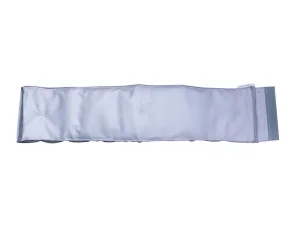
Best Durable Heat Insulation Covers Manufacturer, Exporters
View Specifications
High-Quality Portable Ceramic Heaters for Industry - Efficient Solutions
View Specifications
CE Certification Nano infrared electric band heater Manufacturer
View Specifications
Best Efficient Portable Ceramic Heaters for Industrial Facilities
View Specifications
Portable Ceramic Heaters - Reliable Precise Temperature Control
View Specifications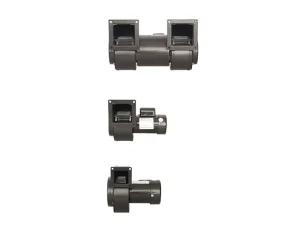
CE Certification Industrial Cooling Fan Manufacturer, Factory
View SpecificationsRequest Custom Engineering Consultation & CAD Evaluation
Submit your pipeline drawings, voltage requirements, watt density targets, or extreme frost prevention parameters. Our team of thermal engineers will provide comprehensive mechanical drafts, thermodynamic calculations, and an official quotation within 24 hours.