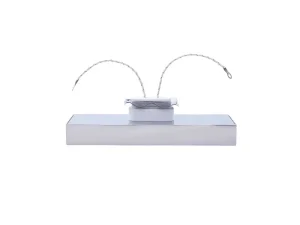
Top Tier Showcase: Extrusion & Process Heating Assemblies
Engineered by leading Chinese thermal technology factories to deliver exact barrel temperature profiling, uniform isothermal boundaries, and reduced carbon intensity.
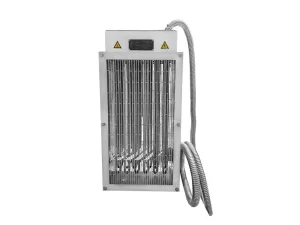
CE Certification Efficient Air Duct Heaters for HVAC Manufacturer, Factory
View Product Details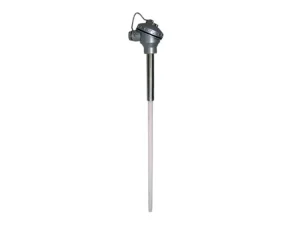
High-Quality Thermocouple Exporter, Factory
View Product Details
Best Pipeline Heater Manufacturers, Factory
View Product Details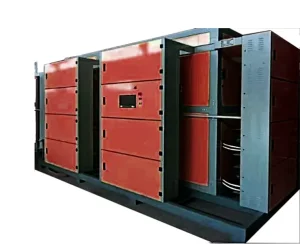
High-Quality Electromagnetic steam boiler Manufacturers, Factories
View Product Details
High-Quality Portable Ceramic Heaters for Industry - Reliable Heating Solutions from China Suppliers and Factory Manufacturers, Factory
View Product Details
High-Quality Portable Ceramic Heaters for Industry - Efficient Heating Solutions from China Suppliers and Factory Exporter, Exporters
View Product Details
Best Efficient Portable Ceramic Heaters from China Suppliers - Ideal for Industrial Heating in Factories Manufacturers, Exporters
View Product Details
China High density heating element Manufacturers, Factories
View Product DetailsThe Evolution of Extruder Barrel Thermal Containment
From uninsulated resistance bands to engineered "Cool-to-the-Touch" dual-action thermodynamic shrouds.
Thermodynamic Enclosure Engineering
Conventional single-layer band heaters radiate up to 40% of their heat directly into the ambient manufacturing floor, driving ambient room temperatures above tolerable operator thresholds and causing massive industrial air conditioning consumption. The modern Cool to-the-Touch Extruder Heat/Cool System integrates specialized ceramic or cast-in bronze heating elements within an aerodynamically contoured, multi-layer insulated shroud.
- Thermal conductivity barrier: < 0.022 W/m·K (Nano Aerogel)
- Forced convective radial channels for instantaneous overshoot control
- Stainless steel AISI 304 outer jacket with touch protection
Shear Heat & Exothermic Mitigation
In high-screw-speed engineering plastic compounding (e.g., PEEK, PA66-GF, CPVC), mechanical shear generates internal friction energy exceeding process targets. A pure heating system cannot stabilize viscosity. Modern Chinese heat/cool assemblies utilize tangential high-CFM blowers and finned cast-aluminum cooling passages to rapidly pull latent shear heat out without thermal shocking the barrel lining.
- Dynamic blower integration: 220V/380V low-noise centrifugal blowers
- Rapid transient cool-down rates: up to 12°C/min without localized cracking
- Elimination of melt fracture and polymer thermal degradation
Operator Safety & ESG Compliance
Global occupational safety standards (including OSHA 1910.261 and European CE Machinery Directives) penalize industrial machinery operating with exposed surfaces above 60°C. Cool-to-the-touch technology enforces absolute compliance, dropping outer-jacket skin temperatures to between 45°C and 55°C, effectively eliminating contact burns while shrinking the facility's carbon footprint.
- Full adherence to CE Low Voltage Directive (LVD) & ISO 9001:2015
- Direct reduction of corporate Scope 1 & Scope 2 greenhouse emissions
- Five-year industrial structural warranty coverage via Kangpu engineering
Global Sourcing Demands & Commercial Intent Analysis
Why Tier-1 extrusion plants across North America, the European Union, and Southeast Asia are replacing OEM thermal systems with engineered Chinese turnkey assemblies.
Total Cost of Ownership (TCO)
Procurement directors evaluate lifecycle operating expenditures rather than upfront hardware cost. An engineered cool-to-the-touch system delivers energy payback within 7 to 11 months on continuous 24/7 lines through direct electrical reduction.
Zero Unplanned Downtime
Heater element burnout halts extruders, causing molten resin freeze-up in twin screws. Kangpu utilizes ultra-pure compacted MgO insulation and premium Ni80Cr20 resistance alloys, providing reliable service lifetimes exceeding 50,000 continuous hours.
Direct Dimensional Retrofitting
Global machine builders require drop-in replacements for KraussMaffei, Battenfeld-Cincinnati, Coperion, and Davis-Standard lines. Chinese factories manufacture barrel diameters from 25mm to 350mm with custom cutouts for melt pressure transducers.
Lead Time & Supply Reliability
While European or domestic regional suppliers often quote 16 to 24 weeks for custom cast-in heating/cooling zones, Kangpu leverages fully integrated in-house foundries and CNC sheet metal production to dispatch customized sample batches in just 10–14 days.
China Industry 4.0: Metallurgical Precision & Supply Resilience
How Yancheng Laier Heating Technology Co., Ltd. (Kangpu) executes comprehensive vertical integration to ensure zero-defect production across four decades of specialized thermal engineering.
| Critical Engineering Metric | Traditional European / US Exporters | Generic Domestic Tier-3 Suppliers | Kangpu / China Industry 4.0 Standard |
|---|---|---|---|
| Barrel Contact Accuracy | High precision CNC finish, premium pricing tier | Hand-rolled sheet metal, air-gap hotspots common | Automated CNC precision boring; 100% surface contact tolerance (<0.05mm) |
| Outer Touch Temperature | 70°C – 85°C with partial thermal covers | 120°C – 220°C (Uninsulated or basic perforated sheet) | Controlled < 55°C utilizing multi-layer aerogel and dynamic convection channels |
| Cooling Response Speed | 4°C to 8°C per minute air-cooled cycle | Uncontrolled airflow, uneven axial barrel quenching | Optimized fluid-dynamic ducting yielding up to 12°C/min uniform convective dissipation |
| Custom Mold Turnaround | 8 to 12 weeks for tooling development | Limited custom engineering, rigid standard catalogs | 7-day rapid CAD/CAM mold development with real-mold sample verification |
| Standard Warranty Coverage | 12 Months standard industrial terms | 3 to 6 months replacement only | Industry-leading 5-Year Full Warranty with full batch traceability |
Localized Application Scenarios in Modern Plastics Manufacturing
Real-world integration showing how cool-touch heat/cool systems stabilize high-volume production lines.
Molecularly Oriented PVC-O Pipe Lines
PVC-O manufacturing demands severe dimensional tolerances and ultra-tight melt homogeneity to achieve circumferential polymer chain alignment. Temperature fluctuations above 1.5°C cause wall thickness variations and pipe burst failures under hydrostatic testing. Kangpu heat/cool systems integrate directly with high-torque twin-screw barrels, using ceramic heating matrices and high-velocity radial blowers to guarantee ±0.5°C thermal stability along the entire metering and degassing sections.
High-Speed Twin-Screw Compounding
When compounding engineering thermoplastics with up to 50% glass fiber or mineral filler loading, viscous shear energy creates rapid, runaway barrel temperature spikes. Conventional cooling cannot pull heat through heavy metal walls quickly enough. Our patented cooling/heating integrated shrouds feature aerodynamically shaped heat-dissipating cooling fins cast directly into high-conductivity copper or aluminum alloy liners, immediately dissipating excess BTU without chilling the melt core.
Medical-Grade Cleanroom Tubing
Micro-extrusion of polyurethane (TPU), fluoropolymers (FEP), and PEEK catheters in cleanroom facilities cannot tolerate radiant heat that creates upward thermal drafts, disturbs laminar airflow, or sheds microscopic insulation dust. Kangpu fully sealed cool-to-the-touch shrouds are constructed with seamless stainless steel mirror or brushed finishes, particulate-free ceramic insulation, and encapsulated blowers, preserving cleanroom air classification while protecting technicians.
Frequently Asked Questions: Technical & Sourcing Specifications
Direct answers for process engineers, maintenance supervisors, and OEM machinery buyers regarding heat/cool system performance.
How does a "Cool-to-the-Touch" system maintain an outer skin below 55°C when internal barrel temperatures exceed 300°C?
The system utilizes a three-tier thermal decoupling design. The inner heating element (ceramic band or cast-aluminum module) transfers thermal energy inward via high-density conduction. Immediately surrounding the heater is a microporous nano-aerogel insulation barrier with ultra-low thermal conductivity. Between this barrier and the outer 304 stainless steel shroud, an engineered convective air gap channels minor residual heat out via directional louvers or continuous micro-exhaust, keeping touch surfaces completely safe for operators.
Why is air cooling favored over liquid cooling in many extruder barrel zones?
While liquid cooling offers intense heat extraction, it introduces severe operational hazards: thermal shock that can warp or micro-crack expensive bi-metallic barrels, mineral scaling inside internal coolant passages that degrades heat transfer over time, and catastrophic water leaks near molten polymer. Precision forced-air cooling jackets provide smooth, predictable, non-shock heat extraction that maintains perfect melt viscosity without scaling or high-pressure plumbing risks.
Can Kangpu custom-manufacture heating and cooling jackets to replace existing OEM parts?
Yes. Customization to exact machine specifications represents our core engineering strength. Clients simply provide existing 2D/3D mechanical drawings, electrical ratings (voltage/wattage), or barrel zone dimensions. Kangpu follows a 7-stage engineering lifecycle: ID modeling, electrical customization, real-mold sample production, client verification, performance modification, rigorous testing, and volume mass production—all backed by a 5-year warranty.
What concrete energy savings can an extrusion plant anticipate after retrofitting?
In uninsulated barrel configurations, between 25% and 40% of the heating energy is wasted into the ambient plant air. By replacing bare mica or standard ceramic bands with Kangpu cool-to-the-touch integrated systems, power consumption drops immediately by 20% to 35%. Furthermore, reducing ambient factory heat reduces industrial air conditioning and chiller load by an additional 15% to 25%, delivering dramatic dual energy reductions.
Engineered Assemblies, Integrated Systems & Thermal Accessories
Complete heating, insulation, and cooling inventory engineered for modern plastics processing, blown film lines, pipe orientation, and industrial fluid heating.
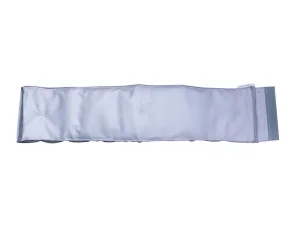
Best Durable Heat Insulation Covers Manufacturer, Exporters
View Product Details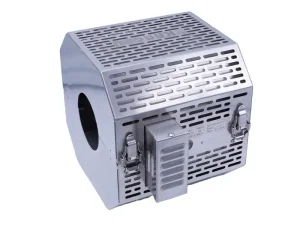
Best Heating/Cooling Integrated System Exporter, Exporters
View Product Details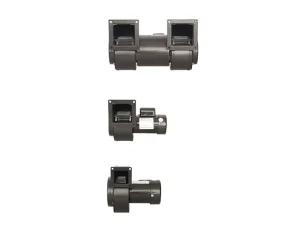
CE Certification Fan Manufacturer, Factory
View Product Details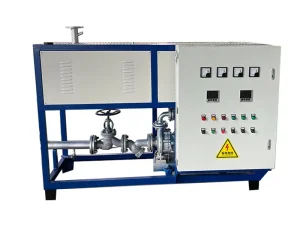
High-Quality Heat-conducting oil furnace Manufacturer, Exporter
View Product Details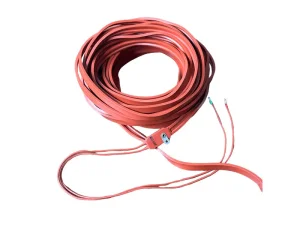
CE Certification Flexible Heaters for Custom Applications Manufacturer, Exporter
View Product Details
CE Certification Nano infrared electric band heater Manufacturer, Manufacturers
View Product Details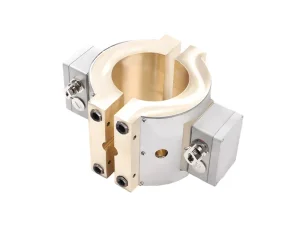
CE Certification Cast Aluminum/Copper Heater Manufacturer, Exporter
View Product Details