
Precision Electric & Infrared Heating Solutions
Explore high-emissivity ceramic panels, precision heating-cooling combinations, and industrial thermal process units custom engineered for extreme industrial environments.
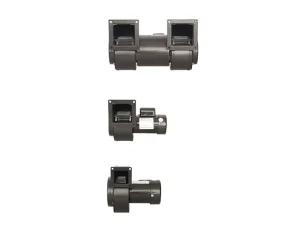
CE Certification Fan Manufacturer, Factory
View Specifications →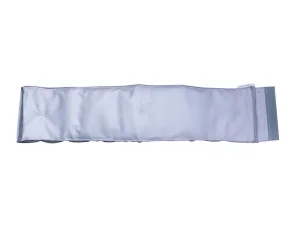
Best Durable Heat Insulation Covers Manufacturer, Exporters
View Specifications →
CE Certification Ovens Manufacturer, Exporter
View Specifications →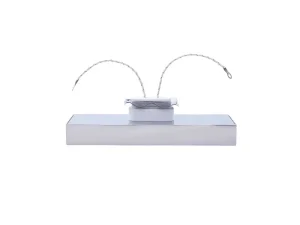
Best Infrared Ceramic Heaters for Efficient Heating Manufacturers, Exporters
View Specifications →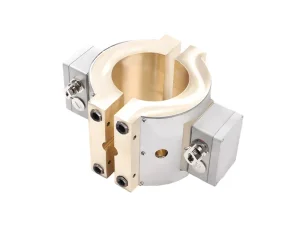
CE Certification Cast Aluminum/Copper Heater Manufacturer, Exporter
View Specifications →
CE Certification Nano infrared electric band heater Manufacturer, Manufacturers
View Specifications →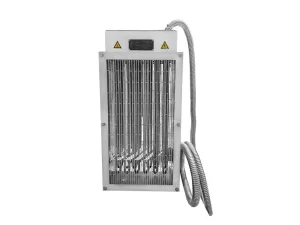
CE Certification Efficient Air Duct Heaters for HVAC Manufacturer, Factory
View Specifications →
CE Certification Precise Cooling and Heating System Manufacturers, Exporters
View Specifications →The Decarbonization Imperative & Modern Industrial Infrared Waves
Global manufacturing is witnessing a fundamental engineering pivot away from fossil fuel combustion and convective heating manifolds toward targeted wavelength infrared (IR) heating panels and smart electric thermal elements.
Traditional industrial heating systems—such as gas-fired reverberatory ovens, fluid heat-transfer loops, and basic resistance convection units—suffer from thermodynamic inefficiencies inherent in multi-step heat transfers. Heating ambient air to subsequently heat a workpiece introduces substantial convective losses, boundary-layer thermal resistance, and massive carbon footprints. Industrial infrared heating panels manufactured by top-tier Chinese facilities utilize electromagnetic radiant transfer governed by the Stefan-Boltzmann law and Planck's distribution law. By matching the peak emission wavelength (spanning medium-wave 2.0–4.0 μm to long-wave 4.0–10.0 μm) to the specific molecular resonance and absorption spectra of polymers, composites, coatings, and water, energy is absorbed directly within the substrate at efficiency rates exceeding 92%.
As an industry pioneer founded in 1986 in Yancheng, Jiangsu, Yancheng Laier Heating Technology Co., Ltd. (operating globally under the Kangpu Heater brand) has led this technological evolution over four decades. From specialized ceramic heating matrices and high-flux nano-infrared band systems to integrated extruder thermal cooling suites and PVC-O molecular orientation ovens, our engineering directives align with the corporate motto: "People-oriented, leading technology."
Global Corporate Procurement Benchmarks: Navigating Thermal TCO
For international enterprise procurement teams across North America, the European Union, Japan, and Southeast Asia, buying industrial heaters has shifted from simple unit cost purchasing to comprehensive Total Cost of Ownership (TCO) evaluation.
Thermomechanical Reliability vs. Downtime Costs
In high-throughput continuous manufacturing—such as automotive plastics extrusion, blow molding, and continuous web drying—a single heater band open-circuit or element burnout halts an entire multi-million dollar extrusion line. The resulting unscheduled downtime, scrap material purging, and labor often cost tens of thousands of dollars per hour. Procurement mandates demand elements with extended Mean Time Between Failures (MTBF > 30,000 operational hours), robust terminal construction, and five-year guaranteed lifecycles.
Spectral Absorption Matching & Watt-Density Tuning
Global procurement engineers increasingly reject one-size-fits-all heating elements. Modern specifications require custom finite element analysis (FEA) of thermal transfer profiles. Emissivity ratings must be certified above 0.90 for infrared emitters, surface watt densities must be uniformly calibrated within ±1.5% across the planar area to prevent localized hot spots, and insulation layers (aerogel or ceramic fiber) must keep external casing temperatures below 60°C for operator safety and HVAC energy reduction.
Compliance, Traceability & Dielectric Integrity
Rigorous OEM integration requires adherence to strict regulatory baselines: CE certification under Low Voltage Directive (LVD 2014/35/EU) and Electromagnetic Compatibility (EMC 2014/30/EU), RoHS lead-free compliance, and UL-certified electrical isolation. Insulation resistance under ambient conditions must exceed 100 MΩ at 500V DC, maintaining dielectric breakdown thresholds above 2,000V AC for 60 seconds without leakage flashover.
China Factory 4.0: Supply Chain Resilience & High-Precision Manufacturing
How deep vertical integration, automated precision winding, CNC casting, and batch traceability establish China as the premier global powerhouse for advanced electric and infrared heating technologies.
Hyper-Clustered Raw Material Integration
Our manufacturing complex in Yancheng, Jiangsu sits at the epicenter of the world's most dense advanced materials cluster. High-purity nickel-chromium resistance wire (Ni80Cr20 / Tophet A), steatite and cordierite technical ceramics, electrical-grade magnesium oxide powder (99.5% MgO), aerospace-grade mica sheets, and pure casting-grade aluminum/copper are procured with same-day logistics. This complete upstream integration shields international buyers from global supply volatility and raw material lead-time inflation.
Automated Robotic Processing & CNC Casting
Precision is hard-coded into our production floor. Automated computerized coil winding ensures pitch consistency across every centimeter of resistance wire, eliminating localized micro-variances in electrical resistance. For cast-in aluminum and copper heating systems, high-pressure die casting and automated gravity foundry processes eliminate internal air inclusions and porosity, guaranteeing 100% thermal contact and void-free heat conductivity to barrel cylinders.
Digital Batch Traceability & Life-Cycle QC
Every industrial heating element leaving our facility receives a laser-etched matrix identifier encoding production lot, winding machine ID, insulation powder batch, and technician signature. Before dispatch, 100% of units undergo automatic multi-station testing: electrical insulation resistance, cold resistance tolerance (±3%), high-voltage hipot withstand tests, and infrared thermal imaging to verify uniform radiant dissipation under full load.
Thermodynamic & Performance Selection Matrix
Engineering reference for plant managers, OEM design engineers, and systems integrators selecting ideal heater architectures based on thermal performance parameters.
| Heating Technology | Operating Temperature | Surface Watt Density | Primary Heat Mode | Optimal Industrial Application | Energy Efficiency Factor |
|---|---|---|---|---|---|
| Nano Infrared Band Heaters | Up to 500°C | Up to 8.0 W/cm² | Medium & Far-IR Radiation | Plastics Extrusion, Injection Molding Retrofits | 30% - 50% Energy Reduction |
| Infrared Ceramic Heating Panels | Up to 750°C | Up to 6.5 W/cm² | Long-Wave Infrared | Thermoforming, Curing, Paint Drying, Shrink Packaging | Direct substrate absorption |
| Cast-in Aluminum / Copper Heaters | Al: 400°C / Cu: 650°C | Al: 5 W/cm² / Cu: 8 W/cm² | High-Density Conduction | High-pressure extruders, blown film, harsh mechanical zones | Uniform cylindrical thermal mass |
| Insulated Ceramic Band Heaters | Up to 650°C | Up to 6.0 W/cm² | Conduction + Radiative Retention | Plasticizing cylinders, blown film dies, pipe manufacturing | 15% - 25% Energy Retention |
| Mica Band & Strip Heaters | Up to 350°C | Up to 3.5 W/cm² | Direct Conduction | Injection nozzles, hot runner manifolds, laboratory vessels | Compact, rapid response profile |
| Air Duct & Flanged Process Heaters | Up to 600°C | Calculated per CFM air velocity | Forced Air Convection | Industrial HVAC, drying tunnels, drying ovens, autoclaves | Tailored CFM aerodynamic rise |
Comprehensive Industrial Applications & Case Scenarios
From extreme-tolerance plastics extrusion to complex aerospace curing, Kangpu heating architectures drive critical manufacturing lines worldwide.
1. Plastic Extrusion & Advanced Polymer Compounding
Extrusion barrels processing high-performance technical polymers (PEEK, PTFE, PVDF, polyamides) require exact melt temperature gradients across multiple zones. Our patented precise heating and cooling integrated systems feature air-cooled perforated shrouds or integrated liquid cooling loops that counteract shear heating. Nano-infrared bands prevent barrel radiant losses to the surrounding facility, maintaining polymer melt viscosity within ±0.5°C to prevent resin degradation and wall thickness variation.
2. PVC-O Pipe Biaxial Molecular Orientation Ovens
The manufacturing of molecularly oriented PVC-O pipes represents one of the most demanding thermal processes in modern polymer engineering. Extruded PVC preforms must be brought to an exact glass transition temperature window before mechanical expansion. Kangpu precision convection and infrared PVC-O ovens deliver multi-stage circumferential heating uniformity within ±1°C, ensuring flawless molecular orientation, doubled impact resistance, and maximum tensile strength without brittle wall failures.
3. Thermoforming, Vacuum Forming & Automotive Composite Curing
Infrared ceramic heating panels are the gold standard for sheet pre-heating in food container thermoforming, automotive door panel molding, and carbon-fiber prepreg autoclave curing. Because ceramic elements project uniform long-wave infrared radiation matching the absorption bands of polyolefins, sheets heat evenly from outer skin to internal core, preventing surface blistering, thinning, and thermal shock during rapid cycle times.
4. Industrial Thermal Fluid & Zero-Emission Steam Generation
Where direct electric band heating cannot reach, Kangpu heat-conducting oil furnaces and electromagnetic induction steam boilers provide clean, pressurized thermal transfer. Operating without combustion, chimneys, or local nitrous oxide emissions, these units supply indirect heating to lamination rollers, chemical reactors, calendering lines, and food sterilizers, slashing facility carbon footprints while allowing instantaneous modulating power control.
From Blueprint to Mass Production: The 7-Stage Custom Workflow
Eliminating procurement risk through our verified seven-gate validation system. Every custom order is rigorously simulated, physically prototyped with dedicated tooling, and machine-tested before volume manufacture.
Engineering ID Design
Technical CAD review of machine envelopes, mechanical clamping clearances, terminal orientations, and thermal dissipation paths.
Parametric Customization
Calculation of exact voltage, wattage, target surface watt density, dielectric barrier thickness, and wire alloy composition.
Production Tooling & Mold Build
Unlike competitors who hand-bend prototypes, we open genuine production tooling and casting dies so samples match production reality.
Client Fit & Functional Sign-Off
You install the physical test unit on your factory machinery to evaluate spatial envelope, clamping tension, and terminal connection ease.
Iterative Refinement
Prompt engineering adjustments to terminal lead angles, mounting brackets, or wattage distribution based on real runtime feedback.
Laboratory Performance Testing
Full-load thermal chamber testing, dielectric hipot isolation, leakage current monitoring, and emissivity confirmation.
Batch Mass Production
Full automated production with digital batch traceability, export-grade vacuum moisture-proof packaging, and global logistics dispatch.
Specialized Heavy-Duty & Custom Heating Lineup
Explore portable ceramic heating banks, pipeline process flow units, high-temperature thermal oil furnaces, and molecular orientation thermal systems.

China Portable Ceramic Heaters for Industry Manufacturers, Exporter
View Specifications →
Best Pipeline Heater Manufacturers, Factory
View Specifications →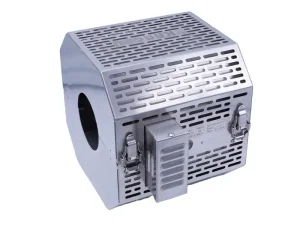
Best Heating/Cooling Integrated System Exporter, Exporters
View Specifications →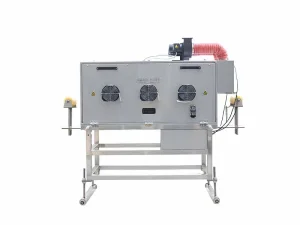
CE Certification PVC-O Ovens for Precision Heating Manufacturer, Manufacturers
View Specifications →
High-Quality Portable Ceramic Heaters for Industry - Reliable Temperature Control
View Specifications →
China Portable Ceramic Heaters from China Suppliers: Efficient Heating Solutions
View Specifications →
China Efficient Portable Ceramic Heaters for Industry | China Suppliers & Factory
View Specifications →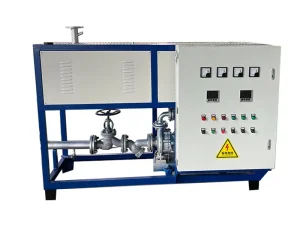
High-Quality Heat-conducting oil furnace Manufacturer, Exporter
View Specifications →Frequently Asked Questions for Plant Engineers & Buyers
Clear, unambiguous answers addressing design criteria, thermal performance, customization minimums, and international commercial protections.
Can Kangpu / Laier Heating manufacture directly to proprietary OEM drawings and non-standard dimensions?
Yes. Customization represents over 80% of our daily production volume. Whether you require specific internal diameters, unique arc widths, custom cutout notches for thermocouples and barrel pressure transducers, terminal boxes with IP65 ingress protection, or specialized high-temperature armored stainless steel leads, our engineering department provides rapid CAD verification within 24 hours. Production follows your approved mechanical drawing with strict dimensional tolerance control (±0.5 mm).
How does the 5-Year Factory Warranty operate for overseas export shipments?
Unlike standard trading intermediaries who offer 6 to 12 months, our 5-year warranty is backed directly by the factory. Because each heating element is permanently etched with a batch traceability code, any rare premature failure is investigated via our metallurgical and electrical records to determine root cause. If a defect stems from manufacturing or material failure, replacement elements are prioritized and air-freighted directly to your facility at zero cost to your enterprise.
What is the exact physical difference between Nano Infrared Band Heaters and traditional Ceramic Band Heaters?
Traditional ceramic band heaters utilize embedded resistance wires woven through interlocking ceramic tiles, transferring heat primarily via conduction into the barrel and losing a notable percentage of heat radially through the outer stainless steel sheath. Nano Infrared Band Heaters, by contrast, utilize a high-emissivity nano-composite radiant layer that emits directed electromagnetic infrared waves directly into the cylinder substrate, accompanied by an advanced aerogel reflective insulation jacket. This architecture lowers the outer casing temperature to approximately 50°C–60°C while delivering verified electricity savings of 30% to 50% on plastic extrusion and injection machinery.
What parameters do your engineers need to recommend the correct watt density?
To accurately calculate the optimal watt density (W/cm²) and prevent premature element burnout or thermal degradation, we evaluate four key application variables: (1) Target operational barrel or workpiece temperature; (2) Process cycle time and required initial pre-heat ramp duration; (3) Process medium characteristics (e.g., polymer melt index, air flow velocity in CFM, fluid viscosity); and (4) Machine mechanical interface fit (e.g., air-cooled blower shroud, casting mass, or direct high-torque clamping band).
How do you ensure reliable electrical dielectric isolation at continuous operating temperatures above 500°C?
At elevated temperatures, inferior insulating materials suffer electrical conductivity leakage. Kangpu utilizes electro-fused high-purity magnesium oxide (MgO) powder processed under high compaction, combined with high-grade steatite ceramic bodies and pure mica matrices with minimal binder volatilization. Every element undergoes strict high-potential (hipot) testing (minimum 2000V AC/1 min) and retains insulation resistance values exceeding 50 MΩ even after continuous thermal soaking at maximum rated temperatures.
Which international markets do you currently export to and how are bulk shipments protected against moisture during ocean transit?
Kangpu thermal systems are exported to over 100 countries across Europe, North America, South America, the Middle East, and the Asia-Pacific region. To prevent hygroscopic moisture absorption by internal dielectric ceramics during multi-week ocean transport, all heating elements are sealed with specialized moisture barriers (silicone or epoxy hermetic seals) and packed inside heavy-duty multi-layer vacuum foil bags containing industrial desiccants, secured within custom reinforced fumigated wooden crates.