1. The Thermodynamics of Industrial Infrared Heating Systems
In modern polymer extrusion, injection molding, drying, and thermoforming manufacturing, thermal efficiency defines operating margins. Traditional thermal conduction and convention techniques rely heavily on physical surface contact or heated ambient air envelopes. This method incurs huge thermodynamic losses through ambient dissipation, convection currents, and slow recovery latency. As an advanced China infrared electric heater manufacturer, Kangpu Heater (Yancheng Laier Heating Technology Co., Ltd.) designs specialized electromagnetic radiation bands that deliver non-contact electromagnetic flux directly to the molecular lattices of workpieces and barrels.
Electromagnetic radiation in the infrared spectrum obeys the Stefan-Boltzmann law ($$E = \varepsilon \sigma T^4$$) and Planck's distribution. In industrial operations, infrared heating functions across three discrete wavelength ranges:
Short-Wave IR (0.78 – 1.4 µm)
High penetration depth, rapid thermal rise within 1 to 2 seconds, operating temperatures up to 2,200°C. Ideal for fast-curing varnishes, automotive coatings, and rapid thermoforming lines where instant on/off cycling is critical.
Medium-Wave IR (1.4 – 3.0 µm)
Maximum absorption profile for most industrial polymers, water-based solutions, and industrial solvents. Optimal for plastics drying, blowing machinery, PVC-O orientation tunnels, and surface heating zones.
Long-Wave / Ceramic IR (3.0 – 1000 µm)
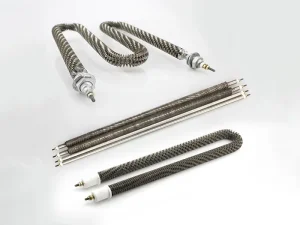
Stable, deep, highly uniform radiant distribution. Preferred for extruder barrels, deep-draw vacuum processing, and clean thermo-curing due to solid heat absorption characteristics across complex organic macromolecules.
2. Competitive Advantages of Chinese Thermal Engineering & Manufacturing
Sourcing from premier China infrared electric heater manufacturers provides global original equipment manufacturers (OEMs) and process facilities with structural operational advantages beyond simple unit-cost differentials:
Integrated Raw Material Supply Chains: Based in Yancheng, Jiangsu—a globally recognized precision heating industrial cluster—manufacturers like Yancheng Laier Heating Technology maintain direct vertical integration with metallurgical refineries producing high-purity Nichrome (Ni80Cr20), Kanthal (FeCrAl), fused cordierite ceramics, and high-purity electrical-grade magnesium oxide (MgO) powder. This direct integration removes multiple supply layers, maintains strict quality control, and isolates buyers from raw material price volatility.
Precision Tooling & Mold Opening Capabilities: Unlike intermediaries who assemble pre-made modular components, true manufacturers maintain on-site CNC tooling, die-casting centers (for aluminum and copper cast-in heaters), and clean ceramic firing kilns. This allows Kangpu to implement Stage 3 (Real Mold Opening for Samples) within 5 to 7 working days, ensuring rapid validation before scaling up to mass production.
3. Technical Comparison: Industrial Band & Radiant Heaters
Selecting the ideal thermal emitter requires balancing thermodynamic efficiency, physical shock resistance, maximum operating temperature, and capital expenditure payback. The table below details engineering metrics across our primary industrial lines:
| Heater Archetype | Core Metallurgy & Insulation | Max Operating Temp | Max Watt Density | Energy Conversion Efficiency | Primary Industrial Target |
|---|---|---|---|---|---|
| Nano Infrared Band Heater | Nano alloy wire, Aerogel composite shielding, quartz reflector | 650°C (1200°F) | 6.5 – 8.0 W/cm² | > 98.2% (Radiative) | Plastic extruders, blow molding, injection barrels (Energy retrofits) |
| Ceramic Band Heater | Ni80Cr20 coil, Steatite ceramic knuckles, ceramic fiber blanket | 760°C (1400°F) | 7.0 – 9.0 W/cm² | 86% – 90% (Convective/Radiant) | High-temperature resin processing, compounding lines, blown film dies |
| Cast-In Aluminum / Copper | Incoloy 800 tubular elements cast in Al alloy or CDA 81100 Cu | Al: 400°C / Cu: 650°C | Al: 5.5 / Cu: 9.5 W/cm² | 82% – 88% (Conduction) | Heavy-duty twin screw barrels requiring internal liquid/air cooling |
| Mica Band Heater | Continuous wound ribbon wire, muscovite/phlogopite mica | 480°C (900°F) | 3.5 – 4.5 W/cm² | 78% – 84% (Direct Contact) | Low-clearance injection nozzles, packaging sealers, hot-runner dies |
| Flexible Silicone/Kapton Heater | Etched foil / wound wire between polyimide or vulcanized silicone | 200°C – 260°C | 0.8 – 1.5 W/cm² | 92% (Surface Transfer) | Pipes, tanks, analytical diagnostics, freeze prevention, aerospace |
4. Macro Industrial Applications & Regional Deployment Scenarios
Infrared thermal systems are essential components across modern manufacturing, helping facilities optimize heating processes and reduce energy use:
A. Plastics Compounding & Profile Extrusion (Global Machinery Hubs)
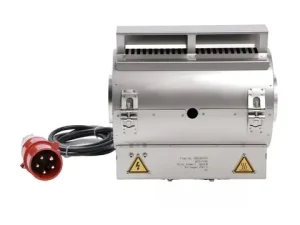
Modern high-speed extruders handling engineering thermoplastics (such as PEEK, PTFE, and glass-filled Nylon) require uniform temperatures to maintain melt quality. Our patented air-cooled barrel heating and cooling systems combine high-efficiency nano infrared radiant elements with high-pressure centrifugal blowers. This design prevents thermal overshoot from screw shear and holds process temperatures within a tight ±1°C tolerance window across all barrel zones.
B. PVC-O (Molecularly Oriented Polyvinyl Chloride) Pipe Production
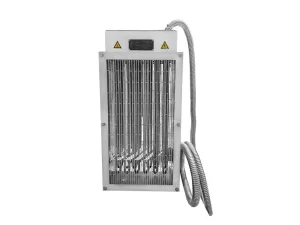
Orientation ovens require extremely consistent radiant heat flux. A temperature variation of even 1.5°C across the circumferential profile can lead to wall thinning, stress fissures, or failure during hydrostatic pressure validation. Kangpu’s custom heating arrays use matched-wavelength medium-wave infrared systems, delivering deep, uniform heat penetration through thick pipe blanks before axial and radial expansion stages.
C. Clean Room & Chemical Process Facilities
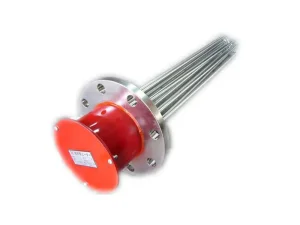
For applications where open flames, flue emissions, or volatile gases are unacceptable, our industrial electromagnetic steam generators and explosion-proof flanged immersion circulation heaters deliver zero-emission heat transfer. These systems run smoothly in specialized medical packaging, chemical batch distillation, and semiconductor component washing environments.