Primary Heating Solutions & Auxiliary Systems
Precision-manufactured electric heaters, surface heating bands, industrial furnaces, and thermal insulation jackets built to custom technical drawings.







The Mechanics and Thermodynamics of Silicone Rubber Drum Heaters
An exhaustive evaluation of surface heat dissipation, vulcanized dielectric elastomers, resistance alloys, and transient fluid viscosity control inside standard packaging vessels.
In global industrial supply chains, managing liquid viscosity during storage, transfer, and decanting is a foundational engineering necessity. Standard 55-gallon (200-liter) steel and high-density polyethylene (HDPE) plastic drums, intermediate bulk containers (IBC totes), and specialty chemical pails are engineered for transport efficiency, not thermodynamic conductivity. When ambient temperatures decline, fluid viscosity rises according to the Arrhenius temperature-dependent fluidity model. Heavy oils, epoxy resins, polyurethane prepolymers, adhesives, bio-diesel blends, honey, and industrial syrups transform into non-pumpable, semi-solid gelatinous masses. Attempting to evacuate unconditioned drums results in catastrophic pump cavitation, extreme throughput delays, incomplete decanting residue (often exceeding 8-12% product loss), and line contamination.
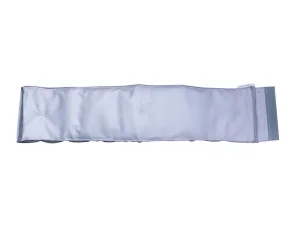
Silicone rubber drum heaters (also categorized in industrial procurement as flexible drum heating blankets, silicone heating bands, or jacket heaters) deliver the definitive solution. These engineered heating bands are constructed by encapsulating precision-etched metal alloy foils or wire-wound resistive circuits between multi-ply, calendered, fiberglass-reinforced silicone rubber vulcanizates. By contouring flush against the cylindrical wall of a steel or poly drum, the heating element minimizes contact thermal resistance, allowing rapid, uniform thermal conduction directly through the vessel skin into the fluid substrate.
Dielectric Resilience
High-purity silicone elastomers reinforced with high-tensile fiberglass weave offer dielectric breakdown ratings exceeding 20 kV/mm. This preserves electrical isolation and prevents leakage under cyclic mechanical expansion and contraction.
Optimized Alloy Foils
Utilizing precision-etched Nickel-Chromium (NiCr 80/20) or Copper-Nickel (CuNi) foils. Chemical etching allows ultra-dense parallel trace paths, eliminating hot spots and maximizing surface contact area up to 88% versus traditional spiral wires.
Thermal Uniformity
Low thermal inertia and high thermal conductivity ($k \approx 0.22\text{ W/m·K}$) guarantee steady energy flux. Custom multi-zone heat tracing ensures fluid near the base and surface receives calibrated energy inputs.
Strategic Advantages of Partnering with Chinese Drum Heater Manufacturers
How regional specialization, upstream raw material access, and four decades of manufacturing maturation create unassailable cost and technological dividends.
The manufacturing cluster located in Jiangsu Province (anchored by industrial centers like Yancheng) produces a commanding portion of the world's commercial and industrial electric thermal components. Yancheng Laier Heating Technology Co., Ltd. (operating under the international mark Kangpu Heater, established in 1986) epitomizes this manufacturing evolution. Over forty years of specialized focus has translated into systematic advantages for global engineering buyers:
Upstream Integration
Direct domestic access to advanced organosilicon polymers, high-temperature woven fiberglass substrates, and metallurgical alloy foils eliminates multi-tiered supply delays and curbs raw material cost spikes.
Real-Mold Tooling
Unlike small assembly shops relying on manual cutting, Chinese precision plants deploy automated vacuum vulcanizing presses and CNC laser cutting for customized lengths, nozzle cutouts, and specialized latches.
Strict 7-Stage NPI
Rigid New Product Introduction (NPI) workflow: CAD electrical modeling, ID validation, real vulcanizing mold sampling, real-barrel fit approval, thermal load endurance, and final batch serialization.
Industry 5-Year Warranty
Reflecting rigorous material chemistry and anti-aging testing, Kangpu backs systems with a comprehensive 5-year warranty with complete batch-traceable raw-material documentation.
Localized Application Scenarios & Heavy Industry Solutions
Engineered fluid conditioning across chemical processing, food manufacturing, offshore logistics, and cold-region utilities.
Chemicals, Resins & Adhesives
Epoxies, polyols, isocyanates, and hot-melt resins require constant temperatures between 40°C and 80°C to prevent crystallization and allow smooth pumping into mixing reactors without burning the product.
Food Grade & Sanitary Processing
Vegetable oils, honey, invert sugar, malt extract, and molasses undergo non-destructive viscosity reduction. Gentle heat flux eliminates localized caramelization, preserving enzymic balance and food safety.
Bio-Pharmaceutics & Cosmetics
Maintains petroleum jelly, waxes, and glycerin precursors in liquid state for metering into emulsification machinery. Non-outgassing silicone compounds meet sterile cleanroom environmental standards.
Paints, Varnishes & Coatings
Solvent-based and waterborne industrial paints must avoid freezing or phase separation in winter storage. Our silicone drum heaters preserve spray viscosity without hot-spot pigment scorching.
Sub-Zero Freeze Prevention
Water storage, aqueous urea solutions (DEF/AdBlue), water-treatment chemicals, and lubricants stored in outdoor unheated depots are shielded from freezing at temperatures as low as -40°C.
Maritime & Petrochemical Supply
Heavy bunkering fuel additives, greases, and hydraulic fluids on drilling platforms and ships need compact, moisture-resistant, and salt-fog-resistant flexible heaters that withstand harsh offshore conditions.
Engineering Specifications & Quality Parameters
Direct comparative technical benchmarks for procurement managers, plant maintenance engineers, and OEM systems integrators.
Specifying the proper silicone rubber drum heater requires checking vessel wall material compatibility, thermal conductance, operating ambient temperature, and controller precision. Steel containers dissipate heat rapidly, safely accepting higher watt densities (typically up to 0.8 W/cm²). Polyethylene (HDPE) drums demand lower watt densities (typically ≤ 0.25 W/cm²) coupled with precision thermostats to prevent localized wall softening or melting.
| Drum Type / Vessel Volume | Standard Dimensions (H × L) | Standard Voltage Options | Power Rating (W) | Recommended Vessel Substrate | Thermostat Control System |
|---|---|---|---|---|---|
| 5-Gallon (20 Liter) Pail | 100 mm × 860 mm / 125 × 860 mm | 110V, 120V, 220V, 240V | 300W – 800W | Carbon Steel / Stainless Steel / Plastic | Capillary (30-150°C) or Digital PID |
| 15-Gallon (60 Liter) Drum | 125 mm × 1100 mm / 150 × 1100 mm | 120V, 220V, 240V | 600W – 1200W | Steel or Polyethylene (HDPE) | Bimetal Dial / Digital Sensor |
| 30-Gallon (100 Liter) Drum | 125 mm × 1500 mm / 200 × 1500 mm | 120V, 230V, 240V | 1000W – 1500W | Steel or Polyethylene (HDPE) | 0-120°C Adjustable Dial Controller |
| 55-Gallon (200 Liter) Standard | 125 mm × 1740 mm / 250 × 1740 mm | 120V, 220V, 240V, 380V | 1000W – 3000W (Multi-Band Stackable) | Tight-head / Open-head Steel Barrels | Heavy-Duty Capillary (0-150°C) / PID |
| 55-Gallon (Plastic/HDPE) | 125 mm × 1740 mm / 150 × 1740 mm | 120V, 230V, 240V | 400W – 800W (Low Watt Density Safe) | High Density Polyethylene (HDPE) | Fixed limit cut-off (Max 70°C) |
| 275/330-Gallon (1000L IBC Tote) | Full Jacket / Multi-Tier Bands | 220V, 240V, 380V 3-Phase | 2000W – 4500W Total Input | Composite IBC with Outer Insulation | Independent Dual-Zone Digital PID |
Beyond electrical sizing, fastening mechanisms directly govern contact efficiency and operational lifespan. Factory-engineered drum heaters from Kangpu incorporate stainless steel heavy-duty tension springs with hook-and-eye attachments, industrial hook-and-loop (Velcro) quick-release closures, or adjustable draw-latch buckles. Spring-loaded connections automatically adjust for the thermal expansion of metal barrels during heating cycles, ensuring the silicone blanket stays in direct contact without air gaps that cause localized overheating and burnout.
Technological Trajectories Shaping the Drum Heating Industry
Examining how IoT connectivity, advanced nanocomposite materials, and integrated thermal insulation are transforming drum heating efficiency.
IoT & Cloud Telemetry
Modern silicone drum heaters are evolving beyond mechanical bimetal dial thermostats. Embedded Modbus RS-485, Wi-Fi, and 4G wireless sensors stream temperature and energy use to central SCADA systems, preventing run-away thermal events in remote storage hubs.
Hybrid Full-Coverage Jackets
Traditional narrow band heaters leave the upper drum surface exposed, losing up to 45% of thermal energy to cool ambient air. Next-generation designs integrate the silicone heating layer inside an outer aerogel or fiberglass blanket, cutting power draw by 35%.
ATEX / HazLoc Safe Designs
Hazardous processing areas (Class I, Div 2 / Zone 1 & 2) demand explosion-proof terminal boxes, hermetically sealed thermocouple wells, and self-limiting thermal fuses embedded inside vulcanized silicone layers to safely handle flammable volatiles.
Frequently Asked Questions by Industrial Sourcing Teams
Clear answers to critical questions about silicone drum heater sizing, plastic drum safety, installation best practices, and factory OEM capabilities.
Can silicone rubber drum heaters be safely installed on plastic (poly/HDPE) drums?
Yes, but only with models specifically engineered for plastic drums. Polyethylene has a lower melting point and significantly lower thermal conductivity than carbon steel. Drum heaters for plastic containers must feature lower watt densities (typically ≤ 0.25 W/cm²) and an internal temperature limiter or precision thermostat set not to exceed 60°C–70°C, preventing drum wall deformation.
How many heating bands can be installed simultaneously on a single 55-gallon drum?
Depending on fluid viscosity and desired heat-up times, standard 55-gallon carbon steel drums can accommodate 1, 2, or 3 silicone band heaters positioned across the bottom, middle, and upper sections. Because warm fluid rises by natural convection, bottom placement is primary. Stacking multiple bands accelerates bulk melt-out cycles while spreading electrical load across separate circuits.
What is the difference between etched foil and wire-wound resistance elements?
Wire-wound elements wind resistance alloy wire around a fiberglass core. They are flexible and economical for standard designs. Etched foil elements use photo-chemically etched nickel alloy foils. This creates wider, flat traces that cover up to 80% more surface area, improving heat transfer uniformity, reducing hot spots, and extending operating life under continuous duty.
Can Kangpu manufacture silicone drum heaters to custom dimensions, voltages, and plugs?
Yes. Custom manufacturing is our core capability. We tailor total length, band width, supply voltage (12V to 480V single/three-phase), wattage, cable exit orientation, integrated insulation thickness, and regional power plugs (NEMA, Schuko, UK, BS, Australian) to match your exact regional requirements.
What temperature control systems are built directly onto drum heaters?
We offer three main temperature control options: (1) Adjustable bimetal capillary dial thermostats (30°C–150°C), simple and rugged; (2) Digital PID micro-controllers with LED screens for ±1°C precision; and (3) Factory-calibrated snap-action internal bimetal switches (e.g., fixed cut-off at 50°C, 70°C, or 90°C) to prevent operator tampering.
What quality testing and electrical safety inspections occur before shipping?
Every production unit undergoes three mandatory electrical tests: Hi-pot dielectric withstand testing (1500V AC for 60 seconds), insulation resistance measurement (>100MΩ at 500V DC), and resistance tolerance testing (±5% of nominal value). We also perform thermal camera inspections on first-off samples to verify even surface heat distribution.
Specialized Thermal Machinery, Boilers & Heating Units
Explore our broader industrial heating equipment, including high-density cartridge elements, pipeline heating units, and complete PVC-O processing ovens.