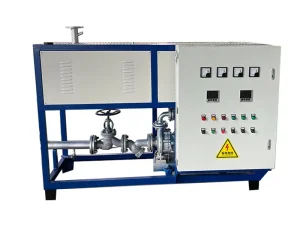
High-Efficiency Industrial Electric Heating Products
Precision-engineered thermal elements, band heaters, and integrated cooling solutions manufactured by Yancheng Laier Heating Technology Co., Ltd.






Executive Technical Overview: Convection vs. Radiant Thermal Energy Transfer
A rigorous examination of kinetic fluid energy transfer versus electromagnetic wave radiation for industrial process optimization.
In modern high-precision industrial processing, thermal management dictates product quality, cycle efficiency, and overall operational expenditure. Plant managers, machinery builders (OEMs), and thermal system engineers constantly face the strategic decision between convection heating systems and radiant heating solutions. Understanding the core physics governing these two distinct thermal propagation modes is critical for maximizing coefficient of performance (COP) and minimizing carbon footprint.
1. Mechanical Principles of Convection Heating
Convection heating relies on fluid dynamics—utilizing a carrier medium such as air, nitrogen, thermal fluid, or steam to transport thermal energy from a high-temperature element to the target surface. Guided by Newton’s Law of Cooling ($Q = h \cdot A \cdot \Delta T$), the heat transfer rate $Q$ depends directly on the convective heat transfer coefficient $h$, the contact surface area $A$, and the temperature gradient $\Delta T$. Forced convection systems integrate high-velocity blowers or circulation pumps to maximize $h$, breaking boundary air films to achieve uniform bulk volumetric heating. This mechanism makes convection ideal for complex geometries, continuous web drying, PVC-O orientation ovens, and bulk air duct conditioning.
2. Electromagnetic Principles of Radiant Heating
In contrast, radiant heating bypasses intermediate fluid mediums altogether. Governed by the Stefan-Boltzmann Law ($E = \epsilon \cdot \sigma \cdot T^4$), thermal energy is emitted via electromagnetic waves (primarily medium-to-far infrared spectrum, $\lambda = 2.0 - 10 \, \mu\text{m}$) directly from the source to the target material. Energy transmission occurs at the speed of light, where absorption rates depend heavily on the spectral emissivity ($\epsilon$) of the workpiece. Radiant mechanisms—such as Nano-Infrared Band Heaters and Ceramic Radiators—deliver rapid, high-intensity surface thermal absorption with near-zero thermal inertia, proving exceptionally effective for barrel heating, plastic extrusion lines, sheet thermoforming, and rapid spot curing.
Engineering Trade-off Analysis: Convection vs Radiant
Systematic matrix contrasting thermodynamic metrics, operational efficiency, and maintenance dynamics.
| Evaluation Parameter | Convection Heating Systems | Radiant / Infrared Heating Systems |
|---|---|---|
| Primary Heat Transfer Mode | Fluid conduction & mass transport (Air/Gas/Oil) | Direct Electromagnetic Radiation (Infrared Spectrum) |
| Thermal Response Velocity | Moderate to Slow (Requires fluid medium warm-up) | Ultra-Fast (Instantaneous wave transfer, low inertia) |
| Energy Conversion Efficiency | 65% - 80% (Duct/Piping losses present) | 85% - 96% (Direct target surface coupling) |
| Temperature Uniformity | Superior for complex, 3D shapes & internal cavities | Line-of-sight dependent; highly targeted for flat/cylindrical surfaces |
| Ambient Heat Loss & Insulation | Higher ambient heat loss; requires heavy shell insulation | Low ambient losses when combined with aerogel reflective jackets |
| Capital & Maintenance Cost | Higher upfront ductwork; moderate ongoing maintenance | Lower initial installation cost; solid-state element longevity |
| Target Industrial Equipment | Industrial Ovens, HVAC Ducts, Heat Conducting Oil Furnaces | Extruder Barrels, Injection Nozzles, Thermoforming Lines |
Thermal Efficiency & Cost Optimization
Radiant systems excel in targeted applications like plastic extrusion barrels where direct contact and radiant efficiency reduce power draw by up to 45%. Convection shines in recirculating systems where total volumetric heat distribution avoids localized hot spots.
Precision PID Control & Dynamics
Integrating closed-loop thermocouple feedback with solid-state relays (SSRs) allows radiant infrared bands to maintain tight ±1°C tolerance windows. Convection systems utilize modulating dampers and variable speed fans to balance thermal inertia.
Structural Durability & Service Life
Built with nickel-chromium (Ni80Cr20) resistance wiring, high-density ceramic blocks, or cast aluminum matrix casings, our elements guarantee non-degrading performance under continuous 24/7 industrial operating conditions.
Sector-Specific Thermal Engineering Applications
Deploying specialized heating technologies across global manufacturing, processing, and heavy industrial markets.
Plastics Processing & Polymer Extrusion
Extruders require rigorous multi-zone temperature control. Replacing traditional mica bands with high-efficiency Ceramic Band Heaters or Nano-Infrared Band Heaters drastically minimizes warm-up times and prevents polymer shear degradation.
Molecularly Oriented Pipe Manufacturing (PVC-O)
Precise heating within PVC-O orientation ovens relies on combined forced convection recirculation to guarantee strict thermal distribution across thick pipe walls prior to biaxial stretching, ensuring high burst pressure ratings.
Chemical, Fluid & Process Piping Systems
Explosion-proof circulation heaters and thermal oil furnaces utilize heavy-duty tubular convection immersion elements to heat viscous fluids, asphalt, heat transfer oils, and process gases within dangerous ATEX/IECEx certified zones.
Yancheng Laier Heating Technology: Established 1986
Four decades of technical innovation, global export infrastructure, and direct engineering accountability.
Operating under the brand Kangpu Heater, Yancheng Laier Heating Technology Co., Ltd. has established itself as an authoritative global manufacturer of electric industrial heaters and integrated thermal systems. Located in Yancheng, Jiangsu Province, China, our specialized engineering team designs and manufactures customized solutions for plastic machinery builders, chemical plants, HVAC OEMs, and process heating integrators worldwide.
Under our operational philosophy—"People-oriented, leading technology"—we manage every step in-house, from industrial CAD/CAM design to real-mold sampling and automated production. We back our craftsmanship with an industry-leading 5-Year After-Sales Warranty, utilizing batch traceability numbers on every element so root-cause diagnostics can be resolved immediately.
7-Stage Precision Engineering & Customization Workflow
ID Design Analysis
Engineers evaluate machine schematics, fixing clearances, terminal geometry, and watt density requirements.
Product Specification
Confirmation of voltage, wattage, sheath material (SS304/SS316/Incoloy), insulation grade, and wire lead configuration.
Real-Mold Tooling
Production-grade molds are opened for sample creation rather than prototype hand-building to guarantee consistency.
Customer Verification
Physical sample dispatched for hands-on machine installation, dimensional checks, and dry-run validation.
Feedback & Modification
Iterative engineering adjustments made to clamping force, lead exit orientation, or terminal protection boxes.
Rigorously Tested
High-voltage dielectric testing, insulation resistance checking (hi-pot test), and thermographic heat distribution analysis.
Mass Production
Automated assembly line execution, batch serialization, custom export packaging, and international shipping.
Compliance Standards & Technological Innovation Roadmap
Aligning global electrical certifications with smart thermal management trends.
International Compliance & Standards
Our export products comply with international standards including CE Certification, ISO 9001:2015 Quality Management Systems, and specialized explosion-proof standards for explosive atmosphere operating conditions.
Nano-Scale Insulation & Energy Savings
Next-generation radiant heating incorporates aerogel and multi-layer reflective coatings, maintaining external shell temperatures under 50°C to safeguard operators and cut air conditioning loads in workshops.
IoT Integration & Industry 4.0 Smart Monitoring
Modern thermal elements are increasingly outfitted with embedded micro-thermocouples and RS485 Modbus telemetry outputs, granting plant operators real-time predictive diagnostic visibility prior to element burnout.
Frequently Asked Questions (Technical Procurement Q&A)
Addressing common engineering inquiries, thermal selection criteria, and order fulfillment policies.
Can Kangpu manufacture custom industrial electric heaters to our engineering drawings?
Yes. Custom manufacturing is our primary service model. Customers can provide technical CAD drawings, physical samples, or machine model specifications. Our engineering staff verifies electrical parameters, mounting clamping dimensions, terminal types, and lead wire insulation before manufacturing a sample for validation.
What warranty coverage is provided with Kangpu industrial heating elements?
All standard product lines come with a comprehensive 5-year after-sales warranty. Each unit is stamped with a unique batch number, allowing full manufacturing traceability and root-cause engineering corrections in the rare event of a defect.
Should I specify ceramic band heaters or mica band heaters for an extruder line?
Mica band heaters are compact, offer rapid initial response, and present a lower initial capital cost, making them ideal for injection molding nozzles and small barrels operating under 300°C. Ceramic band heaters feature built-in ceramic insulating blocks that prevent radiant heat loss and withstand operational temperatures up to 500°C+, making them preferred for larger extruder barrels where energy efficiency is paramount.
How do Nano-Infrared Band Heaters achieve up to 30-45% energy savings?
Nano-Infrared Band Heaters utilize high-emissivity resistance alloys coupled with an advanced infrared radiation layer and an exterior aerogel insulation barrier. Energy is transmitted predominantly via high-absorption infrared waves directly into the metallic barrel rather than relying on pure conduction, while radiant loss to ambient air is almost entirely eliminated.
What export documentation and international certifications are available?
We routinely export to more than 100 countries across Europe, North America, South America, Asia, and the Middle East. Products can be supplied with CE Compliance Certificates, ISO9001 quality certificates, material test reports (MTRs), and custom shipping manifests tailored to local customs requirements.
What is the typical sampling and lead-time duration for custom OEM orders?
Initial engineering sample creation generally requires 5 to 7 working days once drawings are finalized. After sample approval, standard batch mass production lead times range between 2 to 3 weeks depending on quantity and raw material specifications.
Advanced Thermal Oil Furnaces, Ovens & Heating Elements
Explore our complete product catalog for heavy-duty industrial processing, extruders, HVAC systems, and process lines.