
Featured Heating & Cooling Systems (Top Engineering Range)
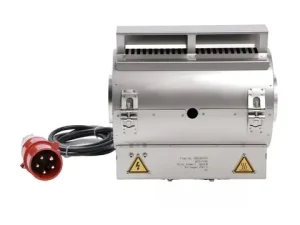
Explore our flagship precision heating and forced-air/liquid cooling modular systems engineered specifically for polymer extruders, PVC-O orientation lines, and heavy-duty industrial processing.





Executive Whitepaper: Thermodynamic Precision in Polymer Extrusion
In modern continuous plastics transformation—spanning thermoplastics compounding, multi-layer blown film, PVC-O biaxial pipe extrusion, and precision medical tubing—the extruder barrel thermal management zone represents the single most critical nexus of operational efficiency, melt homogeneity, and energy expenditure. Historically, industrial extruder barrels operated with basic ceramic band heaters paired with ambient blower cowlings, yielding severe energy leakage, wide thermal hysteresis, and dangerous outer shell temperatures exceeding 180°C.
As a premier global enterprise with four decades of manufacturing heritage (operating as Yancheng Laier Heating Technology Co., Ltd. / Kangpu Heater since 1986), we engineered the Cool Touch Hi-Efficiency Extruder Heating & Cooling Integrated System. This advanced architecture solves the traditional trade-off between rapid thermal ramp-up, precise shear heat dissipation, and operator workplace safety. By integrating multi-layered ceramic-aerogel insulation matrixes, custom-molded high-flow air or liquid channels, and low-emissivity alloy outer jackets, our systems guarantee outer surface temperatures under 50°C—delivering up to 30% to 45% net electrical power savings for global plastics processing facilities.
Global Extrusion Trends: Energy Transition & Digitalization
The global polymer machinery sector is undergoing a structural transformation driven by strict energy efficiency mandates, decarbonization goals (such as EU Directive 2023/1791 and US DOE Industrial Efficiency programs), and the rise of AI-driven smart factories.
Escalating Kilowatt Cost Pressures
Extrusion lines run continuously for 6,000 to 8,000 hours per year. Traditional non-insulated heating bands spill up to 40% of their thermal input into ambient factory air. Upgrading to a cool-touch high-efficiency system typically delivers payback in 6 to 14 months based on direct electrical power savings.
Shear Heat Management for Recycled Resins
Processing PCR (Post-Consumer Recycled) polymers and high-filler compounds requires exact thermal balancing. Fluctuating melt viscosity generates erratic frictional heat inside the barrel, demanding rapid, non-overshooting cooling cycles to prevent thermal degradation.
Occupational Safety & ESG Standards
Modern ESG audits and ISO 45001 workplace health requirements mandate surface touch temperatures below 60°C to eliminate burn hazards and reduce factory HVAC cooling loads in tropical and temperate manufacturing zones.
Anatomy of a Cool-Touch Hi-Efficiency Extruder System
A superior extrusion thermal management system must harmonize four core engineering elements: conductive heating, convective cooling, radiant suppression, and precise mechanical clamping. Below is the technical breakdown of our integrated architecture:
| Subsystem Element | Material / Structural Specification | Thermodynamic Role | Performance Benefit |
|---|---|---|---|
| Conductive Heating Layer | High-purity Nickel-Chrome (Ni80Cr20) ribbon embedded in steatite ceramic or cast-aluminum blocks. | Direct thermal energy transfer into the alloy steel extruder barrel wall. | Rapid pre-heating cycles; uniform 360-degree heat distribution with no local hot spots. |
| Forced-Air Cooling Shroud | Custom-formed copper or aluminized fins with low-noise centrifugal blower ducting. | Rapid heat extraction when polymer shear forces generate excess internal heat. | Eliminates temperature overshoot, preventing melt burn or structural degradation. |
| Aerogel / Nano-Mica Insulation Layer | Multi-layer silica aerogel blanketing combined with high-purity synthetic mica sheets. | Thermal barrier blocking radiant and convective heat from reaching the outer cover. | Maintains outer surface temperature under 50°C during continuous 350°C operation. |
| Cool-Touch Outer Enclosure | 304 Stainless Steel or anodized perforated aluminum shell with reflective internal coating. | Structural housing, mechanical protection, and secondary thermal isolation. | Zero operator burn hazard; sleek, high-tech industrial aesthetic for modern factories. |
Global Procurement Matrix: OEM vs Modernization Retrofits
Whether you are an international Extrusion Machinery Manufacturer (OEM) specifying components for new machine lines or a Plant Operations Manager optimizing existing production lines, our customized engineering adapts to your technical requirements.
Extrusion Machinery OEMs
For machine builders across Germany, Italy, North America, and Asia, we provide fully customized, 3D CAD-integrated heating and cooling assemblies. Features include plug-and-play industrial connectors (Harting/Weidmüller), unified multi-zone electrical terminal boxes, custom blower mounts, and factory pre-tested wattage matching to ensure seamless assembly line integration.
Plant Retrofit & Energy Modernization
For operating extrusion plants looking to cut utility bills and improve factory thermal comfort, our split-hinged modular designs allow rapid retrofitting on existing barrels without removing screws or disassembling die heads. Our engineering team calculates ROI based on current power consumption, delivering custom-fit retrofit packages.
Tailored Macro Solutions for High-Spec Applications
Different polymer formulations and product geometries require distinct thermodynamic profiles. Our systems are engineered to serve specialized extrusion sectors:
PVC-O & Heavy Pipe Extrusion
Molecularly oriented PVC (PVC-O) demands extremely tight temperature control across long heating zones to enable precise orientation stretching. Our specialized PVC-O heating ovens and cooling jackets ensure stable thermal profiles without degradation.
Engineering Resins (PA, PEEK, PC)
High-temperature polymers require sustained barrel temperatures reaching 350°C to 450°C. Our heavy-duty ceramic and cast-copper heater configurations provide stable thermal transfer while keeping outer touch temperatures safe for operators.
Blown Film & Co-Extrusion Lines
Multi-layer film quality depends on melt temperature uniformity across all extruders. Our modular cooling and heating units eliminate temperature drift, helping maintain consistent film thickness and optical clarity.
Quality Architecture, CE Certification & Global Compliance
To ensure reliable continuous operation under demanding manufacturing conditions, every heating and cooling assembly undergoes a strict 7-stage quality protocol before dispatch:
1. Dielectric & Insulation Testing
Full high-potential (Hi-Pot) flash testing up to 2000V AC and insulation resistance measurement exceeding 500MΩ under ambient and elevated temperatures.
2. Thermal Imaging Verification
Every system is powered in our testing bay and monitored with calibrated FLIR thermal imaging cameras to verify 100% surface temperature uniformity and cool-touch outer jacket performance.
3. CE, RoHS & International Compliance
Fully compliant with EU Low Voltage Directive 2014/35/EU and Electromagnetic Compatibility (EMC) 2014/30/EU. Built using RoHS compliant non-toxic ceramic and mineral insulation materials.
Technology Roadmap (2025–2030): The Future of Smart Thermal Management
Our R&D team continues to advance industrial heating and cooling technology. Over the next five years, our technological development focuses on three primary innovations:
AI-Predictive Thermal Tuning
Integrating embedded micro-sensors directly within ceramic insulator blocks to provide real-time thermal flux data to extruder PLC controllers, enabling predictive anti-overshoot tuning.
Hybrid Solid-State Cooling Modules
Developing hybrid forced-air and thermoelectric solid-state cooling modules to achieve faster heat dissipation for micro-extrusion lines without liquid cooling infrastructure.
Ultra-Low Emissivity Graphene Coatings
Applying graphene-based infrared reflective coatings to outer shrouds, lowering outer shell touch temperatures even closer to ambient room conditions.
Complete Heating Solutions & Process Equipment Showcase
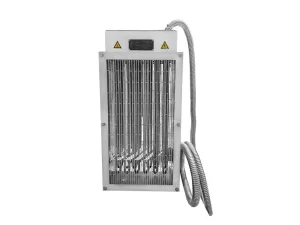
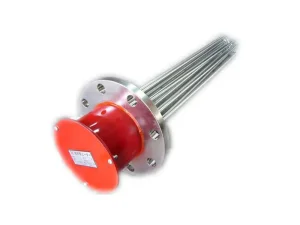
Browse our extended range of industrial heating components, electromagnetic boilers, cast-metal elements, and HVAC duct heaters.




Technical Q&A: Extruder Thermal Engineering
Direct engineering answers to frequently asked questions regarding extruder thermal management, customization, payback calculations, and system selection.