
High-Efficiency Industrial Heating Systems: Tier-1 Lineup
Explore custom-engineered electric strip, ceramic, cast-in, and explosion-proof heating systems built for harsh continuous processing environments.

China Portable Ceramic Heaters from China Suppliers: Efficient Heating Solutions for Factories and Industries Manufacturer, Exporters
Request Engineering Specs
Best Infrared Ceramic Heaters for Efficient Heating Manufacturers, Exporters
Request Engineering Specs
CE Certification Explosion Proof Electric Heater Exporter, Factory
Request Engineering Specs
China Portable Ceramic Heaters for Industry Manufacturers, Exporter
Request Engineering Specs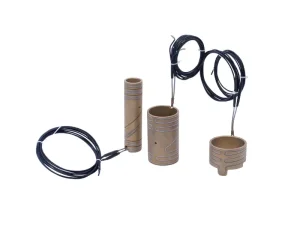
High-Quality (Hot-runner)Spring heater/Coil heater Manufacturers, Factory
Request Engineering Specs
CE Certification Fan Manufacturer, Factory
Request Engineering Specs
Best Heating/Cooling Integrated System Exporter, Exporters
Request Engineering Specs
China High density heating element Manufacturers, Factories
Request Engineering SpecsThe Physics of Conduction: Next-Generation Electric Strip Heating
Electric strip heating represents one of the most mechanically rugged, thermally responsive, and dimensionally versatile solutions for surface conduction and forced-convection process heating across continuous production cycles.
Electric strip heaters operate on fundamental Joule heating principles ($P = I^2 R$), where electrical resistance within a high-grade helical or etched wire element is converted into thermal flux. Unlike open immersion or ambient radiant elements, an electric strip heater relies on intimate solid-to-solid contact with a flat or cylindrical platen surface, transferring heat primarily via Fourier conduction ($q = -k \nabla T$). Under heavy continuous industrial cycles, thermal degradation of internal dielectric insulation, premature oxidation of resistance alloys, and contact resistance caused by thermal distortion (warping) remain the primary failure points that global OEM engineers battle daily.
As a foundational manufacturer operating since 1986, Yancheng Laier Heating Technology Co., Ltd. (Kangpu Heater) has developed proprietary compaction, sintering, and sheath cold-forming processes that resolve long-standing thermal dissipation bottlenecks. By compressing high-purity magnesium oxide (MgO) insulation under multi-axis hydraulic pressure—reaching densities exceeding 3.2 g/cm³—our engineered electric strip heaters establish an ultra-low dielectric thermal resistance path. This structural rigidity allows thermal energy generated in the nickel-chromium (NiCr 80/20) resistor to dissipate instantly into outer 304/316L stainless steel, aluminized steel, or Incoloy® 800 sheaths, minimizing internal core temperatures and preventing wire burnout under elevated operational demands up to 650°C (1200°F).
Emerging Macro Trends Reshaping Electric Strip Heating Solutions
The industrial heating sector is experiencing a generational shift driven by net-zero industrial mandates, localized decarbonization, smart thermal feedback architectures, and severe uptime imperatives.
1. Rapid Process Electrification & Decarbonization
Global petrochemical, plastics, and automotive tier suppliers are systematically phasing out open-flame gas burners and high-maintenance steam loops. High-voltage, precision electric strip heaters provide 98%+ localized thermal efficiency, zero on-site greenhouse gas emissions, and direct coupling to corporate renewable energy microgrids without piping heat loss.
2. Digital Twin Integration & Real-Time Edge PID
Modern extrusion lines and automated sealing platens no longer tolerate lagging thermo-mechanical responses. Industry 4.0 standards necessitate strip heaters embedded with internal dual-junction Class 1 Type-K/J thermocouples, permitting edge IoT thermal analytics, preventive resistance diagnostics, and sub-second PID loop stabilization within ±0.5°C.
3. Ultra-High Watt Density Metallurgy (W/cm²)
As equipment packaging becomes ultra-compact, machine builders require 2.5x to 3.5x higher watt densities per linear centimeter without compromising element longevity. The transition toward swaged mineral-insulated (MI) construction and micro-grooved conduction profiles enables safe operation up to 45 W/in² (7 W/cm²), vastly outperforming traditional open-mica configurations.
Engineering Specifications & Material Selection Architecture
A rigorous comparative engineering framework designed for procurement managers, plant maintenance directors, and OEM mechanical design teams.
| Strip Heater Category | Dielectric Core Material | Sheath Metallurgy Options | Max Sheath Temp | Typical Watt Density Range | Primary Industrial Applications |
|---|---|---|---|---|---|
| Mica-Insulated Strip Heaters | High-grade Muscovite / Phlogopite Mica Plates | Aluminized Steel / AISI 304 Stainless Steel | 480°C / 900°F | 15 – 25 W/in² (2.3 – 3.8 W/cm²) | Packaging seal jaws, hot stamp platens, blow molding dies, food holding equipment. |
| Ceramic-Insulated Refractory Strip | Interlocking Steatite / High-Alumina Ceramic Bricks | 304 / 316L / Incoloy® 800 Heat-Resistant Alloy | 650°C / 1200°F | 25 – 45 W/in² (3.8 – 7.0 W/cm²) | Plastics extrusion barrels, hot runner manifolds, laboratory test benches, vulcanizing presses. |
| Mineral-Insulated (MI) Swaged Strip | Compacted High-Purity Dielectric MgO Powder | AISI 321 / Incoloy® 840 Superalloy | 760°C / 1400°F | 40 – 65 W/in² (6.2 – 10.0 W/cm²) | Semiconductor vacuum chambers, aerospace thermo-forming, zinc/aluminum die heating. |
| Cast-In Aluminum / Copper Strip Elements | Compacted MgO in Seamless Alloy Casting | Cast Aluminum Alloy 319 / Cast Bronze / Copper | 400°C (Al) / 650°C (Cu) | 20 – 50 W/in² (Integrated Liquid Cooling) | Extreme duty polymer extruders, pharmaceutical reactors, chemical pipeline trace stations. |
| Finned Electric Convection Strip | Ceramic / Compacted MgO with Stainless Steel Fins | Corrosion-Resistant Aluminized Steel / 304 SS | 450°C / 840°F | 15 – 35 W/in² (In Forced Air Velocity) | HVAC drying tunnels, curing ovens, load dump resistors, air duct reheat banks. |
Critical Engineering Calculation: Clamping Force & Thermal Expansion Mitigation
A frequent pitfall in industrial strip heating installation is the failure to accommodate differential thermal expansion between the heating strip and the heated platen. A 300 mm stainless steel strip heater expands approximately 0.9 mm when cycled from ambient (20°C) to 500°C. If both ends are rigidly clamped without slotted holes or spring-loaded Belleville washers, the strip buckles outward in the center. An air gap of just 0.05 mm increases interfacial contact thermal resistance by over 300%, triggering thermal runaway within the core and rapid failure.
At Kangpu Heater, all high-temperature strip components are designed with pre-engineered expansion slots, reinforced center-rib stiffeners, and matched Belleville thermal tension washers to ensure constant 1.2–1.5 N/mm² surface clamping pressure across 10,000+ continuous thermal cycles.
Macro Industry Solutions: Mission-Critical Deployment
From petrochemical processing to high-speed automation lines, our customized electric strip heating architectures power modern industrial infrastructure.
Plastics Processing & High-Output Extrusion
In twin-screw extruders and blown film lines, melt viscosity stability is critical. Our ceramic and cast-in strip configurations maintain tight axial temperature gradients, eliminating resin shear degradation and die build-up, and cutting line reboot scrap rates by up to 40%.
Automated Packaging & High-Speed Seal Jaws
High-cycle horizontal form-fill-seal (HFFS) lines operate at 150+ cycles per minute. Kangpu mica strip elements provide rapid thermal replenishment upon contact with cold film polymers, preventing cold spots and ensuring hermetic seals without pinhole ruptures.
Industrial HVAC, Forced Air & Curing Tunnels
Configured with crimped stainless steel cooling fins, our convection strip heaters deliver exceptional heat dissipation in airflow velocities up to 15 m/s. Widely deployed in paint curing tunnels, textile stentering machines, and pharmaceutical drying chambers.
7-Stage Controlled Customization & Manufacturing Workflow
Eliminating procurement risks through deterministic, stage-gated engineering validation from CAD drafting to batch traceability.
ID & Thermal Modeling
Finite element thermal flux modeling, mechanical envelope determination, and fixing geometry validation.
Electrical Engineering
Voltage, wattage density, resistance wire gauge selection, terminal insulation sizing, and safety clearances.
Hard Tooling Tooling
Fabrication via dedicated production molds rather than soft prototypes to mirror true production tolerances.
Client On-Site Trial
Physical dimensional verification and mechanical clamp fitting on client production machinery.
Engineering Revision
Rapid iterative adjustment of leads, terminal brackets, or watt distribution profiles based on client feedback.
Full-Scale Validation
Hi-Pot dielectric testing (1500V/min), leakage current checks (<0.5mA), insulation resistance (>100MΩ), and thermal imaging.
Automated Mass Production
Frozen design specifications, robotic winding and sheathing, laser-etched serial tracking, and 5-year warranty certification.
Localized Support & Global Compliance Assurance
Seamless international trade execution backed by regulatory conformity across North American, European, and Asia-Pacific industrial corridors.
CE, UL 499 & RoHS Compliance
Every electric strip element is designed and certified according to European CE low-voltage directives (LVD 2014/35/EU) and North American UL 499 standards. Strict restriction of hazardous substances (RoHS) and REACH chemical declarations ensure unobstructed international customs clearance.
Export Packaging & Shock Resistance
Precision-ground ceramic insulation and thin-profile mica layers are vulnerable to transit vibration. We employ custom high-density foam molds, vacuum-sealed barrier foil bags to block oceanic moisture ingress, and reinforced sea/air freight wooden crates compliant with ISPM-15 phytosanitary rules.
5-Year Batch-Traceable Warranty
Our commitment to industrial reliability is embodied in our 5-year written factory warranty. Each unit carries a laser-etched QR code tying the heater back to raw material heat numbers, winding tension records, MgO lot logs, and final Hi-Pot technician sign-offs.
Technology Roadmap: The 2030 Vision for Strip Heating
Pioneering materials science and integrated smart thermal controls for the next century of industrial manufacturing.
Phase 1: Nano-Infrared Radiative Coatings
Application of sub-micron metal-oxide ceramic radiative films directly to outer sheaths, shifting conductive loss into high-efficiency directed infrared emission and cutting surface radiant losses by 22%.
Phase 2: Additive & Thick-Film Dielectric Layers
Transition from layered mica to plasma-sprayed ceramic dielectric coatings under 200 microns thick, providing 3000V isolation while slashing conduction thermal resistance by two orders of magnitude.
Phase 3: Silicon-Carbide (SiC) Resistors
Development of ultra-high temperature, non-oxidizing SiC strip elements capable of steady 900°C (1650°F) operation in corrosive atmospheres without requiring vacuum encapsulation.
Frequently Asked Questions: Strip Heating Technical Inquiry
Detailed engineering explanations answering common procurement, design, and operating concerns.
The allowable watt density depends on platen operating temperature, sheath material, and intimate clamping contact. For standard steel platens up to 250°C, mica strip heaters safely sustain 20 to 25 W/in² (3.1 to 3.8 W/cm²). Above 300°C, ceramic-insulated refractory strips or mineral-insulated (MI) construction should be specified, supporting 35 to 45 W/in² (5.4 to 7.0 W/cm²), provided that high-temperature anti-seize thermal paste and spring-loaded clamping prevent air-gap thermal runaway.
Magnesium oxide (MgO) is naturally hygroscopic. During prolonged shutdowns in humid environments, ambient moisture migrates into unsealed terminal ends, causing insulation resistance to drop below 1 MΩ and tripping ground fault circuit interrupters (GFCI). Kangpu heaters integrate hermetic high-temperature silicone or ceramic-to-metal braze terminal seals, combined with a hydrophobic MgO additive that inhibits water absorption even during trans-oceanic freight.
AISI 304 begins rapid sensitization and surface oxidation above 450°C (842°F), especially in environments containing halides, sulfur, or cycling atmospheric moisture. Incoloy® 800 (Nickel-Iron-Chromium superalloy) provides superior structural stability, resists carburization and stress corrosion cracking up to 760°C (1400°F), and prevents sheath embrittlement during aggressive high-wattage thermal cycles.
Yes. We regularly engineer custom multi-tapped, dual-voltage (120/240V or 240/480V) and star/delta 3-phase wiring within single or joined strip envelopes. Internal precision CNC winding allows dual-resistor layouts that give operators high/low staging capability without requiring SCR phase-angle thyristor firing controls.
High-Performance Thermal Equipment & Advanced Ovens
Explore specialized industrial heating equipment, thermal oil furnaces, flexible custom elements, and molecular orientation ovens.

CE Certification Flexible Heaters for Custom Applications Manufacturer, Exporter
Request Engineering Specs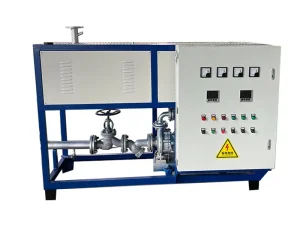
High-Quality Heat-conducting oil furnace Manufacturer, Exporter
Request Engineering Specs
CE Certification PVC-O Ovens for Precision Heating Manufacturer, Manufacturers
Request Engineering Specs
CE Certification Nano infrared electric band heater Manufacturer, Manufacturers
Request Engineering Specs
CE Certification Precise Cooling and Heating System Manufacturers, Exporters
Request Engineering Specs
China Efficient Portable Ceramic Heaters for Industry | China Suppliers & Factory Exporters, Factories
Request Engineering Specs
High-Quality Portable Ceramic Heaters for Industry - Efficient Heating Solutions from China Suppliers and Factory Exporter, Exporters
Request Engineering Specs