Industrial Process Heaters & Systems
Engineered for polymers, fluid processing, and clean utility operations with full material traceability.







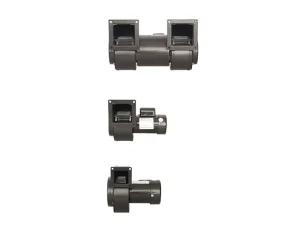
Engineering Principles: Fan-Assisted Flanged Immersion Heaters
Bridging high-power liquid immersion with forced-convection boundary cooling to solve boundary layer coking and thermal runaway in high-viscosity media.
Procurement Demands & Sheath Sizing
Procurement directors and process engineering heads face strict uptime targets. When specifying fan flanged immersion assemblies, thermal boundary design is crucial. High watt density in stagnant or viscous petrochemical, glycol, or heavy fuel environments causes thermal crack degradation and sheath calcification. Our system configures precise watt density (ranging from 1.2 to 8.5 W/cm²) utilizing high-purity compacted MgO dielectric cores and automated orbital TIG-welded hairpin tubes to standard ANSI/ASME or DIN flanges.
Watt-Density Range: 1.2 - 8.5 W/cm²Forced Air Cooling Integration
Standard flanged immersion heaters often suffer terminal enclosure heat soak, causing lead wire embrittlement and catastrophic seal blowouts when handling media above 250°C. Our specialized "Fan Flanged" architecture couples an auxiliary cooling shroud, air fin standoffs, and a high-static pressure centrifugal or axial blower. This forced convective draft isolates the terminal junction box (NEMA 4/7/ATEX certified), maintaining ambient internal enclosure temperatures even under extreme boiler vessel conditions.
Terminal Box: < 65°C ContinuousMetallurgical & Corrosion Resistance
Selecting the proper metallurgy guarantees operational longevity. We cast and form immersion bundles using premium Incoloy 800/840, SUS316L, SUS321, and pure Titanium tubes. Every flanged heater undergoing export is hydraulically pressure tested up to 2.5 MPa, subjected to dielectric breakdown tests at 2000V/min, and sealed with proprietary high-temperature silicone rubber or epoxy potting against humidity intrusion.
Pressure Tested: Up to 2.5 MPaMacro-Industry Decarbonization & Heating Solutions
Transforming industrial electrification across critical global processing sectors.
Plastics & Polymer Synthetics
From compounding twin-screw extruders to PVC-O orientation systems, flanged immersion and circulation setups regulate jacketed heat exchangers, barrel fluid tempering units, and cleaning furnaces. The rapid thermal responsiveness ensures absolute plastic melt stability without degrading delicate additives.
Petrochemical & Power Generation
Heavy turbine lube oil conditioning, fuel preheating, and closed-loop heat transfer oil circuits require explosion-proof (Ex-d), fan-flanged immersion architectures. Our designs prevent catastrophic fluid coking over tubular sheaths while safeguarding terminal chambers from hazardous gas atmospheres.
Food, Beverage & Pharma Clean Steam
Electromagnetic steam generation and sanitary immersion boilers demand zero carbon emissions and no combustion flue exhausts. Stainless steel SUS316L and electro-polished passivated flange immersion assemblies deliver high-purity dry steam for CIP/SIP sterilization and food-grade autoclaves.
Industrial HVAC & Marine Environments
Heavy marine engine preheaters, offshore drilling rig mud heating, and industrial air handling duct networks rely on high-capacity duct and immersion systems. Built with copper-nickel and super duplex alloys, these units resist saline corrosion and high vibrational stresses.
Engineering Matrix & Technology Roadmap (2025–2030)
Data-backed selection parameters for global process design engineers.
| Heating Technology | Sheath Metallurgy | Max Operational Temp | Typical Watt Density | Primary Industrial Use Case |
|---|---|---|---|---|
| Fan Flanged Immersion Heater | Incoloy 800 / SUS316L | 650°C (Process Fluid) | 2.0 - 7.5 W/cm² | Heavy oil, high-temp thermal transfer fluid & pressure vessels |
| Ceramic Band Barrel Heater | Steatite Ceramic / Al-Steel | 500°C (Barrel Surface) | 4.0 - 8.0 W/cm² | Plastic extruders, injection blow molding & pipe processing |
| Cast-in Aluminum / Copper Heater | Cast Al Alloy / Brass | 400°C (Al) / 650°C (Cu) | 3.0 - 5.5 W/cm² | Extrusion die heads, food forming lines, aggressive vibration zones |
| Nano Infrared Band Heater | Aerogel / Quartz Composite | 350°C (Energy-Saving) | 3.0 - 6.0 W/cm² | Energy retrofit programs cutting radiant loss by 20%-35% |
| Electromagnetic Steam Boiler | Magnetic Induction Core | 190°C (Saturated Steam) | Volumetric Flux | Decarbonized, flue-gas-free industrial dry steam production |
Phase 1: Edge IoT & Sheath Telemetry
Embedding multi-point micro-thermocouples inside the core resistance windings of immersion bundles. By transmitting raw sheath temperatures via Modbus RTU/Ethernet IP to plant DCS systems, operators prevent coking events before element burnout occurs.
Phase 2: Additive Manufacturing Alloys
R&D migration into direct metal laser sintering (DMLS) for complex internal turbulators within flanged tube arrays. Enhanced surface-area-to-volume geometry accelerates convective heat exchange coefficients by up to 28% without increasing flange diameter.
Phase 3: Net-Zero Circular Thermal Design
Kangpu is deploying modular, fully rebuildable immersion core cartridges. Plant operators can replace damaged internal heating coils while preserving the machined heavy-duty flange, reducing lifecycle carbon emissions and CAPEX by more than 40%.
Full Regulatory Compliance & 7-Stage Validation
Direct OEM support adhering strictly to global electrical and pressure equipment directives.
Global Regulatory Certifications
Kangpu products comply with CE Low Voltage Directive (LVD 2014/35/EU), Electromagnetic Compatibility (EMC 2014/30/EU), and pressure vessel codes (ASME Section VIII, Div 1 / PED 2014/68/EU). Full EN 10204 3.1 material test certificates and radiographic weld inspection reports accompany every export container.
The 7-Stage Production Protocol
To safeguard high-stakes industrial projects, we execute a rigorous seven-stage process: 1. ID Engineering & Simulation → 2. Parameter Customization → 3. Hard Tooling Molds → 4. Customer Physical Signoff → 5. Tolerance Correction → 6. Full-Load Diagnostic Testing → 7. Traceable Batch Mass Production.
5-Year Traceable Warranty
Unlike trading agencies, our factory stamps and tracks each heating element with unique laser batch IDs. Should an unexpected insulation breakdown or sheath failure occur, our metallurgical lab conducts root-cause analysis (destructive microscopy & elemental spectroscopy) to replace the unit and optimize future runs.
Frequently Asked Technical Questions
Immediate engineering answers regarding sizing, custom tooling, and operational safety.
The forced-draft fan isolates and active-cools the standoff chamber between the mounting flange and the electrical terminal box. In high-temperature liquid processes (>250°C), conductive and radiant heat from the flange often degrades wiring insulation and terminal seals. Active convective cooling protects terminal junctions and extends the lifespan of sensitive electronic sensor terminations.
Watt density is determined by fluid velocity, operating viscosity, and thermal conductivity. For heavy fuel oil or thermal heat transfer fluid, watt density must remain below 1.5 - 2.5 W/cm² to prevent local boundary fluid breakdown (carbon coking). For water or low-viscosity aqueous solutions, densities can safely reach 6.0 - 8.5 W/cm². Our technical engineers calculate exact watt density curves based on your operational media characteristics.
Yes. Custom manufacturing is our primary engineering service. You can provide ANSI (150lb to 2500lb), DIN, or JIS flange drawings, immersion lengths, sheath bending profiles, and wiring schematics. Our engineers will verify clearance tolerances, review watt density, build physical pre-production test samples, and execute mass production only after your on-site physical approval.
Mica band heaters are slim, budget-friendly, and provide rapid thermal response up to 350°C, making them ideal for injection nozzles and small-diameter barrels. Ceramic band heaters utilize interlocking steatite ceramic blocks with built-in thermal insulation blankets, tolerating continuous temperatures up to 500°C–650°C. They reduce external heat loss to ambient air and save significant energy on high-output plastics extruders.
Every batch shipped from Kangpu is stamped with a traceable QR code and serial number linking back to the raw material melt certificates and electrical inspection records. If an element fails within 5 years under normal process conditions, our quality assurance team analyzes the failure mode, provides corrective engineering adjustments, and ships free expedited replacements directly to your plant.
Specialized Industrial Ovens, Fans & Thermal Hardware
Precision cast assemblies, duct heating packages, and turn-key thermal process machinery.