

Precision Engineering Solutions
Featured Industrial Heat Exchange & Thermal Systems
Directly integrated heating and multi-stage heat recovery components engineered for rigorous duty cycles, thermal uniformity, and high-efficiency fluid-gas exchange.
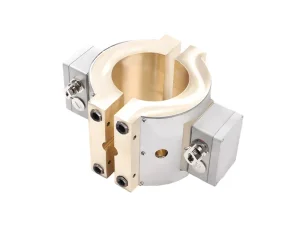
CE Certification Cast Aluminum/Copper Heater Manufacturer, Exporter
Explore Specification
CE Certification Ovens Manufacturer, Exporter
Explore Specification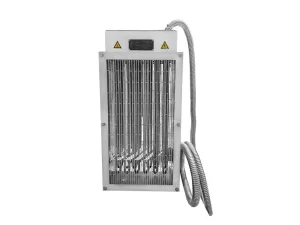
CE Certification Efficient Air Duct Heaters for HVAC Manufacturer, Factory
Explore Specification
High-Quality Portable Ceramic Heaters for Industry - Reliable Temperature Control from China Suppliers and Factory Exporter, Factory
Explore Specification
High-Quality Thermocouple Exporter, Factory
Explore Specification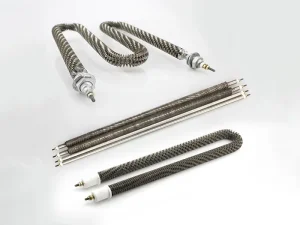
China High density heating element Manufacturers, Factories
Explore Specification
High-Quality Portable Ceramic Heaters for Industry - Reliable Heating Solutions from China Suppliers and Factory Manufacturers, Factory
Explore SpecificationThe Engineering Evolution of Multiple Heat Exchanger Configurations
In contemporary industrial thermodynamics, singular heat transfer surfaces often fall short when dealing with non-linear temperature curves, fluctuating mass flow velocities, and critical approach temperatures. The term Heat Exchanger Multiple identifies a sophisticated architectural paradigm: multi-pass, multi-tube, multi-channel, and multi-zone heating and cooling arrays coordinated to achieve optimal Logarithmic Mean Temperature Difference (LMTD) and minimum entropy generation. Whether deployed in continuous plastics extrusion, chemical reaction control, or industrial air recuperation, transitioning to multi-channel configurations enables precision gradient management that single-circuit exchangers cannot deliver.
When industrial facilities scale throughput, fluid dynamics transition into turbulent boundaries where boundary-layer thermal resistance governs overall transfer efficiency. Advanced manufacturers engineer multi-circuit heating exchangers utilizing internal turbulators, micro-fin geometries, and dual-envelope cast conductive matrices (aluminum and copper alloys) to break laminar dead zones. This enables high-density thermal throughput while maintaining a compact physical footprint, curtailing capital expenditure on structural plant space and piping manifolds.
Key Engineering Fact: Multi-pass cross-flow and counter-current heat exchangers exhibit up to 34% higher thermal recovery rates compared to conventional single-pass co-current designs under identical pumping power constraints, directly mitigating process utility consumption.
Multi-Pass Thermal Vectoring
Segmented baffle designs and multi-circuit fluid routing eliminate thermal dead spots, preventing localized fluid degradation or thermal stress cracks in high-pressure thermal oil loops.
Modular Matrix Scalability
Engineered around standardized multi-element sub-assemblies that permit on-site capacity expansion without requiring complete replacement of piping infrastructure or base skids.
Active Dual-Loop Control
Seamless pairing of electric heating elements (cast aluminum/ceramic) with internal cooling fluid channels to maintain critical process setpoints within ±0.5°C margins.
Global Industry Drivers & Enterprise Procurement Benchmarks
The global heat exchanger market is experiencing a profound structural transformation propelled by decarbonization targets, mandatory heat recuperation regulations, and the rapid electrification of heavy industry. Global Fortune 500 manufacturers, EPC engineering conglomerates, and machinery builders are no longer evaluating heat exchangers merely as standalone hardware components; they are procuring them as integrated thermo-hydraulic sub-systems backed by quantified MTBF (Mean Time Between Failures) metrics, lifecycle carbon accounting, and total cost of ownership (TCO) models.
Crucial B2B Procurement Evaluation Vectors
Enterprise procurement officers and plant engineering directors enforce stringent qualification protocols when selecting a verified Heat Exchanger Multiple Manufacturer. Key evaluation dimensions include:
- Metallurgical Purity & Traceability: Certified chemical composition of high-grade AISI 316L, Incoloy 800/840, and pure copper alloys to resist chloride-induced stress corrosion cracking (SCC).
- Thermal Cycling Endurance: Structural integrity under continuous cyclic ramp-ups from ambient conditions to 450°C+ without brazing joint degradation or seal failure.
- Fouling Factor Mitigation: Optimized fluid shear velocities within tube passes to prevent particulate crystallization and calcification, reducing plant clean-in-place (CIP) intervals.
- ASME & CE/PED Conformance: Pressure vessel and electric element certification guaranteeing rupture-proof performance up to high operating pressures (10 MPa+).
China Factory 4.0: Supply Chain Resilience, Vertical Integration & Cost Efficiency
China’s industrial manufacturing sector has transitioned from labor-dense assembly to cutting-edge Factory 4.0 automation. As an epicenter of specialized industrial heating and thermal technology, manufacturing facilities located in industrial hubs such as Yancheng, Jiangsu, harness hyper-concentrated supply chain clusters. In this ecosystem, precision raw material sourcing, automated CNC tube bending, robotic orbital welding, and vacuum dielectric filling occur within tight geographic radii. This architectural clustering provides unmatched supply chain resilience, insulation against geopolitical shipping bottlenecks, and rapid rapid-prototyping turnaround cycles.
Factory 4.0 integration at Kangpu Heater (Yancheng Laier Heating Technology) combines digital CAD/CAM mold generation with in-line computerized thermal performance testing. Before mass manufacturing begins, our facilities construct custom tooling molds that replicate true production wall thicknesses, heat dissipation channels, and terminal enclosures. This eliminate common prototype-to-production discrepancies, ensuring that serial production batches adhere strictly to approved thermodynamic baselines.
Digital Quality Control Assurance: Every multi-stage exchanger and cast heating-cooling unit undergoes 100% dielectric withstand testing (Hi-Pot up to 2500V), helium mass spectrometry leak detection, and automated thermal imaging to guarantee uniform surface watt density prior to overseas export.
| Exchanger Architecture | Primary Heat Media | Operating Temp Range | Thermal Transfer Efficiency | Ideal Application Scenario |
|---|---|---|---|---|
| Multi-Pass Cast Aluminum/Copper | Electric Resistance + Liquid Coolant | Ambient to 450°C (Al) / 650°C (Cu) | 92% - 96% Conductive Transfer | Plastics Extrusion & Injection Molding Barrels |
| Multi-Circuit Air Duct Exchangers | Forced Air, Nitrogen, Process Flue Gas | -20°C to 500°C | 88% - 94% Convective Transfer | HVAC Air Handling, Industrial Drying Ovens |
| Multi-Zone Ceramic Infrared Elements | High-Grade Radiant Ceramic Matrix | Up to 700°C Process Surface | 94% - 98% Radiation Coupling | Thermoforming, Curing, Pipe Orientation Lines |
| Multi-Stage Thermal Oil Boilers/Furnaces | Synthetic Heat Transfer Fluids (HTF) | Ambient to 350°C at Low Pressure | 90% - 95% Closed-Loop Systemic | Chemical Reactors, Laminating Rollers, Calenders |
Field Engineering Deployments
Engineered Application Scenarios for Multi-Circuit Exchangers
Proven engineering architectures deployed across mission-critical continuous manufacturing sectors worldwide.
1. High-Performance Polymer Extrusion & PVC-O
In PVC-O (molecularly oriented polyvinyl chloride) pipe lines and compounding extruders, melt shear creates intense localized friction. Multi-pass cast-in cooling channels combined with ceramic heating elements dynamically extract excess frictional calories while maintaining barrel zone tolerances within ±1°C, eliminating degradation of heat-sensitive resin chains.
2. Continuous Chemical & Petrochemical Synthesis
Pilot plants and commercial processing columns require multiple indirect heat exchangers operating with thermal oils or electromagnetic steam generation. Eliminating open combustion minimizes hazardous zone classifications (ATEX/IECEx zones) while multi-stage fluid looping optimizes reaction exotherm control without risk of flash vapor pocketing.
3. Industrial Air Handling & Cleanroom Drying
High-capacity air duct heat exchangers equipped with high-density finned heating matrices supply uniform dry air streams for pharmaceutical spray dryers, lithium battery coating cleanrooms, and automotive paint booths, preventing condensation via tight multi-stage PID modulation.
Technical Clarifications
Frequently Asked Questions: Heat Exchanger Multiple Systems
Direct technical answers from senior thermal engineering consultants regarding design calculations, metallurgy, and procurement.
What distinguishes a "Heat Exchanger Multiple" from standard single-circuit exchangers?
A multiple heat exchanger incorporates partitioned fluid circuits, multiple passes, or segregated electrical heating zones within a single envelope. This allows operators to run different temperature stages, handle variable fluid viscosities across passes, manage thermal expansion unevenness, and maintain process continuity even if one circuit undergoes maintenance.
How do you resolve thermal expansion mismatch in multi-tube or multi-pass shells?
We utilize floating tube-sheet assemblies, toroidal expansion bellows, and pre-formed helical coils. For cast-in electric heating/cooling systems, tubular elements and stainless coolant pipes are cast within high-purity aluminum or copper matrices using proprietary thermal expansion gap engineering to prevent inner bore ovality under rapid cycles.
Can Kangpu manufacture heat exchange solutions directly from proprietary client CAD drawings?
Yes. Over 70% of our production consists of build-to-print or customized OEM engineering. We accept STEP, IGES, and DWG drawings, reviewing them through thermodynamic simulation software to verify watt density, fluid pressure drops, lead orientation, and mechanical clamping geometry prior to sample mold fabrication.
What is the standard warranty coverage and traceability protocol?
Kangpu offers an industry-leading five-year warranty on core heating elements and structural cast exchangers. Every unit is laser-etched with a unique traceability code linked to raw material melt batches, internal resistance metrics, Hi-Pot test readouts, and final inspector sign-offs.
When should cast bronze/copper be selected over cast aluminum for heat exchanger bands?
Cast aluminum is optimal for operating temperatures up to 400°C - 450°C and provides lightweight thermal responsiveness. Cast bronze or brass alloys are selected when operating temperatures consistently range between 450°C and 650°C, or when aggressive ambient atmospheric vapors demand superior anti-corrosive chemical resistance.
How does nano-infrared technology improve energy conservation in multi-unit arrays?
Nano-infrared band heaters utilize high-emissivity ceramic coatings coupled with aerogel and microporous ceramic fiber back-insulation. Rather than relying purely on conduction, heat is transferred radiantly into the process cylinder while external casing temperatures remain below 50°C - 60°C, cutting power consumption by 20% to 35%.
Complete Equipment Catalog
Specialized Thermal Equipment & Ancillary Systems
Explore our full industrial line including thermal oil furnaces, high-temp insulation, cleaning furnaces, and advanced heating elements.
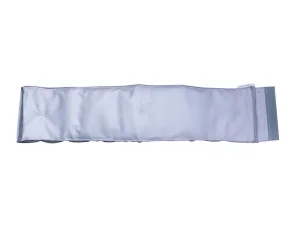
Best Durable Heat Insulation Covers Manufacturer, Exporters
Explore Specification
China Portable Ceramic Heaters for Industry Manufacturers, Exporter
Explore Specification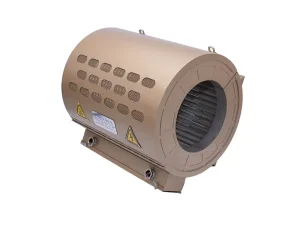
CE Certification Nano infrared electric band heater Manufacturer, Manufacturers
Explore Specification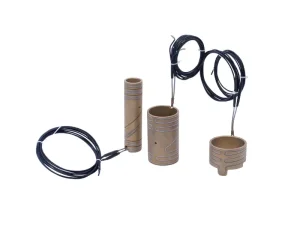
High-Quality (Hot-runner)Spring heater/Coil heater Manufacturers, Factory
Explore Specification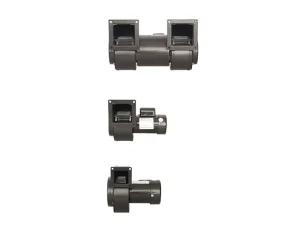
CE Certification Fan Manufacturer, Factory
Explore Specification
High-Quality Cleaning furnace Manufacturer, Exporter
Explore Specification
High-Quality Portable Ceramic Heaters for Industry - Efficient Heating Solutions from China Suppliers and Factory Exporter, Exporters
Explore Specification