
Featured Industrial Heating Elements & Induction Oven Modules
Explore heavy-duty heating solutions engineered for continuous industrial manufacturing, high-temperature thermodynamic stability, and zero-downtime manufacturing lines.

High-Quality Heat-conducting oil furnace Manufacturer, Exporter
Configure Specs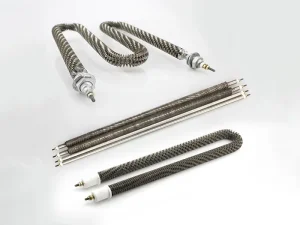
China High density heating element Manufacturers, Factories
Configure Specs
China Efficient Portable Ceramic Heaters for Industry | China Suppliers & Factory Exporters, Factories
Configure Specs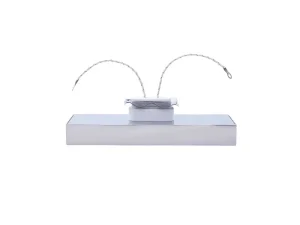
Best Infrared Ceramic Heaters for Efficient Heating Manufacturers, Exporters
Configure Specs
High-Quality Portable Ceramic Heaters for Industry - Reliable Temperature Control from China Suppliers
Configure Specs
High-Quality Portable Ceramic Heaters for Industry - Efficient Heating Solutions Exporters
Configure Specs
China Portable Ceramic Heaters for Industry Manufacturers, Exporter
Configure Specs
CE Certification Explosion Proof Electric Heater Exporter, Factory
Configure SpecsEvolutionary Trajectory of Industrial Induction Heating & Thermal Systems
From rudimentary resistance convection ovens to non-contact high-frequency electromagnetic field induction: An engineering whitepaper on energy density, decarbonization, and process yield optimization.
Over the past four decades, the global manufacturing sector has witnessed an imperative shift from fossil-fuel combustion and conventional open-coil resistance heating toward advanced industrial induction ovens. Conventional thermal transfer mechanisms—primarily thermal conduction and atmospheric convection—suffer from substantial thermodynamic entropy loss, sluggish transient response times, erratic heat flux gradients, and excessive carbon emissions. In sharp contrast, electromagnetic induction heating harnesses Faraday's law of electromagnetic induction to generate eddy currents directly within the target conductive core or high-permeability susceptors.
Industrial induction ovens represent the pinnacle of modern thermal physics. By eliminating the thermal boundary resistance typically found in traditional surface-mounted bands and radiant resistance elements, an industrial induction oven achieves an instantaneous electrical-to-thermal conversion efficiency exceeding 93% to 98%. The resultant Joule heat generation operates instantaneously at the molecular level, enabling ramp rates that surpass 150°C per minute while maintaining skin-depth penetration control that prevents core embrittlement or surface decarburization.
To evaluate total lifetime cost (Total Cost of Ownership - TCO), thermal uniformity, and plant ESG alignment, procurement engineers evaluate the following core parameters across competing heating technologies:
| Operational Metric | Traditional Gas-Fired Oven | Standard Resistance Oven | Advanced Industrial Induction Oven |
|---|---|---|---|
| Thermal Efficiency (%) | 35% – 52% (flue gas loss) | 65% – 78% (air gap losses) | 93% – 98.5% (direct field excitation) |
| Ramp-Up Speed to 450°C | 45 – 90 Minutes | 30 – 50 Minutes | 3 – 8 Minutes (instantaneous) |
| Temperature Tolerance Zone | ±15°C to ±25°C | ±5°C to ±10°C | ±0.5°C to ±1.5°C (PID digital loop) |
| Carbon Footprint & On-Site Emissions | High CO2, NOx, and volatile particulates | Indirect electrical emissions | Zero direct emissions (100% clean electrifiable) |
| Refractory & Coil Lifespan | 18 – 36 Months before relining | 6,000 – 12,000 Hours (element burnout) | >100,000 Hours (water-cooled non-contact coils) |
| Factory Floor Heat Dissipation | Massive (requires extreme air conditioning) | Moderate to high skin temperatures | Minimal (<45°C ambient chassis touch) |
Global Corporate Procurement Requirements & Buyer Decision Matrix
Chief Procurement Officers (CPOs) and Plant Engineering Directors rely on quantifiable technical validation criteria when selecting Tier-1 industrial induction oven manufacturers.
1. Regulatory Compliance & Certifications
International procurement frameworks mandate strict alignment with safety directives and electromagnetic compatibility (EMC) regulations. Tier-1 buyers cannot risk plant shutdowns due to uncertified machinery.
- CE Mark Certification: Conforming to European Low Voltage Directive (LVD) 2014/35/EU and Machinery Directive 2006/42/EC.
- EMC & Harmonics Protection: Compliance with EN 61000-6-2/4 to prevent electromagnetic interference with automated PLC architectures.
- Explosion-Proof Ratings: ATEX and IECEx compliance for volatile environments, utilizing intrinsically safe coil isolation.
2. Digital Integration & PLC Architecture
Modern production facilities demand total interoperability with existing SCADA, MES, and Industry 4.0 data highways for autonomous self-tuning control loops.
- Proportional-Integral-Derivative (PID): High-frequency sampling rates (<10ms) delivering micro-degree thermal stabilization.
- Industrial Bus Protocols: Native Siemens Profinet, Modbus TCP/IP, EtherCAT, and OPC-UA connectivity for remote performance telemetry.
- Preventive Diagnostics: Real-time coil impedance monitoring, cooling water flow sensors, and dielectric breakdown alarms.
3. Total Lifecycle Cost (TCO) & Efficiency
Procurement teams evaluate systems not merely on capital expenditure (CAPEX), but on cumulative energy consumption and maintenance overhead over a 15-year operating life.
- Kilowatt-Hour Amortization: Induction ovens recoup initial price premiums within 8 to 14 months through 30-45% electrical savings.
- Zero Consumable Wear: Induction coils operate without contact, eliminating annual resistance wire burnout and ceramic degradation.
- Rapid Batch Changeovers: Instantaneous cool-down and thermal reconfiguration slash setup times between production cycles by up to 70%.
China Industry 4.0: Supply Chain Resilience, Precision & Scale
How Yancheng Laier Heating Technology (Kangpu Heater) leverages an integrated industrial cluster in Jiangsu to deliver unmatched engineering consistency and swift global fulfillment.
Full In-House Upstream Integration
From metallurgical refining of oxygen-free high-conductivity (OFHC) copper tubes to automated CNC machining of induction inductors, every stage remains inside our Yancheng manufacturing complex.
Real-Mold Pre-Production Verification
Unlike intermediaries relying on generic handcrafting, Kangpu initiates custom tooling with dedicated steel molds, verifying coil inductance, flux leakage, and insulation resistance prior to batch production.
Sub-Component Batch Traceability
Every single heating unit, induction generator, and cast-in sleeve is assigned a laser-etched matrix tracking coil winding density, resin potting temperature, dielectric test data, and material metallurgy.
Rapid Global Logistics Resilience
Positioned along China's eastern maritime industrial corridor, Kangpu provides seamless containerized multimodal export handling with rapid spare-parts availability across Europe, North America, and ASEAN.
Global Macro-Industrial Landscape: The Green Electrification Mandate
How sovereign climate regulations, carbon border taxes, and high energy tariffs are driving heavy process manufacturing into zero-carbon induction heating conversions.
The international industrial manufacturing footprint is currently facing unprecedented structural disruption. With the implementation of the European Union's Carbon Border Adjustment Mechanism (CBAM), United States Inflation Reduction Act (IRA) tax incentives for industrial electrification, and aggressive national carbon neutrality roadmaps throughout the OECD, traditional gas-fired industrial furnaces and oil combustion ovens are rapidly transitioning into operational and financial liabilities.
In metallurgical casting, plastics polymer processing, and thermal petrochemical sectors, natural gas combustion accounts for upwards of 40% of plant direct Scope-1 greenhouse emissions. Transitioning to high-frequency industrial induction ovens eliminates direct emissions completely, opening avenues for manufacturing facilities to operate on 100% renewable grid power (solar photovoltaic, wind turbine, and nuclear micro-grid sourcing).
Industrial economic models reveal that while fossil fuel tariffs continue to experience volatility, high-efficiency electrical induction ovens present a predictable, linear energy consumption profile. By converting 95%+ of incoming electricity into effective workpiece enthalpy, factories avoid the massive heat dump into workshop ambients, slashing auxiliary air conditioning and ventilation loads by up to 55%. This dual advantage—energy reduction at the coil coupled with plant-wide cooling cost mitigation—directly increases net operational margins for high-volume processors.
Localized Industrial Application Scenarios: Field Engineering Depth
Precision heating deployments engineered for extreme mechanical stresses, sub-millimeter tolerances, and specialized thermodynamic behavior.
Biaxial Molecular PVC-O Pipe Orientation Ovens
Oriented Polyvinyl Chloride (PVC-O) pipe manufacturing requires heating thick-walled extruded hollow pipes precisely to the high-elastic rubbery state (105°C to 115°C) across both circumferential and radial profiles.
Any non-uniformity exceeding ±1.0°C causes localized wall necking and hoop stress failure under internal pressure testing. Kangpu high-stability heating and induction ovens provide multi-zone air-recirculating induction arrays that guarantee molecular lattice stretching symmetry, reducing raw resin consumption by up to 35% while doubling burst-strength resistance.
Extrusion Barrel Heating & Patented Cooling Zones
High-output twin-screw polymer extruders running engineering thermoplastics (PEEK, fluoropolymers, PA66-GF) generate massive shear heat that destabilizes melt viscosity.
Our patented air-cooled and cast-in integrated systems combine electromagnetic band heating with localized blower-ducted cooling channels. By instantly suppressing heat overshoot when mechanical friction rises, melt homogeneity is preserved, preventing black specks, degradation, and gauge variation in high-speed extrusion lines.
Zero-Emission Steam & Thermal Oil Circulation
Pharmaceutical reactors, chemical autoclaves, and cleanroom textile processing require high-temperature heat transfer fluids without on-site boiler houses or explosive open flames.
Kangpu electromagnetic steam boilers and high-temperature heat-conducting oil furnaces generate up to 350°C indirect fluid heat through sealed electromagnetic induction vessels. The compact footprint allows direct mounting adjacent to reactor jackets, cutting distribution piping thermal losses by 20%.
Industrial Heaters, Precise Controls & Process Assemblies
Complete your plant heating architecture with certified industrial boilers, flexible heating elements, sensor arrays, and custom pipeline systems.
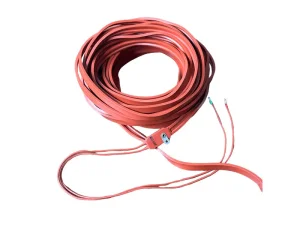
CE Certification Flexible Heaters for Custom Applications Manufacturer, Exporter
Configure Specs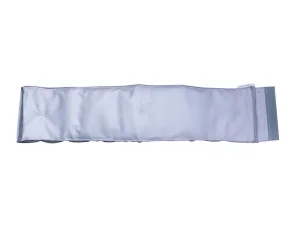
Best Durable Heat Insulation Covers Manufacturer, Exporters
Configure Specs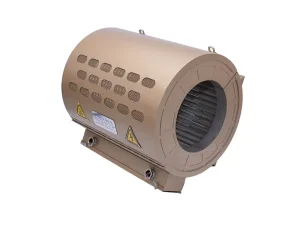
CE Certification Nano infrared electric band heater Manufacturer, Manufacturers
Configure Specs
High-Quality Thermocouple Exporter, Factory
Configure Specs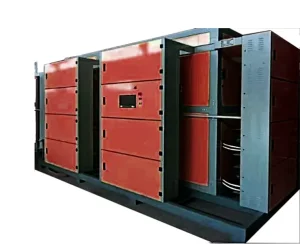
High-Quality Electromagnetic steam boiler Manufacturers, Factories
Configure Specs
Best Heating/Cooling Integrated System Exporter, Exporters
Configure Specs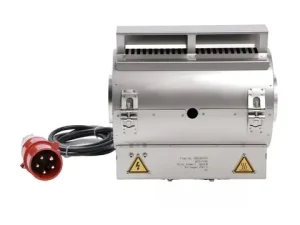
CE Certification Precise Cooling and Heating System Manufacturers, Exporters
Configure Specs
Best Pipeline Heater Manufacturers, Factory
Configure SpecsFrequently Asked Engineering & Procurement Questions (FAQ)
Direct answers to core inquiries regarding induction heating system architecture, custom fabrication, and international delivery cycles.
Yes, custom engineering and direct OEM manufacturing constitute over 70% of our production capacity. When you provide CAD/SolidWorks drawings, machine models, or physical samples, our engineering team evaluates internal and external dimensions, electromagnetic field resonance, watt density requirements, voltage configurations (from 110V single-phase up to 690V three-phase), terminal clamping configurations, and lead exit geometries. Before initiating full mass production, we open dedicated production molds and assemble physical samples for your factory validation.
Kangpu provides a comprehensive 5-year industrial warranty on our heating and cooling systems and industrial ovens. Every manufactured unit is assigned a permanent batch number, linking it to raw material mill test certificates, winding technician records, dielectric breakdown test logs, and operating thermal telemetry. If an anomaly occurs under specified operational parameters, our engineering department performs root-cause analysis on the batch code and provides swift replacement components or field engineering rectifications.
Mica heaters are lightweight, low-profile, and economical, functioning best for compact injection molding machine nozzles up to 300°C. Ceramic band heaters incorporate grooved ceramic tiles and external insulation blankets, handling operating temperatures up to 500°C–650°C for extruder barrels. Industrial induction ovens, by contrast, utilize contactless electromagnetic induction coils operating with high-frequency inverters. Induction systems generate heat internally within the target vessel or barrel rather than relying on surface contact conduction. This delivers up to 98% thermal efficiency, near-instantaneous heat-up times, and outer casing touch temperatures below 45°C, reducing workshop air conditioning loads.
Field telemetry across continuous plastic extrusion lines, chemical reactors, and continuous PVC-O pipe manufacturing facilities indicates an average electrical power reduction of 30% to 45% compared to legacy resistance band heaters. For lines operating on 24/7 industrial production cycles (6,000 to 8,000 hours per annum), the cumulative energy savings typically offset 100% of the capital expenditure (CAPEX) within 8 to 14 months of continuous operation, in addition to slashing line-down replacement intervals caused by resistance element burnout.
Kangpu products and industrial ovens are active across more than 100 sovereign territories, supporting over 5,000 industrial end-users, machinery builders (OEMs), and engineering contractors. Key export corridors include Germany, Italy, and Poland in the European Union; the United States and Canada in North America; Brazil and Mexico in Latin America; as well as high-growth industrial manufacturing hubs throughout Southeast Asia (Vietnam, Thailand, Indonesia) and the Middle East.