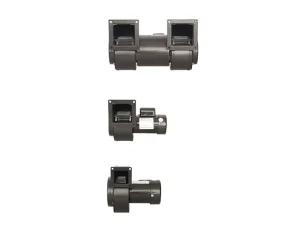
High-Efficiency Industrial Heating & Thermal Systems (Part I)
Explore our foundational range of heavy-duty thermal components, engineered in accordance with rigorous industrial specifications to serve pressurized lines, continuous heating jackets, and precision process equipment.

Best Infrared Ceramic Heaters for Efficient Heating Manufacturers, Exporters
Configure Product
CE Certification Cast Aluminum/Copper Heater Manufacturer, Exporter
Configure Product
CE Certification Efficient Air Duct Heaters for HVAC Manufacturer, Factory
Configure Product
CE Certification Nano infrared electric band heater Manufacturer, Manufacturers
Configure Product
China Efficient Portable Ceramic Heaters for Industry | China Suppliers & Factory Exporters, Factories
Configure Product
High-Quality Electromagnetic steam boiler Manufacturers, Factories
Configure Product
High-Quality Thermocouple Exporter, Factory
Configure Product
High-Quality Heat-conducting oil furnace Manufacturer, Exporter
Configure ProductThe Global Commercial & Industrial Landscape of Line Water Heating
A rigorous examination of fluid dynamics, zero-carbon electrification mandates, and why heavy process plants are phasing out fossil steam loops for forced-circulation electric line water heaters.
Thermal Decarbonization Pressures
Global manufacturing facilities face stringent Scope 1 and Scope 2 emission limits under EU ETS, US IRA incentives, and Asian carbon reduction protocols. Industrial line water heaters (circulation heaters) replace gas-fired boilers with direct electric joule heating, offering near 100% boundary thermal efficiency, instantaneous modulation, and complete elimination of on-site stack emissions.
Precision Fluid Control & Zero Delta-T Lag
Traditional steam jackets suffer from condensate sluggishness and mechanical valve hysteresis. Kangpu's precision line water heating assemblies employ engineered internal baffle arrangements that force high-velocity turbulent flow (Reynolds numbers > 10,000) over nickel-chromium resistance cores. This design eliminates localized stagnation and ensures stable, uniform temperature delivery within ±0.5°C.
ASME & PED High-Pressure Compliance
Operating line water heaters at pressurized conditions (up to 25 bar and 220°C in pressurized hot water loops) requires certified pressure vessel fabrication. Certified factories utilize automated orbital TIG welding, 100% radiographic weld seam evaluation, and hydrostatic stress trials to ensure catastrophic rupture resistance across rigorous cyclic operations.
Engineering Architecture: Mechanical, Thermodynamic & Metallurgy
A systematic breakdown of sheath material metallurgy, watt density distribution, and thermal boundary layers essential for procuring durable industrial line water heaters.
Sheath Metallurgy Selection
Line water heaters operate in chemically varied environments. Kangpu manufactures elements in Incoloy 800/840 for superior chloride stress-corrosion resistance, SS316L for clean sanitary loops, and passivated copper for high-conductivity closed heating circuits. Sheath thickness is calibrated to withstand erosion-corrosion from continuous turbulent fluid sweeps.
Watt Density Management (W/cm²)
Preventing boiling boundary-layer cavitation and mineral scaling depends directly on surface watt density. While stagnant water demands low densities (< 4 W/cm²), our forced-circulation line heaters are optimized between 6.0 and 12.0 W/cm². This maintains maximum heat exchange while keeping sheath skin temperatures well below fluid breakdown thresholds.
Internal Flow Baffling Dynamics
Unbaffled vessels suffer from bypass currents, stagnant dead zones, and localized overheating that causes element premature burnout. Kangpu implements CNC-punched segmental or helical flow baffles that cross-channel incoming pressurized water perpendicular to the tubular bundles, maximizing convection coefficients and optimizing pressure drop (ΔP).
| Specification Parameter | Commercial Grade Utility Heaters | Kangpu Industrial In-Line Water Heaters | Engineering Benefit & Lifecycle ROI |
|---|---|---|---|
| Heating Core Metallurgy | Commercial standard SS304 / Brass | Incoloy 800 / 840, Electro-polished SS316L | Resists pitting corrosion and stress cracking; 4x extended service life |
| Dielectric Insulation | Standard industrial MgO powder | High-purity electro-fused MgO, compacted >3.2g/cm³ | Superior dielectric strength (>2500V breakdown), zero thermal insulation voids |
| Vessel Construction | Welded seam thin-wall pipe (Sch 10) | Seamless Heavy-Wall Sch 40/80 (ASME Sec VIII) | Guaranteed cyclic pressure handling up to 40 bar without stress rupture |
| Over-Temperature Protection | Single mechanical thermostat switch | Dual internal sheath thermocouples + Vessel RTD | Instantaneous SCR trip on dry-run conditions; zero catastrophic burnouts |
| Warranty & Traceability | 12-month standard limited | 5-Year Complete Factory Warranty + Batch QR Trace | Full material test reports (MTR), heat numbers, and zero-defect assurance |
Mission-Critical Application Scenarios for Industrial Line Heaters
From advanced polymer extrusion temperature control units (TCUs) to sanitary clean-in-place (CIP) loops, discover where continuous circulation heating systems drive factory throughput.
Plastics & Rubber TCU Integration
Continuous closed-loop water circulation heaters power modern Mold Temperature Controllers (MTC) and extrusion barrel cooling-heating zones. Operating at temperatures up to 180°C under pressure, these units maintain absolute mold surface temperature stability, preventing parts warping, sink marks, and thermal cycle delays in high-speed injection lines.
Sanitary Clean-in-Place (CIP)
Food processing, dairy, beverage, and pharmaceutical facilities rely on in-line water heaters to ramp caustic and acid sanitizing wash loops up to 85°C instantaneously. Electropolished 316L flow vessels and sanitary tri-clamp fittings prevent bacteriological accumulation and meet stringent 3-A and FDA standards.
Boiler Feedwater Pre-Heating
In large industrial power and cogeneration facilities, electric in-line heaters act as critical economizers. Pre-heating demineralized boiler make-up water prior to deaeration prevents thermal shock in primary boiler tubes, reduces dissolved oxygen content, and optimizes overall steam plant thermodynamic efficiency.
Chemical Reactor Jacket Circulation
Exothermic and endothermic chemical syntheses demand rapid switching between forced heating and jacket water cooling. Flanged in-line heaters deliver high-kW thermal injection on demand, interfacing directly with automated PLC feedback systems to prevent runaway chemical reactions.
Technology Roadmap: Next-Generation Industrial Line Water Heating
A strategic overview of emerging thermal materials, edge IoT sensorization, and automated predictive maintenance architectures reshaping the industrial heating sector through 2030.
SCR Solid-State Power Modulations
Transition from electromechanical contactor cycling to zero-cross and phase-angle thyristor (SCR) power firing. Eliminates mechanical arcing, eliminates thermal cycling stress on element coils, and delivers micro-watt thermal precision under variable flow.
Integrated IoT Edge Health Monitoring
Embedding multi-point fiber Bragg grating temperature sensors and continuous dielectric leakage monitoring directly into heating bundles. Enables plant engineers to detect microscopic scale buildup and insulation degradation before equipment faults occur.
Silicon Carbide & Ceramic Nanocoatings
Application of plasma-sprayed ceramic nanocomposite coatings onto heating element sheaths. These hydrophobic, non-stick barriers resist limescale deposition in hard process water, maintaining pristine heat transfer rates over years of service.
AI-Driven Predictive Thermal Dynamics
Integration of self-learning PID neural network algorithms that continuously adapt to upstream fluid temperature spikes and production throughput shifts, pre-modulating power delivery before process loop setpoint deviation occurs.
Macro Industrial Solutions: Skid-Mounted Process Water Systems
Beyond bare heating elements, Yancheng Laier Heating Technology (Kangpu Heater) engineers and delivers fully packaged, skid-mounted fluid circulation systems ready for immediate utility tie-in.
Factory Pre-Packaged Skids
Our turnkey circulation skids consolidate the flanged in-line heater, magnetic-drive or mechanical-seal circulation pumps, expansion tanks, flow meters, differential pressure transmitters, and dual safety relief valves onto a single vibration-isolated structural steel frame, minimizing field labor and piping errors.
Custom Electrical & PLC Architecture
Every industrial line water heater requires matching electrical distribution. Kangpu designs and builds NEMA 4X / IP66 and ATEX/IECEx explosion-proof control panels with Siemens or Allen-Bradley PLCs, touchscreen HMIs, and Profinet/Modbus TCP integration for seamless DCS connectivity.
7-Stage Customization Protocol
Every Kangpu industrial line water heater project follows our proven seven-stage protocol: 1) Engineering ID & CFD analysis, 2) Watt density & metallurgy customization, 3) Real-mold precision fabrication, 4) Physical customer sample verification, 5) Tolerance modification, 6) Dielectric & hydrostatic stress testing, and 7) Mass production supported by our 5-Year Factory Warranty.
Frequently Asked Questions: Industrial Line Water Heaters
Authoritative engineering answers to help plant managers, system integrators, and procurement officers select and commission high-performance line water heating systems.
What distinguishes an industrial line water heater from a standard immersion heater?
An immersion heater is installed statically inside an unpressurized tank or reservoir, relying primarily on natural thermal convection. An industrial line water heater (also referred to as an in-line circulation heater) consists of a specialized immersion heating bundle mounted within a pressure-rated vessel with dedicated inlet and outlet nozzle ports. Fluid is actively pumped through the vessel under forced convection. This design enables higher watt densities, instantaneous heat transfer, exact temperature control, and the ability to operate safely in high-pressure closed-loop systems up to 40 bar.
How do you calculate the required kilowatt (kW) capacity for an in-line water heating system?
The standard thermodynamic equation used by Kangpu heating engineers is:
kW = [Flow Rate (m³/h) × Specific Heat of Water (4.186 kJ/kg·°C) × Density (kg/m³) × ΔT (°C)] / [3600 × Thermal Efficiency (η)].
Because electric circulation heaters achieve over 99% boundary transfer efficiency, η is typically set between 0.96 and 0.98 to account for ambient vessel radiation. Our engineering team also evaluates dynamic viscosity and Reynolds numbers to avoid laminar stagnation along the boundary elements.
What sheath materials and watt densities are recommended to prevent mineral scaling in hard water?
For untreated or hard industrial process water, we mandate Incoloy 800 or Incoloy 840 sheath materials with a de-rated surface watt density between 4.5 and 6.0 W/cm² (30–40 W/in²). Lower watt densities reduce the localized sheath surface temperature, preventing calcium carbonate (CaCO₃) and magnesium salts from precipitating and forming insulating scale. For deionized (DI) or reverse-osmosis (RO) clean water loops, electro-polished SS316L with watt densities up to 10 W/cm² is specified.
How does Kangpu Heater's 5-Year After-Sales Warranty operate in international markets?
Kangpu Heater (Yancheng Laier Heating Technology Co., Ltd.) tracks every component via laser-etched serial codes linked to full batch production records, including raw metallurgy mill test certificates (MTR), dielectric withstand logs, and hydrostatic testing data. In the rare event of a field failure, our engineers review operating parameters, analyze telemetry data, and ship expedited replacement elements while tracing the root cause back through our manufacturing quality system.
Can Kangpu fabricate circulation vessels and elements to custom customer drawings and foreign codes?
Yes. Customization is our primary operational model since 1986. We manufacture custom flanges (ANSI/ASME B16.5, DIN, JIS), specialized vessel nozzle orientations, non-standard voltages (208V, 380V, 415V, 480V, 600V, 690V up to multi-megawatt systems), and specific electrical enclosures (IP54, IP65, NEMA 4X, NEMA 7 explosion-proof). Simply provide your process flow sheet, dimensional envelope, or CAD drawings for engineering approval.
High-Efficiency Industrial Heating & Thermal Systems (Part II)
Explore our extended catalog of high-density industrial heating elements, furnace assemblies, hot-runner components, and thermal insulation solutions engineered for global export.
High-Quality Portable Ceramic Heaters for Industry - Reliable Temperature Control from China Suppliers and Factory Exporter, Factory
Configure Product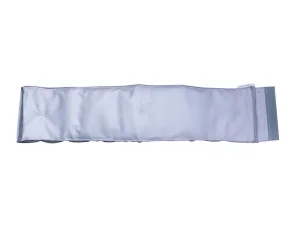
Best Durable Heat Insulation Covers Manufacturer, Exporters
Configure Product
High-Quality (Hot-runner)Spring heater/Coil heater Manufacturers, Factory
Configure Product
China Portable Ceramic Heaters from China Suppliers: Efficient Heating Solutions for Factories and Industries Manufacturer, Exporters
Configure Product
China High density heating element Manufacturers, Factories
Configure Product
CE Certification Ovens Manufacturer, Exporter
Configure Product
High-Quality Cleaning furnace Manufacturer, Exporter
Configure Product