Engineered Process Heating & Thermal Systems
Explore our certified thermal components and precision systems deployed across hygienic fluid pipelines, clean utility skid systems, and critical industrial extrusion lines worldwide.


Precision Sanitary Process Immersion Heating: Structural Mechanics & Material Purity
In sterile fluid processing, thermal precision must coexist with uncompromising metallurgical hygiene. Sanitary process immersion heaters operate directly inside ultra-pure media—such as Water for Injection (WFI), active pharmaceutical ingredient (API) solvents, ultra-pasteurized dairy streams, and semiconductor rinse chemicals. Every dimensional interface, weld seam, and sheath micro-topography must eliminate micro-crevices where biofilms, microbial spore traps, or thermal degradation can occur.
Hermetic Seal Technology & Epoxy Passivation
Standard industrial heating elements rely on silicone or resin terminal barriers susceptible to moisture intrusion during washdown. Our sanitary process immersion heaters utilize ceramic-to-metal hermetic brazing paired with fluoropolymer moisture barriers, guaranteeing insulation resistance > 1,000 MΩ even through repetitive 135°C Clean-in-Place (CIP) and Steam-in-Place (SIP) thermal cycling.
Ultra-Low Watt Density Calibration
Thermal scorching or fluid degradation causes catastrophic caramelization in dairy or protein denaturing in biopharma. We engineer sanitary heating bundles with ultra-low watt densities ranging between 1.5 W/cm² to 3.2 W/cm² (10 to 20 W/in²), distributing thermal flux uniformly along the entire active element length to prevent localized film boiling and sheath scorching.
Orbital GTAW Crevice-Free Flange Joints
Eliminating micro-pockets where bacteria colonize is our metallurgical standard. Heating elements are joined to sanitary Tri-Clamp ferrules or ASME BPE flanges using automated orbital gas tungsten arc welding (GTAW) with complete argon purge, followed by internal borescope inspection and chemical passivation under ASTM A967 standards.
Global Enterprise Procurement Requirements & Macro Industry Solutions
Procurement engineers and plant operations directors at Fortune 500 pharmaceutical conglomerates, food processing giants, and semiconductor wet-bench manufacturers navigate complex technical trade-offs when acquiring immersion heating assemblies.
| Sanitary Immersion Class | Wetted Materials | Surface Finish (Ra) | Primary Industrial Use-Case | Regulatory Validation Scope |
|---|---|---|---|---|
| Tri-Clamp Biopharma Series | AISI 316L, Incoloy 825, Hastelloy C22 | Ra ≤ 0.38 µm (Electropolished) | WFI Loop Buffers, Bioreactor Jacketed Circulation, API Synthesis | ASME BPE, FDA 21 CFR, cGMP, USP Class VI Elastomers |
| Hygienic Food & Beverage | AISI 304, AISI 316L, Titanium Gr. 2 | Ra ≤ 0.8 µm (Mechanical + Chemical Polish) | Pasteurization Skids, High-Fructose Syrup, CIP Caustic Tanks | 3-A Sanitary Standard 74-07, EHEDG Type EL Class I, EC 1935/2004 |
| High-Purity Deionized Water | Seamless Incoloy 800 / 840, Passivated 316L | Ra ≤ 0.5 µm (Passivated) | Microchip Wafer Rinsing, Photovoltaic Cell Cleaning | SEMI S2/S8, UL 499, CE Low Voltage Directive 2014/35/EU |
| Explosion-Proof Sanitary Immersion | Hastelloy C276, Super Duplex 2507 | Ra ≤ 0.4 µm (Electropolished) | Combustible Ethanol Extraction, Solvent Sterilization Skids | ATEX Zone 1/21, IECEx Ex db IIC T4...T6, NEC 500 Class I Div 1 |
Decarbonization & Boiler Replacement
Global manufacturers are rapidly phasing out centralized fossil-fuel steam boilers in favor of point-of-use (POU) electric sanitary immersion heaters. Decentralizing thermal energy directly at pure water generation loops eliminates thermal distribution piping losses of 18–35%, lowering facility Scope 1 greenhouse gas emissions while ensuring dynamic temperature ramp rates up to 10°C/minute.
Digital Twin & CFD Boundary Layer Modeling
Modern process validation requires quantifiable fluid velocity simulations around immersion hairpin bundles. Kangpu engineers employ Computational Fluid Dynamics (CFD) to analyze fluid recirculation patterns across heater element bends. This engineering approach eliminates dead spots, ensuring boundary layer laminar velocities remain sufficient to prevent bio-film adherence and stagnant thermal pockets.
Total Cost of Ownership (TCO) Optimization
Procuring low-cost conventional heaters frequently results in catastrophic batch recalls due to sheath pitting or terminal failure during CIP cycles. Investing in factory-certified 316L electropolished immersion bundles reduces unscheduled maintenance downtime by over 72%, translating to hundreds of thousands of dollars in preserved product batches across biopharmaceutical production campaigns.
The Technological Horizon of Hygienic Process Heating
As Industrial Internet of Things (IIoT) sensors, advanced metallurgy, and artificial intelligence converge on factory floors, sanitary process heating is evolving from static resistive hardware into cognitive thermal assets.
Embedded Multi-Junction Fiber-Optic Thermometry
Integrating micro fiber-optic Bragg grating sensors directly inside the magnesium oxide (MgO) dielectric core to achieve distributed internal temperature profiling at millimeter resolution, preventing localized hot spots before they reach fluid boundaries.
AI-Driven Bio-Fouling & Scale Prognostics
Machine learning impedance spectroscopy tracks dielectric shifts across heating sheath boundaries in real time, alerting maintenance control centers of milkstone (calcium phosphate) or mineral scale formation weeks prior to thermal transfer decay.
Self-Passivating Nano-Ceramic Sheath Barriers
Atomic layer deposition (ALD) of ultra-thin, amorphous metal-oxide films that resist aggressive halide attack in saline biotech formulations while increasing heat flux across the liquid-sheath boundary layer by up to 24%.
Solid-State SCR Autonomous Power Modulation
Dynamic zero-cross Thyristor/SCR power balancing linked directly to SCADA systems, synchronizing instantaneous electrical draw with on-site renewable energy storage while maintaining tight temperature control within ±0.1°C.
Localized Compliance & Factory Traceability Standards
Yancheng Laier Heating Technology Co., Ltd. (Kangpu Heater) manufactures every sanitary immersion bundle under strict ISO 9001 quality management systems, backing every custom process installation with comprehensive material test reports (MTRs) according to EN 10204 Type 3.1.
100% Factory Batch Hydrostatic & Dielectric Testing
Every single manufactured immersion bundle undergoes a rigorous 4-stage verification program before crating: dielectric withstand testing (Hi-Pot) up to 2,500 VAC, insulation resistance verification at 500 VDC (> 1,000 MΩ cold), helium mass spectrometer leak detection for all hermetic joints, and hydrostatic pressure testing up to 1.5 times the maximum allowable working pressure (MAWP).
Full Metallurgical Pedigree & Traceability
From the raw Incoloy or 316L seamless tubing down to the sanitary ferrule forging, every component is assigned an immutable heat lot number. Procurement teams receive a complete validation package containing raw material chemical assay certificates, delta ferrite content verification (< 1% to prevent rouging), surface roughness profilometer readouts, and electropolishing validation certificates.
Global Field Engineering & Fast-Track Customization
With an engineering heritage dating back to 1986, our dedicated technical team supports EPC contractors and process skid fabricators across North America, Europe, Southeast Asia, and the Middle East. We provide full 3D CAD modeling, step files for piping integration, and custom terminal enclosures (NEMA 4X, IP66, IP69K stainless washdown, or ATEX explosion-proof) within 72 business hours.
Frequently Asked Questions by Process Engineers
Authoritative guidance on selecting, installing, and maintaining sanitary process electric immersion heaters across critical manufacturing environments.
Comprehensive Industrial Heating Elements & Furnaces
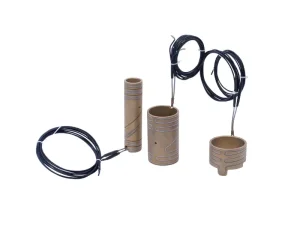
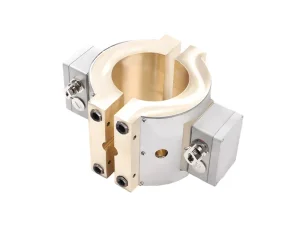
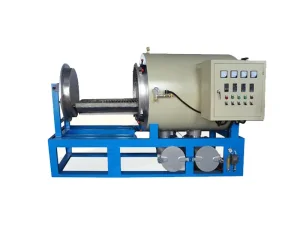
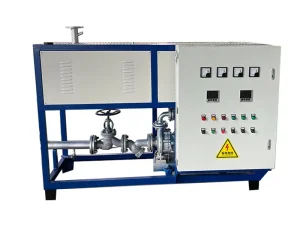
Explore additional precision manufacturing elements produced at our Yancheng manufacturing hub, serving plastic extrusion, high-temperature tooling, and thermal fluid operations worldwide.