
Precision Processing Units for High-Spec Infrastructure
Engineered for immediate integration into automated plastic extrusion lines, cleanroom curing, and industrial steam networks operating throughout the Kanto and Kansai manufacturing hubs.


The Japanese Industrial Heating Landscape: Quality, Net-Zero & Automation
Japanese production facilities (Monozukuri) maintain strict tolerances regarding thermodynamic stability, operational power costs, and space efficiency.
Grid Volatility & High Energy Tariffs
Japanese industrial electricity tariffs drive urgent demand for highly insulated, low-thermal-loss curing ovens and band systems. Our specialized nano-infrared insulation and multidirectional airflow reduce thermal leakage to ambient factory floors, directly optimizing KWh consumption per production ton.
Strict Monozukuri Precision Metrics
In Japanese polymers, automotive interiors, and semiconductor thermal handling, slight thermal variances cause material warping, uneven pipe molecular orientation (PVC-O), or uneven resin curing. Our ovens feature multi-stage digital PID control paired with balanced recirculating ducting for repeatable thermal soaking.
Automation & Cleanroom Compatibility
With an aging workforce and aggressive factory automation (FA) rollouts across Aichi, Osaka, and Kanagawa prefectures, Japanese equipment builders demand plug-and-play communication protocols (Modbus, Profinet, CC-Link compatibility) and stainless clean-heating designs free from particulate emission.
Why Japanese Tier-1 & Tier-2 Producers Partner with Our China Factory
Balancing deep supply chain integration, rapid prototyping, and meticulous metallurgical quality controls since 1986.
40 Years of Thermal Domain Expertise
Established in 1986 in Yancheng, Jiangsu, our engineering core includes over 100 proprietary technologies. We interpret Japanese industrial drawings (CAD/SolidWorks) and immediately evaluate watt-density limits, creep rupture strength, and uniform heating profile layouts.
Rapid Turnaround Real-Mold Sampling
Unlike trading entities that outsource production, our in-house metallurgical, stamping, casting, and assembly facilities produce true real-mold samples within short engineering windows. This allows quick iterations before freezing mass-manufacturing toolings.
5-Year Traceable Warranty Assurance
Every industrial oven, heating cylinder, and band assembly is assigned an encoded serial batch number. If failure occurs during standard duty cycles, our engineers trace root metallurgical and electrical causes, providing full corrective action reports (CAR) standard in Japanese procurement.
Tailored Deployment Across Key Japanese Industrial Sectors
From seismic-resilient infrastructure pipe manufacturing to high-density cleanroom polymer curing.
PVC-O Molecular Orientation Lines
Japan's rigorous waterworks infrastructure demands bi-axially oriented PVC-O pipes with high burst resistance against seismic activity. Our multi-zone PVC-O ovens deliver circumferential temperature uniformity within ±0.5°C, ensuring reliable hoop tensile alignment during expansion sizing.
Automotive Precision Extrusion
Supplying continuous vulcanization and drying ovens for engineering polymers, EPDM weather strips, and under-hood tubing. Integrated heating-cooling barrel jackets eliminate thermal overshoot caused by high-shear screw rotation.
Electronics & Semiconductor Clean Curing
Cleanroom drying cabinets and convection ovens engineered with HEPA filtration channels, zero-degassing ceramic elements, and high-purity alloy heating chambers preventing micro-contamination in optoelectronic processes.
Industrial Oven & Thermal System Engineering Matrix
Compare thermal distribution, typical applications, and energy performance metrics for system procurement.
| Heating Technology | Operating Temp | Thermal Uniformity | Target Application in Japan | Energy Savings vs Conventional |
|---|---|---|---|---|
| Convective PVC-O Oven Systems | 120°C - 240°C | ±0.5°C to ±1.0°C | Biaxial pipe expansion & stretching zones | 25% - 35% Heat Recovery |
| Electromagnetic Induction Boilers | Up to 350°C (Steam) | Instantaneous Response | Zero-flue emission factory processing | 30% Lower OPEX vs Fuel Oil |
| Nano-Infrared Band Arrays | Up to 500°C | ±2.0°C across zone | Extruder barrel retrofitting (Tokyo/Nagoya) | 30% - 45% Direct kWh Savings |
| Cast-In Aluminum / Copper Barrels | 300°C (Al) / 650°C (Cu) | ±1.5°C Surface | Heavy-duty masterbatch & sheet extrusion | Extended 10-year lifespan |
| Clean Air Duct Recirculators | Amb. to 400°C | ±1.0°C Air Flow | Semiconductor package baking & coating lines | Optimized fluid dynamics |
Require Custom Technical Drawings or JIS-Spec Configurations?
Our bilingual thermal engineering staff collaborates directly with your technical team in Osaka, Tokyo, or worldwide.
Industrial Heating Elements, Fans & Thermal Components
High-reliability thermal auxiliaries manufactured with traceable batch standards for extrusion, injection, and curing installations.
-
CE Certification Industrial Blower & Fan Manufacturer

-
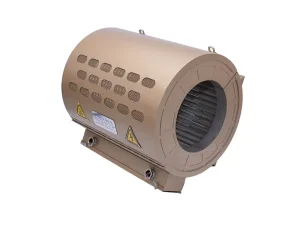
CE Certified Nano Infrared Electric Band Heaters
-
High-Quality Precision Thermocouple Assemblies

-
High-Quality Thermal Cleaning Furnaces for Tooling & Dies

-
Heavy Industrial CE Certified Ovens Exporter

-
High-Quality Hot-Runner Spring & Coil Heaters

-
Efficient Portable Ceramic Factory Heaters

-
Cast Aluminum & Cast Copper Heating/Cooling Jackets

Frequently Asked Technical Questions (FAQ)
Key considerations regarding voltage standards, METI/CE certifications, sample qualification, and logistics to Japan.