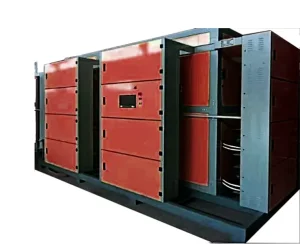

DIRECT EXPORT ENGINE // ASTM & ASME COMPLIANT STANDARDS

High-Quality Oil Furnaces Exporter & Factories serving the Chicago market

Engineering high-precision thermal oil furnaces, electromagnetic steam systems, and industrial circulation machinery tailored for heavy manufacturing, polymer processing, and chemical sectors across the Greater Chicago & Midwest industrial corridors.

Send Inquiry Now Download Engineering Specs
Featured Equipment Suite

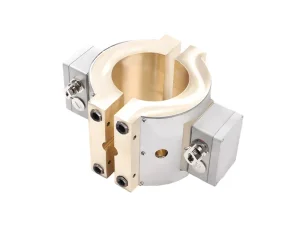
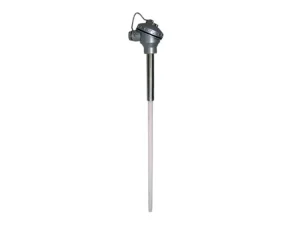
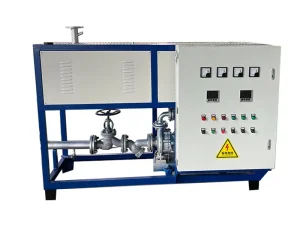
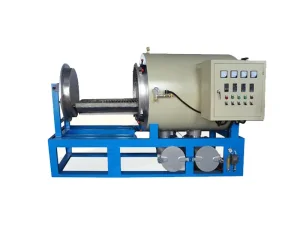
High-Efficiency Industrial Heating Systems for Chicago Plants

Pre-configured thermal assemblies for industrial heating, injection tooling, and process sanitization across Cook, DuPage, and Lake County manufacturing lines.

MARKET INTELLIGENCE // MIDWEST REGION

Thermal Fluid Dynamics in Chicago's Evolving Industrial Landscape

The Greater Chicago metropolitan zone—anchored by historical manufacturing corridors along the Calumet River, Elk Grove Village, and Rockford—remains one of the world's most demanding arenas for thermal engineering. Industrial facilities throughout Illinois are currently facing a twin-vector transformation: severe sub-zero winter temperatures demanding extreme thermal ramp-up stability, coupled with stringent state emissions metrics set forth by the Illinois Environmental Protection Act and federal carbon-abatement mandates.

Historically, traditional open-flame and legacy diesel-fired furnaces handled thermal distribution across food processing, polymer casting, and metal coating lines. However, modern Chicago enterprises are rapidly phasing out localized combustion to mitigate high commercial insurance premiums and hazardous flue monitoring costs. Closed-loop, high-efficiency Heat-Conducting Oil Furnaces (Thermal Fluid Heaters) provide an indirect heating mechanism that delivers working process temperatures up to 350°C (662°F) under negligible system pressures. This low-pressure operation mitigates the explosion hazards traditionally associated with high-pressure steam boilers governed by strict municipal boiler ordinances in Cook County.

By delivering uniform heat transfer across jacketed reactors, calenders, continuous laminating presses, and chemical storage vats, modern thermal oil systems eliminate localized scorching and thermal shock. When matched with precision solid-state control architectures, operations realize up to 30% reduction in peak kilowatt expenditures, maintaining thermal continuity during punishing Midwest freeze cycles.


40+
Years of Thermal Engineering (Since 1986)
±0.5°C
Precision Loop Temperature Stability
350°C
Max Operational Fluid Rating Without Pressure
100+
Global Export Destinations Served
Strategic Manufacturing Synthesis

Bridging Chinese Manufacturing Scale with US Industrial Specs

How state-of-the-art production in Yancheng, Jiangsu delivers high-reliability heating assets at unmatched total-cost-of-ownership (TCO) thresholds.

Supply Chain Precision & Density

Situated in China's premier electrical heating and mechanical manufacturing hub, our Yancheng Laier Heating Technology production complex taps into a deeply integrated supply ecosystem. From ultra-high-grade stainless steel piping to specialized nichrome alloys and synthetic ceramic composites, raw material cycles are streamlined to reduce procurement lead times by up to 45% compared to domestic US fabricators.

Full-Chain Traceability & Testing

Every thermal oil furnace and electromagnetic module undergoes continuous non-destructive examination (NDE), hydro-testing at 1.5× rated design pressures, and live electrical breakdown testing up to 2000V. Backed by our standard 5-year warranty, each unit carries a serialization ledger linking back to ingot melts, welding certification, and insulation density verification.

Direct-to-Jobsite Export Operations

Exporting to over 100 countries has solidified our logistics protocols. Every shipment destined for the Chicago and Great Lakes trade region is crated with vapor-phase corrosion inhibitors (VCI), sealed against marine salinity, and configured with dual-voltage switchgears (480V/240V 60Hz 3-Phase) to guarantee seamless drop-in integration into US control architectures.

Application Engineering

Proven Production Scenarios Across Midwest Operations

Field installations where closed-loop heat transfer and direct-contact heating solve thermal efficiency bottlenecks.

Application Sector Operational Environment Specific Engineering Challenge Standard System Solution
Plastics & Polymers (Elk Grove Village) Multi-layer blown film and twin-screw extruder profiles Inconsistent barrel temperatures creating variable melt flow indexes (MFI) and web gauge errors. High-efficiency Cast-in Copper/Aluminum heaters paired with circulating thermal oil cooling zones.
Chemical & Resin Formulation (Gary / Calumet) Explosion-rated Class I, Div 2 reactor vessel jacketing Steam lines causing localized high-pressure boiling, tube erosion, and scaling in jackets. Flanged explosion-proof circulating heat-conducting oil furnace maintaining 280°C continuous circulation.
Food & Beverage Processing (Chicago Stockyards Hub) High-sanitation industrial deep frying and baking ovens Combustion by-products contaminating air handling arrays; strict sanitation audits. Electromagnetic Induction Steam and Thermal Fluid units delivering uniform, zero-flue clean heat.
Heavy Die Casting & Stamping (Rockford / Aurora) Large-format hydraulic pre-heaters and mold core heating Thermal shock causing recurring tool cracking during high-velocity cyclic alloy injections. Mobile skid-mounted high-density oil heaters with dual-zone programmable ramping cycles.

Need Precision Thermal Calculations for Your Chicago Facility?

Our process engineering staff provides comprehensive CFD heat dissipation modeling, fluid degradation curve simulations, and exact ROI projections for legacy steam conversions.

Send Inquiry Now - Immediate Engineering Consult
Engineering Benchmark

Thermal Fluid Heat Transfer vs. Legacy Steam Systems

A rigorous comparative analysis for plant managers assessing total cost of ownership, regulatory footprints, and thermal precision.

Operational Pressure

Thermal Oil: Operates at atmospheric or minimal pressure (15–45 PSI), regardless of temperature reaching 350°C. Virtually eliminates rupture catastrophe risks.

Steam Systems: To reach 300°C, steam requires dangerous system pressures exceeding 1,200 PSI, requiring heavy wall vessels and frequent safety valve overhauls.

Corrosion & Maintenance

Thermal Oil: Synthetic and mineral oils provide continuous internal lubrication. No internal scale, zero corrosion, and zero boiler feedwater demineralization chemistry costs.

Steam Systems: Constant battle with condensate pitting, steam trap failures, mineral encrustation, blowdown heat loss, and deaerator servicing.

Thermal Uniformity

Thermal Oil: Continuous liquid phase maintains absolute uniform laminar/turbulent heat transfer across intricate runner plates, roll internal spirals, and dual jacket shells.

Steam Systems: Condensate film build-up acts as an insulator, creating localized cold spots and inconsistent production wall temperatures.

Information Architecture // FAQs

Frequently Addressed Engineering & Procurement Inquiries

Detailed technical specifications, certification standards, and logistic frameworks for US enterprise buyers.

What are the key local safety advantages of using an electric oil furnace in Chicago manufacturing facilities?
In metropolitan Chicago (Cook County), operating high-pressure steam boilers involves stringent municipal code monitoring, regular certified stationary boiler engineer oversight, and expensive annual safety relief testing. Because electric thermal fluid furnaces circulate high-boiling-point heat transfer fluids in a liquid phase without phase-change vaporization, operational pressures typically remain below 45 PSI even at temperatures up to 350°C (662°F). This exempts facilities from many high-pressure jurisdictional inspections, eliminates stationary fireman shift overhead, and dramatically lowers municipal property insurance liabilities.
How are Kangpu industrial heating assets configured for American electrical utility standards (480V 60Hz 3-Phase)?
Every product intended for export to the US Midwest market is designed from the ground up to match domestic industrial power standards. Units feature balanced 3-phase resistance elements wound specifically for 480V or 208V/240V at 60Hz. Terminal junction enclosures are certified to NEMA 4/4X or Class I, Div 1/2 hazardous location specifications, and electrical components utilize UL-recognized internal conductors, solid-state switching (SCRs), and thermocouple connection protocols (ANSI Type J/K).
How does Kangpu handle sample validation and custom geometric engineering?
We employ a strict 7-stage custom manufacturing procedure: (1) Industrial Concept and CAD drafting, (2) Electrical wattage and density optimization, (3) Real-mold sample tooling rather than rapid prototypes, (4) Direct client installation verification, (5) Dimensional and lead refinement, (6) Electrical performance load qualification (Dielectric breakdown, hot-insulation resistance), and (7) Full-scale serial fabrication. Serial production only initiates upon your facility’s written technical approval.
What is the thermal life expectancy of synthetic fluids within Kangpu closed-loop furnaces?
Our heating chambers are engineered with low-watt-density heating elements (typically below 2.5 W/cm²) and optimized internal baffle velocities. This prevents film overheating and thermal cracking (pyrolysis). Under standard operating conditions with an inert nitrogen blanket or cold-seal expansion tank, high-grade synthetic thermal oils can operate continuously for 5 to 8 years without requiring fluid changeout, confirmed through annual gas chromatography acid number (TAN) tests.
What is Kangpu’s warranty coverage and global spare parts supply protocol for US operations?
Kangpu provides an industry-leading 5-year warranty on all structural heating elements and thermal chambers. We maintain unique traceability records for every manufacturing run down to the nichrome raw batch. In the event of a service requirement, expedited replacement elements, gaskets, and solid-state modules are shipped via direct air freight to O'Hare International Airport (ORD) with 48-to-72 hour customs clearance protocols.
DIRECT FACTORY PROCUREMENT // OEM & REPLACEMENT

Ready to Modernize Your Industrial Heating Infrastructure?

Speak directly with our senior thermal system engineers. We analyze your machinery blueprints, formulate exact watt-density maps, and dispatch customized proposals within 24 hours.

Send Inquiry Now Download Full 2026 Catalog