

Featured Core Catalog · Barcelona Industrial Hub
Precision Heat Transfer & Electric Heating Systems
Engineered for high-efficiency closed-loop circuits, strict thermal stability, and low watt-density durability.

Thermal Vacuum Cleaning Furnace for Tooling & Dies

Zero-Emission Electromagnetic Induction Steam Boiler

Portable High-Density Ceramic Heaters for Workshops
Industrial Ecosystem Review
The Barcelona & Greater Catalonia Process Heat Landscape
The Greater Barcelona Metropolitan Area (Àrea Metropolitana de Barcelona - AMB), spanning vital industrial corridors such as the Zona Franca, the Baix Llobregat industrial ring (Martorell, Cornellà, Sant Boi), and the chemical-polymer production hubs across the Vallès Occidental and Vallès Oriental (Terrassa, Sabadell, Granollers, Montmeló), represents one of Southern Europe’s dense, technologically demanding industrial powerhouses. Industrial manufacturing accounts for nearly 20% of Catalonia's gross value added, with process heating comprising over 60% of total industrial energy consumption.
Historically dominated by direct gas-fired boilers and central steam networks, Catalan manufacturing facilities are undergoing a tectonic transformation driven by three convergeing market forces:
EU ETS & Catalan Climate Mandates
Under the EU Green Deal, Spain’s PNIEC (Plan Nacional Integrado de Energía y Clima), and regional Catalan climate emissions legislation, plants in the Zona Franca and Vallès face tightening carbon quotas, driving procurement away from inefficient combustion burners toward clean electric heat-conducting oil systems.
Sub-Degree Melt Temperature Control
From advanced polypropylene and PVC-O pipe extrusion to automotive technical plastics for the Martorell EV assembly belt, process lines require steady-state temperature accuracy within ±0.5°C across large cylindrical barrel arrays and reaction vessels—tolerances high-pressure steam simply cannot deliver.
Low-Pressure Safe Process Operations
High-pressure steam systems above 250°C operate at perilous pressures (>40 bar), demanding constant certified operator supervision, extensive blowdown water treatment, and heavy insurance liabilities. Thermal oil systems achieve operating temperatures up to 350°C at virtually atmospheric pressure (<4 bar).
Engineering Insight: Steam vs. Liquid Phase Thermal Fluid in Barcelona Operations
Thermal fluid heating systems (Heat-Conducting Oil Furnaces) circulate organic mineral or synthetic heat-transfer oils through a closed-loop system. Unlike saturated steam systems which suffer from rapid phase-change boundary layer resistance, flash-steam venting losses, boiler scaling, and pipe corrosion, thermal fluid maintains single-phase convective flow. For a standard 500 kW processing zone in Granollers or Sant Feliu, retrofitting from gas-fired steam to an engineered electric heat-conducting oil furnace eliminates feedwater treatment chemicals, cuts energy losses from boiler flue stacks by 100%, and lowers annual maintenance expenditures by up to 34%.
40+
Years Engineering Pedigree
Continuous R&D since 1986
±0.5°C
PID Temperature Stability
Superior to high-pressure steam
98.5%
Electric Thermal Efficiency
Zero on-site flue gas generation
5 Years
Comprehensive Warranty
Supported by full batch traceability
Global Industry Horizon
Global Thermal Fluid Trends: Decarbonization & Electrification of Process Heat
The global industrial heat-transfer market is experiencing an unprecedented structural pivot. Worldwide, process heat accounts for roughly two-thirds of total industrial energy demand and approximately 20% of global greenhouse gas emissions. As international carbon boundary adjustment mechanisms (CBAM) take effect across the European Union, the historical reliance on heavy bunker fuels, diesel-fired burners, and atmospheric natural gas combustion has become an existential compliance liability for export-oriented factories.
Key Technological Trajectories Shaping the Global Industry
1. Direct Electrification via Low Watt-Density Flanged Heating Bundles: Early electric oil furnaces suffered from localized fluid film overheating (exceeding the fluid's maximum film temperature, $T_{\text{film}}$), which induced premature thermal cracking, carbon deposit formation (coking) on heating elements, and severe thermal resistance buildup. Modern systems, such as Kangpu’s engineered oil furnace architectures, utilize precisely computed surface watt densities (down to 1.2–2.0 W/cm² depending on fluid viscosity and Reynolds number) and flow baffle arrays to maintain bulk velocities strictly above 2.0 m/s. This preserves fluid integrity for over 30,000 continuous operating hours.
2. Hybrid Dual-Circuit Systems & Thermal Energy Storage (TES): Facilities handling variable batch processes are pairing electric heat-conducting oil heaters with molten-salt or synthetic fluid thermal reservoirs. In regions like Catalonia where wholesale solar photovoltaic power drops electricity pricing during midday peak hours, smart thermal furnaces charge secondary reservoirs, releasing process heat during peak evening tariffs without operating fossil backup boilers.
3. Synthetic High-Stability Media (Aromatic & Polyphenyl Blends): While mineral oils remain cost-effective for processes up to 280°C, high-performance synthetic fluids (such as hydrogenated terphenyls and diphenyl ether mixtures) allow liquid-phase closed-loop operation up to 400°C without system pressurization exceeding 10 bar. This expands the envelope of oil furnace technology into continuous chemical polymerizations, battery separator film production, and synthetic pharmaceutical active ingredient crystallization.
Localized Manufacturing Scenarios
Precision Applications Across Catalonia’s Strategic Sectors
Tailored engineering deployments serving critical process nodes in Barcelona’s most intensive production sectors.
Automotive & Tier 1 Component Finishing
SEAT Martorell Ecosystem & Baix Llobregat
Electro-coating curing ovens, paint drying tunnels, and thermoforming tooling for interior dashboards require smooth, pulsation-free radiant heat. Electric oil furnaces maintain uniform circulating temperatures without open flames or combustion dust in Class 1 clean-finishing environments.
Operating Temp: 180°C – 240°C · High-Volume Forced Convection
Pharmaceutical & Fine Chemical Synthesis
Granollers, Sant Cugat & Montmeló Hub
Catalonia hosts Spain's primary pharmaceutical cluster. Jacketed glass-lined and 316L stainless steel synthesis reactors require precise thermal profiles through heating, soaking, and rapid cooling transitions without thermal shock or hot-spot localized degradation.
Operating Temp: -20°C to +300°C Dual-Mode Heating/Cooling
Polymer Extrusion & PVC-O Pipe Systems
Vallès Industrial Corridor & Sabadell
Extrusion lines producing pressure water infrastructure (PVC-O biaxially oriented pipes) depend on uniform fluid circulation through specialized thermal conditioning ovens to align polymer chains without wall-thickness irregularities.
Operating Temp: 120°C – 160°C · Uniformity ±0.3°C
Food, Confectionery & Edible Oils
Mercabarna & Penedès Agri-Food Hub
Deodorization, transesterification, and continuous frying lines require indirect heating with non-toxic, food-grade thermal fluids (NSF HT-1 registered) to completely prevent combustion exhaust contact with food consumables.
Operating Temp: 200°C – 270°C · Food-Grade HT-1 Fluid Compatible
Textiles & Technical Fabric Finishing
Terrassa & Maresme Manufacturing Belt
Stenter frames, heat-setting calendars, and continuous roller coaters for technical sports apparel and filtration fabrics utilize high-velocity thermal oil loops to ensure consistent color fastness and hydrophobic coating cure.
Operating Temp: 170°C – 220°C · Multi-Zone Temperature Tracking
Maritime Fuels & Bulk Storage Heating
Port of Barcelona Logistics Terminals
Bulk storage tanks, bitumen transfer lines, and heavy fuel preheaters at the Mediterranean’s leading logistics port require robust thermal tracing circuits capable of continuous marine environment exposure without freezing or high pumping friction.
Operating Temp: 90°C – 180°C · Low-Pressure Circulation
Future Engineering Architecture
Technology Roadmap: The Next Decade of Industrial Process Heating
As industrial infrastructure transitions through the 2026–2035 decarbonization milestone, Kangpu Heater’s engineering R&D group has charted a clear technical roadmap addressing safety, efficiency, and intelligence in heat-conducting oil systems:
2026 – 2028: Next-Gen Smart Edge Diagnostics
Real-Time Fluid Viscosity & Dielectric Degradation Sensing
Integrating multi-parametric optical and dielectric sensors directly into the bypass circulation circuit of electric heat-conducting oil furnaces. Operating plants in Barcelona will receive predictive notifications regarding fluid acid number (TAN) escalation and micro-coking accumulation well before tube wall fouling or catastrophic pump cavitation occurs.
2028 – 2031: Ultra-High Density & Composite Sheathing
Silicon Carbide (SiC) & Hastelloy Heating Elements
Transitioning from traditional Incoloy 800/840 tubular sheathing to advanced nano-coated silicon carbide composites. This architecture permits safe heat fluxes exceeding 5 W/cm² in specialized synthetic fluids up to 420°C, downsizing boiler physical footprints by 40% while fitting congested floor plans in historic urban industrial parks like Poblenou and Cornellà.
2031 – 2035: Autonomous Grid-Interactive Thermal Microgrids
SCADA AI-Modulated Dynamic Process Heating
Integration of European energy spot-market APIs (OMIE) directly into heater PLC control architectures. Heating circuits will dynamically modulate thermal output between high-rate electrical consumption during negative electricity pricing hours and latent thermal storage discharging during peak demand, eliminating corporate energy volatility.
Turnkey Manufacturing Rigor
Enterprise Solutions: From Drawing to Turnkey Commissioning
Procuring industrial heating equipment for demanding European production lines is fundamentally an evaluation of operational risk. A single hour of unplanned line stoppage on a biaxial film line or continuous composite curing autoclave costs thousands of euros in raw material waste and delayed deliveries. Kangpu Heater mitigates operational risk through a rigorous 7-stage manufacturing process backed by four decades of engineering domain expertise:
Hydraulic CFD Modeling
Every furnace vessel undergoes fluid-solid conjugate heat transfer simulation to verify that boundary layer fluid velocities never stagnate below 1.8 m/s, eliminating localized fluid oxidation and hotspot carbonization.
ATEX & Explosion-Proof Safety
For chemical and solvent-rich environments common across Catalan processing parks, electrical terminal boxes are engineered to Ex d IIB/IIC T1-T4 explosion-proof standards with IP66 environmental sealing.
PED 2014/68/EU & CE Harmonization
Pressure vessels, circulating headers, and flange joints conform to European Pressure Equipment Directive (PED) Category II/III/IV specifications with full radiographic weld inspection and hydro-testing documentation.
Technical Clarifications & Engineering Due Diligence
Frequently Asked Questions for Plant Engineers & Specifiers
In-depth responses covering process thermodynamics, fluid longevity, safety systems, and compliance in Barcelona.
How does an electric heat-conducting oil furnace prevent thermal cracking and carbon fouling?
Thermal cracking occurs when the fluid film temperature ($T_{\text{film}}$) in direct contact with the heating element sheath exceeds the fluid's thermal stability limit—typically 15°C to 30°C above the bulk fluid temperature. Kangpu prevents cracking through two critical engineering parameters:
1. Low Watt-Density Distribution: We engineer our flanged tubular heating bundles with watt densities between 1.2 and 2.2 W/cm² (in contrast to generic commercial heaters that run at 4–6 W/cm²).
2. Forced Convective Flow Geometry: Internal circulation baffles enforce high Reynolds numbers ($Re > 10,000$) to maximize turbulent heat transfer, stripping away boundary heat before cracking can occur. An automated low-flow differential pressure switch instantly de-energizes the heating elements if circulation speed drops below safety thresholds.
Why should a Barcelona factory switch from traditional steam boilers to thermal oil heating?
For operating temperatures above 180°C, steam systems operate at extreme saturated pressures. To reach 280°C, steam requires operating pressures of roughly 64 bar (930 psi), mandating expensive thick-walled piping, high-pressure certifications, daily deaeration, softener chemistry, and steam-trap maintenance.
In contrast, a heat-conducting oil furnace reaches 300°C–350°C at low pump delivery pressures typically under 3 to 4 bar. Thermal oil loops eliminate flash-steam heat loss, boiler blowdown waste, scale calcification, and corrosion pitting, resulting in up to 30% higher systemic seasonal efficiency and drastically lower plant liability.
In contrast, a heat-conducting oil furnace reaches 300°C–350°C at low pump delivery pressures typically under 3 to 4 bar. Thermal oil loops eliminate flash-steam heat loss, boiler blowdown waste, scale calcification, and corrosion pitting, resulting in up to 30% higher systemic seasonal efficiency and drastically lower plant liability.
What role does the expansion tank and nitrogen blanketing play in oil furnace longevity?
Thermal fluids expand significantly when heated from ambient to 300°C (often by 20% to 25% of total system volume). The elevated expansion tank accommodates this volumetric swing.
Crucially, mineral and synthetic heat-transfer oils rapidly oxidize if oxygen contacts fluid temperatures above 60°C, creating organic acids and heavy sludge. Kangpu oil systems feature cold-seal expansion tank loops that keep the fluid surface in the expansion tank below 50°C during steady-state runs, or provide an automated nitrogen seal ($N_2$ blanketing) that prevents atmospheric oxygen intrusion, extending oil lifespan from 2 years to over 8–10 years.
Crucially, mineral and synthetic heat-transfer oils rapidly oxidize if oxygen contacts fluid temperatures above 60°C, creating organic acids and heavy sludge. Kangpu oil systems feature cold-seal expansion tank loops that keep the fluid surface in the expansion tank below 50°C during steady-state runs, or provide an automated nitrogen seal ($N_2$ blanketing) that prevents atmospheric oxygen intrusion, extending oil lifespan from 2 years to over 8–10 years.
How does Kangpu support European Pressure Equipment Directive (PED 2014/68/EU) compliance?
All heat-conducting oil furnaces and pressure vessels engineered for the Spanish and wider EU market are manufactured in accordance with European Directive 2014/68/EU. Each system includes comprehensive documentation: third-party weld non-destructive testing (NDT/radiographic inspection reports), material mill test certificates (EN 10204 3.1), safety relief valve discharge calculations, hydrostatic pressure proof-testing protocols, and official CE Declaration of Conformity markings.
Can Kangpu customize heaters directly from CAD drawings or legacy machine samples?
Yes, OEM and retrofit customization is our foundational service. If you have legacy European or domestic machinery (e.g., German, Italian, or Spanish extrusion lines) requiring replacement heating elements, cooling jackets, or complete skids, you can provide 2D/3D CAD models, engineering schematics, or physical worn samples. Our engineering team confirms all dimensional fits, electrical ratings, terminal terminations, and thermocouple routings before building sample prototypes for approval.
What after-sales service and warranty protections are provided to European clients?
Kangpu offers an industry-leading 5-year after-sales warranty on structural heating components and pressure vessels. Each product unit carries an engraved identification plate with an individualized batch tracking code. In the rare event of element degradation or anomalous impedance drift, our engineering logs enable pinpoint root-cause analysis back to original raw material metallurgy and production testing parameters, ensuring corrective prevention rather than superficial component swapping.
Complete Equipment Suite
Integrated Industrial Heating & Thermal Control Products
Complementary thermal components, explosion-proof systems, and specialized sensors serving modern production lines.
Heavy-Duty Heat-Conducting Oil Furnace Skid
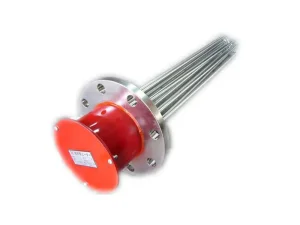
CE Certified Explosion-Proof Electric Heater
Modular Industrial Ceramic Heating Blocks

High-Precision Industrial Thermocouples & RTDs

Cast Aluminum & Cast Copper Barrel Heaters

Precision Heating Ovens for PVC-O Pipe Lines

High-Watt Density Hot Runner Spring & Coil Heaters

Silicone & Kapton Flexible Surface Heaters
Direct Factory Partnership
Ready to Upgrade Your Thermal Systems in Barcelona?
Whether you are modernizing an extrusion plant in Terrassa, installing a zero-emission chemical heating skid in Granollers, or engineering OEM plastics equipment for international export, Kangpu Heater’s senior thermal specialists provide comprehensive CFD sizing, electrical wiring diagrams, and rapid custom sample production.