

Spotlight Selection
High-Demand Industrial Thermal Solutions for Hungary
Rapid deployment ceramic band heaters and heating elements specifically dimensioned for European standard extrusion lines, injection barrels, and demanding plant retrofits.
High-Efficiency Ceramic Heaters for Central European Manufacturing
View Engineering Details
Precision Portable Ceramic Band Heating for Extrusion & Molds
Configure Custom Order
Reliable Temperature-Controlled Ceramic Elements for Hungary Lines
Download CAD Drawings
Market Intelligence
The Industrial Dynamics of Hungary: A Central European Manufacturing Hub
Strategic geographic location, world-class automotive manufacturing clusters, and massive battery gigafactory capital expenditures drive unprecedented requirements for thermal process reliability.
Automotive & OEM Supply Chain Expansion
Hungary serves as the beating heart of automotive component manufacturing in Central and Eastern Europe. Anchored by premier vehicle manufacturing clusters in Győr (Audi), Kecskemét (Mercedes-Benz), and Debrecen (BMW), the local supplier ecosystem comprises thousands of injection molders, blow molders, and composite fabricators. These production lines require continuous thermal stability up to 450°C for engineering resins (PPA, PPS, PA66), where even minor heating fluctuations lead to scrap parts and costly plant shutdowns.
The European Electric Vehicle Battery Epicenter
With historic multi-billion euro capital investments from industry pioneers including CATL, Samsung SDI, SK On, Eve Energy, and BYD (Szeged), Hungary is rapidly establishing itself as Europe's second-largest battery manufacturing powerhouse. Battery cell separator production, electrode coating drying tunnels, and module enclosure welding necessitate ultra-precise, spark-free, and high-watt-density heating devices with certified CE and ATEX compliance to sustain high-throughput 24/7 manufacturing operations.
Energy Transition & Carbon Compliance (EU ETS)
Operating inside the European Union regulatory framework, Hungarian production facilities face rigorous decarbonization benchmarks under EU ETS directives. Industrial operators are aggressively transitioning away from legacy fossil fuel gas heating toward closed-loop electric band heaters, nano-infrared barrel heating jackets, and high-efficiency heat-conducting oil systems. The key procurement imperative is slashing kilowatt-hour consumption per kilogram of extruded plastic while upholding rigorous thermal safety margins.
> €15 Billion
EV & Battery FDI Inflow
28.5%
Manufacturing GDP Share
±1°C
Zone Temperature Precision
Up to 35%
Energy Reduction via Infrared
Strategic Sourcing
Global Procurement Trends: What European Enterprises Demand
Purchasing directors and chief plant engineers in the EU market no longer prioritize rock-bottom initial purchase prices; they evaluate total cost of ownership, mean time between failures, and rapid tool customization.
Total Cost of Ownership (TCO) vs. Unscheduled Downtime
In continuous automated production lines such as pipe extrusion or automotive bumper injection molding, an unexpected heater element burnout causes barrel freeze-up, resin degradation, and thousands of euros per hour in lost output. Enterprise procurement policies require heating components engineered with premium grade Ni80Cr20 resistance wire, steatite ceramic blocks with superior dielectric breakdown strength (>20 kV/mm), and robust stainless steel (SUS304/SUS316L) clamping bands that resist thermal expansion fatigue.
Strict Regulatory Compliance (CE, RoHS, REACH, UL)
Shipments into Hungary and the broader EU single market require comprehensive product compliance dossiers. Industrial electric heating assemblies must satisfy the Low Voltage Directive (LVD 2014/35/EU), Electromagnetic Compatibility (EMC 2014/30/EU), and RoHS chemical restrictions. Direct factory exporters must supply accredited test reports, material mill certificates, and verifiable CE markings on all terminal connection boxes, thermocouple ports, and insulated jacket assemblies.
Fast-Turnaround Custom Engineering & CAD Integration
Standard off-the-shelf band heaters rarely match European OEM barrel architectures (Battenfeld, KraussMaffei, Engel, Arburg). Hungarian tooling shops demand suppliers capable of interpreting STEP/DWG drawings, calculating precise watt densities (W/cm²) based on melt kinetics, and delivering prototype samples in 5 to 7 working days. Rapid prototyping using real tooling molds ensures dimensional drop-in replacement without on-site mechanical modifications.
Integrated Heating & Cooling Dynamics
Extrusion of shear-sensitive polymers (PVC, halogen-free flame retardant compounds) generates immense internal viscous heat. State-of-the-art Hungarian extrusion lines demand integrated thermal management where high-wattage ceramic band heating seamlessly pairs with precision air blowers or cast-in cooling tube geometries. The thermal package must prevent temperature overshoot and maintain uniform melt fluidity across entire barrel lengths.
Manufacturing Excellence
China Factory 4.0: Supply Chain Resilience & High-Precision Output
Combining 40 years of heating technology mastery with automated digital winding, strict metallurgical QA, and direct-to-enterprise logistics serving Central Europe.
Automated CNC Coil Winding & Density Control
Yancheng Laier Heating Technology (Kangpu Heater) leverages advanced automated spiral winding and tension control systems. Unlike manual winding methods that produce dangerous hot-spots and uneven resistance paths, computer-governed spacing guarantees that every linear centimeter of heating element delivers identical thermal flux, extending element service lifetime by more than 40%.
100% Dielectric & Megohmmeter Inspection
Every single industrial heater undergoes multi-stage electrical testing before dispatch: cold resistance testing against specified ohmic tolerances, 1500V/2000V AC high-potential dielectric breakdown verification, and insulation resistance measurement under ambient and heated conditions (>500MΩ). Every shipment includes traceable QA batch certificates.
Vertical Integration & Five-Year Warranty
By controlling the full manufacturing spectrum—from ceramic extrusion, metal stamping, casting, and terminal assembly to final thermal cycling tests—we eliminate intermediary distributor markups and erratic delivery delays. Our confidence in material metallurgical integrity is demonstrated by our industry-leading 5-year commercial warranty.
Industrial Applications
Engineered for Hungary's Most Demanding Production Environments
Real-world integration scenarios where precision thermal hardware directly impacts yield, scrap reduction, and cycle time optimization.
Automotive Precision Molding (Győr & Kecskemét)
Under-the-hood structural brackets, intake manifolds, and connector housings require glass-filled engineering polymers with high processing temperatures (280°C - 380°C). Our custom ceramic band and cast brass nozzle heaters prevent cold slug formation, eliminate jetting defects, and withstand intense injection pressures and aggressive cycle repetition.
EV Battery Enclosures & Thermoforming (Debrecen)
Large-format polymer battery pack covers and thermal barrier membranes require uniform radiant energy. Our nano-infrared band heaters and custom industrial ovens ensure homogeneous surface heating without localized blistering or thermal degradation, crucial for passing stringent UN ECE R100 flammability criteria.
PVC-O & Infrastructure Pipe Extrusion Lines
Municipal water infrastructure upgrades across Hungary utilize molecularly oriented PVC (PVC-O) pipes for high pressure resilience. Our specialized PVC-O conditioning ovens and precision air-cooled barrel heating modules guarantee the exact narrow molecular realignment temperatures required to optimize circumferential tensile strength.
Engineering Evaluation
Industrial Heating Technologies Comparison Matrix
A reference architecture guide to selecting the optimal thermal solution based on thermal conductivity, max operating threshold, watt density, and application fit.
| Heating Architecture | Max Operating Temp | Watt Density (W/cm²) | Primary Thermal Mode | Optimal Industry Application | Energy Efficiency Rating |
|---|---|---|---|---|---|
| Ceramic Band Heaters | Up to 650°C (1200°F) | 4.5 - 8.0 W/cm² | Conduction + Convection | Extruder Barrels, Blow Molding, Resin Melt | High (Ceramic Insulation Reduces Loss) |
| Mica Band Heaters | Up to 350°C (660°F) | 2.5 - 4.5 W/cm² | Direct Conduction | Injection Nozzles, Thin-wall Dies, Tooling | Standard (Fast Response, Low Thermal Mass) |
| Cast-in Aluminum / Copper | 400°C (Al) / 650°C (Cu) | 3.0 - 7.0 W/cm² | Uniform Conduction | Extrusion Dies, Pelletizers, Lab Extruders | Very High (Integrates Cooling Tubes) |
| Nano Infrared Band Heaters | Up to 750°C (1382°F) | 6.0 - 12.0 W/cm² | Infrared Radiation | Energy Retrofits, High-Temp Engineering Resins | Maximum (Cuts Power Usage 20-35%) |
| Circulation Pipeline Heaters | Up to 500°C (932°F) | Custom Calibrated | Fluid Convection | Thermal Oil Transfer, Gas Conditioning, Asphalt | High (Isolated Pressure Vessel Design) |
Technical FAQ
Frequently Asked Technical & Commercial Questions
In-depth clarifications regarding delivery lead times, European standards compliance, drawing approvals, and customization options for Hungarian procurement departments.
Can Kangpu manufacture heaters based directly on European machine CAD drawings?
Yes. Custom engineering accounts for over 85% of our production volume. Our technical department can interpret 2D mechanical blueprints (DWG, DXF, PDF) and 3D CAD files (STEP, IGES). We carefully verify critical mounting clearances, thermocouple cutout locations (J-type, K-type, or PT100 pockets), terminal block orientation, and clamping screw torque specifications to guarantee an exact match for machines from Arburg, KraussMaffei, Battenfeld, Wittmann, and Italian extrusion brands.
What certificates and documentation are provided for import into Hungary (EU)?
Every shipment exported to Hungary comes accompanied by complete compliance documentation. This includes formal CE Declaration of Conformity under the Low Voltage Directive (LVD) and EMC Directives, RoHS and REACH compliance documentation, electrical dielectric breakdown certificates, cold and hot insulation test logs, and comprehensive material mill inspection reports. Customs clearance documentation (EUR.1 assistance, commercial invoices, packing lists with HS codes) is handled seamlessly.
How does the 5-year warranty policy work for overseas Hungarian clients?
Unlike trading companies that offer nominal 12-month warranties, Kangpu provides a comprehensive 5-year warranty backed by batch manufacturing traceability. In the rare event of element failure under nominal operating parameters, our quality control team performs rapid failure root-cause analysis. Verified defectives are replaced immediately via expedited express air freight (DHL/FedEx directly to Budapest or your factory gate) free of charge.
What are the real-world energy savings when retrofitting ceramic or nano-infrared heaters?
Standard uninsulated mica or cast heaters lose 30% to 50% of their heat output into the surrounding workshop air, raising factory HVAC loads and driving up electricity costs. Our ceramic heaters utilize 12mm thick aerogel or fiber ceramic insulation blankets with external mirror-finish stainless steel jackets, which reduces outer surface temperatures from ~350°C down to below 60°C. Nano-infrared band units convert electricity to radiant wavelength energy, achieving verified net electricity reductions between 22% and 36% on continuous extrusion lines.
What is the standard sampling, mold creation, and bulk production timeline?
Following ID and parameter confirmation, custom tooling and real-mold prototypes are produced within 5 to 7 business days. Once the Hungarian customer tests and signs off on the physical sample on their production line, bulk manufacturing runs typically complete in 12 to 18 days depending on order magnitude. Air freight transit to Budapest Liszt Ferenc International Airport takes 4 to 6 days; standard multimodal sea/rail freight takes 25 to 30 days.
Complete Equipment Catalog
Comprehensive Thermal Engineering Solutions for Hungary
Explore our heavy-duty thermal fluid heaters, industrial cleaning furnaces, certified HVAC air duct modules, and precision ovens engineered for continuous production lines.
High-Efficiency Portable Ceramic Band Heaters for Industry
View Factory Quotation
Heavy-Duty Portable Ceramic Barrel Heaters for Hungary Plants
Explore Specifications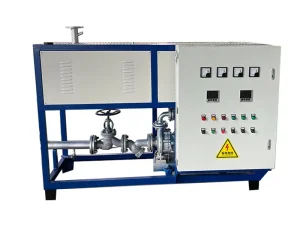
Electric Heat-Conducting Thermal Oil Furnaces for Hungary Lines
Inspect System Parameters
Ceramic Industrial Elements Engineered for Hungarian Tooling
Download Dimensional Sheet
Industrial Pipeline & Fluid Circulation Heaters for Process Lines
Review Flow Capacities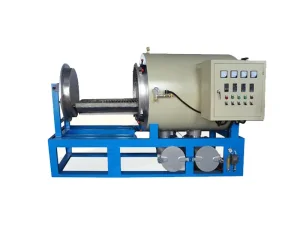
High-Efficiency Thermal Cleaning Furnaces for Extruder Dies
Request Cleaning Cycle Data
CE-Certified Industrial Curing & Conditioning Ovens
Inspect Oven Volumes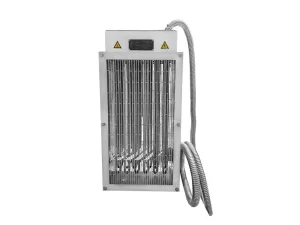
CE Efficient Air Duct Electric Heaters for Factory HVAC Systems
Calculate HVAC Power RatingsConnect Directly with Our Senior Thermal Engineering Group
Procuring industrial heating elements for Hungarian manufacturing projects? Send your CAD drawings, machine models, or process operating parameters for a detailed quotation, thermal simulation review, and custom sample timeline within 24 hours.