
Flagship Thermal Systems for Kuala Lumpur Industrial Projects
Direct-from-factory thermal fluid boilers and specialized heating components manufactured to ASME, CE, and Malaysian DOSH (JKKP) pressure vessel and thermal safety parameters.

Continuous liquid-phase circulation up to 350°C at low operating pressure, engineered for high reliability in chemical and oleochemical plants.
Explore Specifications
Vacuum pyrolysis and thermal cleaning solutions designed for plastic injection dies, spinnerets, and masterbatch extruder screws.
Explore Specifications
Electromagnetic induction steam generator eliminating fuel combustion, meeting strict urban carbon emission mandates across Selangor.
Explore Specifications
Tailored aerogel and multi-layer ceramic fiber insulation jackets reducing thermal radiation loss by up to 45% in humid equatorial environments.
Explore SpecificationsThe Kuala Lumpur & Greater Klang Valley Industrial Ecosystem
Kuala Lumpur and the contiguous industrial clusters of Selangor—encompassing Shah Alam, Subang, Petaling Jaya, Rawang, Bangi, and Port Klang—represent the undisputed economic engine of Malaysia. As modern industrial facilities transition toward high-value manufacturing, the reliance on legacy fire-tube steam boilers and direct-combustion furnaces has encountered significant roadblocks.
Escalating Urban Environmental Directives
Kuala Lumpur Municipal Council (DBKL) and Selangor environmental authorities (DOE Malaysia) enforce rigorous ambient air quality regulations (Environmental Quality Act 1974). Electric-powered heat transfer oil furnaces eliminate NOx, SOx, and particulate emissions on site, enabling clean manufacturing in built-up enterprise zones.
Process Shift from Steam to Thermal Oil
Traditional saturated steam systems require massive hydrostatic pressure (over 160 bar to achieve 350°C), demanding high-maintenance chemical water softening, blowdown treatment, and licensed boiler attendants. Liquid-phase thermal fluid systems deliver up to 350°C at near-atmospheric pressures (<0.8 MPa), slashing operational risks.
Grid Modernization & ESG Alignment
Under Malaysia's National Energy Transition Roadmap (NETR), manufacturing conglomerates listed on Bursa Malaysia are aggressively electrifying industrial heat. Kangpu electric oil furnaces integrate directly with industrial solar PV installations, driving corporate Scope 1 decarbonization goals.
Engineering Comparison: Electric Thermal Fluid vs. Conventional Combustion Furnaces
Selecting thermal generation infrastructure for plants in Port Klang, Shah Alam, or Puchong requires rigorous evaluation of thermodynamic yield, lifecycle expenditure (LCOH), civil works, and regulatory certification.
| Evaluation Parameter | Kangpu Electric Heat-Conducting Oil Furnace | Direct Gas/Diesel-Fired Thermal Furnace | Conventional Saturated Steam Boiler |
|---|---|---|---|
| Operating Temperature | 50°C to 350°C (Continuously adjustable) | 180°C to 320°C (High flue variance) | 100°C to 185°C (Limited by pressure rating) |
| System Working Pressure | 0.3 – 0.6 MPa (Hydraulic circulation only) | 0.4 – 0.8 MPa | 1.0 – 2.5 MPa (High explosion hazards) |
| Thermal Efficiency | 96.5% – 98.8% (Zero exhaust flue loss) | 78% – 84% (Significant stack heat loss) | 65% – 75% (Severe blowdown & condensate loss) |
| Temperature Control Accuracy | ±0.5°C via SCR / PID Power Regulation | ±3°C to ±5°C (Burner cycling lag) | ±2°C to ±4°C (Steam valve throttling) |
| Civil & Ventilation Footprint | Compact, skid-mounted, zero chimney required | Bulky, requires explosion isolation bunker & chimney | Large boiler house, water demineralization plant |
| DOSH / JKKP Compliance Burden | Streamlined pressure piping assessment | Rigorous annual steam engineer inspection | Strict certified boilerman Class 1/2 mandate |
| Site Carbon & Particulate Output | Zero local emissions (Scope 1 = 0) | High CO2, NOx, and soot generation | Emissions from gas/diesel or biomass burners |
Industrial Application Scenarios Across the Klang Valley Corridor
Our exported thermal fluid systems and heating elements are specifically customized to meet the operational demands of Malaysia's premier manufacturing sectors.
Oleochemical & Downstream Palm Fractionation
In Port Klang and Teluk Panglima Garang refining complexes, fatty acid distillation, transesterification, and glycerin dehydration demand uniform, non-coking heat up to 280°C. Our low-watt-density heating elements prevent thermal oil degradation and product scorching.
Advanced Semiconductor & PCB Lamination
Operating within Subang Hi-Tech and Petaling Jaya electronics clusters, multi-day PCB vacuum press lamination requires platen heating with less than ±1.0°C surface thermal variation. Our recirculating oil furnaces guarantee defect-free dielectric bonding.
Polymer Extrusion & PVC-O Pipe Lines
Heavy infrastructure manufacturing in Rawang and Nilai utilizes our patented integrated heating and cooling barrel systems, flexible heaters, and oil furnaces to maintain stable polymer melt rheology without thermal degradation.
Food Processing & Industrial Baking
Food-grade industrial confectionery, spray-drying, and continuous frying lines across Shah Alam leverage indirect thermal fluid heating to maintain strict HACCP cleanliness, eliminating open flames and volatile exhaust contamination.
Regulatory Compliance & Tropical Climate Hardening
Operating process heating machinery in equatorial Malaysia involves dual challenges: navigating statutory licensing under the Department of Occupational Safety and Health (DOSH / JKKP) and mitigating the thermal penalties of ambient temperatures exceeding 34°C with 90% relative humidity.
DOSH / JKKP Boiler & Pressure Vessel Compliance
Every pressure boundary, circulation manifold, and expansion vessel manufactured for export to Malaysia complies with ASME Section VIII Div 1 or EN 13445 design rules. Full material test certificates (MTRs), hydro-test logging, and non-destructive examination (NDE) dossiers accompany each export shipment.
Suruhanjaya Tenaga (Energy Commission) Readiness
Our electrical distribution consoles, thyristor SCR power switches, and contactor banks meet IEC 60364 electrical installation norms and MS IEC standards required by Malaysia's Energy Commission, including IP55 enclosure protection against tropical moisture ingress and dust.
Anti-Oxidation & Tropicalized Nitrogen Sealing
High ambient humidity rapidly accelerates thermal fluid oxidation when hot oil contacts moisture-laden air. Kangpu systems incorporate an automated closed nitrogen blanketing head in the expansion vessel, isolating the heat transfer oil from ambient oxygen and moisture to extend fluid lifespan beyond 45,000 hours.
Engineering Roadmap: High-Temperature Industrial Electrification (2026–2035)
As industry decarbonization deepens across Southeast Asia, Kangpu is deploying cutting-edge thermal engineering innovations designed to elevate process heat performance, safety, and remote telemetry.
SCR Solid-State Power Modulation & Low Watt-Density
Transitioning 100% of industrial furnaces to solid-state thyristor power regulation. Heat flux is strictly maintained below 2.0 W/cm² across heater sheath surfaces to completely prevent oil cracking and carbon coking under heavy 24/7 continuous cycles.
IoT Predictive Degradation & Flow Diagnostics
Onboard edge computing gateways analyzing real-time Reynolds number in circulating piping, delta-T variances across heating elements, and early fluid viscosity shifts, broadcasting automated predictive maintenance alerts directly to plant engineers.
Synthetic Fluid & Molten Salt Systems (Up to 450°C)
Next-generation molten salt and advanced synthetic aromatics systems enabling electric heat delivery above 400°C at low pressure, serving high-performance composite curing, battery cathode calcination, and advanced chemical synthesis.
Industrial Heating Elements, Instrumentation & Auxiliary Units
A comprehensive product suite supporting complete thermal fluid skids, extruder barrel refits, and high-precision process heating setups across ASEAN markets.

Industrial Type K/J and RTD Pt100 temperature sensors built with mineral-insulated sheathing for thermal fluid loop monitoring.
Explore Specifications
High-density coil heaters engineered with integrated thermocouples for precision plastic injection molding nozzles and manifolds.
Explore Specifications
Flanged in-line circulation heaters for heavy fuel preheating, chemical transfer, and high-viscosity oil boosting in industrial hubs.
Explore Specifications
Long-wave ceramic infrared emitters providing rapid surface drying, thermoforming, and paint curing with zero direct contact.
Explore Specifications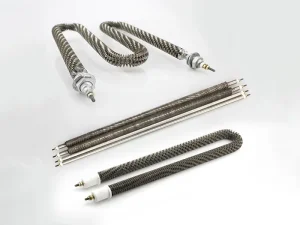
Swaged high-density cartridge heating elements delivering extreme thermal output for metal stamping, sealing bars, and platens.
Explore Specifications
Modular ceramic heating units engineered for pre-weld preheating, vessel stress relieving, and targeted on-site plant maintenance.
Explore Specifications
Integrated thermal oil boilers featuring dual canned-motor circulation pumps, automatic deaeration, and flameproof electrical controls.
Explore Specifications
Silicone rubber and polyimide flexible heating jackets engineered to match curved pipe contours, storage drums, and chemical tanks.
Explore SpecificationsFrequently Asked Questions: Industrial Oil Furnaces in Malaysia
Detailed technical answers to common queries from plant managers, procurement heads, and engineering contractors operating in Kuala Lumpur and across Malaysia.
Unlike pressurized fired steam boilers governed by strict First and Second Grade Boilerman requirements under the Factories and Machinery Act 1967 (FMA), closed-loop electric thermal fluid heaters operate at low hydraulic pressures (typically below 0.6 MPa). In many Malaysian jurisdictions, this significantly streamlines operational staffing constraints. However, pressure piping designs and expansion vessels must still be certified according to DOSH / JKKP pressure equipment guidelines. We provide all necessary ASME/EN design calculations and material certificates to facilitate smooth registration.
Thermal fluid degradation occurs primarily due to film overheating and oxidation. Kangpu prevents this through three engineering controls: (1) Ultra-low surface watt density (below 2.0 W/cm²) across all immersion elements; (2) Forced turbulent fluid flow inside the heater chamber (Reynolds number > 10,000) ensuring rapid boundary-layer heat dissipation; and (3) An automated nitrogen sealing system installed on the cold-leg expansion tank that prevents contact between hot oil and ambient oxygen.
Standard modular skid systems ship within 3 to 4 weeks ex-factory from our manufacturing facility in Yancheng, Jiangsu. Ocean transit time from Shanghai / Ningbo ports to Port Klang (Northport or Westport) averages 7 to 10 days. We provide comprehensive export documentation, including Form E for preferential tariff treatment under the ASEAN-China Free Trade Area (ACFTA), commercial invoices, packing lists, and full inspection test records.
Yes. Every electrical console is built with Siemens S7 or Schneider PLCs as standard, equipped with RS485 Modbus-RTU, Profinet, or Ethernet/IP communication ports. Operators in central control rooms can monitor and adjust inlet/outlet temperatures, differential pressure, pump circulation status, power consumption, and alarm logs in real time.
The combination of high ambient temperatures (30°C–36°C) and heavy humidity accelerates radiant ambient heating inside plant workshops, increasing HVAC loads and worker fatigue. We supply custom-molded, high-density hydrophobic aerogel insulation blankets and double-walled stainless-steel cladding that keep outer skin temperatures below 50°C, drastically lowering ambient heat loss and safeguarding operating personnel.
Deploy Engineering-Grade Thermal Fluid Heating in Kuala Lumpur
Consult directly with our senior thermal system engineers. From custom Skid-mounted Oil Furnaces to barrel heaters and replacement elements, we provide full CAD drawings, thermal load calculations, and turnkey factory support.