

Core Houston Industrial Systems: Primary Oven & Thermal Portfolio
Specially deployed across the Greater Houston industrial footprint—from the Houston Ship Channel to Pasadena and the Energy Corridor—these four flagship thermal assemblies represent our baseline precision heating equipment engineered for extreme duty cycles, rigorous quality assurance, and compliance with American industrial requirements.



Houston’s Industrial Reality: Macro Demands for Advanced Process Ovens
The Houston metropolitan region anchors the world’s most concentrated petrochemical, energy equipment, and heavy manufacturing corridor. Home to the Houston Ship Channel, Baytown complex, Mont Belvieu fractionation centers, and the expansive Texas City refining nexus, Houston processes over 40% of the United States’ base petrochemical derivatives. Within this high-intensity commercial environment, thermal equipment cannot be treated as a generic commodity. Industrial ovens, heat-treating chambers, and polymer orientation furnaces form the critical production backbone for high-integrity assets.
42%
US Petrochemical Output
Concentrated across Houston Ship Channel refineries and specialized polymer compounding lines.
>30%
Energy Reduction Mandate
Texas facilities migrating from direct fuel-gas combustion to zero-emission electric thermal systems.
±1.5°C
Target Temperature Uniformity
Critical for molecularly oriented PVC-O pipe manufacturing and downhole elastomer curing.
NFPA 86
Standard Compliance
Strict safety air purge, explosion relief, and Class I Div 2 hazardous location readiness.
Subsea & OCTG Energy Infrastructure Challenges
Manufacturers in Northwest Houston, Spring, and Conroe fabricate oil country tubular goods (OCTG), high-pressure blowout preventer (BOP) components, and directional drilling assemblies. These precision metal alloys demand specialized solution annealing ovens, tempering chambers, and thermal post-weld stress relieving equipment that eliminate microscopic lattice defects.
Additionally, subsea pipeline coatings—such as 3-layer polyolefin (3LPO), fusion-bonded epoxy (FBE), and high-temperature syntactic polyurethane insulation—require exact pre-heating tunnels and continuous curing ovens that maintain skin-temperature consistency along 40-foot pipe joints without thermal blistering.
Houston Thermal Performance Benchmarks
| Thermal Metric | Standard Commercial Ovens | Kangpu Houston-Spec Ovens |
|---|---|---|
| Thermal Uniformity | ±6.0°C (10.8°F) | ±1.5°C to ±2.0°C (ASTM E145 Class IIA) |
| Heat Loss Efficiency | 120 - 180 W/m² surface | < 45 W/m² (Nano Aerogel Casing) |
| Warmup Cycle (Ambient to 300°C) | 55 - 75 minutes | 22 minutes (Infrared/Convection Hybrid) |
| Atmosphere Control | Ambient air venting | Inert N₂ purge / Positive pressure sealed |
| Hazardous Location Rating | General Purpose (Non-rated) | Class I, Div 2, Groups B, C, D Rated |
Macro-Industry Solutions: Global Supply Challenges vs. Factory-Direct Architecture
Across the global industrial heating sector, facilities face a triple bind: surging electricity and fuel prices, stringent Scope 1 and Scope 2 carbon compliance under international protocols, and crippling lead times from conventional domestic thermal equipment assemblers who rely on outsourced third-party element winding.
As an integrated original design manufacturer (ODM) and factory established in 1986, Kangpu Heater (Yancheng Laier Heating Technology Co., Ltd.) eliminates supply-chain latency. By consolidating raw resistance alloy metallurgical formulation, refractory ceramic extrusion, automated casting, and PLC control cabinet integration within our 40-year facility, we deliver turnkey industrial oven installations and replacement heating assemblies to Texas plant engineers at half the standard industry lead time.
Electrification of Heavy Heat
Replacing aging, inefficient direct gas-fired burners across Texas plants with high-density electric infrared and precision-ducted heating banks. Eliminates point-source NOx, CO, and volatile organic compound (VOC) emissions while boosting net thermodynamic efficiency to over 96%.
Modular Containerized Thermal Units
Pre-assembled, skid-mounted continuous oven modules calibrated for containerized oceanic transit directly to the Port of Houston. Rapid bolt-together structural frames minimize on-site civil works and shave installation shutdown windows from 6 weeks to 72 hours.
Direct Engineering Collaboration
CAD-to-production workflows. Houston process designers collaborate directly with senior thermal systems engineers. Custom watt densities, terminal block layouts, multi-zone thermocouple configurations, and high-temperature lead protections are optimized prior to sample casting.
Localized Application Scenarios Across Greater Houston Industries
Our custom-built ovens and industrial heating elements are deployed across varied manufacturing disciplines throughout Harris, Fort Bend, Montgomery, and Brazoria Counties.
Case A: Molecularly Oriented PVC-O Infrastructure Piping
Municipal water systems across Texas are transitioning rapidly from ductile iron to Biaxially Oriented Polyvinyl Chloride (PVC-O) pipes due to superior tensile strength, fatigue resistance, and corrosion-free lifespans. However, the physical process of molecular orientation requires the extruded PVC preform to pass through a highly calibrated PVC-O Orientation Oven.
Within this thermal window, the pipe must be uniformly heated to its exact glass transition temperature (98°C to 105°C). Even a 2°C temperature variance around the circumference produces wall thickness asymmetry, premature burst failures under hydrostatic pressure tests (ASTM F1483), and line downtime. Our multi-zone infrared PVC-O ovens deploy closed-loop PID control and zoned radiant heating arrays to guarantee circumferential thermal uniformity within ±0.8°C.
Case B: Subsea Downhole Elastomer & PTFE Sintering
Houston oilfield service giants fabricate packers, chevron seals, and high-pressure riser gaskets utilizing virgin and carbon-filled PTFE, PEEK, and Viton/Aflas elastomers capable of surviving 20,000 psi and 200°C downhole sour gas environments (NACE MR0175).
These specialized polymers require multi-stage programmable ramp-soak thermal profiles lasting up to 36 hours. Our heavy-duty forced convection industrial batch ovens provide multi-step digital PLC recipes, vacuum-sealed door clamps, automated exhaust dampers for solvent off-gassing, and positive internal pressure to eliminate particulate contamination during crystalline matrix formation.
Case C: Aerospace Composite Autoclave Alternatives (Space City)
Houston’s aerospace cluster around the NASA Johnson Space Center and the Houston Spaceport at Ellington Airport manufactures carbon-fiber-reinforced polymer (CFRP) structural shrouds, satellite fairings, and antenna radomes.
To bypass high-cost autoclave cycle constraints, our Out-of-Autoclave (OOA) vacuum-assisted curing ovens integrate vacuum bag ports, multi-point thermocouple matrices, and high-velocity horizontal airflow systems. This configuration achieves void fractions under 0.8% and optimal resin consolidation without multimillion-dollar pressure vessel capital expenditure.
Case D: Maritime Shipyard & Pressure Vessel Heat Treating
From the Port of Houston to Galveston Bay drydocks, shipyard fabricators weld heavy-wall marine boiler plates and high-nickel alloy piping. Code mandates (ASME Section VIII, Division 1 and AWS D1.1) require pre-weld preheating and post-weld heat treatment (PWHT) to prevent hydrogen-induced cracking.
Our modular portable ceramic heating pads and high-density flexible elements wrap directly around curved vessel joints, delivering controlled thermal soaking up to 1,050°C (1,922°F) under rugged marine shipyard conditions.
Localized Support, American Standards & Safety Compliance
Industrial equipment operating in Houston chemical and energy facilities must satisfy rigorous US regulatory codes and stringent insurance underwriter criteria. We engineer our industrial ovens and custom heating systems to exceed North American benchmarks:
NFPA 86 (Classes A, B, C & D)
Incorporates FM-approved safety shutoff valves, mechanical purge timers, pressure relief roof latches, and powered solvent-exhaust ventilation systems calculated for flammable vapor processing.
UL 508A & NEC Compliance
Complete industrial control panels fabricated with recognized components, finger-safe touch terminals, short-circuit current ratings (SCCR) up to 100kA, and NEMA 4X / NEMA 7 explosion-proof enclosures.
5-Year Traceable Warranty
Every production run is laser-etched and tracked via factory lot barcodes. From raw nichrome alloy batch to final dielectric breakdown testing, every component carries complete quality documentation.
Direct Logistics to the Port of Houston: All complete industrial ovens and containerized thermal machinery are packed in ocean-worthy treated timber framing (ISPM 15 compliant) with vapor-barrier desiccants and shipped directly through Port Houston (Barbours Cut and Bayport Container Terminals). Our dedicated export team assists with expedited customs clearance, domestic flatbed rigging, and technical commissioning documentation.
Technology Roadmap: Next-Gen Industrial Thermal Architecture (2025–2035)
As the Gulf Coast industrial landscape accelerates its clean hydrogen transition and plant automation initiatives, thermal equipment is evolving from electromechanical boxes into cyber-physical process tools. Our engineering development vector centers on three technical pillars:
1. Zero-Harmonic SCR Power Modulation
Legacy electromechanical contactors and standard burst-firing silicon controlled rectifiers (SCRs) introduce voltage flickers and high-order harmonic distortion onto plant power grids. We are standardizing ultra-precise zero-cross firing thyristor drivers that modulate element power on a millisecond basis. This yields pure sinusoidal power absorption, extends heating element service life by over 300%, and integrates smoothly with Texas plant microgrids and renewable solar/cogeneration arrays.
2. IoT Telemetry & Predictive Failure Analytics
Unplanned thermal element burn-out during a continuous polymer extrusion or elastomer curing run can spoil hundreds of thousands of dollars in resin stock. Our modern control architectures feature integrated IoT telemetry: edge-computing microcontrollers monitor real-time phase resistance, leakage current, and thermal decay curves. The system predicts element failure 72 hours in advance, alerting plant maintenance supervisors via OPC UA / MQTT before thermal runaway occurs.
Expanded Factory Lineup: Industrial Heaters, Ovens & Thermal Systems for Houston
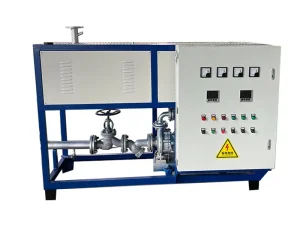
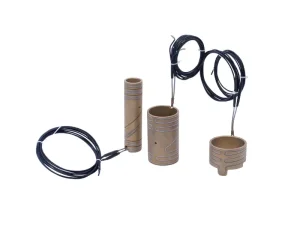
Our complete manufacturing scope encompasses specialized heating bands, high-density elements, continuous oil furnaces, and modular cooling/heating assemblies fabricated to customer technical drawings and voltage criteria (240V / 480V 3-Phase 60Hz).



Frequently Asked Questions: Houston Procurement & Engineering Guide
Technical, regulatory, and logistics inquiries addressed directly by our chief thermal engineering group for Texas plant engineers and procurement teams.
What parameters are critical when specifying a PVC-O molecular orientation oven for Texas pipe plants?
Molecularly oriented PVC-O pipe manufacturing requires hyper-precise thermal control within the polymer's viscoelastic window (around 98°C to 105°C depending on K-value and resin stabilizers). The primary parameters are:
- Circumferential Thermal Uniformity: Must stay within ±1.0°C (preferably ±0.5°C) to prevent wall thickness eccentricity during subsequent internal expansion.
- Zone Controllability: Longitudinal heating zoning (typically 4 to 8 zones) to control the preform temperature profile from entry to exit.
- Infrared Wavelength Matching: Medium-wave quartz infrared emitters (2.0 to 3.5 μm) match the fundamental infrared absorption bands of PVC, achieving in-depth volumetric heating rather than superficial skin heating.
- Automated Mechanical Transfer: Integrated roller beds with synchronized drive speeds to prevent pipe sagging or axial distortion during heating.
How do your ovens comply with NFPA 86 standards for flammable solvent handling?
For Houston facilities curing composite resins, solvent-borne adhesives, or fluoropolymer coatings that release volatile organic compounds (VOCs), we design Class A ovens in strict compliance with NFPA 86 (Standard for Ovens and Furnaces). This incorporates mechanical forced ventilation that maintains vapor concentrations below 25% of the Lower Explosive Limit (LEL) under normal conditions, independent airflow safety interlocks, explosion relief door latches, spring-loaded top panels, and pre-purge ventilation timers guaranteeing at least four volume changes before heating element energization.
Can you manufacture industrial ovens and elements to US 480V 3-Phase 60Hz and NEMA standards?
Yes. Every unit exported to the North American market is custom-wound and wired specifically for local electrical distribution standards: 480V 3-Phase 60Hz, 208V 3-Phase, 240V, or 575V. Electrical control enclosures conform to NEMA 12 (industrial dust-tight), NEMA 4 (watertight outdoor), or NEMA 7 (explosion-proof Class I, Groups C and D) utilizing UL-listed contactors, branch circuit breakers, and solid-state relays.
What is the typical shipping lead time and customs transit to Houston facilities?
Custom engineered heating bands, ceramic modules, and replacement elements typically complete fabrication and factory dielectric testing within 10 to 18 business days. Complete turnkey industrial ovens or large PVC-O tunnel ovens require 6 to 9 weeks for engineering, mold fabrication, assembly, and trial heating runs. Direct ocean transit from our manufacturing base to the Port of Houston (Barbours Cut or Bayport) typically takes 24 to 28 days.
Why choose an electric heating approach over direct natural gas burners in Greater Houston?
While natural gas has historically been economical along the Texas Gulf Coast, industrial electrification offers three distinct advantages:
- Zero On-Site Carbon & NOx Emissions: Enables compliance with Texas Commission on Environmental Quality (TCEQ) air permit caps in non-attainment ozone zones around Harris and Brazoria counties.
- Superior Energy Efficiency: Electric radiant and convection systems deliver over 95% net thermal transfer efficiency to the workpiece, compared to 45%–60% for gas systems where massive heat is lost through flue flannels.
- Precise Process Control: Electric SCR systems adjust in fraction-of-a-second increments, enabling tight ±1°C tolerance control unattainable with gas burner throttling valves.
Start Your Houston Thermal Project Consultation
Whether retrofitting existing petrochemical extruder bands, procuring high-capacity PVC-O orientation ovens, or custom-designing post-weld heat treatment assemblies for Gulf Coast operations, our direct engineering team is ready to analyze your drawings.