
Specialized Industrial Ovens & Heating Units for India
Precision-engineered continuous and batch thermal processing hardware deployed across major Indian manufacturing clusters in Gujarat, Maharashtra, and Tamil Nadu.
-
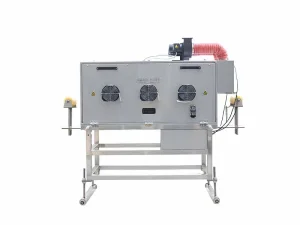
CE Certified PVC-O Precision Heating Ovens for Indian Water Infrastructure
View Product Details -

High-Uniformity Industrial Thermal Ovens Factory Certified for India
View Product Details -

Industrial Heavy-Duty Portable Ceramic Heaters for Indian Factories
View Product Details -

Flameproof & Explosion-Proof Electric Process Heaters for India Operations
View Product Details
Industrial Ovens Landscape in India: The Manufacturing Renaissance
Analyzing the macro-economic drivers, national manufacturing policies, and precision thermal demands steering factory capital investments across the Indian subcontinent.
The Republic of India has firmly established itself as one of the world's most dynamic industrial powerhouses. Driven by national policy frameworks including Make in India, the Production Linked Incentive (PLI) schemes across 14 vital sectors, and aggressive national infrastructure upgrades such as the Jal Jeevan Mission and PM GatiShakti, the demand for precision industrial thermal equipment has experienced an unprecedented surge. Industrial ovens—spanning high-capacity PVC-O orientation systems, convection curing ovens, cleanroom annealing chambers, and composite baking enclosures—serve as the foundational hardware enabling this manufacturing leap.
Key Catalysts Transforming Indian Thermal Processing Operations
Historically, substantial proportions of Indian mid-tier industrial heating relied on uninsulated, high-loss fuel-fired chambers or rudimentary resistive ovens that suffered from substantial thermal gradients exceeding ±12°C. In modern manufacturing, such wide tolerances are unacceptable. The ongoing transformation is defined by three fundamental imperatives:
- Stringent Pipe Extrusion Standards (PVC-O Revolution): With India’s nationwide push for potable water distribution under the Jal Jeevan Mission, potable water line contractors are turning heavily toward Oriented Polyvinyl Chloride (PVC-O) pipes. Molecular orientation demands precise circumferential soaking within specialized continuous ovens held within an uncompromising thermal envelope of ±1.0°C to achieve optimum biaxial alignment without crystalline degradation.
- Automotive & EV Battery Pack Scaling: As automotive hubs in Tamil Nadu (Chennai-Sriperumbudur), Maharashtra (Pune-Chakan), and Haryana (Gurugram-Manesar) pivot to electric vehicles, the demand for stator powder curing, electrode baking, and battery module thermal testing ovens has outstripped conventional domestic capacity.
- Electronic Component Clean Baking: Backed by the electronics manufacturing PLI scheme in regions like Uttar Pradesh (Noida) and Karnataka (Bengaluru), cleanroom ovens operating under Class 100 (ISO 5) particulate cleanliness are vital for semiconductor packaging, fluxless solder reflow, and printed circuit moisture relief.
Grid Fluctuations & SCR Control
Indian industrial grids encounter frequency drift and wide 380V–440V voltage variances. Our high-efficiency oven systems integrate Silicon Controlled Rectifier (SCR) power banks paired with burst-firing algorithms to maintain constant watt-density output regardless of utility phase instability.
Severe Ambient Resilience
Designed for subcontinental environments characterized by ambient shop-floor temperatures peaking at 48°C and monsoon-season humidity up to 98%. Heavy rockwool-aerogel composite insulation walls keep outer skin temperatures below 42°C, shielding shop operators.
Multi-Zone Closed Loop PID
Equipped with Siemens or Delta PLC platforms integrated with multi-point PT100 resistance temperature detectors (RTDs). Dynamic laminar airflow circulation guarantees eliminate dead thermal pockets in massive chambers up to 30 meters long.
Holistic Macro Solutions: Bridging Global Technology with Local Plant Realities
How engineered industrial ovens resolve persistent thermal processing bottlenecks across polymer transformation, aerospace composites, and powder metallurgy.
Across global manufacturing plants, thermal processing accounts for approximately 18% to 27% of total electrical consumption. In India, where commercial industrial tariffs average ₹7.5 to ₹11.0 per kWh depending on state electricity boards (such as GUVNL in Gujarat or MSEDCL in Maharashtra), oven thermal efficiency directly determines product unit margin.
1. The Thermodynamics of Airflow: Laminar Recirculation vs. Thermal Stratification
A frequent point of failure in conventional ovens is vertical air stratification: warm air gathers naturally in the crown of the chamber while colder air sinks to the bed, introducing temperature variations of up to 18°C. For composite polymer curing or PVC-O pipe billet conditioning, this gradient produces uneven wall thickness, erratic burst pressures, and ovality defects.
Our OEM factory designs deploy high-volume forward-curved plug fans powered by IE4 super-premium efficiency motors. Heated by customized, low-watt-density Incoloy 800 or stainless steel finned tubular bundles, conditioned air is directed through micro-adjustable perforated plenum walls. This generates a cross-flow horizontal laminar blanket ensuring that throughout every cubic meter of internal volume, the thermal variance remains strictly within ±1.5°C to ±2.0°C.
| Thermal Architecture Parameter | Standard Local Fabricated Ovens | European Tier-1 Imported Ovens | Our Factory Custom Solutions for India |
|---|---|---|---|
| Thermal Uniformity Guarantee | ±8.0°C to ±15.0°C (Non-calibrated) | ±1.5°C to ±2.5°C (High standard) | ±1.0°C to ±2.0°C (Factory 9-point calibrated) |
| Heating Element Architecture | Exposed Nichrome coils, high oxidation | Sealed Incoloy tubulars, high replacement cost | Heavy-gauge Incoloy 800/840 finned sheath elements |
| Insulation Thickness & Type | 50mm–80mm glass wool (Degrades) | 120mm ceramic fiber (High weight) | 120mm–180mm dual-layer rockwool + aerogel barrier |
| Skin Temp @ 250°C Internal | 65°C – 85°C (High burn hazard) | 38°C – 45°C | < 40°C above ambient (Safe-Touch compliance) |
| Control Topology & Logic | Analog on-off thermostats | Proprietary closed-source microcontrollers | Siemens/Delta PLC + SCR zero-cross thyristors (Open) |
| Spare Part Availability in India | Unstandardized domestic parts | 6 to 12 weeks overseas lead time | Standardized international spares stocked locally |
2. Energy Recovery & Low-Carbon Manufacturing Roadmaps
Under the Bureau of Energy Efficiency (BEE) guidelines and the Perform, Achieve and Trade (PAT) scheme launched by the Ministry of Power, large manufacturing facilities in India face mandatory specific energy consumption targets. Modern industrial ovens must no longer dump exhaust BTUs directly into atmosphere.
Our solutions incorporate air-to-air plate heat exchangers into the fresh air intake ducting. For drying operations that require continuous volatile organic compound (VOC) or moisture extraction, the hot exhaust airstream preheats the incoming 30°C ambient air up to 110°C before it reaches the primary electric heating bank. This counterflow thermal exchange delivers proven energy savings of 22% to 34%, reducing amortized operational costs and carbon emissions over the machine's 20-year design lifecycle.
Key Indian Industrial Corridors & Factory Deployments
Engineering tailor-made oven assemblies aligned precisely with regional manufacturing strengths across India's premier industrial states.
Gujarat Plastics & Chemicals Corridor
Locations: Ahmedabad, Vadodara, Surat, Vapi.
Application: PVC-O continuous orientation tunnel ovens, rotational mold heating systems, and fluoropolymer sintering ovens. Formulated to resist volatile plasticizer vapors with 316L stainless steel interior cladding and continuous solvent exhaust ventilation.
Maharashtra Automotive & Heavy Engineering
Locations: Pune, Chakan, Talegaon, Aurangabad.
Application: E-coat paint curing, brake lining bonding, aluminum aging and solution heat-treatment ovens. Engineered to interface directly with robotic conveyor lines, featuring variable-speed driven chain conveyors and automated air curtain door locks.
Southern India Precision, EV & Aerospace
Locations: Chennai, Sriperumbudur, Coimbatore, Bengaluru.
Application: Carbon composite vacuum-bag debulking ovens, stator varnish impregnation curing, cleanroom medical catheter annealing chambers conforming to AMS 2750G pyrometry specifications for aerospace certification.
Compliance Assurance: BIS, CE, and Indian Factory Norms
Operating industrial machinery in India requires strict adherence to statutory regulatory standards. All ovens and heating equipment manufactured by our factories conform to:
- Bureau of Indian Standards (BIS) & Central Electricity Authority (CEA) Regulations: Compliant with IS/IEC 60519 safety standards in electroheat installations, featuring dual earthing circuits, IP55 control enclosure ratings to prevent the ingress of abrasive industrial dust, and thermal runaway emergency cutoff interlocks.
- European CE Conformity & Machinery Directive 2006/42/EC: Ensuring every heating cabinet meets international occupational safety standards, accompanied by full Declaration of Conformity and technical documentation.
- PESO (Petroleum and Explosives Safety Organisation) Aligned Explosion-Proof Designs: For curing processes that emit flammable solvent vapors, ovens integrate ATEX/IECEx certified explosion-relief venting latches, non-sparking blower assemblies, and intrinsically safe purge timers.
Plan Your Industrial Oven Engineering Project
Connect directly with our senior thermal system application engineers. We evaluate your machine layout, product dimensions, heating profiles, and power requirements to deliver custom-built factory proposals for India.
Send Inquiry NowTechnological Roadmap: The Evolution of Smart Industrial Ovens
Anticipating the technological disruptions that will govern industrial thermal processing in India over the next decade.
The convergence of predictive artificial intelligence, real-time IoT sensors, and high-frequency power electronics is reshaping the baseline capabilities of factory heating equipment. As Indian industry accelerates toward Smart Factory / Industry 4.0 initiatives, our manufacturing facilities are pioneering several advanced technological frontiers:
1. Digital Twin Simulation & Computational Fluid Dynamics (CFD) Profiling
Gone are the days of manual trial-and-error baffle tuning on the plant floor. Prior to welding a single sheet of structural steel, every custom oven is digitally simulated via 3D finite-element CFD models. By modeling the precise aerodynamics of the customer's specific part geometry—whether it is a batch rack of automotive engine blocks or continuous PVC-O pipe sleeves—we ensure that boundary layer air drag is eliminated and turbulent heat transfer coefficients are mathematically balanced.
2. AI-Driven Thermal Profiling & Edge Analytics
Modern ovens exported to Indian tier-1 facilities come enabled with edge computing controllers running adaptive self-tuning algorithms. By continuously analyzing data feeds from distributed RTDs, ambient factory temperature fluctuations, and conveyor cycle speeds, the system autonomously throttles SCR banks ahead of thermal overshoot events. This capability prevents thermal hysteresis, conserving electrical energy during idle production intervals.
3. Full IoT Cloud Integration with SCADA & MES Platforms
Our control panels feature native MQTT and OPC-UA communication protocols, enabling direct handshake with factory ERP and MES architectures. Indian factory managers can monitor cycle times, power consumption curves, temperature uniformity compliance reports, and predictive maintenance alerts (such as blower vibration anomalies or heater coil impedance degradation) via secure remote dashboards.
Frequently Asked Questions: Industrial Ovens for India
Detailed technical answers to common queries raised by plant managers, procurement leads, and maintenance engineers across India.
Why are specialized precision ovens critical for PVC-O pipe manufacturing in India?
How do your industrial ovens cope with electrical voltage volatility in Indian industrial estates?
What level of after-sales engineering and spare parts support is available for Indian buyers?
Can these ovens be designed to meet explosive atmosphere or hazardous area regulations?
What structural materials are utilized to withstand high monsoon humidity and coastal corrosion?
Industrial Electric Heaters, Furnaces & Accessories for India
Original catalog assemblies, industrial heating elements, and process accessories designed for demanding thermal applications across India.
-
High-Efficiency Portable Industrial Ceramic Heaters for Indian Factories
View Product Details -

High-Precision Industrial Thermocouples & RTD Sensors for Indian Ovens
View Product Details -
Heavy-Duty Portable Ceramic Workshop Heaters for Indian Heavy Industry
View Product Details -

High-Flow Industrial Pipeline Circulation Heaters for Indian Plants
View Product Details -
Energy-Efficient Industrial Portable Ceramic Heaters for Indian Assembly Lines
View Product Details -
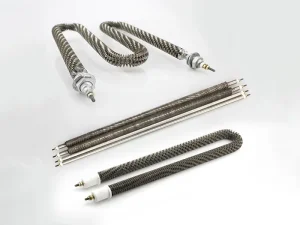
High-Density Industrial Cartridge & Tubular Heating Elements for India
View Product Details -

High-Temperature Thermal Cleaning Furnaces for Indian Extrusion Tooling
View Product Details -
Precision Batch & Continuous Industrial Ovens Certified for Indian Factories
View Product Details