
Featured Export Portfolio: High-Precision Heating Systems
Engineered to exact OEM specifications with automated metallurgical casting, high-density dielectric insulation, and tight thermal tolerance.

CE Certification PVC-O Ovens for Precision Heating
View Specifications
China Portable Ceramic Heaters Industrial Solutions
View Specifications
Efficient Portable Ceramic Heaters for Heavy Industry
View Specifications
CE Certified Industrial Cooling Blower & Fan Assembly
View Specifications
Infrared Ceramic Heaters for High-Efficiency Radiance
View Specifications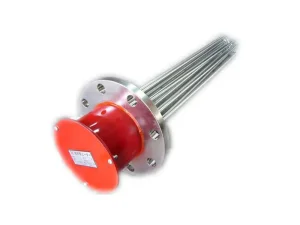
Explosion-Proof ATEX/CE Industrial Electric Heater
View Specifications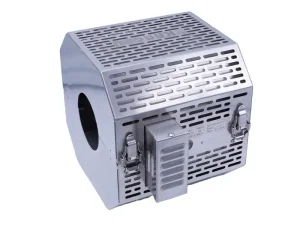
Integrated Extruder Barrel Heating & Cooling System
View Specifications
High-Frequency Induction Clean Steam Boiler
View SpecificationsEngineering Principles of Cast-in Thermal Technology
Why Tier-1 polymer extrusion processors, die-casting manufacturers, and medical packaging leaders replace standard band heaters with monolithic cast-in heating elements.
In heavy industrial processing, thermal consistency across contact surfaces governs product quality, polymer molecular integrity, and mechanical fatigue life. Standard sheet-metal mica or ceramic band heaters inevitably encounter microscopic interfacial air gaps between the inner heater surface and the cylinder or platen exterior. Because air has an exceedingly low thermal conductivity ($k \approx 0.026\text{ W}/(\text{m}\cdot\text{K})$), these microscopic voids induce severe thermal throttling, forming localized hot spots that rapidly accelerate resistance wire oxidation and premature sheath burnout.
Cast-in heaters eliminate this fundamental mechanical failure mode. By cast-encapsulating precision-formed tubular heating elements directly into a metallurgical matrix—typically high-purity aluminum alloys, aluminum bronzes, or brasses—the heating element achieves a continuous, void-free molecular interface. Thermal conduction transitions directly through solid metal ($k \approx 120 - 180\text{ W}/(\text{m}\cdot\text{K})$ for aluminum alloys), dramatically decreasing the internal core temperature of the magnesium oxide (MgO) dielectric core and lowering the operating temperature of the internal nickel-chromium (NiCr 80/20) resistance coil.
| Alloy Classification | Max Operating Temp | Thermal Conductivity | Watt Density Capability | Corrosion & Wear Resistance | Typical Industrial Duty |
|---|---|---|---|---|---|
| Cast Aluminum (A356 / LM25) | 400°C - 450°C (750°F) | 160 W/(m·K) | Up to 5.5 W/cm² (35 W/in²) | Moderate / Standard | Plastics extrusion, blown film, blow molding, thermoforming platens. |
| Cast Bronze (Aluminum Bronze C95400) | 650°C - 700°C (1200°F) | 60 W/(m·K) | Up to 7.0 W/cm² (45 W/in²) | Superior / Anti-Wear | High-temperature engineering resins (PEEK, PTFE, PPS), die-cast zinc/aluminum sprues. |
| Cast Brass (Yellow Brass / C85200) | 550°C - 600°C (1050°F) | 115 W/(m·K) | Up to 6.2 W/cm² (40 W/in²) | High / Chemical Resilient | Chemical autoclave tooling, harsh corrosive washdown zones, medical sterilization. |
| Cast Spheroidal Iron (Ductile) | 450°C - 500°C (930°F) | 45 W/(m·K) | Up to 4.0 W/cm² (25 W/in²) | Extreme Mechanical Shock | Heavy rubber vulcanizing presses, foundry holding furnaces, structural die platens. |
Macro Industry Heating Solutions & Global Applications
Engineered to resolve complex multi-variable thermal dynamics in demanding high-uptime processing sectors.
Thermoplastic Extrusion & Masterbatch Processing
Extrusion barrels require precise heating to plasticize resin pellets followed by rapid, responsive cooling to remove viscous shear heat. Our dual-channel liquid-cooled cast aluminum heaters embed seamless 304 or 316L stainless steel cooling loops side-by-side with tubular heating elements, preventing temperature overshoot and resin thermal degradation on twin-screw and single-screw extruders.
Die-Casting Injection Sleeves & Manifolds
Aluminum bronze cast-in heating blocks resist the aggressive mechanical impacts and metallurgical washouts inherent to zinc and aluminum high-pressure die casting. They maintain molten metal fluidity across the shot sleeve and manifold sprues up to 650°C, drastically lowering porosity rejects and cycle hesitation.
Semiconductor Tooling & Cleanroom Vacuum Platens
Vacuum chucks, baking tables, and CVD reactor heating stages demand zero outgassing and sub-micron flatness. Our precision CNC-machined cast-in aluminum platens feature hermetically sealed cold junction terminations, custom thermocouple wells, and helium mass-spectrometer leak-tested cooling lines compliant with Class 10 cleanroom protocols.
High-Speed Medical Packaging & Pouch Sealing
Form-fill-seal (FFS) packaging machines require uninterrupted heat delivery across the entire length of the sealing jaws. Cast-in bronze and brass heating bars eliminate edge cooling effects, ensuring 100% hermetic barrier sealing for sterile pharmaceutical pouches, intravenous bags, and medical device trays.
PVC-O Molecular Orientation & Pipe Manufacturing
Molecularly oriented polyvinyl chloride (PVC-O) pipe fabrication requires exact, uniform thermal zones to ensure biaxial expansion without wall thickness variation. Our integrated heating-cooling assemblies and specialized industrial ovens maintain strict radial thermal equilibrium across heavy-gauge pipe billets.
Energy Storage & Lithium-Ion Battery Slurry Mixing
Jacketing reactors and twin-screw electrode slurry kneaders with explosion-proof cast aluminum heating sleeves delivers constant temperature control without localized shearing hotspots, preventing solvent evaporation spikes during active electrode material synthesis.
China Industry 4.0: Metallurgical Supply Chain Leadership
Combining 40 years of continuous heating element manufacturing with automated casting cells, 5-axis CNC machining, and rigorous NDT quality assurance.
Global procurement teams often struggle with European and North American lead times of 16 to 24 weeks for replacement cast-in heating elements. Located in Yancheng, Jiangsu—the epicentre of advanced thermal heating engineering in China—Kangpu Heater (Yancheng Laier Heating Technology Co., Ltd.) leverages a vertically integrated smart manufacturing campus that compresses delivery timelines to 2 to 4 weeks while guaranteeing metallurgical repeatability and international compliance.
Our Industry 4.0 production framework removes manual variations through four foundational pillars:
Automated Gravity & Low-Pressure Die Casting
Robotic pouring ladles maintain constant liquid metal temperature and laminar flow, eliminating trapped gas porosity and micro-shrinkage voids around the tubular heating elements. This guarantees 100% metal-to-sheath contact density.
In-House Non-Destructive Testing (NDT)
Every casting batch undergoes digital X-ray radiographic inspection to verify element centering, dielectric MgO density, and absence of internal voids. Hydrostatic testing of cooling passages is conducted at 1.5 MPa (217 PSI) to guarantee zero leak risk under high thermal cycling.
5-Axis CNC Precision Surfacing
Mated cylinder halves are machined on high-precision CNC horizontal machining centers to maintain an internal diameter tolerance within ±0.025 mm. This maximizes surface-to-barrel contact and minimizes heat transfer loss.
Global Enterprise Procurement Intent & Total Cost of Ownership (TCO)
Evaluating capital expenditure versus operational longevity, downtime risks, and energy conservation metrics.
When engineering procurement teams evaluate cast-in heaters, the initial unit purchase price represents less than 12% of total operational lifecycle costs over a 5-year production cycle. Premature heater failure on a continuous polymer extrusion or compounding line causes catastrophic downtime: thousands of dollars per hour in discarded scrap resin, purge labor, screw unfreezing, and lost production capacity.
Kangpu Heater collaborates directly with OEM procurement managers, Plant Operations Directors, and Tier-1 MRO maintenance teams worldwide to engineer out failure points:
Direct-from-Source OEM Cost Amortization
By eliminating trading intermediaries and international distributors, machine builders (OEMs) achieve direct access to customized molds and mass manufacturing economies of scale, achieving unit cost reductions between 30% and 45% compared to local regional fabricators.
Thermal Energy Efficiency Gains
Precision-cast aluminum elements clad in custom aerodynamic stainless steel blow hoods achieve directional radiant reflectance. Upwards of 92% of generated electrical wattage transfers inward toward the process melt, reducing external heat radiation into factory floors and shrinking ambient HVAC loads.
5-Year Batch Traceability Warranty
Every single heater unit leaves the factory with a laser-engraved serial code that links back to the original magnesium oxide purity log, tubular element winding tension, aluminum alloy spectral analysis, and final inspector sign-off. Defective units are root-cause analyzed at the metallurgical level.
International Regulatory Compliance & Localization Support
Ensuring complete electrical, thermal, and environmental compliance for export to North America, the European Union, the Middle East, and Asia-Pacific.
CE Mark & Low Voltage Directive (LVD)
Fully compliant with EU Directives 2014/35/EU (LVD) and 2014/30/EU (EMC). High-voltage dielectric insulation tests exceed 1500V AC at leakage currents < 0.5 mA, safeguarding machine operators from shock hazards in automated environments.
UL 499 & CSA C22.2 No. 72 Specifications
Designed to comply with UL and Canadian Standards Association criteria for industrial electric heating elements. Includes high-temperature ceramic terminal insulator blocks, NEMA 4 moisture-resistant or NEMA 7 explosion-resistant junction boxes.
RoHS 3 (EU 2015/863) & REACH Compliance
All alloys, leads, terminal studs, and brazing pastes are strictly verified lead-free, cadmium-free, and free of Substances of Very High Concern (SVHC), satisfying environmental circularity audits for multinational enterprises.
Technical Roadmap: Next-Generation Cast Thermal Systems
Anticipating the demands of smart factories, advanced polymers, additive thermal manufacturing, and net-zero industrial manufacturing.
IoT-Enabled Predictive Sheath Health Monitoring
Integration of embedded micro-thermocouple arrays and current-leakage sensing chips directly into the cast matrix. Communicating via IO-Link or Modbus protocols to send real-time thermal impedance data to SCADA software, identifying insulation breakdown weeks before line stoppages.
Conformal 3D Additive Cooling Passages
Moving beyond conventional bent-tube liquid lines to 3D-printed metal casting cores with conformal, bio-mimetic cooling channels. These geometries increase liquid heat absorption surface area by up to 140%, cutting thermal overshoot recovery times in half.
Closed-Loop Metallurgical Circularity
End-of-life buyback programs where decommissioned aluminum and bronze cast-in heaters are demounted, de-cored of elements, refined, and recast into new primary ingots, supporting enterprise Scope 3 carbon reduction mandates.
Specialized Thermal & Processing Equipment
Complete custom turnkey heaters, ovens, and steam generation boilers designed for global industrial deployment.
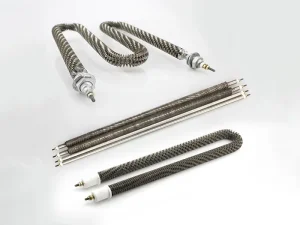
High-Density Industrial Electric Heating Element
View Specifications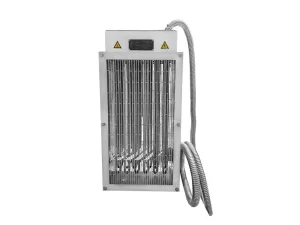
CE Certified Process Air Duct & HVAC Flange Heater
View Specifications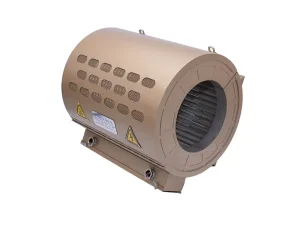
Nano Infrared Energy-Saving Electric Band Heater
View Specifications
Heavy Duty Portable Ceramic Utility Heater
View Specifications
Industrial Precision Curing & Drying Ovens
View Specifications
Thermal Pyrolysis Polymer Cleaning Furnace
View Specifications
Cast Aluminum / Bronze Heaters with Cooling Tubes
View Specifications
High-Efficiency Electromagnetic Induction Barrel Heater
View SpecificationsFrequently Asked Questions on Cast-in Heaters
Key technical insights directly answered by our senior thermal applications engineering group.
How do you avoid thermal expansion mismatches between the cast metal and the inner steel sheath?
Aluminum expands at approximately $23 \times 10^{-6}/\text{K}$, while stainless steel or Incoloy sheaths expand at $16 \times 10^{-6}/\text{K}$. To prevent element sheath fatigue and internal stress cracking during rapid cycling, our proprietary tubular forming profiles utilize pre-annealed bend configurations with calculated expansion radii. The internal metallurgical compaction density absorbs differential dimensional movement without shearing the dielectric MgO layer.
What is the maximum practical watt density for cast aluminum versus cast bronze heaters?
For standard cast aluminum (A356) heaters operating up to 400°C, we recommend designing between 3.0 and 5.5 W/cm² (20 to 35 W/in²) to maintain longevity and avoid internal alloy softening. For aluminum bronze alloys (C95400) operating between 500°C and 700°C, watt densities up to 7.0 W/cm² (45 W/in²) can be achieved reliably, provided adequate heat absorption from the process melt is maintained.
Can liquid cooling channels clog or corrode over prolonged field operation?
To prevent scaling, galvanic pitting, and channel blockage, we use heavy-wall, seamless ASTM A269 304 or 316L stainless steel tubing rather than standard copper pipes. The stainless steel lines resist treated cooling water, glycols, and thermal fluids without internal scale buildup or chemical deterioration over years of continuous closed-loop pumping.
What is the standard prototyping and real-mold verification timeline for custom orders?
Our 7-stage service process (ID Design, Customization, Real Mold Production, Customer Approval, Sample Modification, Testing, Mass Production) typically yields functional first-article physical samples within 10 to 14 business days from 3D CAD sign-off. Because real gravity casting dies are opened immediately for sampling, the approved sample matches 100% of the mass-produced component's physical and electrical characteristics.
How does Kangpu ensure electrical insulation integrity under high-humidity global transit?
Tubular heating elements embedded in castings are prone to atmospheric moisture ingress if improperly protected. Kangpu incorporates proprietary silicone resin and high-temperature epoxy barrier seals at the cold-pin terminal exits. Every unit is dielectric megger tested before packaging (Cold Insulation Resistance > 500 MΩ at 1000V DC) and sealed in vacuum-barrier protective export packaging to ensure immediate plug-and-play installation upon arrival.