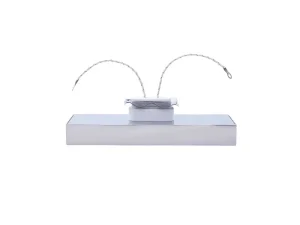
Featured Industrial Heaters & Heavy-Duty Thermal Systems
Engineered to international CE safety directives and ISO 9001 quality benchmarks. High-precision electric heating components designed for heavy industrial uptime.
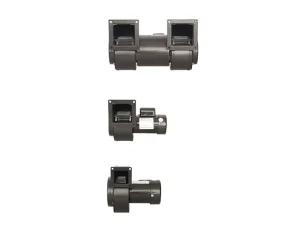
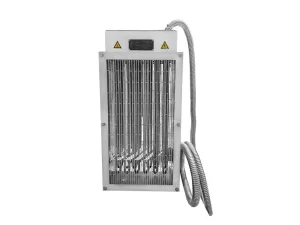
Efficient Flanged Process Air Duct Heaters for HVAC
CE Certification Efficient Air Duct Heaters for HVAC Manufacturer, Factory
Integrated Heating & Cooling Extrusion Module
Best Heating/Cooling Integrated System Exporter, Exporters
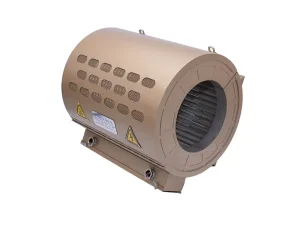
Nano Infrared Radiation Energy-Saving Band Heater
CE Certification Nano infrared electric band heater Manufacturer, Manufacturers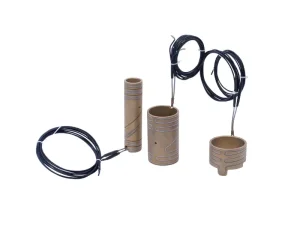
High Watt-Density Hot Runner Coil & Spring Nozzle Heater
High-Quality (Hot-runner)Spring heater/Coil heater Manufacturers, Factory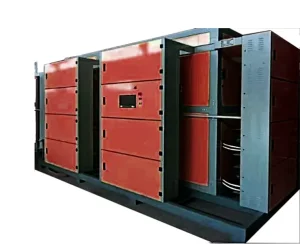
Zero-Emission High-Frequency Electromagnetic Steam Boiler
High-Quality Electromagnetic steam boiler Manufacturers, Factories
Modular Industrial Portable Radiant Ceramic System
High-Quality Portable Ceramic Heaters for Industry - Reliable Heating Solutions from China Suppliers and Factory Manufacturers, FactoryNext-Generation Ceramic Fiber Heaters: Structural Dynamics & Thermal Kinetics
A rigorous engineering comparison of Flat Panel, Cylindrical, and Semi-Cylindrical ceramic fiber heating structures under high-temperature cycling operations up to 1300°C.
Ceramic Fiber Flat Panel Heaters
Fabricated through precision wet vacuum-forming slurries using high-purity alumina-silica ceramic fibers (Al₂O₃-SiO₂). High-resistance FeCrAl (Kanthal) alloy heating elements are embedded flush or exposed to yield high directional radiation efficiency.
- Thermal Gradient: Uniform planar flux across surfaces up to 1200mm × 800mm.
- Mounting Interfaces: Counterbored thru-holes, custom ceramic anchoring spools, or stainless edge collars.
- Key Applications: Annealing furnaces, semiconductor wafer bakeout, planar quartz crystal processing, continuous sintering lehrs.
- Specific Heat: Low heat storage capacity enabling ramp rates exceeding 50°C/min.
Ceramic Fiber Cylindrical Heaters
Full-circle continuous radial heaters engineered for specialized tubular processing chambers. The vacuum-formed hollow cylinder integrates helically coiled resistance wire directly along the internal circumference, providing seamless 360° isothermal envelopment.
- Field Uniformity: Elimination of longitudinal seam cold-spots in high-purity chemical processing.
- Mechanical Integrity: Pre-compressed high-density fiber body avoids wire sagging under prolonged soak.
- Primary Use: Single-zone and multi-zone tube furnaces, pyrolytic gas reactors, optical fiber preform draw towers.
- Thermal Response: Near-zero thermal inertia prevents temperature overshoot in automated ramp-soak profiles.
Ceramic Fiber Semi-Cylindrical Heaters
Engineered as matched interlocking pairs to wrap securely around process tubes, pipes, and extruder barrels. Features precision tongue-and-groove or stepped lap joint perimeters to eliminate line-of-sight infrared loss through split seams.
- Retrofit Ease: Non-intrusive installation without disassembling existing pipelines or process equipment.
- Expansion Tolerance: Resilient fibrous matrix absorbs thermal expansion stresses from metal process tubes.
- Applications: High-temperature extrusion lines, petrochemical pilot pipes, CVD reactors, thermal fluid lines.
- Fast Maintenance: Single half-shell replacement reduces downtime during zone servicing.
Thermal-Mechanical Performance Comparison Matrix
Quantitative design indices comparing refractory vacuum-formed fiber heaters against traditional ceramic band heaters, mineral insulated (MI) cable heaters, and cast metal systems.
| Evaluation Parameter | Vacuum-Formed Ceramic Fiber | Industrial Steatite Ceramic Band | Cast-In Aluminum / Copper Heater | Mineral Insulated (MI) Band |
|---|---|---|---|---|
| Continuous Operating Temp | 1100°C – 1300°C | 500°C – 700°C | 350°C (Al) / 650°C (Cu) | 600°C – 750°C |
| Volumetric Bulk Density | 280 – 380 kg/m³ | 1800 – 2200 kg/m³ | 2700 – 8900 kg/m³ | 2800 – 3400 kg/m³ |
| Thermal Conductivity (at 800°C) | 0.12 – 0.16 W/m·K | 1.0 – 1.4 W/m·K | 120 – 380 W/m·K (Conductive) | 1.8 – 2.5 W/m·K |
| Heat Storage / Thermal Inertia | Extremely Low (<10 kJ/m²·K) | Moderate (60 kJ/m²·K) | High (>250 kJ/m²·K) | Moderate (45 kJ/m²·K) |
| Thermal Shock Resistance | Exceptional (Direct quench immune) | Moderate (Vulnerable to cracking) | High (Ductile metal body) | Good |
| Energy Loss to Ambient | Lowest (Integrated fiber insulation) | High without external blanket | Very High without jacket | High without secondary shroud |
| PID Control Responsiveness | Instantaneous (<3s latency) | Slow ramp-down, thermal overshoot | Heavy overshoot, slow cooldown | Fast response, limited surface flux |
Meeting Global Corporate Procurement Demands
How multinational engineering EPCs, semiconductor equipment fabs, and plastic machinery builders leverage ceramic fiber heating systems to fulfill decarbonization directives and rigorous thermal process controls.
Semiconductor & Advanced Thin-Film Fabs
Demands zero particle spallation and ultra-pure, micro-zone thermal profiles. In Low-Pressure Chemical Vapor Deposition (LPCVD) horizontal and vertical diffusion furnaces, Kangpu ceramic fiber cylindrical and semi-cylindrical heaters serve as critical isothermal boundaries.
The vacuum-formed alumina fiber is calcined under multi-stage firing to remove organic binders, preventing outgassing in class 100 cleanroom environments. Integrated multi-tap resistive paths permit distinct power distributions across tube inlets, process zones, and exhaust flanges.
Polymer & High-Performance Composites
Processing advanced engineering thermoplastics (PEEK, PEI, PPS, and fluoropolymers) requires sustained barrel temperatures above 380°C up to 450°C, where conventional mica bands fail and cast heaters cause unmanageable thermal delay.
Kangpu ceramic fiber semi-cylindrical heaters combine low mass with integrated back-insulation, reducing machine frame skin temperatures from 140°C down to below 45°C. This lowers factory HVAC power consumption by 22–35% while stabilizing melt viscosity during high-speed cycle runs.
Clean Energy & Hydrogen Technologies
In Solid Oxide Fuel Cell (SOFC) test rigs, hydrogen steam methane reformers, and lithium-ion battery cathode sintering lines, flat panel and cylindrical ceramic fiber heaters withstand high oxidation environments up to 1250°C.
Engineered with embedded Kanthal APM powder-metallurgical resistance wires, these systems prevent embrittlement from thermal shock cycles. They ensure gas preheating vessels reach critical dissociation temperatures safely without local hot-spot degradation.
The Kangpu 7-Stage Controlled Customization Workflow
Every customized ceramic fiber heater is verified through real-mold prototype testing before batch freeze, backed by 40 years of direct manufacturing experience.
Industrial ID & Thermal Modeling
SolidWorks CAD modeling paired with Ansys FEA thermal boundary calculations to resolve watt density, element wire pitch, and terminal lead stress clearances.
Product Customization
Matching supply voltages (110V, 220V, 380V, 480V, 3-phase delta/star), specific surface watt loading (up to 4.5 W/cm²), and lead exit geometry.
Real-Mold CNC Tooling
We cut dedicated precision aluminum slurrying molds for sample production rather than using carved prototypes, ensuring reproducible grain density.
Customer Physical Confirmation
Prototypes are dispatched to your plant for mechanical fitting on extruder barrels, process tubes, or kiln frames to confirm alignment tolerances.
Engineering Modification
Rapid iterative revisions based on empirical test data: adjusting thermocouple wells, lead flexible sleeving, or ceramic fiber surface hardening.
Cold/Hot Hi-Pot & Resistance QC
Strict testing including 1500V dielectric breakdown resistance, mega-ohmmeter insulation resistance checking (>100MΩ cold), and thermal imaging scans.
Scalable Batch Execution
Production runs on calibrated automated vacuum slurry drying lines, complete with laser barcoding for full 5-year warranty traceability.
CE & ISO 9001 Audited
All finished products conform to EU Low Voltage Directive 2014/35/EU, RoHS heavy-metal restrictions, and ISO 9001 factory production control standards.
R&D Roadmap: Ceramic Fiber Thermal Evolution
Advancing vacuum-formed industrial heating into the smart manufacturing and zero-carbon industrial processing era.
Polycrystalline Mullite Fibers (1400°C–1600°C)
Transitioning from standard alumino-silicate fibers to sol-gel derived polycrystalline mullite fibers, increasing continuous stability above 1400°C and resisting devitrification in reducing atmospheres.
Selective High-Emissivity Ceramics
Application of zirconium diboride and nano-titanium dioxide surface glazes on the heating face. Increases radiant emissivity from ε=0.85 to ε=0.96 across the 2–10 μm infrared band, boosting radiative heat transfer by 18%.
Embedded Thin-Film Sensor Matrices
Embedding distributed micro-thermocouples and platinum RTD films directly into the ceramic fiber insulation layer, enabling continuous condition monitoring and AI-driven thermal runaway prevention via Modbus/OPC-UA.
Global Commercial Footprint & Localized Regulatory Compliance
Supporting critical manufacturing centers across North America, the European Union, Southeast Asia, and the Middle East with consistent logistics and international engineering certifications.
North American Compliance (UL / CSA Standards)
For US and Canadian machinery builders, Kangpu manufactures heating elements compliant with UL 499 (Electric Heating Appliances) and NFPA 79 electrical safety rules. We supply verified high-temperature leads, NPT terminal enclosures, and high-dielectric mica terminal barrier plates.
European Union Directives (CE & RoHS)
All ceramic fiber heating modules exported to the EU fully adhere to the Low Voltage Directive (LVD) 2014/35/EU and the Machinery Directive 2006/42/EC. Furthermore, raw fiber wools comply with European REACH guidelines regarding synthetic vitreous fibers, using bio-soluble low-biopersistence fiber alternatives on customer request.
Protective Global Packaging Logistics
Given the porous, lightweight structure of refractory ceramic fiber shapes, each unit is vacuum-sealed in moisture-barrier polymer wrapping, encapsulated in custom shock-absorbing foam inserts, and crated in fumigated export wooden plywood boxes (ISPM-15 standard) to ensure zero transit fracture.
Frequently Asked Questions (Technical & Procurement)
Comprehensive engineering clarifications on ceramic fiber selection, life-cycle management, electrical installation, and thermal optimization.
How do Ceramic Fiber Heaters differ fundamentally from standard Ceramic Band Heaters?
Can Kangpu fabricate Flat Panel, Cylindrical, and Semi-Cylindrical heaters to custom drawings?
What specific alloy grades are used for the resistance heating coils?
How should ceramic fiber heaters be mounted to prevent mechanical stress damage?
What scope of after-sales warranty is provided by Yancheng Laier Heating Technology (Kangpu)?
Are these fiber heaters suitable for vacuum furnace or inert gas chambers?
Cast Metal, Mica & Industrial Process Heaters
Explore the full breadth of Kangpu heater manufacturing capabilities: custom-cast aluminum/copper barrels, explosion-proof units, and industrial ovens exported to over 100 countries.
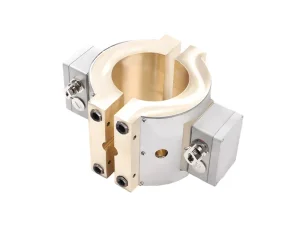
Cast Aluminum & Copper Extrusion Barrel Heater
CE Certification Cast Aluminum/Copper Heater Manufacturer, Exporter
High-Precision Safe and Durable Mica Band Heater
China Safe and Durable Mica Heaters Factory, Factories
High-Efficiency Portable Ceramic Heating Assembly
High-Quality Portable Ceramic Heaters for Industry - Efficient Heating Solutions from China Suppliers and Factory Exporter, Exporters
Industrial Ceramic Rapid Pre-Heating Portable Unit
China Portable Ceramic Heaters for Industry Manufacturers, Exporter
Explosion-Proof Flanged Immersion & Circulation Heater
CE Certification Explosion Proof Electric Heater Exporter, Factory
Rugged Industrial Portable Ceramic Drying Heaters
China Efficient Portable Ceramic Heaters for Industry | China Suppliers & Factory Exporters, Factories