

CE Certification Fan Manufacturer, Factory
Product SpecificationsDirect from our state-of-the-art Jiangsu production hubs, built to withstand continuous industrial thermal loads with maximum operational longevity.
CE Certification Fan Manufacturer, Factory
Product Specifications
High-Quality Cleaning furnace Manufacturer, Exporter
Product Specifications
CE Certification Flexible Heaters for Custom Applications Manufacturer, Exporter
Product Specifications
Best Infrared Ceramic Heaters for Efficient Heating Manufacturers, Exporters
Product Specifications
CE Certification Ovens Manufacturer, Exporter
Product Specifications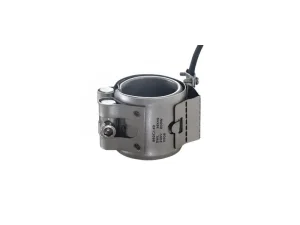
China Safe and Durable Mica Heaters Factory, Factories
Product Specifications
High-Quality Portable Ceramic Heaters for Industry - Reliable Heating Solutions
Product Specifications
High-Quality Thermocouple Exporter, Factory
Product SpecificationsFour Decades of Thermal Engineering
Peak Temperature Execution Range
Global Export Destination Markets
Traceable Full Production Warranty
In modern industrial thermal systems, semi-cylindrical ceramic fiber heaters represent the nexus between refractory thermal insulation and responsive electric element integration. Unlike heavy refractory bricks or brittle cast-in systems, modern vacuum-formed ceramic fiber assemblies deliver near-zero thermal mass coupled with high radiant and convective heat output.
Engineered using low-density polycrystalline mullite fibers (PCW) mixed with organic and inorganic binders. This ensures resistance to thermal shock up to 1400°C without mechanical degradation or internal micro-fractures during rapid thermal cycling.
Precision CNC-grooved paths lock resistance alloys (such as FeCrAl / Kanthal APM) deeply into the ceramic matrix. This design maximizes radiant exposure while eliminating sagging or short circuits under extreme vertical vibration loads.
Because the thermal inertia of ceramic fiber is less than 15% of cast iron or dense cast aluminum, these semi-cylinders reach steady-state temperatures within minutes, cutting preheat times and cooling lag in closed-loop PID control architectures.
From petrochemical tube reactors to high-throughput plastic extrusion barrels, explore how Kangpu custom semi-cylindrical solutions resolve critical heat bottlenecks.
Maintains critical melt viscosities in ultra-high molecular weight polyethylene (UHMWPE) and PVC-O lines. Semi-cylindrical shells mate securely to barrels, ensuring seamless thermal flux across multi-zone setups without thermal striping.
Provides uniform circumferential radiant heat up to 1100°C for chemical synthesis and steam hydrocarbon reforming tubes, preventing localized hot-spot stress cracking and catalyst degradation.
Delivers high chemical stability and ultra-clean thermal delivery. Pure fiber compositions limit metallic particulate flaking, guaranteeing stringent micro-atmosphere process hygiene.
| Thermal Technology | Maximum Temperature | Ramp-Up Speed | Energy Loss (Outer Shell) | Mechanical Fit Versatility |
|---|---|---|---|---|
| Kangpu Ceramic Fiber Semi-Cylinder | Up to 1250°C | Ultra-Fast (< 8 min to 800°C) | Very Low (Integrated Insulation) | High (Tailored CNC Shell Diameters) |
| Standard Ceramic Band Heater | Up to 650°C | Moderate | Medium (Requires Outer Blanket) | Medium (Standard Cylinder Diameters) |
| Cast-In Aluminum Heater | Up to 450°C | Slow (High Thermal Mass) | High (Conductive Metal Body) | Rigid (Requires Dedicated Tooling Mold) |
| Mica Band Heater | Up to 350°C | Fast | High (Very Low Insulation) | Flexible (Nozzle Wraps) |
Located in Yancheng's High-Tech Industrial Zone, Kangpu combines modern automation, internal metallurgical formulation, and lean manufacturing to optimize procurement cycles for global partners.
Automated multi-chamber vacuum-forming presses ensure precise structural density across both semi-cylindrical halves, eliminating uneven thermal conductivity and thin wall spots.
Every single manufactured unit is subjected to high-voltage insulation tests, cold resistance metering, and thermal imaging before crating, ensuring complete zero-defect delivery.
Strategically situated near Shanghai and Ningbo logistics hubs, ensuring rapid international sea, air, and multimodal export workflows with end-to-end bill-of-lading transparency.
Enterprise procurement specialists require more than competitive unit pricing—they require total compliance, predictable customs clearance, and documented lifecycle verification.
Fully compliant with CE Low Voltage Directive (LVD) and Electromagnetic Compatibility (EMC) regulations, RoHS environmental directives, and UL94 flammability ratings for export into North America and the European Union.
Dedicated English-speaking thermal design engineers assist with AutoCAD and 3D step-file integrations, providing rapid turnaround on custom bracket arrangements, lead geometries, and power terminals.
Every ceramic fiber semi-cylinder is assigned a unique serialized laser-etched badge, linking back to raw material fiber batches, winding tension logs, and furnace firing data.
Detailed technical answers addressing mechanical mounting, watt density calculations, and custom tooling parameters.
Ceramic fiber semi-cylindrical heaters support significantly higher operating temperatures (up to 1200°C compared to 450°C for cast aluminum) and feature exceptionally low thermal mass. This allows for extremely rapid heating and cooling cycles, reduced energy consumption due to built-in refractory insulation, and an outer shell temperature that remains remarkably low compared to conductive aluminum bodies.
Yes. Customization is our foundational manufacturing core. Utilizing precision CNC milling and modular vacuum molds, we readily incorporate thermocouple access holes, observation ports, lead cut-outs, and asymmetric power distributions to match your exact pipeline or barrel geometry.
With embedded coils, recommended watt densities range from 2.5 to 4.5 W/cm² to ensure maximum element longevity under closed insulation. For applications requiring rapid radiant transfer, partially exposed or grooved coil configurations can operate up to 6.0 W/cm² depending on the operating atmosphere and target chamber temperature.
We maintain comprehensive digital engineering archives for all OEM partner designs. When a replacement or field retrofit is ordered, units are produced from original frozen CAD drawings with expedited sample verifications and prioritized international door-to-door air freight shipping.
Our 7-stage workflow includes: 1) Initial ID Design Consultation, 2) Technical Customization Verification, 3) Precision Production Mold Opening, 4) Physical Customer Approval Sample, 5) Modification and Power Adjustment, 6) High-Voltage Electrical & Thermal Testing, and 7) Mass Production with 5-year warranty protection.
Explore our extended series of electromagnetic steam systems, explosion-proof units, and temperature-controlled processing equipment.
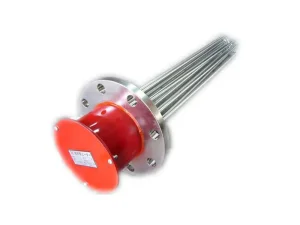
CE Certification Explosion Proof Electric Heater Exporter, Factory
Product Specifications
High-Quality (Hot-runner)Spring heater/Coil heater Manufacturers, Factory
Product Specifications
Best Pipeline Heater Manufacturers, Factory
Product Specifications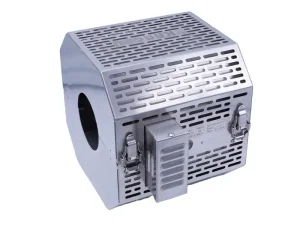
Best Heating/Cooling Integrated System Exporter, Exporters
Product Specifications
High-Quality Electromagnetic steam boiler Manufacturers, Factories
Product Specifications
Best Durable Heat Insulation Covers Manufacturer, Exporters
Product Specifications
CE Certification PVC-O Ovens for Precision Heating Manufacturer, Manufacturers
Product Specifications
CE Certification Cast Aluminum/Copper Heater Manufacturer, Exporter
Product Specifications