
Industrial Duct Heating & Thermal Core Equipment
High-performance electric air duct heaters and auxiliary thermal elements manufactured in Kangpu's state-of-the-art facility (Yancheng Laier Heating Technology Co., Ltd.), rigorously engineered for continuous duty, zero thermal stratification, and maximum thermodynamic efficiency.

Best Efficient Portable Ceramic Heaters from China Suppliers - Ideal for Industrial Heating in Factories Manufacturers, Exporters
Explore Specifications
CE Certification Ovens Manufacturer, Exporter
Explore Specifications
CE Certification Electromagnetic induction heater Manufacturer, Exporter
Explore Specifications
CE Certification Efficient Air Duct Heaters for HVAC Manufacturer, Factory
Explore Specifications
High-Quality Electromagnetic steam boiler Manufacturers, Factories
Explore Specifications
High-Quality (Hot-runner)Spring heater/Coil heater Manufacturers, Factory
Explore Specifications
CE Certification Precise Cooling and Heating System Manufacturers, Exporters
Explore Specifications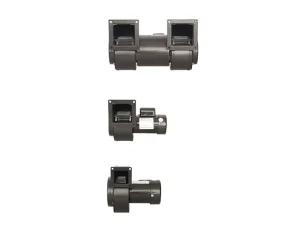
CE Certification Fan Manufacturer, Factory
Explore SpecificationsGlobal Commercial & Industrial Duct Heating Landscape
Navigating the structural transition from fossil-fuel combustive air handling to smart, zero-emission electrified duct heating systems across Tier-1 industrial manufacturing plants worldwide.
Industrial Decarbonization Mandates
With the global adoption of Scope 1 carbon emission penalties and net-zero targets (such as EU ETS and US IRA industrial incentives), heavy facilities are systematically replacing gas-fired burner boxes and steam coil air handling units with direct electric duct heaters. Electric heating delivers 100% thermal conversion efficiency at point-of-use without flue stack losses.
Yancheng Laier Heating Technology (Kangpu Heater) has spearheaded this transition since 1986, supplying high-voltage duct arrays that integrate directly into centralized AHU (Air Handling Unit) networks without needing boiler infrastructure.
Stringent Clean Air & ASHRAE Standards
Advanced manufacturing facilities—specifically semiconductor fabs, pharmaceutical lyophilization chambers, and ISO Class 1 cleanrooms—strictly prohibit airborne combustion byproducts, volatile organic compounds, or hydrocarbon particulates.
Electric duct heaters manufactured with SS316L, SS321, or Incoloy 840 tubular sheaths provide inert, contaminant-free air heating. Kangpu designs its elements with low surface watt-densities (down to 1.5 - 3.2 W/cm²) to ensure zero air ionization or carbon cracking under variable airflow regimes.
Grid Modernization & SCR Power Throttling
Traditional on/off contactor staging introduces massive thermal fluctuations and mechanical expansion stresses, accelerating element fatigue and reducing heating element lifespans.
Modern commercial specifications mandate SCR (Silicon Controlled Rectifier) thyristor proportional modulation. By deploying 4-20mA or 0-10VDC modulated zero-cross firing circuits, Kangpu duct heaters hold air discharge temperatures to an ultra-precise ±0.2°C tolerance, drastically reducing kilowatt-hour draw during steady-state equilibrium.
Duct Heater Construction Archetypes: Engineering Specification Matrix
Selecting the ideal duct heating architecture requires reconciling fluid dynamics, static duct pressure drop, particle exposure, and sheath metallurgy. Below is the authoritative selection reference.
| Duct Heater Type | Core Metallurgy | Max Air Temp (°C) | Watt Density Range | Typical Applications | Key Strengths & Limitations |
|---|---|---|---|---|---|
| Finned Tubular Duct Heaters | Stainless 304 / Incoloy 840 with continuous spiral SS fins | Up to 450°C | 2.5 – 5.5 W/cm² | Comfort HVAC, AHUs, drying tunnels, packaging machinery | Exceptional heat exchange area; low sheath temp; requires non-clogging clean airflow. |
| Open Coil Element Heaters | Nickel-Chromium 80/20 resistance wire suspended in ceramic insulators | Up to 300°C | Variable by velocity | VAV terminal units, light commercial fan coils, air handlers | Fastest thermal response; near-zero pressure drop; vulnerable to airborne moisture & conductive dust. |
| Flanged Tubular Duct Heaters | Incoloy 800 / SS310S / SS316L heavy wall tubing | Up to 650°C | 1.8 – 4.0 W/cm² | High-temperature industrial ovens, petrochemical process gas, autoclaves | Extreme mechanical durability; immune to damp or humid gases; higher initial thermal inertia. |
| Explosion-Proof (ATEX / IECEx) | Heavy Cast Iron / Stainless terminal enclosure, Ex d IIB/IIC T1-T6 | Up to 550°C | 1.2 – 2.8 W/cm² | Offshore oil & gas rigs, paint spray booths, battery cell manufacturing | Certified hazardous zone containment; internal flame paths; heavier structure requiring engineered rigging. |
| Sanitary / Cleanroom Duct Arrays | Electropolished SS316L with food-grade silicone hermetic seals | Up to 350°C | 1.5 – 3.2 W/cm² | Pharmaceutical tablet drying, semiconductor dry rooms, biotech labs | Zero outgassing; mirror-finish minimizes micro-bacterial adhesion; premium alloy fabrication. |
Aerodynamic Sizing & kW Calculation
Correct heater sizing is governed by the sensible heat transfer formula: kW = (CFM × ΔT °F) / 3193 or in metric units kW = (m³/hr × ρ × Cp × ΔT °C) / 3600.
Under-calculating airflow velocity causes localized heat concentration, triggering the built-in primary automatic thermal reset (rated 75°C) and secondary manual-reset disc limiters (rated 105°C). Kangpu engineers perform complete Computational Fluid Dynamics (CFD) modeling to confirm uniform element scrubbing.
Multi-Tier Safety Interlock Architecture
Every industrial duct heater manufactured by Yancheng Laier Heating Technology features a triple-redundant safety chain:
1. Differential Pressure Switch Interlock: Prevents element energization unless a positive static pressure differential (>50 Pa) is confirmed across the bank.
2. Primary Auto-Reset Thermostat: Shuts off control circuit if duct boundary air exceeds nominal limits.
3. Manual Reset Linear Thermal Cutout: Cuts power to the main magnetic contactor coils in event of SCR short circuit or blower motor stoppage.
Corrosion Metallurgy & Marine Engineering
In coastal or marine environments (e.g., offshore platforms and LNG vessels), ambient salinity rapidly corrodes standard galvanized steel framing.
Kangpu constructs heavy-gauge AISI 316Ti / Duplex 2205 sheet metal casings and terminal boxes rated NEMA 4X / IP66. Element lead pins are sealed using high-purity magnesium oxide (MgO) compacted to >3.2 g/cm³ and terminated with RTV ceramic potting resins to guarantee dielectric strength >2000V after long sea voyages.
Mission-Critical Application Scenarios
How Kangpu’s custom-engineered duct heaters solve localized temperature control, moisture eradication, and clean process challenges worldwide.
EV Lithium-Ion Battery Dry Rooms
Electrode slurry drying and pouch assembly require strictly controlled environments with dew points below -40°C to -60°C. In desiccated air recovery loops, large-capacity duct heaters regenerate silica gel desiccant wheels at temperatures ranging between 120°C and 160°C.
Kangpu’s high-capacity flanged duct arrays deliver uninterrupted high-volume convective heating, preventing hygroscopic contamination in gigafactories across North America, Europe, and Asia.
Food Processing & Spray Dehydration
From powdered dairy products to coffee agglomeration and starch dehydration, spray drying towers require steady hot air volumes without oil, combustion gas, or moisture contamination.
Our all-stainless-steel duct heaters provide seamless, washable thermal integration up to 350°C, equipped with food-grade sanitary weld joints and zero-crevice terminal transition chambers that satisfy international hygiene guidelines.
Semiconductor Photolithography Cleanrooms
Wafer fabrication requires discharge air stability within ±0.05°C to avoid silicon mask expansion and optical aberration during deep-ultraviolet (DUV) lithography.
Kangpu’s pulse-width modulated (PWM) solid-state relay duct systems eliminate thermal cycling spikes, providing continuous micro-step compensation in tandem with laminar flow fan filter units (FFUs).
Plastics Processing, Extrusion & PVC-O
Leveraging our 40-year heritage in plastics thermal management, Kangpu duct heaters and auxiliary barrel cooling/heating systems serve pipe production lines, biaxially oriented PVC-O ovens, and cast film extrusion.
Integrating forced-air duct heaters with closed-loop blower manifolds eliminates temperature overshoots caused by shear friction along extruder screws.
The 7-Stage Precision Engineering Process
Rooted in four decades of engineering mastery since 1986, Kangpu (Yancheng Laier Heating Technology) follows a deterministic manufacturing workflow that ensures every custom duct heater arrives ready for immediate, flawless commissioning.
Stage 1 & 2: ID Design & Thermal Sizing
Our application engineers evaluate your duct ductwork geometry, airflow velocity profiles, supply voltage (from 110V single-phase up to 690V 3-phase), and target Delta T. We establish optimal watt densities and generate comprehensive 3D CAD models and electrical schematics.
Stage 3 & 4: Real-Mold Tooling & Customer Sampling
Unlike workshops that hand-bend prototypes, Kangpu opens dedicated production tooling for sample builds. The sample is constructed with final production-grade elements, allowing your engineering team to verify physical fit, terminal box orientation, and electrical compatibility on-site.
Stage 5 & 6: Iteration & Stress Testing
Client feedback is integrated before specification freeze. Every unit undergoes dielectric insulation resistance testing (>100MΩ cold), 2500V high-voltage breakdown analysis, helium mass spectrometry leak checks for hermetic seals, and infrared thermal imaging to eliminate internal hotspots.
Stage 7: Mass Production & 5-Year Warranty
Batch manufacturing is carried out under strict ISO9001 and CE quality protocols. Each duct heater is assigned an engraved serial number linked to its raw material metallurgical certificate and test log. We back our craftsmanship with an industry-leading 5-year warranty.
Next-Generation Duct Heating Technologies & Horizon 2030
How artificial intelligence, wide-bandgap semiconductors, and advanced nano-composite coatings are reshaping thermal process efficiency.
IoT-Enabled Predictive Sheath Diagnostics
Modern smart factories demand zero unplanned downtime. Kangpu is deploying integrated micro-thermocouples embedded directly within the active MgO insulation of the heater elements.
Paired with edge-computing transmitters running Modbus/TCP or BACnet IP, the system calculates sheath-to-air thermal gradient decay in real-time. This alerts maintenance teams of airflow filter clogging or scale accumulation weeks before an over-temperature trip occurs.
Nano-Infrared High-Emissivity Fin Treatments
Traditional convective duct heaters rely entirely on conductive boundary layer shearing. Kangpu R&D is commercializing nano-ceramic infrared surface coatings applied directly to stainless fin arrays.
These proprietary coatings raise surface emissivity ($\epsilon$) from 0.45 to >0.92 across the 2-10 $\mu m$ wavelength spectrum, combining intense infrared radiation with convective transfer. This delivers a 14% to 18% reduction in energy consumption for identical air volume heating.
Silicon Carbide (SiC) Solid-State Switching
Switching high-kilowatt electrical duct heaters causes harmonic distortion and heat dissipation losses in conventional thyristor cabinets.
Kangpu is integrating wide-bandgap Silicon Carbide (SiC) power switching modules into our smart control panels. SiC switches operate at higher frequencies with 70% lower switching losses, eliminating cumbersome fan-cooled heat sinks and achieving whisper-quiet, zero-harmonic compliance with IEEE 519 standards.
Frequently Asked Questions (FAQ)
Detailed technical and commercial insights for engineering consultancies, HVAC contractors, and industrial procurement managers.
What minimum airflow velocity is required for electric duct heaters?
To prevent overheating and nuisance tripping of thermal limiters, finned tubular duct heaters generally require a minimum velocity of 400 to 500 feet per minute (FPM) (approximately 2.0 to 2.5 m/s). For high-temperature process duct heaters operating with watt densities exceeding 4 W/cm², velocities between 800 and 1200 FPM (4.0 to 6.0 m/s) are recommended. If variable air volume (VAV) systems reduce flow below these thresholds, our SCR controllers automatically down-modulate kW output proportionally.
How does Kangpu support custom OEM dimensional and voltage configurations?
Customization is our primary operational focus. We engineer custom rectangular, square, circular, or slip-in flanged duct heaters matching your exact duct dimensions (from 150mm up to 4000mm+ span). Voltage configurations cover all global industrial standards: 120V, 208V, 240V, 380V, 415V, 480V, and 600V/690V in single or 3-phase star/delta topologies. We supply custom terminal orientation, standoff cooling sections, and remote control panels.
What is the advantage of Incoloy 840/800 over standard Stainless 304?
Stainless 304 is economical for mild ambient air heating below 250°C. However, in continuous industrial service, high temperatures cause carbide precipitation in SS304 grain boundaries, leading to embrittlement and stress corrosion cracking. Incoloy 840 and 800 contain higher nickel (18-35%) and chromium (19-23%) content, offering superior oxidation resistance, exceptional hot strength up to 850°C, and structural immunity in humid or chemical-laden airstreams.
What certifications and quality control standards do your heaters comply with?
All Kangpu products manufactured by Yancheng Laier Heating Technology comply with European CE directives (Low Voltage Directive 2014/35/EU and EMC Directive 2014/30/EU), RoHS compliance, and ISO 9001:2015 quality management systems. For hazardous locations, explosion-proof terminal boxes are engineered according to ATEX and IECEx standards (Ex d / Ex e explosion-proof certifications).
How does Kangpu’s 5-Year Warranty program function for export clients?
We provide an unprecedented 5-year warranty on our industrial electric heating equipment. Each unit carries a laser-etched trace ID. In the rare event of a component failure under proper installation, our engineering department reviews the batch telemetry, root cause, and operating logs. Replacement elements or core modules are air-freighted directly to your site, accompanied by root cause analysis documentation to prevent recurrence.
Can you provide complete turnkey control panels with BACnet/Modbus integration?
Yes. We design and assemble complete NEMA 4/12 or IP65 power distribution and control panels. These feature fused branch element staging, main disconnect switches, door interlocks, rapid-acting semiconductor fuses for SCR thyristor protection, and digital temperature controllers equipped with RS-485 Modbus RTU or Ethernet BACnet/IP communication for integration into Building Automation Systems (BAS).
Comprehensive Industrial Heating Solutions
From explosion-proof process heaters to high-conductivity cast-in barrel heaters and energy-retaining thermal insulation covers—explore the complete manufacturing range of Kangpu Heater.

Best Heating/Cooling Integrated System Exporter, Exporters
Explore Specifications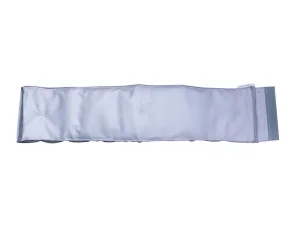
Best Durable Heat Insulation Covers Manufacturer, Exporters
Explore Specifications
High-Quality Thermocouple Exporter, Factory
Explore Specifications
High-Quality Portable Ceramic Heaters for Industry - Reliable Heating Solutions from China Suppliers and Factory Manufacturers, Factory
Explore Specifications
CE Certification Cast Aluminum/Copper Heater Manufacturer, Exporter
Explore Specifications
CE Certification Explosion Proof Electric Heater Exporter, Factory
Explore Specifications
High-Quality Heat-conducting oil furnace Manufacturer, Exporter
Explore Specifications