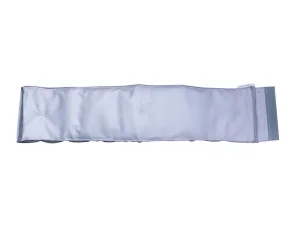
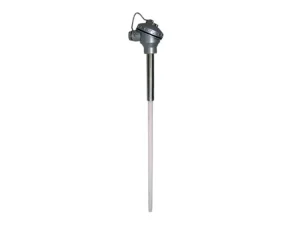
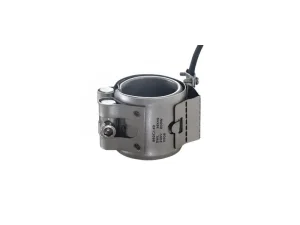
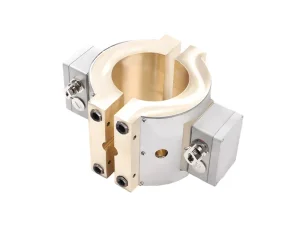
Featured Industrial Thermal & Forced Airflow Equipment
Direct factory supply of certified explosion-proof thermal blowers, precision cooling ducts, and process circulation systems engineered for demanding industrial environments.



Industrial Aerodynamic & Thermal Dynamic Solutions
Modern heavy industry demands high efficiency, precise CFD airflow profile tuning, and resilient materials capable of handling extreme heat, aggressive chemicals, and particulate-laden airstreams.
Polymer Processing & Extrusion
Thermal stability is mandatory for polymer rheology. In precision twin-screw extrusion, exothermic shearing causes destructive localized hotspots. Our integrated forced-air blower shrouds and cooling jackets balance temperatures within ±1°C across multi-zone barrels.
Hazardous & Chemical Vapors
Engineered for Zone 1 and Zone 2 volatile industrial zones. Incorporating spark-resistant copper-aluminum alloy impellers, certified flameproof ATEX/IECEx motor enclosures, and gas-tight labyrinth seals to eliminate ignition risks when moving explosive gas mixtures.
Cleanroom & Data Center HVAC
Ultra-quiet electronically commutated (EC) fans optimized for modular HVAC units and microelectronics fabrication lines. Designed for minimum turbulence, ultra-low harmonic distortion, and seamless BACnet/Modbus smart factory integration.
Global Industrial Air Movement Trends & Directives
International environmental mandates and increasing plant energy costs have elevated fan selection from simple hardware procurement to a critical lifecycle and operating expense priority.
ErP 2024 Tier 3 Mandates
European Directive 2009/125/EC enforces stricter Fan Efficiency Grade (FEG) standards. Our advanced 3D backward-curved impeller geometries achieve aerodynamic efficiencies exceeding 78%, lowering energy losses in continuous industrial HVAC and forced-draft thermal configurations.
Severe Corrosion Metallurgy
Coastal and marine environments demand robust resilience. Moving beyond standard galvanized steel, our chemical scrubbers and industrial exhaust lines leverage SS316Ti, Hastelloy C-276, and fluoropolymer PTFE coatings to guard against pitting in acidic processing environments.
Predictive Vibration Monitoring
Unplanned downtime is costly for continuous processing plants. Kangpu designs integrate tri-axial vibration and motor temperature sensors, streaming real-time operational data via IO-Link to forecast dynamic bearing wear and prevent mechanical failure.
Localized Compliance, Testing & Export Certification
Every blower and thermal circulation system undergoes testing to comply with international safety frameworks and regional statutory mandates before export.
| Regulatory Framework | Target Region | Governing Specification | Engineering Realization |
|---|---|---|---|
| CE / Machinery Directive | European Union | 2006/42/EC, EN ISO 12100 | Guarded intake cages, fail-safe isolation interlocks, comprehensive risk mitigation dossiers. |
| ATEX Certification | Europe / Global | Directive 2014/34/EU (EN 14986) | Spark-free wheel materials, conductive anti-static grounding paths, flameproof Ex-d motor housings. |
| UL / CSA Standards | North America | UL 507 / CSA C22.2 No. 113 | Class H insulation systems, dual-frequency motor windings, approved terminal junction boxes. |
| AMCA International | Worldwide | AMCA Standard 210 & 300 | Certified aerodynamic air performance wind-tunnel testing and accredited acoustic sound measurements. |
| ISO Dynamic Balance | Worldwide | ISO 1940-1 Grade G2.5 | Dual-plane dynamic balancing at full operational RPM to minimize vibration and extend bearing life. |
7-Stage Precision Manufacturing & Customization Process
From custom aerodynamic profiling and thermal calculations to mass production, our seven-step engineering methodology ensures consistent build quality and long operational life.
Provide ID Design
Our engineers review your application parameters and develop initial 3D models covering form factor, mount configuration, and aerodynamic clearances.
Product Customization
Operating voltage, power draw, static pressure targets, CFM requirements, and core metallurgy are verified against project operating conditions.
Open Real Mold for Sample
We build production-grade tooling and molds for prototypes rather than handmade units, ensuring samples reflect actual mass-production characteristics.
Customer Confirms Sample
You test the prototype directly on your production machinery to verify dimensions, sound levels, electrical draws, and aerodynamic performance.
Modify Sample
Customer feedback—such as revised lead terminations, modified mounting brackets, or adjusted flow baffling—is integrated into updated revisions.
Rigorous Sample Testing
Comprehensive dielectric breakdown, thermographic load analysis, and ISO dynamic balancing tests are run before freezing production prints.
Mass Production
Large-scale production runs using automated CNC bending and dynamic balancing cells, backed by batch traceability and export sea-crate packaging.
Technology Roadmap & Next-Generation R&D
We continue to refine fan and thermal circulation designs to deliver higher efficiency, integrated intelligence, and lower lifecycle emissions.
Composite & Biomimetic Aerofoils
Drawing design cues from natural aerodynamic profiles, our newest continuous-strand carbon-fiber impeller geometries lower rotational inertia by 42%. This reduces startup motor loads and decreases acoustic resonance across mid-frequency bands.
Integrated Edge-Computing VFDs
Modern fan assemblies are evolving into smart system endpoints. Our engineering roadmap includes compact, motor-integrated inverter drives featuring on-board edge diagnostics, automated pressure stabilization, and plug-and-play fieldbus links.
Ultra-High Temperature Gas Sealing
For closed-loop chemical reclamation and inert gas recirculation, we are advancing specialized ceramic magnetic-fluid dynamic seals capable of sustained operation up to 650°C without fugitive gas leakage.
Frequently Asked Engineering & Sourcing Questions
Practical technical answers covering drawings, dynamic balancing, warranty coverages, and custom manufacturing processes.
Can Kangpu manufacture industrial fan assemblies and heaters to customer drawings?
What warranty coverage is included with your industrial blower and thermal assemblies?
How do you balance high-speed fan wheels and impellers for heavy-duty operation?
How should engineers choose between ceramic and mica thermal air assemblies?
Which countries and industrial regions does Kangpu regularly export to?
Industrial Heating, Duct Circulation & Process Assemblies
Explore our complementary lineup of cast-in thermal units, industrial mica bands, custom thermocouples, and modular ceramic heating elements.