
Direct OEM/ODM Equipment
Featured Industrial Thermal Systems (Batch I)
Engineered for extreme duty cycles in fluid dynamics, polymer extrusion, and forced air duct applications. Configurable by voltage, watt density, sheath metallography, and aerodynamic geometry.

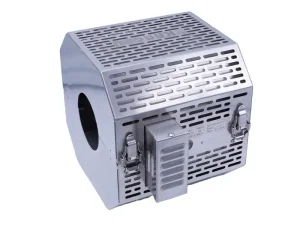
China Portable Ceramic Heaters (Efficient Solutions)
Explore Specifications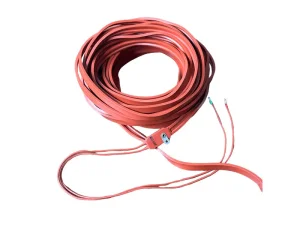
CE Flexible Heaters for Custom Applications
Explore Specifications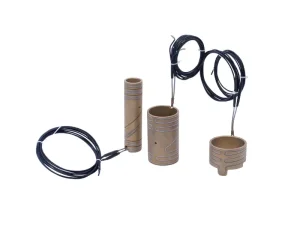
High-Quality Coil & Hot-Runner Spring Heaters
Explore Specifications
Best Industrial Pipeline Heating Chambers
Explore Specifications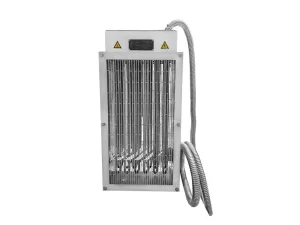
CE Efficient Air Duct Heaters for HVAC
Explore Specifications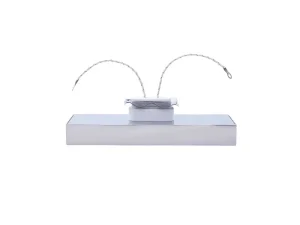
Best Infrared Ceramic Heaters for Industry
Explore Specifications
China Heavy-Duty Portable Ceramic Heaters
Explore Specifications
Aerodynamic & Thermal Engineering
Thermodynamic Mechanics: Finned Tubular Geometry vs. Plain Sheath
In forced air thermal transfer, boundary layer air separation and the thermal resistance of stagnant film dictate element life and kilowatt throughput. Finned duct heaters engineered by Kangpu eliminate hotspots via optimized heat transfer surface area multiplication.
Surface Area Multiplier
Continuous helically wound or rectangular mechanical fins increase effective radiative/convective surface area by 300% to 500% compared to bare tubular elements. This allows substantially lower sheath temperatures at identical wattage ratings.
Watt Density De-escalation
By diffusing heat over a broader dissipation perimeter, watt densities are held safe between 20 to 45 W/in² (3.1 to 7.0 W/cm²), mitigating premature resistance wire oxidation and preventing thermal cracking in low-airflow zones.
Metallurgical Bonding
Utilizing high-temperature furnace brazing or permanent groove-rolling techniques, our fins maintain structural integrity up to 650°C (1200°F) without thermal decoupling caused by differential thermal expansion between fin and sheath.
Technical Sheath Metallurgy & Performance Roadmap
| Sheath & Fin Material | Max Air Temp | Corrosion Resistance Profile | Primary Industrial Environments |
|---|---|---|---|
| Aluminized Steel / Carbon Steel | 400°C (752°F) | Standard non-condensing moisture | Commercial HVAC comfort heating, non-corrosive air drying |
| Stainless Steel 304 (SS304) | 600°C (1112°F) | High oxidation & ambient chemical fumes | Food processing ovens, plastic drying hoppers, industrial AHUs |
| Stainless Steel 316L (SS316L) | 650°C (1202°F) | Marine, acidic vapour, high halide resistance | Chemical plants, offshore platforms, pharmaceutical cleanrooms |
| Incoloy 800 / 840 Alloy | 800°C (1472°F) | Extreme thermal fatigue & carburization proof | High-temp recirculating ovens, aerospace autoclaves, PVC-O ducts |
Engineering Note on Cold End Protection: Kangpu heaters incorporate continuous cold-pin transitions positioned outside the convective airflow zone. Magnesium oxide (MgO) compaction exceeding 3.2 g/cm³ guarantees dielectric insulation resistance (>100 MΩ at 1000V DC) across elevated temperatures.
Macro-Industry Solutions
Cross-Sector Turnkey Heating Deployments
From closed-loop semiconductor bake-out tunnels to hazardous-location oil recirculators, finned duct heating represents the core operational backbone for continuous industrial automation.
Polymer & Plastics Processing
Integrated duct pre-heaters maintain narrow temperature bands for plastic resin dehumidification and uniform orientation in PVC-O pipe heating tunnels.
Cleanroom HVAC & Pharma
Electropolished stainless steel 316L finned elements deliver zero-particulate air tempering in certified GMP drying modules and clean air handling units.
Automotive & Coating Lines
Custom multi-stage bank finned assemblies ensure rapid air cure for paint baking ovens, preventing explosive solvent flashovers with sealed standoff terminals.
Energy Storage & Wind Power
Anti-condensation and de-icing finned air duct banks built for nacelle compartments, offshore wind platforms, and containerized battery energy storage systems (BESS).
Industry 4.0 Manufacturing Ecosystem
China Factory 4.0: Supply Chain Resilience & Lean Velocity
Operating from our Yancheng production complex since 1986, Kangpu integrates raw metallurgical sourcing, automated winding, CNC bending, and computerized thermal modeling under one continuous quality roof.
Automated Robotic Spiral Finning
Robotic fin-attaching machines achieve uniform tension and groove tolerance (±0.05 mm), ensuring constant pitch across 6-meter long elements without hot spot induction.
Multi-Stage Verification Protocol
Every element undergoes 100% automated dielectric withstand testing (Hi-Pot up to 2500V), helium leak mass spectrometry, and X-ray concentricity verification for nickel-chrome resistance spirals.
Agile Supply Chain Scalability
Direct supply contracts with tier-1 raw alloy mills and modular duct frame stamping ensure rapid turnaround: 7-day prototype dispatch and high-volume container shipments within 3 weeks.
International Assurance
Meeting Global Enterprise Procurement Standards
International mechanical contractors and OEM plant builders require total adherence to electrical, structural, and safety protocols. Kangpu streamlines cross-border customs and regional plant approvals.
Harmonized Regulatory Compliance
Built fully compliant with CE Low Voltage Directive (LVD 2014/35/EU), Electromagnetic Compatibility (EMC 2014/30/EU), and engineered to meet UL 1996 duct heater design rules.
Terminal Enclosures & IP Protection
NEMA 1 standard ventilated boxes, NEMA 4/IP65 weather-tight enclosures, and ATEX/IECEx hazardous-zone explosion-proof terminal housings for hydrocarbon-laden environments.
Export Sea/Air Packaging Engineering
VCI vapor corrosion-inhibiting wrapping, vacuum hermetic foil sealing, and heavy reinforced treated wooden crates ensure elements reach Latin America, Europe, or the Middle East zero-defect.
The Forward Trajectory
Technology Roadmap: Intelligent & Decarbonized Heating
As heavy industry phases out fossil-fueled open combustion boilers in favor of electrified air flow, Kangpu's R&D center is commercializing advanced thermal management technologies.
IoT-Embedded Smart Elements
Integration of miniature fiber Bragg grating (FBG) optical sensors inside finned sheaths for real-time internal core temperature monitoring and AI predictive maintenance before failure occurs.
SCR Solid-State Zero-Crossing Arrays
High-speed Silicon Controlled Rectifier (SCR) power racks deliver microsecond power modulating from 0 to 100%, completely eliminating mechanical contactor wear and electrical grid harmonics.
Next-Gen Ceramic Nanocoatings
Application of high-emissivity ceramic nanocoatings on fin exteriors boosts radiative heat dissipation, yielding an additional 12% to 18% thermal efficiency gain over standard metallurgy.
Engineered Traceability
From Drawing to Mass Production: The 7-Stage Rigor
We eliminate commissioning risk through transparent stage gates. No production run commences until real mold samples are validated on your line.
Stage 01-02
ID Design & Customization: Engineering review of CFM airflow, velocity profiles, static duct pressures, delta-T targets, voltages, and mounting flanges.
Stage 03-04
Real Mold Tooling & Sampling: Hard tooling created for genuine production samples. On-site installation by client to verify physical tolerances and wiring runout.
Stage 05-06
Iterative Tuning & Full Stress Testing: Re-engineering terminal orientation or watt adjustments followed by prolonged thermal cycling and dielectric breakdown testing.
Stage 07
Mass Production & Batch Traceability: Final manufacturing backed by a 5-year factory warranty. Every unit stamped with individual QA serial metrics.
Direct OEM/ODM Equipment
Featured Industrial Thermal Systems (Batch II)
Advanced industrial thermal hardware for polymers, convection furnaces, and process duct environments. Exported to over 100 countries globally.
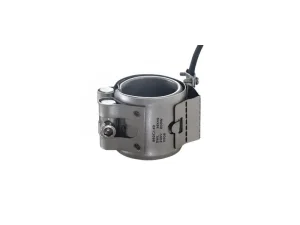
China Safe & Durable Mica Heating Elements
Explore Specifications
CE Precise Barrel Cooling & Heating Systems
Explore Specifications
CE Nano Infrared Electric Band Heaters
Explore Specifications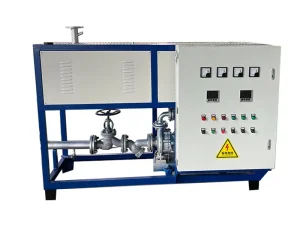
Industrial Heat-Conducting Thermal Oil Furnaces
Explore Specifications
CE Certified Heavy Industrial Convection Ovens
Explore Specifications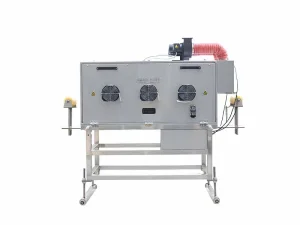
CE PVC-O Continuous Precision Orientation Ovens
Explore Specifications
High-Quality Portable Industrial Ceramic Modules
Explore Specifications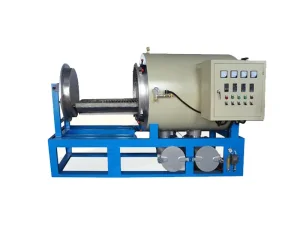
High-Temperature Vacuum Polymer Cleaning Furnaces
Explore Specifications
Technical Clarifications
Frequently Asked Questions (FAQ)
Detailed answers regarding selection criteria, mechanical engineering, electrical safety, and global supply guarantees.
How does fin spacing and geometry influence static duct pressure drop?
Finned elements introduce drag into the airstream. Typical continuous helically wound fins operate between 4 to 6 fins per inch (FPI). While tighter finning improves convective surface area, it increases static pressure resistance across the bank. Our application engineers evaluate your air handler's fan capacity (CFM and Pa) to specify the optimal fin spacing, ensuring the boundary air speed remains above 3 m/s (600 FPM) to avoid localized overheating.
What over-temperature and airflow safety cutouts are required?
Industrial codes (such as NEC and CE standards) demand redundant safety circuits. Kangpu finned duct assemblies integrate primary automatic reset thermal cutoffs (set near maximum operating discharge temp) and secondary manual reset linear cutoffs mounted directly against the element sheath. Additionally, an airflow differential pressure switch is interlocked with the main power contactor to immediately shut down elements upon loss of forced draft.
Can Kangpu manufacture heaters to custom OEM drawings and replace legacy brands?
Yes. Direct customization represents our core manufacturing capability since 1986. You can submit CAD/STEP drawings, mechanical blueprints, or a worn physical sample. We engineer exact bolt-circle dimensions, mounting slide racks, terminal standoff distances, and precise electrical rating matches to replace obsolete or failing heaters from North American or European makers.
Why should industrial buyers specify Incoloy 840 over standard stainless steel?
Stainless Steel 304/316 performs excellently up to 600°C in clean air. However, in applications where cycling is frequent or where trace aggressive chemicals or high relative humidity exist, stainless steels can suffer stress corrosion cracking or outer wall oxidation. Incoloy 840/800 alloy features superior nickel-chromium content that forms an exceptionally stable protective oxide layer, significantly prolonging operating longevity in heavy-duty duct heaters.
What warranty and batch traceability protocols support global shipments?
Kangpu heaters are backed by an unprecedented 5-year industrial warranty. Every single element is laser-etched with batch and manufacturing IDs. This allows us to trace raw wire coils, MgO lots, and assembly technician records over decades, ensuring root-cause resolution rather than mere component swapping.