High-Performance Industrial Heating Solutions
Engineered to exact OEM specifications with custom voltage, wattage, and geometry to optimize thermal efficiency and eliminate thermal gradients in demanding production lines.




Global Industrial Heating Outlook & Energy Economics
Industrial thermal processes represent over 20% of global industrial energy consumption. As international decarbonization initiatives enforce stringent energy caps, modern processing plants are transitioning rapidly from antiquated resistive bands to high-efficiency infrared, precision-cast, and electromagnetic induction systems.
Thermal Energy Transition
Global regulatory bodies such as the EU Ecodesign Directive are forcing extruders and processors to reduce parasitic heat loss. Traditional open-coil or uninsulated mica heaters radiate up to 40% of their heat outward. Advanced ceramic block insulation and nano-infrared materials reflect radiant energy inward, cutting kilowatt-hour consumption significantly per metric ton of polymer output.
Total Cost of Downtime (TCD)
Unplanned heating element failures cause molten plastic to freeze inside barrels, ruining screws and creating thousands of dollars per hour in production losses. Industrial procurement strategies have fundamentally shifted away from cheap commoditized elements to batch-tested, high-density elements with robust terminal lead protection and proven dielectric strength.
Electrification & Zero Flue Gas
Industrial processing is progressively replacing fossil-fired fuel burners with clean electromagnetic steam boilers and high-temperature thermal oil heating circuits. This eliminates flue exhausts, simplifies site compliance, and enables precision digital zone modulation for closed-loop SCADA and PLC integrations.
| Heating Technology | Operating Temperature | Watt Density Range | Primary Industrial Use-Case | Key Efficiency Metric |
|---|---|---|---|---|
| Mica Band Heaters | Up to 350°C (662°F) | Up to 4.5 W/cm² | Injection molding nozzles, small cylinders | Ultra-fast thermal ramp-up response |
| Ceramic Band Heaters | Up to 700°C (1292°F) | Up to 8.0 W/cm² | Heavy plastic extrusion, blowing machines | High heat retention via ceramic fiber insulation |
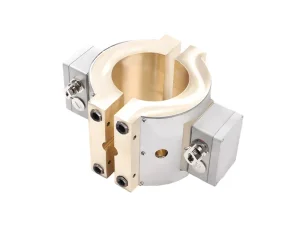
| Cast-in (Alu / Bronze) | Alu: 400°C / Cu: 650°C | Alu: 5 W/cm² / Cu: 8 W/cm² | Extruders requiring liquid/air cooling ducts | Extreme mechanical shock and wear resistance |
| Nano Infrared Heaters | Up to 500°C (932°F) | Up to 6.5 W/cm² | Energy retrofit programs in extrusion plants | Direct directional thermal radiation (up to 99.8%) |
Localized Engineering Application Scenarios
Heating elements are mission-critical components operating under harsh conditions including thermal expansion cycling, vibrational stresses, corrosive outgassing, and washdown environments.
Polymer Extrusion & Blow Molding
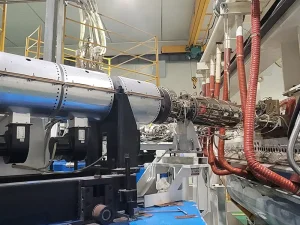
Extruder barrels demand continuous, non-pulsing thermal profiles across multi-stage screw zones. Cast aluminum and ceramic band heaters engineered with cooling jackets prevent viscous shear heating from degrading sensitive polymers such as PVC, HDPE, and engineering resins, maintaining melt index stability across continuous 24/7 runs.
High-Cycle Injection Molding Nozzles
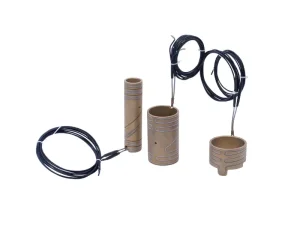
Nozzle heating demands tight spatial tolerance and resistance to material drool and contamination. Our brass-sealed mica bands and spring coil heaters ensure leak-proof, high-density conduction, preventing premature short circuits caused by molten resin intrusion around electrical terminals.
PVC-O Molecular Orientation Systems
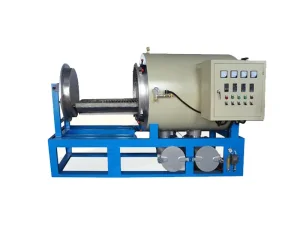
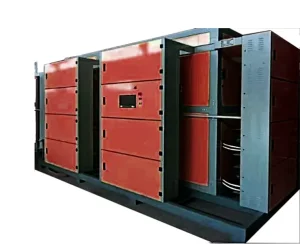
Molecularly Oriented Polyvinyl Chloride (PVC-O) pipe manufacturing requires uniform heating across the entire pipe circumference before radial expansion. Specialized PVC-O ovens equipped with dynamic airflow recirculation ensure precise thermal boundaries within ±0.5°C, preventing wall thickness irregularities or rupture.
Process Air, Fluid Transport & HVAC
Continuous circulation duct heaters and flanged pipeline heaters handle gas heating, nitrogen purging, drying tunnels, and chemical inline fluid processing. Constructed with high-grade Incoloy 800/840 or 316L stainless steel sheaths, they withstand high-pressure fluid velocities and corrosive atmospheric agents.
Custom Architectural Contours & Flexible Heating
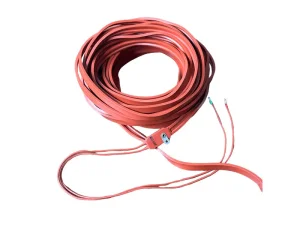
For chemical reactor vessels, curved manifolds, complex analytical instrumentation, and aerospace surface heating, silicone rubber, polyimide, and fiberglass flexible heaters provide conformable surface contact. Vulcanized precision etched-foil circuits provide uniform thermal transfer without air gap hot spots.
Industrial Clean Steam & Induction Boilers
In food packaging, pharmaceutical processing, and vulcanization lines where open flames and fossil combustion are restricted, electromagnetic steam boilers convert electrical energy into high-temperature steam in seconds, offering complete isolation between electrical inputs and process fluids.
China Factory Supply Chain Resilience & Efficiency
Headquartered in Yancheng, Jiangsu—China's premier manufacturing hub for industrial heating elements—Kangpu Heater leverages complete vertical integration from metallurgical drawing to automated resistance winding.
Complete Raw Material Integration
Our localized supply ecosystem ensures rapid access to premium-grade Swedish Nichrome (Ni80Cr20) resistance wires, ultra-pure electro-fused magnesium oxide (MgO) insulation powder from Liaoning, and high-purity metallurgical copper/aluminum ingots. By keeping material sourcing within a 50-mile radius, raw material lead times are cut by 60% compared to Western competitors.
Automated In-House Tooling & Mold Casts
Unlike assembly-only brokers, Kangpu operates its own high-precision tooling and casting shop. From CNC machining of heavy aluminum molds to real-mold casting prototypes, we compress prototyping cycles from months to under 10 business days, ensuring custom geometry without outsourced margin markups.
Batch Quality Assurance & Metrology
Every element passes rigorous multi-point validation before leaving the factory: high-voltage flash dielectric testing (1500V–2500V), cold/hot resistance measurement, insulation resistance verification (>100MΩ at 500VDC), and helium mass-spectrometer leak checks for sealed immersion configurations.
Engineering Roadmap: Next-Gen Industrial Heating
Continuous R&D is the foundation of our engineering team. Over 100 core proprietary technologies power our hardware, driving smart industrial transformation.
Embedded Thermocouple Sensor Arrays
Integration of multi-junction micro-thermocouples directly adjacent to resistance coils within ceramic matrix cores. Enables real-time internal core vs. sheath temperature differentials for predictive failure prevention and anomaly alerting via edge controllers.
Graphene & Nano-Composite Coatings
Development of proprietary aerogel composites and micro-structured ceramic radiation surfaces capable of 99.4% emissivity in the far-infrared (FIR) band. Maximizes direct heat absorption by polymer molecules and reduces external shell temperatures below 55°C.
Electromagnetic Induction Systems
Advancing high-frequency IGBT induction modules that generate eddy currents directly within barrel metal walls. Eliminates interface conductive resistance entirely, delivering instant heat-up times and up to 50% energy savings on large extruders.
Modular Quick-Release Assemblies
Transitioning toward unified quick-clamp architectures that reduce changeover downtime from hours to minutes. Standardized modular insulation blankets and core resistance inserts maximize component reusability and support sustainable recycling.
Global Standards & Localized Engineering Support
Industrial machinery builders serving international markets require certified, compliant components. Kangpu supplies fully certified heating elements engineered to pass global customs audits, occupational safety checks, and high-voltage grid standards without delay.
CE & Low Voltage Directive (LVD)
All Kangpu heating products are manufactured to conform strictly to European safety standards (EN 60335-1, EN 60519-1/2). Creepage distances, dielectric clearances, and high-voltage terminal shields meet full conformity requirements for seamless CE-marked machine builds.
RoHS & REACH Metallurgical Compliance
We ensure zero hazardous substances in all mica laminates, lead wires, terminal posts, solder joints, and ceramic refractories. Full documentation, laboratory certificates, and material safety data sheets (MSDS) accompany production lots to guarantee smooth customs clearance.
Localized Global Support & Warehousing
Exporting to over 100 countries requires dependable technical coordination. Our multilingual sales engineers verify CAD drawings, voltage balances (208V, 220V, 240V, 380V, 415V, 480V, Delta vs. Star configurations), and can support regional buffer inventory agreements for high-frequency OEM consumers.
Frequently Asked Questions (FAQ)
Essential guidance on watt densities, material selections, customization options, and factory warranty protocols.
What parameters are required to manufacture heaters to my custom drawing?
To produce an exact engineered fit, our engineering team requires: inner diameter (ID), axial width/length, operating voltage, total wattage, cold zones, termination style (screw posts, euro-plugs, terminal boxes, flexible braided leads), clamping method, and whether holes/cutouts are required for thermocouples or mounting bolts.
How does Kangpu back its comprehensive 5-Year After-Sales Warranty?
Every industrial heater leaving our Yancheng facility is laser-engraved with an individual batch identification code. This code links to raw material heat lots, coil winding specs, and quality inspection logs. If an unexpected premature failure occurs under recommended operating watt densities, we inspect the root cause, update the batch record, and supply replacement units promptly.
When should I specify ceramic band heaters over mica band heaters?
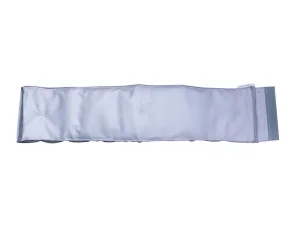
Mica heaters are cost-effective, thin, and ideal for quick thermal response at temperatures below 350°C (662°F), such as on injection molding nozzles. Ceramic band heaters feature built-in interlocking refractory ceramic blocks and thermal insulation blankets, tolerating process temperatures up to 700°C (1292°F). They are the optimal choice for high-temperature plastic extruders and energy-efficient retrofits.
How does the 7-stage sampling and approval procedure operate?
Our controlled sample process guarantees mass-production confidence: 1) ID & thermal clearance design; 2) Electrical customization calculations; 3) Production of a real-mold sample (not a loose handmade mock-up); 4) Customer dimensional and fitment confirmation; 5) Engineering modifications if required; 6) Electrical & thermal ramp stress-testing; 7) Full-scale mass manufacturing to frozen specs.
Can cast aluminum heaters include integrated cooling tubes?
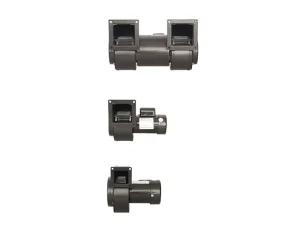
Yes. Extrusion barrels generating intense exothermic friction heat require combined heating and cooling. We cast seamless stainless steel cooling tubes directly alongside the tubular heating elements inside the aluminum or bronze matrix, enabling precise closed-loop temperature control using forced air blowers or circulated water.
What is the efficiency advantage of Nano Infrared band heaters?
Nano Infrared elements convert over 99% of electrical energy into targeted radiant wavelengths that penetrate directly into the barrel surface. Combined with high-grade aerogel reflection shells, external surface temperatures drop from ~200°C to below 60°C. This reduces ambient HVAC cooling loads and cuts barrel heating energy consumption by 30% to 50%.
Featured Custom Heating Elements & Equipment
Explore our certified ceramic band heaters, hot runner coil heaters, industrial ovens, and custom flexible elements built to drawing.