

Industrial Catalog • Phase I
High-Efficiency Process Heating Elements & Subsystems
Engineered for continuous operation in pressurized vessels, industrial reservoirs, and chemical immersion systems with strict watt-density control.

Portable Ceramic Heaters for Industry - Precise Control
Configure Specs
CE Certified Cast Aluminum & Cast Copper Heaters
Configure Specs
CE Explosion-Proof Immersion Electric Heater
Configure Specs
CE Certification PVC-O Ovens for Precision Heating
Configure Specs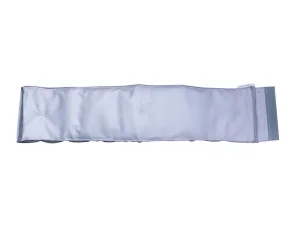
Industrial Energy-Saving Heat Insulation Jackets
Configure Specs
Industrial Safe and Durable High-Temp Mica Heaters
Configure Specs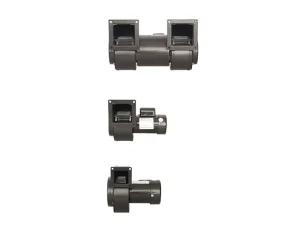
CE Certified Forced-Air Cooling Industrial Blowers
Configure Specs
Industry Intelligence • EEAT Benchmark
Global Landscape of Commercial & Industrial Hot Water Tank Heating
Decarbonization, process electrification, and the global phase-out of fossil-fuel boilers are reshaping fluid thermal management across North America, Europe, and Asia-Pacific.
In the contemporary industrial and commercial landscape, hot water storage tanks, pressurized caloric accumulators, and industrial fluid process vessels represent critical thermal nodes. As global industrial mandates pivot toward Net-Zero Scope 1 and Scope 2 emission limits, the transition from legacy gas-fired hydronic systems to high-performance flanged electric immersion heaters and thermal circulation systems has accelerated. Modern manufacturing plants, commercial HVAC complexes, pharmaceutical clean-in-place (CIP) setups, and municipal district heating networks demand liquid heating systems that offer not only 100% stoichiometric efficiency at the point of consumption but also strict metallurgical resilience against galvanic corrosion, localized cavitation, and scale encrustation.
Backed by four decades of rigorous engineering since 1986, Kangpu Heater (Yancheng Laier Heating Technology Co., Ltd.) has established itself as an authoritative global manufacturer and OEM/ODM exporter of high-load industrial heating equipment. Operating out of our dedicated R&D and production campus in Yancheng, Jiangsu, China, our manufacturing methodology integrates advanced metallurgical forming, automated high-purity magnesium oxide (MgO) dielectric compaction, and laser-guided robotic welding. We engineer customized hot water tank immersion bundles that solve the fundamental thermodynamic challenges of thermal stratification, watt-density degradation, and mechanical stress failure in continuous duty cycles.
1986
Year Established (40 Years Proven Experience)
100+
Export Countries Across 6 Continents
5,000+
Global Enterprise & OEM Clients
5 YRS
Comprehensive Batch-Traceable Warranty
Thermodynamic Architecture
Engineering Metallurgy & Watt-Density Optimization for Tank Immersion
Preventing element burnout, mineral scale insulation, and chloride-induced stress corrosion cracking through custom metallurgy and precision surface loading.
Advanced Sheath Metallurgy
We configure tubular immersion elements utilizing Incoloy 800/840, ASTM 316L Stainless Steel, Titanium, and heavy-wall deoxidized copper. This eliminates intergranular corrosion, chemical pitting, and stress fatigue in chlorinated municipal water, high-salinity brines, and aggressive deionized process tanks.
Optimized Watt-Density (W/cm²)
Uncontrolled surface watt-density leads to localized liquid boiling, rapid mineral precipitation (scaling), and premature sheath blowout. Kangpu custom-calibrates watt densities between 4.0 W/cm² (for hard, untreated water) and 12.0 W/cm² (for circulating, treated process loops) to maximize operating life.
Hermetic Terminal Enclosures
From IP65 moisture-resistant terminal enclosures to ATEX/IECEx certified explosion-proof (Ex-d flameproof) connection boxes, our immersion heater headers protect electrical junction points against atmospheric condensing humidity, vapor ingress, and explosive petrochemical zone hazards.
| Heating Configuration | Primary Industrial Applications | Sheath Metallurgy Options | Operating Temp Range | Critical Engineering Advantages |
|---|---|---|---|---|
| Flanged Immersion Heaters | Commercial hot water tanks, district energy calorifiers, boiler feed water vessels. | Incoloy 800, Incoloy 840, SS304, SS316L, Copper | Ambient to 250°C (482°F) | ANSI / DIN / JIS flanged mounting, multi-kilowatt staging, field-replaceable U-tube bundles. |
| Screw Plug Immersion Heaters | Compact storage tanks, rinse tanks, OEM booster tanks, food service steamers. | SS316L, Copper, Passivated Titanium | Ambient to 160°C (320°F) | Standard NPT/BSP threading, rapid threaded retrofit, integrated thermowells for RTD/TC sensing. |
| Circulation / In-Line Heaters | Closed-loop process heating, rapid hot water flushing, thermal oil boosting. | Carbon Steel, SS316L Insulated Shell | Up to 350°C (662°F) | Zero tank volume required, instantaneous dynamic heating, integrated thermal insulation jackets. |
| Over-the-Side Immersion Units | Open chemical tanks, industrial washing reservoirs, phosphating & plating baths. | PTFE fluoropolymer, Titanium, SS316L | Ambient to 110°C (230°F) | No vessel wall penetrations needed; simple vertical drop-in design with customizable cold risers. |
| Cast-In Aluminum / Copper Elements | Vessel exterior contact heating, sanitary pharmaceutical tanks, plastics extruders. | High-purity Cast Aluminum / Bronze alloys | Up to 650°C (1202°F) | Contour-matched conductive contact, no liquid contact, integrated dual heating/cooling channels. |
Macro-Industrial Solutions
Localized Application Scenarios Across Mission-Critical Verticals
Deploying tailored thermal dynamic hardware from sanitary food processing tanks to offshore marine calorifiers.
Sanitary Food & Beverage Processing
Demanding electropolished SS316L sheaths with surface roughness Ra < 0.5 µm to eliminate bacterial harboring in brewery mash tuns, milk pasteurization buffer tanks, and Clean-In-Place (CIP) sanitizer fluid vessels. All seals comply with FDA/USP Class VI food-grade standards.
Petrochemical & Hazardous Zone Storage
ATEX and CE-certified flameproof immersion bundles designed for oil-water separation tanks, heavy crude viscosity-reduction calorifiers, and glycol-water freeze protection vessels. Features isolated cold sections to eliminate surface thermal runaway near liquid interfaces.
District Hydronic & Thermal Energy Storage (TES)
Large-scale municipal and industrial thermal batteries utilize multi-megawatt electric flanged immersion clusters. These systems capture surplus grid renewable energy (solar/wind curtailment) to generate pressurized hot water for district central heating networks.
Plastics, Pipe Extrusion & Chemical Washing
From pre-heating cooling bath tanks on high-speed PVC-O pipe manufacturing lines to temperature stabilization of injection molding mold temperers. Integrated with custom cooling systems and insulation jackets to curtail ambient thermal loss.
Marine, Offshore & Naval Desalination
Extreme duty cupronickel (CuNi 90/10) and titanium immersion elements designed to endure aggressive chloride exposure, shipboard vibration shock, and heavy mechanical cavitation in potable marine water storage tanks and evaporative distillation systems.
High-Precision Cleanroom & Laboratory Rinsing
Semiconductor quartz-tube heating elements and passivated electro-polished heaters providing zero metallic ion leaching for ultra-pure water (UPW) recirculation tanks and medical apparatus sterilization autoclave systems.
Quality Engineering Protocol
Kangpu's 7-Stage Controlled Customization Methodology
Eliminating field integration failures by validating thermodynamics, tolerances, and electrical safety before mass tooling.
01. ID & CFD Thermal Design
Reviewing tank boundary conditions, flow turbulence, fluid viscosity, and boundary-layer thermal gradient models using advanced computer modeling before drawing sign-off.
02. Parametric Electrical Matching
Calculating phase balancing across 380V, 415V, 480V, or 690V industrial grids, optimizing element resistance coil pitch, and selecting lead terminations for thermal isolation.
03. Precision Real-Mold Tooling
Tooling real production molds and bending mandrels rather than hand-worked prototypes, ensuring that mechanical clearances precisely mimic final production series.
04. Client Pilot Verification
Direct mechanical dry-fit and live immersion pressure-vessel installation on the customer's actual hardware to confirm structural clearances and ease of wiring.
05. Design Revision & Refinement
Incorporating telemetry feedback regarding temperature overshoot, sensor sheath placement, or flange bolt clearance adjustments into the revised production blueprint.
06. Destructive & Hydrostatic Testing
Every sample undergoes 100% dielectric breakdown testing (Hi-Pot 2000V/min), helium mass spectrometer leak detection, and 1.5x working pressure hydrostatic verification.
07. Scaled Mass Manufacturing: Once full client sign-off is achieved, orders move into automated production backed by individual serial batch records. This comprehensive quality infrastructure allows Kangpu to extend our hallmark 5-year warranty, setting an industry-wide benchmark for reliability and transparency.
Industrial Catalog • Phase II
Integrated Systems, Furnaces & Process Assemblies
Explore comprehensive fluid handling and heating/cooling systems built to international CE, ISO, and pressure-vessel standards.

Best Heating / Cooling Integrated Process System
Configure Specs
China Portable Ceramic Heaters for Plant Vessels
Configure Specs
High-Quality Heat-Conducting Thermal Oil Furnace
Configure Specs
Heavy-Duty Portable Ceramic Heating Solutions
Configure Specs
High-Efficiency Portable Ceramic Heaters
Configure Specs
Industrial Portable Ceramic Heating Elements
Configure Specs
CE Precise Cooling and Heating System
Configure Specs
CE Certification Industrial Precision Thermal Ovens
Configure Specs
Technical FAQ • Expert Knowledge
Industrial Hot Water Tank Heating: Engineering Consultation
In-depth responses to critical procurement, operational safety, and system design inquiries.
How do you calculate the correct kilowatt (kW) capacity and watt-density for an industrial hot water tank?
Sizing a tank heater accurately requires calculating two distinct thermodynamic values: the sensible heat required to bring the fluid mass to temperature within a target heat-up window, and the static heat losses dissipated through vessel walls and piping. The base formula is:
kW = [V × ΔT × 4.184] / [3600 × t] + (A × q_loss)
Where V is water volume in liters, ΔT is the temperature differential in °C, t is the desired warm-up time in hours, A is tank surface area, and q_loss is insulation convective loss. Once kW is established, watt density is strictly determined by water chemistry: clean, treated water allows up to 10–12 W/cm², while hard or untreated water rich in calcium and magnesium carbonates requires derating to 4.5–6.0 W/cm² to prevent rapid calcification and sheath insulation thermal breakdown.
Why are Incoloy 800/840 alloys preferred over Standard SS304 in commercial hot water tanks?
While Standard SS304 is economical, municipal hot water supplies contain varying concentrations of dissolved chlorine and chlorides. When water is heated, localized boiling occurs microscopically at the element boundary, concentrating chlorides on the metal surface. Standard 304 and 316 austenitic stainless steels are highly susceptible to Chloride Stress Corrosion Cracking (SCC) at temperatures exceeding 60°C (140°F). Incoloy 800 and 840 are nickel-iron-chromium superalloys engineered specifically with high nickel content (>30%) that renders the metallurgical lattice virtually immune to SCC, pitting corrosion, and oxidation failure, ensuring an extended operational lifespan.
What is the engineering mechanism behind Kangpu’s 5-Year After-Sales Warranty?
Most generic suppliers offer a standard 12-month limited warranty because they use recycled resistance wires or low-grade dielectric magnesium oxide (MgO). Kangpu implements aerospace-grade quality assurance: our internal heating spirals utilize original Swedish Kanthal alloy coils; our insulating dielectric is 99.4% electro-fused high-purity crystalline MgO powder, and every completed element bundle undergoes 4-stage vacuum annealing. We maintain full material traceability back to the casting batch. If an issue occurs, our root-cause engineering protocol analyzes water samples, chemical sediment, and electrical line logs to address the fundamental system issue rather than simply mailing a replacement part.
How do you prevent thermal stratification inside large vertical liquid storage vessels?
Thermal stratification occurs when hot water naturally rises to the top of a vessel, leaving dense cold layers stagnant at the lower hemisphere. Kangpu solves this through dual engineering approaches: First, we configure asymmetric unheated cold sections on our flanged immersion bundles, placing active element loops precisely in the lowest quadrant to initiate natural thermal convection currents. Second, for large storage tanks exceeding 5,000 liters, we integrate external side-stream circulation loops (in-line circulation heaters) combined with internal liquid sparging tubes to maintain temperature homogeneity within ±1.0°C throughout the fluid volume.
Can Kangpu produce custom replacements for obsolete OEM boiler or tank heaters from other brands?
Yes. Reverse engineering and custom OEM replacements represent approximately 40% of our export manufacturing volume. Whether you have an obsolete European, American, or Japanese hot water vessel, you can provide us with a technical drawing, physical sample, or even field photos with dimensions and nameplate data. We will reconstruct the exact flange bolt circles (ANSI, DIN, JIS), immersion length, terminal box orientation, and electrical parameters while frequently improving the design through modern superalloy sheath materials and enhanced hermetic terminal seals.
Future Horizons • 2026-2035
Technological Roadmap: The Future of Liquid Thermal Processing
Next-generation innovations integrating smart grid frequency response, nano-diamond anti-scale sheaths, and solid-state SCR telemetry.
IoT Telemetry & Health Monitoring
Kangpu is integrating micro-thin fiber-optic Bragg grating sensors directly inside the tubular element sheaths. This enables real-time interior core temperature mapping along the entire length of the element, alerting facility managers to scale accumulation or dry-fire conditions weeks before a catastrophic burnout occurs.
Hydrophobic Nano-Composite Coatings
Partnering with advanced materials laboratories, our R&D center is commercializing ultra-thin fluoropolymer and ceramic nanocoatings. These surfaces drop mineral crystallization adhesion by over 85%, allowing lime scale to automatically slough off in turbulent flow conditions without chemical acid washing.
Grid-Interactive Dynamic Modulation
Transitioning from mechanical contactor switching to solid-state thyristor (SCR) controllers synchronized with facility EMS and smart grid signals. Industrial tank heaters act as flexible power sinks, ramping up in milliseconds during negative energy pricing spikes and modulating output to balance renewable microgrids.
Request Custom Engineering Calculations & Direct Factory Quotes
Send your engineering drawings, process flow diagrams (P&ID), or operational specs. Our thermal design engineers will generate custom CAD drawings, watt-density analysis, and quotation within 24 hours.