
Featured Industrial Thermal Systems & Band Heaters
Engineered for extreme duty cycles, tight thermal profiling, and maximum energy conservation across plastic processing, chemical manufacturing, and heavy engineering plants.




The Global Commercial Landscape of Industrial Electric Heating
Navigating the historic pivot from hydrocarbon combustion to precision electrified thermal systems across international processing and manufacturing hubs.
Across North America, the European Union, Southeast Asia, and the Middle East, heavy industry is confronting an unprecedented structural shift: the deep decarbonization of industrial heat. Traditionally, high-temperature thermal loads in petrochemical refining, plastics compounding, textile curing, and metallurgical processing relied on fossil-fuel combustion boilers or inefficient direct gas burners. However, escalating carbon taxation, stringent Scope 1 and Scope 2 emission monitoring frameworks (such as the EU Carbon Border Adjustment Mechanism - CBAM), and volatile gas spot markets have catalyzed a massive transition toward high-density Industrial Electric Heaters.
Modern industrial facilities demand thermal systems that deliver high thermal transfer coefficients, near-instantaneous response times, and zero direct flue-gas emissions on the plant floor. Industrial electric heaters convert electrical energy directly into thermal energy with near-100% stoichiometric efficiency at the point of application. Unlike centralized fossil boilers that lose substantial enthalpy through uninsulated steam pipes, steam traps, and exhaust stacks, decentralized electric thermal elements—such as ceramic band heaters, cast-in aluminum/copper heating and cooling platens, cartridge elements, and thermal oil circulation systems—deliver exact watt-density profiling directly to the process substrate.
Net-Zero Electrification Compliance
Global plants are systematically replacing gas-fired hot air and steam loops with electric duct heaters and electromagnetic induction boilers to achieve Scope 1 carbon emission elimination.
- Elimination of localized combustion and NOx/SOx emissions
- Seamless integration with onsite industrial solar and wind microgrids
- Direct compliance with ISO 50001 energy management frameworks
Sub-Millimeter Thermal Uniformity
Modern polymer extrusion, EV battery cell slurry drying, and aerospace composite curing cannot tolerate thermal gradients exceeding ±1.5°C across complex barrel geometries.
- Cast copper and cast aluminum conductive containment
- Zone-specific watt density variations offsetting thermal radiation losses
- Direct integration with closed-loop PID thermocouple feedback loops
Total Cost of Ownership (TCO) Optimization
Unplanned heating element failure causes catastrophic operational downtime. The market has shifted decisively from lowest upfront unit cost to lifetime thermal MTBF metrics.
- High-purity crystalline Magnesium Oxide (MgO) dielectric insulation
- Premium Nichrome (NiCr 80/20) resistance wire mitigating hot-spot burnout
- Ruggedized terminal blocks and flexible stainless steel armored conduits
Why Global Tier-1 Buyers Source From Yancheng Industrial Clusters
Unpacking the structural, supply chain, and metallurgical superiority of specialized Chinese thermal technology factories.
Global procurement directors from Germany, Japan, the United States, and Italy increasingly consolidate their custom industrial heating requirements with specialized Chinese manufacturers, specifically those rooted in the historical thermal manufacturing epicenter of Yancheng, Jiangsu Province. Established in 1986, Kangpu Heater (Yancheng Laier Heating Technology Co., Ltd.) embodies four decades of concentrated manufacturing refinement. The operational advantages of sourcing from this industrial cluster extend far beyond basic labor cost differentials:
Hyper-Localized Metallurgy
Direct supply chains for high-grade austenitic stainless steel (SUS304, SUS316L, SUS321), Incoloy 800/840 superalloys, and metallurgical-grade electrolytic copper enable zero-delay raw material dispatch.
In-House Tooling & Real-Mold Prototyping
Unlike commercial trading intermediaries, Kangpu operates its own dedicated foundry and CNC machining centers. Real-mold sample casting is executed rapidly, ensuring test prototypes match mass-production tolerances.
Full-Scale Electrical Testing Rigor
Every single heating element undergoes non-destructive and stress testing: flash dielectric breakdown testing up to 1500V/5mA/1s, cold/hot insulation resistance checking (>50MΩ at 500VDC), and helium leak detection.
5-Year Traceable Warranty
Through systematic laser-engraved batch serial numbers and stringent production tracking, all finished heaters carry a full 5-year warranty with complete metallurgical and electrical auditability.
Engineered Application Scenarios Across Critical Industries
Precision temperature profiling where component failure results in costly production halts or polymer degradation.
High-Output Plastics Extrusion
On twin-screw compounding extruders and blown film lines, viscous shear heating creates localized heat spikes while heat loss cools the outer shell. Kangpu Patented Precise Heating/Cooling Integrated Systems merge high-conductivity cast-in bronze heaters with stainless steel cooling tubes, instantly venting shear heat via forced air or liquid cooling.
Temp: Up to 450°C | ±1°C StabilityThermal Oil Circulation Furnaces
For chemical reactors, composite hot platen presses, and textile calenders requiring indirect, uniform heating without steam pressure hazards. Kangpu explosion-proof electric thermal oil boilers circulate synthetic heat-transfer fluid up to 320°C at atmospheric pressure, eliminating safety risks of pressurized boilers.
ATEX / Ex-Proof Certified | Closed-LoopPVC-O Molecular Orientation Ovens
Biaxially oriented polyvinyl chloride (PVC-O) pipes require ultra-tight temperature conditioning within an extremely tight glass transition window (~98°C to 105°C). Kangpu specialized multi-zone air-recirculating PVC-O ovens ensure homogeneous wall temperature prior to expansion, preventing micro-cracking and burst failures.
Tight Tolerance | High Air VelocityElectromagnetic Clean Steam Generation
For pharmaceutical cleanrooms, food processing, and aseptic sterilization where combustion residues or burner stack permits are strictly prohibited. Kangpu high-frequency induction steam generators excite water jacket surfaces magnetically, producing rapid on-demand steam within seconds without direct immersion scale buildup.
Zero Emissions | Rapid Vapor StartHigh-Flow Process Air Duct Systems
Large industrial paint-baking tunnels, paper drying lines, and HVAC secondary tempering require multi-stage finned tubular duct heater banks. Sized strictly according to CFM flow rates and air static pressure, Kangpu duct heaters utilize Incoloy 840 sheaths with helical fins for maximum convective transfer.
Custom Flange | High CFM DutyRemovable Thermal Insulation Jackets
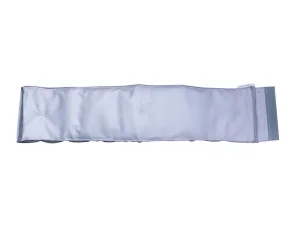
Extruder barrels and injection manifolds constantly radiate uncontrolled heat into the facility, driving up AC utility bills and exposing workers to burn hazards. Our bespoke multi-layer ceramic fiber insulation blankets cut barrel radiant heat loss by up to 35%, paying for themselves within 6 to 9 months.
35% Energy Reduction | Safe Touch <50°CComprehensive Heating Element Technology Comparison
Selecting the appropriate heating core based on operating temperature, watt density, mechanical stress, and thermal transfer physics.
| Heater Technology | Core Sheath / Alloy | Max Operating Temp | Max Watt Density | Primary Heat Transfer Mode | Ideal Industrial Suitability |
|---|---|---|---|---|---|
| Ceramic Band Heater | Steatite Ceramic / Stainless Steel | 650°C – 700°C | Up to 8 W/cm² | Conduction & Direct Radiation | Extruder barrels, blown film dies, injection cylinders |
| Mica Band Heater | Phlogopite Mica / SUS304 | 350°C – 400°C | 3.5 – 4.5 W/cm² | Direct Conduction | Nozzles, small barrels, packaging machinery |
| Cast Aluminum Heater | Alloy Casting (ZL104) | 350°C – 400°C | 3.5 – 5 W/cm² | Uniform Volumetric Conduction | Twin screw extruders, hot-melt dies, rubber machinery |
| Cast Copper / Bronze | Phosphor Bronze Casting | 600°C – 650°C | Up to 8.5 W/cm² | High-Density Conduction | High-temperature fluoropolymers (PTFE, PEEK extrusion) |
| Nano-Infrared Band | Aerogel + Quartz Emitter | 450°C | 6 – 8 W/cm² | Directed Infrared Radiation | Energy-saving retrofits, zero-loss workshop upgrades |
| Coil / Hot Runner Heater | Incoloy 800 / NiCr 80/20 | 750°C | Up to 12 W/cm² | Conduction into Mold Steel | Plastic injection hot runner nozzles & manifolds |
| Electromagnetic Boiler | Magnetic Induction Core / 316L | 250°C (Steam) / 350°C (Oil) | System Dependent | Foucault Eddy Current Induction | Food, pharmaceutical, and combustion-free steam plants |
Next-Generation Trends & B2B Procurement Best Practices
What engineering consultants and global supply chain managers must verify before approving industrial heater vendor qualifications.
IoT-Enabled Thermal Profiling
The industry is transitioning toward smart heaters embedded with multi-junction Type-K / Pt100 thermocouples and micro-sensors that communicate with SCADA and MES systems via IO-Link or Modbus. Predictive algorithms track micro-shifts in element resistance to preemptively alert maintenance crews weeks before an open-circuit failure occurs.
Nano Aerogel Heat Containment
Traditional ceramic bands lose substantial heat into the ambient plant air. The fastest-growing trend in heater retrofit programs is hybrid nano-infrared bands jacketed with microporous silica aerogel insulation. Outer sheath surface temperatures remain under 50°C while the inner barrel reaches 300°C, slicing electric bills by 30% to 40%.
Procurement Audit Checklist
Global procurement specialists must ensure suppliers provide verifiable CE, RoHS, and explosion-proof Ex certifications, certified mill test certificates for stainless steel alloys, and high-pot testing records. Partnering directly with established manufacturers like Kangpu eliminates unnecessary middleman markups and guarantees rapid engineering revisions.
Frequently Asked Questions by Industrial Thermal Engineers
Authoritative technical answers to common questions regarding heater sizing, sheath selection, and operational longevity.
How do I determine whether my application needs Mica, Ceramic, or Cast-In Heaters?
Selection depends entirely on operating process temperature, watt density, and thermal cycling frequency. Mica bands are ideal for compact nozzles under 350°C with watt densities ≤ 4 W/cm². Ceramic band heaters excel from 350°C to 650°C with higher watt densities up to 8 W/cm² where radiant retention is essential. Cast aluminum or cast copper heaters are selected when physical shock resistance, extreme temperature uniformity (±1°C), or combined internal cooling loops are required.
What is the primary cause of premature band heater failure in industrial environments?
The #1 root cause of premature failure is poor mechanical clamping leading to air gaps. Because air has a terrible thermal conductivity (approx. 0.026 W/m·K), an air gap prevents thermal conduction away from the heater sheath. The internal NiCr wire overheats within seconds and burns out. Kangpu engineered barrel bands utilize heavy-duty barrel clamps and low-thermal-expansion tie straps to maintain continuous, uniform intimate surface contact under all thermal expansions.
Can Kangpu manufacture heaters based on custom OEM drawings or reverse engineering?
Yes. Customization is our primary operational focus. We produce heaters strictly to customer CAD/SolidWorks schematics, 2D PDF blueprints, or physical worn samples shipped to our facility. Our engineering team confirms all dimensional criticals: internal diameter tolerances (±0.5mm), gap gaps, terminal box types (euro-plugs, post terminals, armor leads), cutout positions for thermocouples, and exact voltage/wattage specifications prior to real-mold casting.
What testing procedures are conducted prior to international shipment?
Every single manufactured unit is subjected to rigorous end-of-line electrical testing in our accredited quality laboratory: 1) High-potential flash dielectric breakdown testing (1500V AC at 5mA for 1 second); 2) Insulation resistance verification (>50MΩ under 500V DC megohmmeter); 3) Cold resistance tolerance check against nominal calculated ohms (±5%); and 4) Complete visual inspection of weld joints, terminal torque, and surface finishes.
How does an electric thermal oil furnace compare to a high-pressure steam boiler?
Electric heat-conducting oil furnaces operate at atmospheric or very low line pressure (typically ≤ 0.4 MPa) while achieving liquid process temperatures up to 320°C. In contrast, reaching 320°C with a saturated steam boiler requires pressures exceeding 11 MPa (110 bar), demanding certified boiler operators, heavy thick-walled pressure piping, continuous water deionization chemicals, and annual regulatory inspections. Thermal oil eliminates pipe corrosion, freeze hazards, and steam trap maintenance.
What is the typical lead time and minimum order quantity (MOQ) for export orders?
Kangpu accommodates both small-batch custom prototyping (MOQ: 1 to 5 pieces for specialized barrel heaters) and mass production runs of thousands of units for major machinery OEMs. Prototype samples are engineered and dispatched in 5 to 7 working days, while full container shipments are finalized in 15 to 25 days depending on metallurgical casting requirements.
Specialized Heavy-Duty Heaters, Ex-Proof Systems & Controls
Direct factory supply for electromagnetic boilers, cast-in bronze assemblies, integrated barrel cooling zones, and high-precision sensors.





