High-Efficiency Process Heating Elements & Turnkey Systems
Engineered for minimal dissipation, rapid thermal recovery, and extended mean-time-between-failures (MTBF) under demanding industrial production regimes.





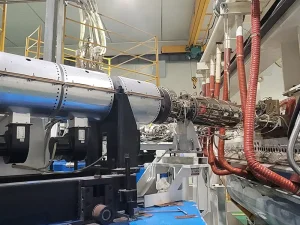
The Global Shift Toward Low-Consumption Electric Industrial Heating
Industrial thermal processes account for over 70% of total manufacturing energy use globally. Today's strict decarbonization mandates demand a paradigm shift from fossil fuel-fired boilers and inefficient thermal elements toward precision electric heating.
Escalating Operational Expenditure
Industrial electricity and carbon taxation regimes across the EU and North America have magnified the operating cost impact of thermal dissipation. Conventional legacy heaters lose up to 35% of their input energy as ambient radiation, inflating cooling loads within facilities and inflating production overhead.
Process Control & Quality Yield
Modern engineering thermoplastics (PEEK, fluoropolymers, molecularly oriented PVC-O) tolerate minimal thermal variation before degradation or dimensional instability occurs. Advanced low-consumption electric heaters leverage multi-layered ceramic insulation and precise PID feedback to guarantee tight temperature tolerances.
Electrification & Zero Scope 1 Emissions
Industrial manufacturers are aggressively pursuing carbon neutrality. Replacing fossil fuel combustion systems and thermal oil furnaces with high-performance electromagnetic induction systems and insulated electric bands eliminates direct factory emissions while maximizing thermal transfer efficiency.
Optimized Configurations Across Demanding Process Sectors
From custom barrel profiles to precise atmospheric ovens, Kangpu's manufacturing protocols match unique thermal transfer characteristics with localized operational environments.
Polymer & Continuous Extrusion
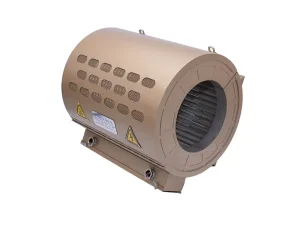
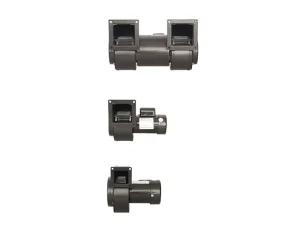
Extrusion barrels generate severe internal shear heat alongside conductive heating needs. Kangpu's integrated heating and cooling modules unite ceramic band elements or cast-aluminum segments with high-volume blower cooling shrouds. This architecture prevents thermal runaway and guarantees melt homogeneity without excess energy draw.
Injection Molding & Nozzle Zones
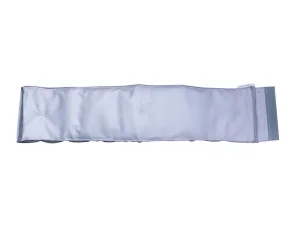
Cycle times in high-speed injection molding hinge upon ultra-fast thermal response. Kangpu mica bands and nano infrared heaters supply tight watt-density distribution along nozzle zones, resisting polymer leakage and minimizing downtime through customized clamping mechanisms and robust terminal protection.
PVC-O Molecular Pipe Orientation
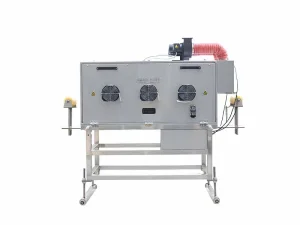
Producing biaxially oriented PVC-O pipe demands absolute circumferential temperature uniformity inside expansion ovens. Kangpu's custom-engineered recirculating forced-air PVC-O ovens utilize aerodynamic duct designs and precision heating arrays to achieve uniform cross-sectional stretching without wall thickness variances.
Industrial Electric Heater Architecture & Performance Roadmap
A rigorous empirical comparison of fundamental heating element technologies for plant engineers and procurement teams seeking measurable energy reduction.
| Heating Technology | Operating Temp. Max | Watt Density Range | Energy Efficiency Rating | Primary Industrial Use Case |
|---|---|---|---|---|
| Nano Infrared Band Heaters | Up to 550°C | 4.0 – 8.0 W/cm² | 95% – 98% (Ultra Low Loss) | Extruder retrofits, energy-sensitive thermoforming lines |
| Engineered Ceramic Band Heaters | Up to 700°C | 6.0 – 9.0 W/cm² | 88% – 92% (High Efficiency) | Plastic extrusion cylinders, high-temperature resin processing |
| Cast-in Aluminum / Copper Heaters | 450°C (Al) / 650°C (Cu) | 3.5 – 7.5 W/cm² | 85% – 90% (Integrated Cooling) | Rigid pipe extrusion, blown film dies, lab extrusion systems |
| Precision Mica Band Heaters | Up to 350°C | 2.5 – 4.5 W/cm² | 80% – 85% (Standard Baseline) | Injection nozzles, small cylindrical tooling, packaging equipment |
| Electromagnetic Induction Boilers | Up to 450°C | Instant Induction | 98.5% (Zero Combustion Loss) | Clean steam generation, pharmaceutical reactors, chemical vessels |
Aerogel & Ceramic Fiber Hybrids
Our next-generation R&D roadmap incorporates composite aerogel outer barriers combined with stepped ceramic cores, achieving exterior surface temperatures below 50°C during 400°C internal operation, cutting radiated energy waste by over 40%.
IoT-Enabled Smart Thermal Zones
Integrating high-density thermocouples directly into the heating grid allows real-time impedance tracking. Predictive degradation monitoring signals maintenance cycles weeks before potential resistance failure, preventing emergency downtime.
High-Frequency Induction Integration
Expanding the boundary of electromagnetic heating beyond steam generators directly to extruder barrels, eliminating the thermal resistance barrier entirely and enabling sub-minute temperature ramp rates with zero contact resistance.
End-to-End Vertical Integration in Yancheng, China
Combining four decades of technical tooling expertise with an uncompromised supply network, Kangpu delivers unmatched manufacturing speed, cost efficiency, and raw material provenance.
In-House Die & Tooling
Kangpu operates internal tooling and casting facilities for aluminum and copper heater segments, eliminating third-party foundry delays and verifying porosity-free casting integrity on every production batch.
Raw Material Selection
We source ultra-pure Swedish/German-grade NiCr 80/20 resistance wire, high-dielectric steatite ceramics, and aerospace-grade micanite sheets, guaranteeing consistent resistance and insulation resistance up to 500MΩ+.
Agile Prototyping
Where Western vendors require 8–12 weeks for custom-molded sample units, Kangpu leverages fully integrated 7-stage design-to-sample manufacturing to deliver real-mold approval units in 7–15 working days.
Cost-to-Performance Ratio
Vertical scale allows plant operators and global OEM machine builders to access CE-certified, 5-year-warranted thermal components at direct-factory economics without distributor markups.
International Regulatory Compliance & Localized Technical Support
Operating in 100+ countries requires uncompromising alignment with regional electrical safety directives, pressure equipment standards, and rapid cross-border spare part availability.
Certifications: CE, RoHS & ISO
Every industrial heater leaving our facility meets European CE Low Voltage Directive (LVD) and Electromagnetic Compatibility (EMC) requirements. Our clean manufacturing protocols adhere to RoHS guidelines, ensuring zero hazardous substance migration.
100% End-of-Line Dielectric Testing
Quality assurance includes automated flash voltage tests (up to 2000V/1s breakdown screening), cold and hot electrical resistance benchmarking, and thermal distribution infrared scanning to eliminate localized hot spots.
Direct Engineering Field Support
Our multilingual application engineering group communicates directly with customer operations teams. We provide remote thermodynamic barrel calculations, custom CAD drawings, and on-site retrofitting guidelines to match local plant power grids (208V, 380V, 415V, 480V).
Frequently Asked Questions: Industrial Heating Systems
In-depth responses to critical design, procurement, and field replacement queries from process engineers and plant managers worldwide.
How do low-consumption nano infrared heaters reduce power use by 20%–35%?
Conventional band heaters rely exclusively on conduction through contact shells, suffering significant convective losses to factory air. Nano infrared heaters use high-emissivity ceramic coatings and reflective composite aerogel barriers. Thermal radiation directly couples into the barrel shell while the outer surface remains safe to touch (typically under 60°C), eliminating dissipated energy losses.
What engineering information is required to produce custom heaters from CAD?
For custom ceramic or cast band heaters, we require: barrel outer diameter (OD), axial width, desired voltage, total wattage, thermocouple port locations/diameters, terminal connection preference (lead wire, ceramic terminal block, or armored enclosure), and preferred clamping mechanisms (wedge-lock or sprung latch).
How does Kangpu back its 5-year warranty on industrial heaters?
Each unit is laser-engraved with an immutable production tracking code. If a premature element failure occurs, our metallurgical lab assesses the batch metallurgy, winding tension, and oxide insulation. We provide root-cause documentation alongside free replacement units, updating manufacturing tolerances to prevent recurring issues.
When is an integrated heating/cooling system mandatory over plain band heaters?
Integrated blower/heater shrouds are essential whenever processing polymers with high internal friction (e.g., rigid PVC, engineering polyamides, HDPE pipe compounding). Because screw rotation imparts mechanical heat exceeding processing setpoints, cooling jackets are required to rapidly remove exothermic energy and maintain melt temperature stability.
Precision Portable & Specialized Industrial Heaters
Explore our heavy-duty portable ceramic heating units, thermal fluid generators, and certified PVC-O industrial oven systems.