
Featured High-Duty Industrial Electric Heaters & Systems
Select from heavy-duty electromagnetic boilers, rugged pipeline circulation systems, and calibrated heating hardware engineered for nonstop processing cycles.
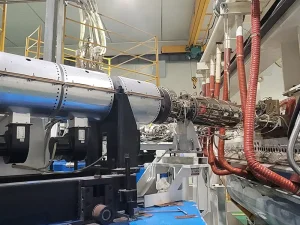
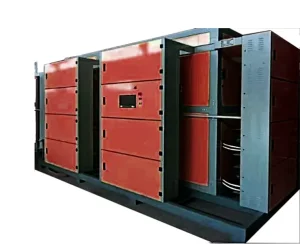


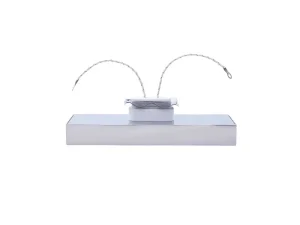
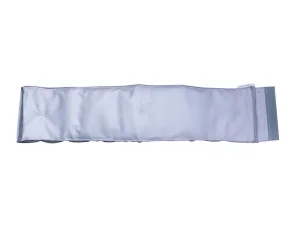
Global Industrial Electrification & Process Heating Realities
The transition from fossil-fired boiler installations to closed-loop electric pipeline circulation and induction steam arrays is accelerating worldwide.
Macro Industrial Shift: Clean Megawatts Replacing Fossil Combustion
Across North America, the European Union, and the Asia-Pacific region, heavy industries are confronting aggressive decarbonization mandates (Scope 1 emissions reductions), rising carbon border adjustment taxes, and volatile gas commodity markets. Consequently, industrial electric water heaters—ranging from flanged immersion circulation vessels to high-frequency electromagnetic steam generators—are shifting from ancillary apparatus to central mission-critical infrastructure.
Unlike conventional fossil fuel boilers that waste significant thermal energy via exhaust flues (achieving typical seasonal efficiencies of only 75% to 84%), electric process heaters transform electrical power directly into thermodynamic heat at nearly 98% to 99.5% boundary efficiency. The operational deployment of clean-kW electric water heaters eliminates on-site nitrogen oxide (NOx), sulfur oxide (SOx), and particulate matter emissions, enabling industrial sites to meet the strictest clean-air plant permitting requirements.
Grid Dynamic Responsiveness
Modern electrical process heating systems offer sub-second modulation via Thyristor/SCR power controllers, allowing factories to absorb renewable grid curtailment and benefit from time-of-use variable pricing tariffs.
Zero Local Exhaust Footprint
Electric pipeline and steam units require no chimneys, fuel storage tanks, burner management blowers, or compliance inspections for flue-gas emissions, drastically simplifying civil engineering overhead.
Precision Temperature Control
With segmented multi-circuit heating elements and solid-state temperature integration, electric water heaters achieve narrow thermal bands within ±0.5°C, preventing thermal shock in sensitive fluid loops.
Four Decades of Thermal Engineering Excellence
Founded in 1986 in Yancheng, Jiangsu, Kangpu Heater (Yancheng Laier Heating Technology Co., Ltd.) has engineered heavy thermal systems for over 5,000 customers across 100+ nations.
Industrial Water Heating in Localized Production Lines
Engineered to excel in demanding chemical, plastics, pharmaceutical, food, and heavy mechanical processing plants where constant thermodynamic stability is mandatory.
Closed-Loop Extrusion & Molding
Supplies temper-stabilized circulating water for twin-screw extruder jacket barrels, PVC calibration water troughs, and automated injection mold temperature controller units (TCUs).
CIP/SIP Chemical & Food Systems
Electromagnetic steam boilers and high-velocity circulation water heaters instantly provide sanitary hot water (85°C–95°C) for sterile clean-in-place flush cycles without thermal lag.
Petrochemical & Reactor Heating
Explosion-proof flanged inline electric heaters engineered to maintain uniform aqueous and thermal-fluid heat transfers in Class I, Division 1/2 hazardous industrial reactor jackets.
Industrial Wash & Surface Treatment
Delivers continuous thermal volume for multi-stage metal phosphating, electrolytic pickling baths, automotive chassis paint pre-treatment, and ultrasonic industrial degreasing vats.
China's Factory Ecosystem: Resilience, Quality, and Speed
How our integrated industrial heating manufacturing campus in Yancheng guarantees superior metallurgy, component agility, and unbeatable lead times.
Full In-House Upstream Verticalization
From seamless Incoloy 800/840 drawing and automated CNC coil winding to automated magnesium oxide (MgO) compaction, we control 100% of raw element fabrication under one roof.
Robust Sourcing & Metallurgy Reserves
Yancheng's industrial cluster allows instant access to specialty high-nickel alloys (SUS316L, Hastelloy, Titanium) and high-purity electrical-grade dielectric powders without international logistic delays.
Direct-from-Factory Engineering Margin
By eliminating trading intermediaries and international brokerage markups, our clients receive heavy-spec industrial heaters built with genuine heavy-wall materials at direct factory terms.
Industrial Electric Water Heating Technology Matrix
Select the optimal electric heating method based on process pressure, fluid chemistry, heat-up kinetics, and thermodynamic watt densities.
| Heating Technology | Core Thermal Mechanism | Max Operational Pressure | Thermal Efficiency | Ideal Industrial Application |
|---|---|---|---|---|
| Flanged Inline Pipeline Heater | Direct immersion tubular elements (Incoloy/SS316) | Up to 5.0 MPa (50 Bar) | > 98.5% | Closed-loop water circulation, extruder jackets, district loops |
| Electromagnetic Steam Boiler | High-frequency eddy current induction (combustion-free) | Up to 1.6 MPa (16 Bar) | > 96.0% | Sanitary clean steam, CIP cycles, textile & food processing |
| Cast-In Aluminum/Copper Jackets | Embedded tubular element with conduction block | Process barrel dependent | > 92.0% | Dual heating/cooling cylinder control in plastics extrusion |
| Ceramic Core Immersion Unit | Replaceable ceramic core in dry thermowell pockets | Atmospheric to 1.0 MPa | > 95.0% | Deionized water, corrosive industrial wash tanks, plating baths |
| Nano Infrared Liquid Modules | High-radiation nano-resistive quartz boundary layers | Low to Medium Pressure | > 97.5% | Rapid intermittent heating, specialized thin-film applications |
The Next Era of Smart Industrial Thermal Systems
How Kangpu Heating integrates predictive algorithms, edge IoT diagnostics, and advanced surface nano-engineering into next-generation industrial heaters.
AI-Driven Predictive Life Cycling
Integrated micro-RTD sensors within internal MgO layers continuously stream insulation resistance and dielectric leakage telemetry. Machine learning models predict element failure weeks before burnout occurs, averting costly unscheduled downtime.
Next-Gen Silicon Carbide (SiC) Power
Implementing solid-state SiC power switching modules capable of kilohertz-speed power chopping. Eliminates traditional mechanical contactor wear, delivering smooth electrical loads and ultra-fine ±0.1°C water temperature stabilization.
Omni-Fluid Nano Anti-Scale Surfaces
Integrating chemical vapor deposition (CVD) nano-coatings onto heater sheath outer walls. Prevents calcium carbonate crystallization and industrial mineral scaling, maintaining peak heat transfer rates even in untreated water conditions.
Local Support, Pressure Directives & International Approvals
Seamless plant integration backed by internationally recognized electrical and pressure vessel certifications.
CE, PED & Low Voltage Certified
Fully compliant with European Pressure Equipment Directive (PED 2014/68/EU), Low Voltage Directive (LVD 2014/35/EU), and CE industrial standards. All pressure housings undergo non-destructive ultrasonic and hydrostatic proof testing.
ATEX & IECEx Flameproof Compliance
For chemical and volatile fluid handling, our hazardous-area heaters feature heavy-gauge Ex-d explosion-proof terminal boxes certified for Zone 1 and Zone 2 gas atmospheres, preventing internal sparking escape.
Global Field Engineering Support
Exporting to over 100 countries, we provide remote CAD/SolidWorks engineering verification, customized wiring diagrams, rapid-dispatch emergency replacement bundles, and comprehensive lifecycle documentation.
From Blueprint to Factory Commissioning in 7 Controlled Stages
Eliminating procurement risk with an engineering-first prototype validation procedure before batch production begins.
01. ID & Thermal Modeling
Engineers calculate flow velocity, required kW rating, watt density, and vessel dimensions to construct comprehensive 3D CAD models and circuit schematics.
02. Parametric Tailoring
Operating voltage (220V–690V), sheath materials (Incoloy 800/840, SUS316L), flange ratings (ANSI/DIN), and junction housing styles are aligned with your site specifications.
03. Real-Mold Prototype Build
Unlike hand-fabricated samples, we open actual production tooling for sample builds to ensure identical mechanical tolerances to final volume runs.
04. Client Pilot Evaluation
The client tests the sample directly on their processing equipment to evaluate thermal transfer, mechanical fit, and electrical compatibility.
05. Design Optimization
If testing indicates a need for altered clamping, lead orientations, or watt density redistribution, our tooling is promptly adjusted.
06. Multi-Factor Testing
Comprehensive dielectric withstand testing (Hi-Pot > 2000V), insulation resistance (> 100MΩ), and hydrostatic pressure verification up to 1.5x design pressure.
07. Volume Mass Production
Full manufacturing execution under ISO 9001 guidelines, export-grade vacuum moisture-barrier packaging, and rapid international sea/air dispatch.
Specialized Industrial Electric Heating Hardware
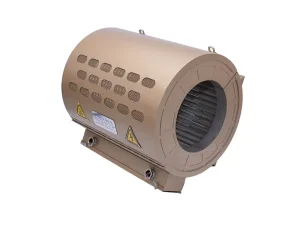
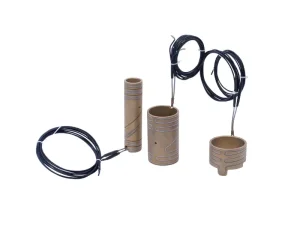
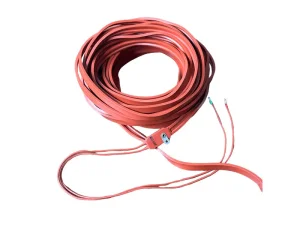
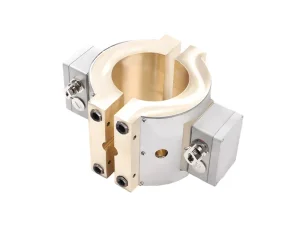
Advanced heating components engineered for precision molding, fluid heating jackets, and high-temperature thermal oil systems.



Industrial Procurement & Engineering Q&A
Technical answers regarding watt density thresholds, thermal optimization, factory testing, and procurement safety.