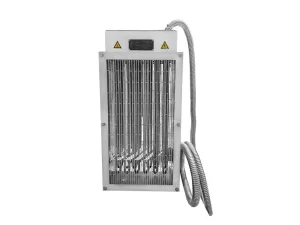
Precision Industrial Thermal Systems & Heaters
Engineered for high-throughput continuous operations. Every unit undergoes multi-stage electrical insulation and thermal boundary verification prior to factory dispatch.
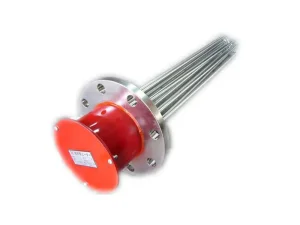

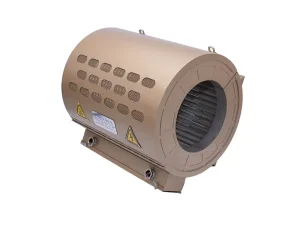





The Global Landscape of Industrial Equipment & Thermal Machinery
Analyzing supply chain resilience, thermodynamic electrification, and process heating transformation across key industrial hubs worldwide.
Energy Electrification Megatrend
Global manufacturing facilities are aggressively phasing out combustion burners in favor of high-efficiency direct electrical elements. The adoption of electromagnetic induction and cast heaters has reduced Scope 1 carbon footprints while boosting thermodynamic efficiency up to 98%.
Supply Chain Regionalization
Tier-1 automotive, plastics processing, and chemical enterprises are mitigating lead-time risks by sourcing from consolidated manufacturing hubs capable of fast turnaround, customizable CAD/CAM engineering, and documented ISO-certified compliance.
Total Cost of Ownership (TCO)
Procurement metrics have shifted from initial acquisition costs to comprehensive lifecycle reliability. An unplanned extruder shutdown due to element failure costs upwards of $12,000 per hour, making 5-year warranty-backed components the superior economic choice.
Modern Technological Trends & Macro Industry Solutions
Addressing thermodynamic dissipation, closed-loop feedback precision, and industrial heat recovery across continuous production lines.
Thermal Boundary Optimization
Traditional barrel heaters leak up to 35% of their thermal output into ambient workspace air. By pairing custom high-density ceramic elements with modular silica aero-insulation jackets, thermal loss is curbed by up to 45%, significantly lowering ambient cooling energy demands.
Integrated Dynamic Cooling & Heating
Modern high-speed extruders generate massive shear heat, leading to polymer degradation. Kangpu's patented combined heating and liquid/forced-air cooling systems balance temperature swings within ±1°C, stabilizing melt viscosity during high-speed runs.
Zero-Emission Steam Generation
Combusting fossil fuels for on-site steam boiler operations faces stringent regional carbon caps. Kangpu's electromagnetic steam boilers offer instantaneous, flue-gas-free high-pressure steam for pharmaceutical, food packaging, and specialized manufacturing plants.
Biaxial Molecular Pipe Orientation
The global shift toward high-impact PVC-O pressure pipes requires strictly uniform temperature distribution prior to stretching. Our precision infrared PVC-O ovens eliminate cold spots, guaranteeing radial mechanical strength across large pipe diameters.
Localized Engineering Use Cases & Field Implementations
Specific hardware pairings tailored to exact factory conditions and machine operating profiles.
Plastics Extrusion Lines
Challenge: Excessive temperature spikes caused by high shear screws in HDPE/PP pellet production.
Solution: Cast aluminum heaters integrated with external cooling blowers and nano infrared bands to maintain homogeneous thermal melt zones without localized burning.
High-Cycle Injection Molding
Challenge: Drool, nozzle freezing, and premature heater failure due to plastic ingress.
Solution: Hermetically sealed mica bands and micro-tubular spring coil heaters that resist resin leakage, withstand vibrations, and provide rapid thermal recovery during short cycle times.
Thermal Fluid & Reactor Heating
Challenge: Uneven heating leading to thermal cracking in industrial fluid circulation lines.
Solution: Multi-zone heat-conducting oil furnaces equipped with low-watt-density heating elements to protect the thermal fluid from degradation while maintaining constant temperature transfers.
Technical Specification & Application Engineering Matrix
A reference guide compiled by Kangpu's senior engineering department to streamline industrial procurement decisions.
| Heating Technology | Max Operating Temp | Watt Density Range | Core Industrial Value | Best Match Application |
|---|---|---|---|---|
| Ceramic Band Heaters | Up to 700°C (1292°F) | 4.0 – 8.0 W/cm² | Built-in ceramic insulation blocks prevent thermal loss to ambient air | Plastic extruders, blow molding, chemical processing |
| Mica Band Heaters | Up to 350°C (662°F) | 2.5 – 4.5 W/cm² | Ultra-slim profile, immediate thermal conduction, cost-effective | Injection molding nozzles, cylindrical dies, test equipment |
| Cast-in (Al / Cu) Heaters | 450°C (Al) / 650°C (Cu) | 3.0 – 7.0 W/cm² | Seamless casing with integrated cooling tubes; extreme shock resistance | High-load extrusion barrels, die heads, lab equipment |
| Nano Infrared Heaters | Up to 600°C (1112°F) | Up to 9.0 W/cm² | Direct radiant thermal transmission; external casing stays cool (<60°C) | Energy-saving factory retrofits, precision drying lines |
| Flexible Silicone/Kapton | Up to 220°C (428°F) | 0.5 – 1.5 W/cm² | Etched-foil technology flexible to non-planar surfaces, tanks, and valves | Aerospace, fluid storage, medical machinery, composite curing |
| Electromagnetic Induction | Up to 800°C+ (1472°F) | Direct Eddy Heating | Direct barrel excitation without surface thermal resistance; 95%+ efficiency | Large melt capacity extruders, industrial boilers, hot furnaces |
Technology Roadmap: The Next Decade in Industrial Heating
Strategic engineering paths under active development in our Yancheng laboratories.
Smart IoT Embedding
Integrating micro-thin RTD thermocouple arrays directly into the element substrate for real-time thermal gradient mapping over standard industrial fieldbuses.
Advanced Ceramic Matrices
Developing silicon nitride (Si₃N₄) composite insulators to boost dielectric breakdown limits while enhancing thermal transfer coefficients past conventional steatite.
High-Frequency Induction
Optimizing solid-state IGBT topologies to achieve sub-second thermal adjustment during automated polymer recipe switches on continuous extrusion lines.
Net-Zero Industrial Retrofits
Creating standardized plug-and-play conversion kits that enable heavy industrial furnaces to switch entirely from gas combustion to electric oil thermal systems.
End-to-End Quality Architecture: 7-Stage Delivery
Our systematic framework ensures design parameters match operational realities before committing to production volumes.
Industrial Design (ID)
Detailed evaluation of mounting constraints, lead exits, clearance tolerances, and electrical wiring geometry.
Engineering Specification
Balancing watt density, sheath metallurgy, dielectric thickness, and clamping arrangements.
Production Tooling Sample
Fabricating evaluation units using production molds, guaranteeing prototype fidelity to final production runs.
Factory Integration Trial
Field verification on your machinery to validate physical envelope, thermal response, and wiring fit.
Iterative Optimization
Refining watt distribution or clamping mechanisms based on field trial telemetry.
Comprehensive Verification
Hi-pot leakage, cold resistance, and thermal imaging checks to establish baseline benchmarks.
Mass Production & Trace
Full-scale batch fabrication backed by laser serial marking and a 5-year traceable warranty.
Strict Zero-Defect Policy
Certified ISO 9001 quality workflows with CE and RoHS compliance tracking for every export shipment.
Frequently Asked Technical & Commercial Questions
In-depth responses covering OEM fabrication, material selection, and logistics protocols.
How does Kangpu ensure precise dimensional fits for non-standard barrels?
Our engineering team works directly from your CAD STEP files, physical element rubbings, or worn replacement samples. We verify barrel curvature radii, terminal box positions, thermocouple cutouts, and clamping clearances prior to manufacturing the production tooling, eliminating dimensional mismatches on the assembly floor.
What specific failure modes are covered under the 5-Year After-Sales Warranty?
Our 5-year warranty covers internal element open circuits, premature dielectric breakdown, terminal welding fractures, and insulation deterioration when operated within agreed voltage and watt-density parameters. Each unit is laser-etched with batch tracking numbers, allowing our QA group to trace metallurgical lots and manufacturing shift records for root-cause resolution.
When should an extrusion facility select Cast Aluminum versus Ceramic Band Heaters?
Cast Aluminum heaters are ideal for applications requiring built-in cooling tubes, extreme mechanical durability, and temperatures up to 450°C. Ceramic Band heaters are best suited for operating environments up to 700°C where high watt density, lightweight construction, and rapid thermal responsiveness are needed to support varied processing schedules.
What electrical compliance documentation is provided for international shipments?
All international orders include a certified Factory Test Certificate (FTC) verifying Cold Insulation Resistance (>50MΩ at 500VDC), High-Potential Dielectric Strength (1500V/1min without flashover), dimensional tolerance compliance, and CE / RoHS conformity declarations matching European and North American electrical safety codes.
How do Nano Infrared Heaters generate verifiable energy savings?
Unlike standard conductive heating bands that lose significant heat via convective air currents, Nano Infrared elements emit targeted electromagnetic waves matched to the absorption spectrum of the machine barrel. Combined with an integrated multi-layer ceramic aerogel casing, outer shell temperatures drop below 60°C, cutting heating electricity consumption by up to 30%.
High-Performance Industrial Heating Equipment
Explore our complete production lines designed for extruders, injection machinery, air-duct networks, and high-temp furnaces.