
Best L Shaped Cast-In Heater Exporter & Exporters
Precision thermodynamic geometry, non-destructive die casting, and high-conductivity thermal solutions engineered for polymer extrusion and high-load industrial machinery worldwide.
Precision Thermal Systems & Industrial Elements
Explore our specialized range of certified cast-in assemblies, high-temperature thermal accessories, and electromagnetic heating systems configured for global plant operators.
-
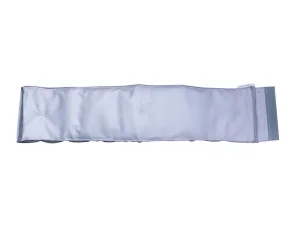
Best Durable Heat Insulation Covers Manufacturer, Exporters
View Product Details -

High-Quality Thermocouple Exporter, Factory
View Product Details -

Best Efficient Portable Ceramic Heaters from China Suppliers - Ideal for Industrial Heating
View Product Details -

CE Certification Electromagnetic induction heater Manufacturer, Exporter
View Product Details -

High-Quality Electromagnetic steam boiler Manufacturers, Factories
View Product Details -

CE Certification Nano infrared electric band heater Manufacturer, Manufacturers
View Product Details -

Best Heating/Cooling Integrated System Exporter, Exporters
View Product Details -

CE Certification Precise Cooling and Heating System Manufacturers, Exporters
View Product Details
Thermodynamic Superiority of L Shaped Cast-In Heating Elements
Analyzing thermal dissipation mechanics, metallurgical integration, and geometric efficiency across complex industrial tooling interfaces.
In high-throughput continuous manufacturing—most notably twin-screw polymer extrusion, blow molding crossheads, and specialized rubber vulcanization—standard cylindrical or planar band heaters frequently confront physical and spatial constraints. Thermal transfer loss along irregular corners and right-angled junctions generates persistent hot spots, resulting in premature polymer degradation and structural stress fractures. The development of engineered L Shaped Cast-In Heaters solves these acute thermodynamic boundary challenges.
When engineering heating solutions for extrusion barrels, die heads, and angular manifolds, heat dissipation efficiency relies heavily on casting density and uniform metallurgical bonding. Leading global exporters must enforce zero-porosity casting standards via vacuum die casting or precision gravity feed techniques to ensure structural longevity under severe continuous thermal expansion cycles.
Dual-Plane Conduction
By conforming precisely to L-shaped profiles, the heater delivers seamless conductive energy across both horizontal and vertical tooling faces simultaneously, stabilizing melt pressure and melt rheology.
Metallurgical Density
Utilizing high-purity die-cast aluminum or copper-bronze alloys ensures maximum thermal transfer coefficients (up to 200 W/m·K) while resisting shear force deformation under intense clamping pressure.
Integrated Dual Cooling
Advanced L-shaped designs can incorporate internal seamless stainless steel cooling tubes (liquid cooling) or external finned contours (forced air), achieving rapid closed-loop thermal regulation.
Supply Chain Resilience, Customization & Global Export Scale
How digitalized production facilities in China deliver high-spec thermal tooling with tight dimensional tolerances and uninterrupted global delivery schedules.
Rapid 7-Stage Digital Prototyping
From original ID CAD rendering through real-mold casting confirmation and electrical bench validation, custom OEM samples transition into series production in fraction of Western lead times.
Precision CNC Machining
Cast elements receive computerized five-axis finish milling along mating surfaces, ensuring contact flatness tolerances within ±0.05mm to maximize interface conduction and prevent heat leakage.
Traceability & Compliance
Each cast heater batch is tested for dielectric withstand, insulation resistance (>1000MΩ at 500VDC), and radiographic alloy integrity, complying with CE, RoHS, and ISO standards for international compliance.
Comprehensive Industrial Heating Element Comparison
Compare thermal efficiency, operational lifespan, and capital expenditure across standard configurations to select the ideal component for your machinery.
| Heater Technology | Max Operating Temp | Thermal Distribution | Vibration & Physical Durability | Primary Industrial Use-Cases |
|---|---|---|---|---|
| L-Shaped Cast Aluminum | 400°C – 450°C | Exceptional (Uniform conductive plane) | Extreme (Solid non-porous casting) | Extruder corner blocks, die manifolds, thermoforming |
| Cast Bronze / Copper | 650°C – 700°C | Maximum (Highest thermal flux) | Maximum (Immune to thermal distortion) | High-temp polymers (PEEK, PTFE), chemical reactors |
| Ceramic Band Heaters | 600°C – 750°C | Moderate (Convective & Radiant) | Moderate (Ceramic knuckle segments) | Standard straight extruder barrels, blown film lines |
| Mica Band Heaters | 300°C – 350°C | Low to Moderate (Prone to gaps) | Low (Thin metal sheath construction) | Injection molding nozzles, small tooling areas |
| Nano Infrared Bands | 400°C – 550°C | High radiant efficiency | Moderate | Energy retrofit projects on cylindrical extruders |
Where L-Shaped Cast Heating Elements Run Globally
Field installations across plastics processing, composite aerospace curing, and continuous extrusion plants in North America, Europe, and Asia-Pacific.
Extrusion Crossheads & 90° Turn Dies
Maintains razor-sharp temperature control across transition adapter blocks and co-extrusion crossheads, where thermal drops can cause un-melted pellets or thickness deviation in sheet extrusion.
Blow Molding & Parison Control
Delivers targeted conductive heat around lower die lips and angular clamping frames, ensuring homogeneous parison thickness and reducing rejected bottles or hollow parts.
Rubber Vulcanizing & Sealing Platens
Resists mechanical vibration, high hydraulic clamp shocks, and continuous duty cycles in compression molding operations that destroy lightweight mica or quartz elements.
Frequently Asked Questions on L-Shaped Cast Heaters
Practical engineering answers for procurement managers, plant maintenance teams, and original equipment manufacturers (OEMs).
Complementary Process Heaters, Furnaces & Ovens
Expand your facility's energy efficiency with custom duct heaters, precision PVC-O ovens, cleaning furnaces, and high-temp portable ceramic units.
-

Best Pipeline Heater Manufacturers, Factory
View Product Details -
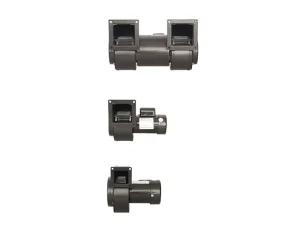
CE Certification Fan Manufacturer, Factory
View Product Details -

CE Certification Flexible Heaters for Custom Applications Manufacturer, Exporter
View Product Details -

CE Certification PVC-O Ovens for Precision Heating Manufacturer, Manufacturers
View Product Details -
China Portable Ceramic Heaters from China Suppliers: Efficient Heating Solutions
View Product Details -
High-Quality Portable Ceramic Heaters for Industry - Reliable Temperature Control
View Product Details -

High-Quality Cleaning furnace Manufacturer, Exporter
View Product Details -
High-Quality Portable Ceramic Heaters for Industry - Efficient Heating Solutions
View Product Details