
High-Efficiency Radiant & Ceramic Thermal Systems
Explore precision-machined, heavy-duty industrial electric heating elements manufactured for plastics compounding, extrusion, and advanced process thermodynamics.
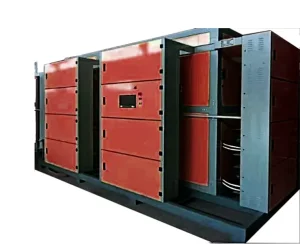
High-Quality Electromagnetic Steam Boiler
Non-combustion induction steam generation providing instantaneous thermal conversion and clean environmental compliance for production lines.
Explore Specs
Efficient Portable Ceramic Heaters
Engineered for industrial factory heating with advanced steatite ceramic matrices and high-durability Nichrome resistance windings.
Explore Specs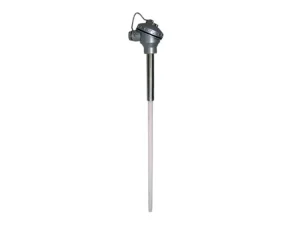
High-Quality Industrial Thermocouple
High-precision thermal measurement instrumentation designed to operate in tandem with heavy-duty radiant and ceramic closed-loop arrays.
Explore Specs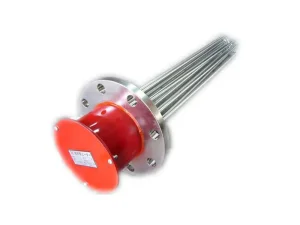
CE Explosion Proof Electric Heater
Certified ATEX/CE-rated industrial heating elements built for hazardous petrochemical environments and high-risk thermal fluid systems.
Explore Specs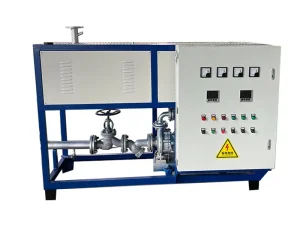
High-Quality Heat-Conducting Oil Furnace
Closed-cycle thermal fluid heating solution providing precision temperature profiles for industrial polymer curing, molding, and calenders.
Explore Specs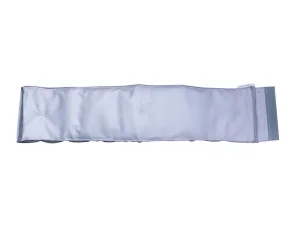
Durable Thermal Heat Insulation Covers
Custom-tailored aerogel-composite insulation jackets designed to reduce radiant barrel ambient energy losses by up to 45%.
Explore Specs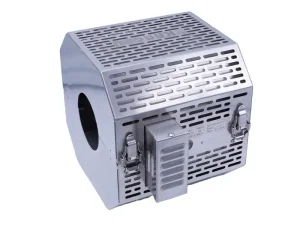
Heating/Cooling Integrated System
Advanced extruded-cylinder thermal management system matching high-density radiant zones with active forced-air cooling jackets.
Explore Specs
Portable Ceramic Heating Unit (Factory Grade)
Heavy-duty, convection-radiant mobile heating module built for targeted spot drying, component pre-heating, and plant service bays.
Explore SpecsRadiant Heaters vs. Ceramic Heaters: Engineering Evaluation
A rigorous metallurgical, thermodynamic, and operational breakdown to help industrial procurement leaders select the optimal thermal architecture.
Infrared Radiant Heat Transfer
Radiant heaters emit electromagnetic waves mainly within the medium- to far-infrared spectrum (2.5 µm to 10 µm). Radiant energy transfers directly to targets without relying on air conduction, providing line-of-sight energy transmission, minimal convective losses in high-airflow workshops, and near-instantaneous thermal ramp rates.
Ceramic Conduction & Retention
Ceramic heaters house resistance elements within precision interlocking steatite or alumina blocks. This layout provides thermal buffering and uniform heat dissipation. Built-in ceramic fiber backing cuts peripheral conduction losses, keeping barrel contact stable up to 700°C (1292°F) during high-throughput polymer processing.
Failure Mode & Lifecycle Dynamics
While radiant elements face mechanical thermal shock and quartz envelope embrittlement under heavy cycling, ceramic band assemblies distribute mechanical clamping stress across robust stainless steel shrouds. This balance between radiant transfer and ceramic thermal inertia often dictates component lifetime in continuous extrusion lines.
| Performance Metrics | High-Intensity Radiant Heaters | Industrial Ceramic Band Heaters | Hybrid Nano-Infrared Bands |
|---|---|---|---|
| Thermodynamic Primary Mechanism | Direct Infrared Radiation (IR Flux) | Conduction to Barrel + Internal Radiation | Far-IR Reflection + Direct Radiant Coupling |
| Operating Temperature Limit | Up to 900°C (Target Surface Dependent) | Up to 700°C (Continuous Duty) | Up to 550°C (Optimized for Extrusion) |
| Typical Watt Density Capacity | 6.0 to 12.0 W/cm² | 4.0 to 8.0 W/cm² | 3.5 to 7.0 W/cm² |
| Thermal Ramp-Up Time | Ultra-Rapid (< 90 seconds to steady-state) | Gradual / Buffered (8 to 15 minutes) | Fast / Controlled (3 to 6 minutes) |
| Energy Conservation Metric | Low convective ambient losses in spot targeting | High retention when combined with insulation | Up to 30–45% power reduction vs bare mica/bands |
| Primary Target Application | Thermoforming, Paint Curing, Pipe Orientation | Extruder Barrels, Blow Molding, Injection Barrels | Retrofitting Energy-Intensive Extrusion Plants |
Why Tier-1 Global OEMs Source Ceramic & Radiant Heaters in China
The manufacturing ecosystem in Yancheng, Jiangsu delivers integrated supply chains, automated production lines, and complete testing certifications.
Raw Material Supply Chains
Yancheng's industrial heating cluster provides direct access to high-grade Swedish Kanthal or high-purity Ni80Cr20 alloys, premium steatite ceramics, and high-temp dielectric mica sheets. This co-located supply base lowers raw material lead times by up to 60% compared to fragmented western plants.
Precision CNC Tooling
Modern Chinese heating factories maintain in-house tool and die shops. We engineer production-grade stamping and bending molds directly from customer CAD drawings within 48 to 72 hours, avoiding prototype delays and maintaining dimensional consistency on barrel diameters from 25mm to over 1200mm.
Full Regulatory Compliance
Export-focused factories maintain rigorous internal QA labs. Standard QC workflows include high-potential (Hi-Pot) dielectric breakdown testing up to 2000V, cold-insulation resistance checks above 50MΩ, automated dimensional laser scans, and CE, UL, and RoHS compliance audits for seamless international import clearance.
Custom High-Volume Scalability
With multi-decade institutional experience since 1986, Chinese production floors handle both specialized prototype batches for one-off automated machine builders and high-volume containerized OEM contracts, keeping unit economics balanced with long-term reliability.
Next-Generation Process Heating Technologies
Global net-zero regulations and surging factory energy costs are driving rapid modernization across industrial heating equipment.
Decarbonization & Electrification
Heavy industries are phasing out fossil fuel steam boilers and direct gas-fired heaters in favor of electromagnetic boilers and closed-loop electric thermal fluid furnaces. This transition eliminates flue-gas emissions on the factory floor while delivering up to 98% thermal efficiency at the heating point.
Integrated Thermal Balancing
Modern high-speed twin-screw extruders generate heavy internal shear heat, creating localized thermal spikes. Next-generation systems integrate ceramic radiant bands with cast-in air or liquid cooling jackets in a single zone assembly, preventing polymer degradation through closed-loop PID control.
Advanced Insulation Integration
Uninsulated ceramic bands can lose 30% to 40% of their heat into ambient workshop air, straining HVAC systems. High-performance retrofits combine ceramic band heaters with tailor-made aerogel and ceramic-fiber insulation covers, keeping outer shell temperatures below 60°C to protect technicians and save power.
Localized Applications & Global Procurement Requirements
Evaluating real-world duty cycles, thermal stresses, and cross-border procurement requirements for process engineers.
Plastics Extrusion & Blow Molding
Extruder barrels require sustained temperatures between 180°C and 350°C across multi-zone profiles. Ceramic band heaters provide the mechanical strength needed to resist polymer fumes, oil contamination, and vibration from high-torque motors, maintaining tight zone-to-zone thermal profiles.
PVC-O Molecular Orientation
Biaxially oriented PVC pipe production requires tight, consistent thermal conditioning within narrow processing margins. Precision radiant heating tunnels and specialized circulation ovens provide balanced heat penetration across pipe walls, preventing wall thinning and premature burst failures.
Global Procurement Specifications
Tier-1 procurement teams evaluate suppliers on more than piece-part pricing. Critical vendor criteria include batch-level traceability, standardized terminal junctions (such as European plug blocks or armored leads), custom mounting tolerances, and verified multi-voltage wiring schematics (220V/380V/480V Delta/Star).
Frequently Asked Questions for Technical Sourcing Teams
Direct answers from our engineering desk on customization, thermal tolerances, and factory production standards.
Can Kangpu manufacture industrial heating elements to custom engineering drawings?
Yes. Customization is our core OEM operation. You can provide a CAD file, dimensioned mechanical drawing, or physical reference unit. Our engineering group confirms inner/outer diameters, axial width, operating voltage, wattage ratings, clamping mechanisms, thermocouple cutouts, and terminal box styles before building a pilot sample for approval.
What specific after-sales warranty coverage is provided with Kangpu heating equipment?
We provide a comprehensive five-year after-sales warranty on our core industrial heating elements. Each manufactured batch has a laser-etched serial code providing complete traceability to the raw alloy melt, ceramic batch, and assembly QA records, ensuring direct accountability and root-cause verification.
What are the key differences between ceramic band heaters and mica band heaters?
Mica band heaters use thin natural or synthetic mica sheets with a lower profile and faster initial heat-up, making them suitable for small injection nozzles and temperatures up to 300°C. Ceramic band heaters incorporate grooved steatite ceramic bricks backed by insulation, allowing continuous operation up to 700°C with lower heat loss, making them standard equipment for larger extrusion barrels.
How does the seven-stage prototype-to-mass-production workflow work?
Our quality workflow includes: (1) Industrial mechanical and terminal design review, (2) Parameter and watt density specification confirmation, (3) Real-mold sample tooling, (4) Customer fit and interface inspection, (5) Engineering revisions based on machine testing, (6) Thermal ramp and insulation dielectric stress testing, and (7) High-volume mass production to the locked revision.
What international shipping and packaging standards are used for export orders?
To prevent mechanical shock or moisture ingress during ocean transit, all export heaters are sealed in moisture-barrier film, packed in custom double-wall cartons, and secured within fumigated ISPM-15 compliant plywood crates. We ship through Shanghai, Ningbo, or via direct air cargo to over 100 countries.
Specialized Electric Heaters & Custom Heating Elements
Engineered for hot-runner tooling, high-temperature manifolds, flexible surface heating, and precision zone controls.
Portable Ceramic Heaters for Industry
Industrial heating units engineered by China suppliers for dependable workshop spot heating and surface drying.
Explore Specs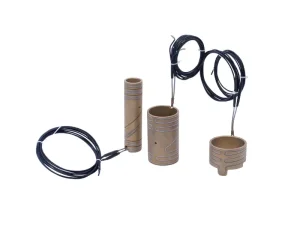
Hot-Runner Spring & Coil Heaters
Precision miniature coil heating elements designed for injection molding hot-runner nozzles and high-density manifolds.
Explore Specs
CE Nano Infrared Electric Band Heater
Advanced high-emissivity nano-coating band heater reducing external thermal radiation and lowering electrical consumption.
Explore Specs
Reliable Temperature Control Ceramic Heaters
Engineered ceramic heating arrays optimized for stability, high dielectric ratings, and continuous industrial service.
Explore Specs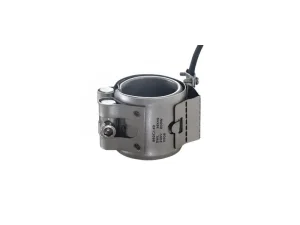
China Safe and Durable Mica Heaters
Low-profile, rapid-heating mica band and plate heaters built for small barrel extruders and standard injection machinery.
Explore Specs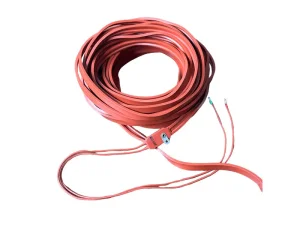
CE Flexible Heaters for Custom Applications
Flexible silicone and polyimide surface heaters that conform to valves, curved tanks, and irregular piping surfaces.
Explore Specs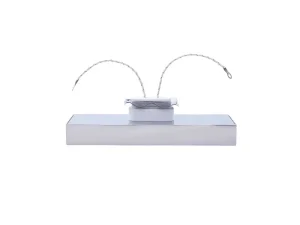
Infrared Ceramic Heaters for Efficient Heating
High-emissivity curved and flat ceramic emitters designed for thermoforming, pre-heating, and drying applications.
Explore Specs
China High-Density Heating Elements
High-watt-density cartridge elements engineered with compressed MgO insulation for tooling dies and mold heating.
Explore Specs