
High-Efficiency Industrial Heating Systems (Part I)
Explore our certified electro-thermal product lines engineered for extrusion, polymer orientation, process steam generation, and industrial thermal conditioning.
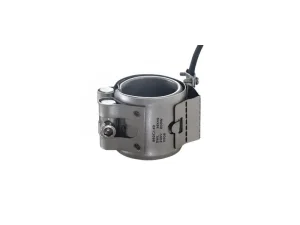
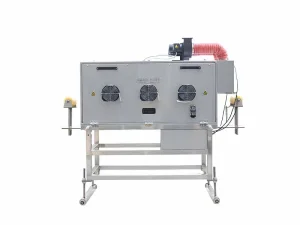
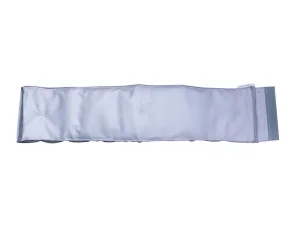
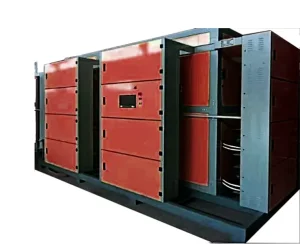

The Global Electrification of Industrial Process Heat
Across advanced European, North American, and Asian production ecosystems, the shift toward deep decarbonization has transformed electric heaters from mere components into strategic assets for industrial process efficiency.
Fossil-Fuel Decarbonization
Global regulatory mandates such as the EU Green Deal and corporate Scope 1 emission caps are rapidly accelerating the replacement of carbon-heavy natural gas burners and oil boilers. CE-certified electric heating elements convert direct electrical power into clean thermal energy at virtually 98-99% thermal efficiency, eliminating point-of-use carbon dioxide and NOx emissions.
Rigorous CE Compliance
Compliance with the European Union's Low Voltage Directive (LVD 2014/35/EU), Electromagnetic Compatibility (EMC 2014/30/EU), and EN 60519 industrial electroheating standards is no longer optional. Exporting to high-tier markets demands verified insulation resistance above 1000 MΩ, rigorous dielectric breakdown testing at 1500V+, and proven thermal cycling safety.
Tight Thermal Gradient Control
Modern advanced materials—including engineering polymers, aerospace composites, and ultra-high molecular weight plastics—exhibit tight thermal processing windows within ±1°C. Standard thermal systems with high overshoot cause polymer degradation, making custom-engineered zones and multi-zone closed-loop feedback non-negotiable.
Emerging Trends Reshaping Industrial Electric Heating
The convergence of metallurgy, nano-coatings, and smart edge control algorithms is driving unprecedented efficiency, thermal responsiveness, and equipment lifespan.
Nano-Infrared Radiation
Traditional conduction heaters rely strictly on physical contact. Next-generation nano-infrared band heaters utilize aerospace-grade ceramic radiation coatings to transfer heat via electromagnetic infrared wavelengths, reducing shell skin temperatures below 50°C and cutting energy draw by 25% to 40%.
Integrated Dynamic Air/Liquid Cooling
High-shear extrusion generates substantial internal friction heat. Patented cooling-heating integrated zones combine cast-in cooling coils or forced axial fin fans directly into the heater shell, actively counteracting temperature overshoot during high-RPM continuous manufacturing runs.
High-Density Ceramic Steatite
Moving beyond fragile refractory materials, high-density interlocking steatite ceramic blocks provide superior dielectric breakdown resistance up to 800°C. Coupled with 80/20 Nickel-Chromium resistance wires, these elements resist oxidation and thermal stress-induced mechanical cracking.
Digital Twin & Predictive Maintenance
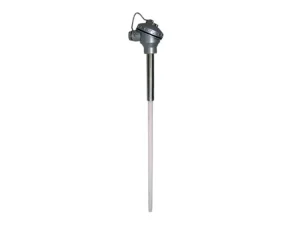
By embedding high-precision multi-junction thermocouples directly into critical thermal nodes, industrial operators can track real-time resistance drift. Micro-changes in electrical impedance predict wire necking before catastrophic open-circuit line stoppages occur.
Precision Application Scenarios Across Critical Industries
Kangpu Heater custom-tailors sheath materials, clamping geometries, and watt densities to withstand harsh industrial operating conditions worldwide.
Plastic Extrusion & Injection
High-watt-density ceramic, mica, and cast-in aluminum heaters mounted across barrel zones, melt adapters, and extrusion nozzles. Engineered to hold stable rheological viscosity for PVC, PE, PP, and engineering nylon.
Biaxially Oriented PVC-O Ovens
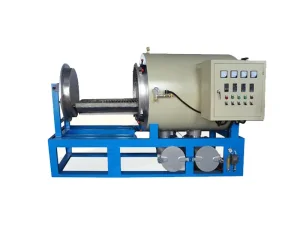
Purpose-built forced-convection hot air circulation ovens specifically designed for biaxial molecular orientation of PVC pipes, guaranteeing uniform circumferential stretch temperature and structural burst resistance.
Electromagnetic Steam Boilers
Direct electromagnetic eddy-current induction steam generators for sanitary food processing, pharmaceutical sanitization, and chemical autoclaves, completely eliminating boiler room burner emissions.
Industrial Duct & HVAC Processing
Incoloy and stainless steel finned tubular duct heaters mounted in continuous drying tunnels, curing ovens, and high-volume HVAC air distribution systems with multi-stage SCR power modulation.
Pipeline & Irregular Vessel Tracing
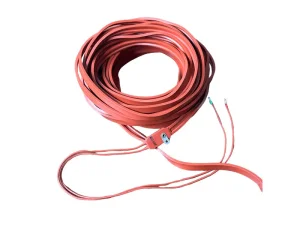
Custom flexible silicone and polyimide heaters laminated with aluminum foil backing to provide form-fitting surface contact for valves, manifolds, chemical process tanks, and vacuum bake-out jackets.
Comprehensive Technical Matrix of Industrial Heating Technologies
A reference guide based on 40 years of application engineering data to assist mechanical designers and procurement engineers in component selection.
| Heating Technology | Core Thermal Core | Max Sheath Temp (°C) | Typical Watt Density | Primary Industrial Use-Case | CE Safety Verification Point |
|---|---|---|---|---|---|
| Mica Band Heaters | Muscovite / Phlogopite Mica Plates with Ni80Cr20 Ribbon | Up to 350°C (662°F) | 3.0 - 4.5 W/cm² | Injection molding nozzles, packaging heat-sealing dies, lab extruders | EN 60335-1 Cold Dielectric Leakage < 0.5 mA |
| Ceramic Band Heaters | Steatite Ceramic Blocks with Helical Resistance Coils | Up to 650°C (1200°F) | 6.0 - 8.5 W/cm² | High-temp plastics extrusion, blow molding, recycled resin processing | EN 60519-1 High-Temp Insulation Resistance > 100 MΩ |
| Cast-in Aluminum Heaters | Tubular Elements Cast into AlSi12 / A356 Ingot | Up to 400°C (752°F) | 4.0 - 6.0 W/cm² | Laminators, pipe extrusion dies, rubber vulcanizing presses | X-Ray Void Inspection & Ground Continuity < 0.1 Ω |
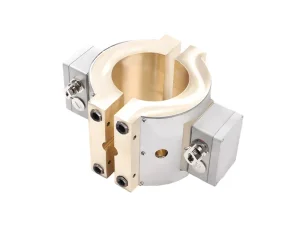
| Cast-in Bronze/Copper | Incoloy Sheaths Cast in High-Thermal-Conductivity Bronze | Up to 700°C (1292°F) | 7.0 - 10.0 W/cm² | Heavy-duty compounding extruders, hazardous zone process lines | Hydrostatic Pressure Burst Test on Internal Cooling Tubes |
| Nano-Infrared Band Heaters | Aerospace Aerogel Blanket + Rare-Earth Radiant Layer | Up to 500°C (Core 750°C) | 5.0 - 7.5 W/cm² | Extruder barrel energy-saving retrofits (cuts kWh consumption by 30%) | EMC 2014/30/EU Zero Harmonic Interference Emission |
| Flexible Silicone Heaters | Etched Foil Circuit vulcanized between Silicone Sheets | Up to 200°C (392°F) | 0.5 - 1.2 W/cm² | Semiconductor vacuum chucks, drum heating, aerospace de-icing | UL94 V-0 Flame Retardance & IEC 60529 IP65 Sealing |
| Induction Steam Boilers | High-Frequency Electromagnetic Induction Coil | Steam up to 180°C @ 10 Bar | Volumetric Dynamic | Clean steam for pharmaceutical, textile, distillation, food sanitation | Pressure Equipment Directive (PED 2014/68/EU) + LVD |
Integrated Thermal Solutions: From Component to Plant-Wide Control
Kangpu Heater provides integrated thermal control packages that combine hardware, sensor architecture, and energy containment to achieve optimal process repeatability.
Integrated Multi-Zone Barrel Systems
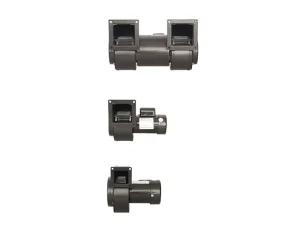
We supply turnkey barrel thermal assemblies incorporating customized ceramic or cast band heaters, built-in air duct jackets, high-flow centrifugal blowers, and outer heat-shield wraps. This closed system dampens external ambient draft variations, maintaining tight ±0.5°C tolerance across all barrel zones.
Removable Thermal Insulation Blankets
Radiant loss from bare extruder barrels and high-temperature manifolds accounts for up to 35% of total plant energy waste while raising workshop temperatures. Our modular, multi-layer ceramic fiber insulation covers feature custom cut-outs for thermocouple hubs and mounting brackets, offering an average payback period of under 4 months.
SCR Solid-State Power Control Integration
Traditional mechanical contactors pulse power coarsely, inducing rapid thermal cycling fatigue in nickel-chromium resistance cores. We partner with machine builders to design Zero-Cross SCR (Silicon-Controlled Rectifier) and phase-angle modulated control panels that deliver smooth, continuous power for extended element longevity.
Engineering Roadmap: High-Temperature Innovation (2025–2035)
Continuous investment in R&D at our Yancheng manufacturing center drives improvements in material life, watt-density handling, and digital connectivity.
Silicon Carbide (SiC) & Advanced Molybdenum
For ultra-high-temperature requirements reaching 1200°C to 1600°C, traditional NiCr wire reaches its physical sublimation limit. We are developing compact SiC composite heating matrices for high-purity glass annealing, chemical vapor deposition (CVD), and advanced battery anode sintering.
Embedded Edge Thermal Sensors & IO-Link
Integrating micro-thin thin-film thermocouples directly into the insulation layer enables multi-point surface temperature mapping. Coupled with industrial IO-Link protocols, each band heater communicates operational hours, real-time current draw, and degradation curves to plant SCADA systems.
Additive Manufacturing for Cast-In Cooling Geometry
Traditional sand casting limits cooling channels to simple linear or serpentine bores. Kangpu is exploring 3D printed sand molds to create conformal, high-surface-area internal cooling passages, boosting thermal recovery rates during polymer changes by 45%.
7-Stage Custom Engineering & Approval Protocol
From initial CAD analysis to certified mass production, every order follows a disciplined engineering workflow to guarantee zero site fitting errors.
ID & Mechanical Design
Our engineering team verifies your mechanical drawing, confirming exact internal diameters, terminal exits, clamp styles, and clearance tolerances.
Electro-Thermal Sizing
Voltage, total wattage, watt density, and material selection (Incoloy, stainless, mica, or ceramic) are cross-checked against your target operating temperature.
Real Tooling Prototyping
Unlike makeshift hand-formed prototypes, we utilize real production tooling to create evaluation samples that match final production tolerances.
Client Fit Validation
The physical sample is mounted directly to your production machinery or extruder barrel to confirm clamping tightness, terminal accessibility, and dimensional fit.
Engineering Refinements
Any revisions—such as reorienting lead wires, adding thermocouple pockets, or tuning clamp tension—are directly updated in the master engineering file.
Empirical Load Testing
The final sample undergoes dielectric breakdown checks, insulation resistance testing at operating temperatures, and full-load burn-in before release.
CE Batch Mass Production & Traceability
Scheduled volume production begins with full batch traceability. Every unit is serialized and backed by our comprehensive 5-year after-sales support program.
Frequently Asked Questions Regarding CE Certified Industrial Heaters
Clear, technical answers addressing compliance, material selection, watt density calculations, and maintenance protocols.
What specific standards govern CE certification for industrial electric heaters?
CE compliance for industrial electroheating requires adherence to the Low Voltage Directive (LVD 2014/35/EU) and standard EN 60519-1 / EN 60519-2 (Safety in electroheat installations). This involves mandatory cold insulation resistance testing (>1000 MΩ @ 1000V DC), high-voltage dielectric withstand testing (1500V AC for 60 seconds without breakdown), strict leakage current thresholds (<0.75 mA/kW), and earth bonding continuity (<0.1 Ω resistance from terminal ground pin to outer metal sheath). If integrated with fans or controllers, the EMC Directive (2014/30/EU) also applies.
How do I determine whether to specify a ceramic or mica band heater?
The choice is governed by operating temperature, watt density, and thermal mass. Mica band heaters are thin (3–4 mm), feature low thermal inertia for rapid heat-up and cool-down cycles, and are well suited for smaller diameters such as injection molding nozzles with process temperatures up to 300°C–350°C. Ceramic band heaters incorporate thick steatite ceramic blocks with built-in insulation blankets, handling temperatures up to 650°C at watt densities up to 8.5 W/cm². They retain heat more effectively, making them ideal for continuous extruder barrels.
Why is watt density critical, and what happens if it is oversized?
Watt density (Watts per unit surface area, W/cm² or W/in²) determines the heat flux through the sheath. If watt density is oversized relative to the thermal conductivity and heat uptake of the barrel, heat cannot escape quickly enough. The inner resistance wire temperature escalates, accelerating oxidation and leading to premature wire burnout. For plastic extrusion, we recommend 3.5–4.5 W/cm² for mica, 6.0–8.0 W/cm² for ceramic, and up to 5.5 W/cm² for cast aluminum.
How does Kangpu Heater's 5-Year After-Sales Warranty work in practice?
Every industrial heater leaving our Yancheng facility is stamped with a unique laser-etched serial code that maps to its raw material heat lot, production mold, resistance wire tension data, and QA test certificate. In the rare event of premature failure, our engineering department reviews the operating context, watt-density matching, and installation clamping torque to determine the root cause, providing warranty replacement elements and actionable process corrections.
Can you manufacture heaters to replace legacy European or American OEM brands?
Yes. A substantial share of our global business consists of direct replacement heaters for international extruder and molding machinery brands. By providing a physical sample, equipment drawing, or model specification, our engineers will replicate or improve upon the original electrical parameters, clamping systems, and terminal configurations, ensuring direct drop-in compatibility.
What is the energy-saving mechanism of Nano-Infrared Electric Band Heaters?
Standard conduction bands lose substantial heat to the plant atmosphere through external radiation. Nano-infrared band heaters utilize high-efficiency radiant heating elements combined with an aerospace-grade aerogel insulation blanket with a thermal conductivity lower than air (0.018 W/m·K). While the internal radiant core efficiently delivers targeted wavelengths to the metal barrel, the exterior shell remains cool to the touch (<55°C), reducing machine kWh consumption by up to 30%.
High-Efficiency Industrial Heating Systems (Part II)
Explore our specialized cast metal heating elements, high-intensity infrared systems, thermal sensors, and heavy industrial process furnaces.



Connect with Our Senior Thermal Engineering Group
Accelerate your project with Kangpu Heater's 40-year engineering heritage. Send us your CAD drawings, machine parameters, or operational challenges to receive a formal engineering review and quotation within 24 hours.