

Primary Thermal Equipment Matrix
Industrial Heating Systems & Engineered Assemblies
Explore our heavy-duty CE certified pipeline heaters, industrial ovens, explosion-proof units, and specialized thermal elements engineered for maximum thermodynamic efficiency.

Best Durable Heat Insulation Covers Manufacturer, Exporters

CE Certification Fan Manufacturer, Factory

China High density heating element Manufacturers, Factories

Best Pipeline Heater Manufacturers, Factory

CE Certification Explosion Proof Electric Heater Exporter, Factory

High-Quality Portable Ceramic Heaters for Industry
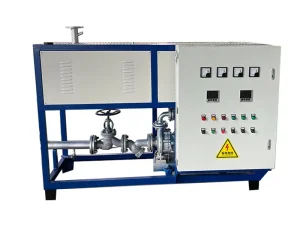
High-Quality Heat-conducting oil furnace Manufacturer, Exporter
Industry Macro Landscape
Global Industrial Landscape & CE Certification Imperatives
Decarbonization, electrification of steam systems, and rigid safety directives are transforming industrial liquid and gas heating infrastructure worldwide.
Across modern manufacturing, chemical synthesis, petroleum refining, and power generation, electric immersion heaters serve as foundational equipment. Global energy transition policies, net-zero greenhouse gas commitments, and stringent carbon border taxes (such as the EU CBAM) have rapidly accelerated the conversion from fossil-fired boiler tubes to zero-direct-emission direct electric immersion heating. Unlike indirect heating mechanisms which suffer flue-gas stack losses, electric immersion assemblies operate at thermal conversion efficiencies exceeding 98.5%, placing thermal resistive elements in unmediated contact with the process fluid.
The Strategic Role of CE Marking: For industrial procurement officers in the European Economic Area, the Middle East, and Latin America, CE certification is not merely a border pass; it is a rigorous verification of mechanical integrity under pressure, dielectric isolation under extreme thermal cycles, and electromagnetic safety under high power transients.
LVD (2014/35/EU)
Guarantees comprehensive electrical insulation, rigorous creepage and clearance distances, high-voltage flash resistance (up to 2500V AC), and robust terminal grounding protection across all operating parameters.
EMC (2014/30/EU)
Prevents destructive harmonic distortion and high-frequency emissions caused by thyristor (SCR) burst firing, protecting mission-critical distributed control systems (DCS) and PLC interfaces.
PED (2014/68/EU)
Mandatory for pressurized vessel installations and circulation heating chambers. Enforces full radiographic weld verification, hydro-testing at 1.5x design pressure, and material batch tracking.
99.2%
Thermal Transfer Efficiency
2500V
Dielectric Withstand Test
100+
Global Export Destinations
5 Years
Extended Warranty Support
Industrial Cluster Superiority
Chinese Manufacturing Agility: Supply Chain & Engineering Scale
How specialized regional clusters deliver unparalleled lead times, metallurgical precision, and total cost optimization for Tier-1 engineering contractors.
In global industrial procurement, long delivery cycles can jeopardize multi-million dollar engineering projects. European and North American heater fabricators frequently quote lead times of 16 to 26 weeks for customized, high-capacity flange immersion heaters. By leveraging China’s premier industrial heating manufacturing hub in Yancheng, Jiangsu, modern factories have decoupled from fragmented supplier chains to create an integrated ecosystem that routinely delivers complex custom systems within 3 to 5 weeks.
This remarkable velocity is achieved without compromising metallurgical integrity. The concentration of automated cold-drawing tube mills, automated CNC swaging centers, laser robotic orbital welding stations, and specialized high-purity electro-fused magnesium oxide (MgO) refining within a 50-kilometer radius drives exceptional production cohesion.
Integrated Metallurgy & Sourcing
Direct supply partnerships with tier-1 raw material refineries guarantee traceable mill certificates for genuine Incoloy 800/825, Hastelloy C276, Monel 400, and ASTM A182 forged stainless flanges.
Automated Dielectric Compaction
Multi-axis automated roll-reduction machines achieve MgO powder compaction density exceeding 3.05 g/cm³, maximizing thermal conduction from the 80/20 NiCr coil to the outer sheath.
Orbital TIG Tube-to-Flange Jointing
Robotic tungsten inert gas (TIG) welding ensures zero heat-affected-zone (HAZ) embrittlement, uniform root penetration, and microscopic hermetic sealing verified by helium mass spectrometer leak tests.
Application Engineering
Localized Industrial Application Scenarios & Design Matrices
Specific metallurgical selections, watt densities, and mechanical configurations engineered to counteract fluid degradation, fouling, and stress corrosion cracking.
Selecting an electric immersion heater is fundamentally an exercise in fluid thermodynamics, fluid boundary-layer chemistry, and corrosion dynamics. Operating an element with excessive surface watt density (W/cm²) can induce fluid cracking, carbonization (coking), or localized boiling that leads to premature burnout. Below are critical engineering application blueprints:
| Application Scenario | Common Process Medium | Recommended Sheath Alloy | Optimal Watt Density | CE & Protection Spec |
|---|---|---|---|---|
| Petrochemical Refining | Heavy Crude, Bitumen, Bunker C Fuel | Incoloy 800 / SS321 | 1.2 – 2.5 W/cm² (8 – 16 W/in²) | ATEX / Ex d IIC T4, PED Cat III |
| Thermal Oil Loops | Synthetic Heat Transfer Fluids (Marlotherm, Dowtherm) | Low Carbon Steel / SS316L | 1.8 – 3.2 W/cm² (12 – 20 W/in²) | LVD 2014/35/EU, IP66 Enclosure |
| Chemical & Electroplating | Sulfuric Acid, Hydrochloric Acid, Plating Baths | Titanium Gr. 2 / Teflon PFA | 2.0 – 4.0 W/cm² (13 – 25 W/in²) | LVD Compliant, NEMA 4X / IP67 |
| Industrial Water Treatment | Deionized, Reverse Osmosis, Boiler Feed Water | Incoloy 825 / SS316Ti | 6.0 – 9.0 W/cm² (40 – 60 W/in²) | LVD / EMC Harmonized, IP65 |
| Food & Beverage (Sanitary) | Syrups, Edible Oils, CIP Sanitization Water | SS316L (Ra < 0.4µm Polished) | 3.5 – 5.5 W/cm² (22 – 35 W/in²) | 3-A Sanitary, FDA, CE LVD |
Thermal Stratification & Fluid Boundary Velocity Control
In high-viscosity media (such as lube oils, fuel preheaters, and asphalt bitumen), natural convection is sluggish. A high heat flux causes oil film cracking, leaving an insulating carbon deposit on the sheath. This carbon layer impedes heat transfer, causing sheath core temperatures to escalate past metallurgical failure limits (often exceeding 850°C). By deploying custom CFD (Computational Fluid Dynamics) thermal simulations, our engineering team optimizes element spacing, baffle configurations, and internal thermowell placements to guarantee that sheath boundary temperatures remain safely beneath the media decomposition threshold.
Procurement Protocols
Global B2B Procurement Standards: Engineering Audit Checklist
A rigorous inspection guideline for EPC contractors, plant maintenance directors, and OEM system integrators specifying electric immersion systems.
1. Pressure Vessel Integrity & Flanges
Verify whether the mounting standard calls for ANSI/ASME B16.5, EN 1092-1, or JIS flanges. Specify pressure ratings (150# to 2500#), raised face (RF) or ring-type joint (RTJ), and full radiographic or dye-penetrant weld testing on tube sheets.
2. Cold Resistance & Dielectric Strength
Factory Acceptance Testing (FAT) must verify cold insulation resistance exceeding 100 MΩ at 1000V DC. Dielectric withstand testing must demonstrate zero arc flash or leakage current exceeding 0.5mA when subjected to 2U + 1000V test protocols.
3. Integral Thermowell Sensors
Immersion bundles must incorporate dual-sensor thermowells: one dedicated to fluid temperature control (RTD Pt100 or Type K/J thermocouple) and a high-limit skin sensor mechanically clamped directly against the hottest heating element sheath.
4. Enclosure IP & Hazardous Area Ratings
Select appropriate terminal housings: NEMA 4/IP65 for outdoor weatherproof installations, or ATEX/IECEx Ex d / Ex e certified flameproof junction boxes for Class I, Division 1 & 2 zones subject to explosive vapors or gases.
5. Material Traceability Dossier
Ensure your supplier delivers EN 10204 3.1 material test reports (MTR), covering positive material identification (PMI) of sheath alloys, flange melt heats, filler metals, and complete hydro-test certifications.
6. Lifecycle Thermal Shock Management
For cyclic heating duties, evaluate the internal pin termination architecture. Solid molybdenum or nickel-plated cold pins prevent local terminal overheating, while proprietary RTV/epoxy terminal end-seals block atmospheric moisture ingress.
Future-Ready Engineering
Industry Horizons: Electrification, IoT Telemetry & Advanced Metallurgy
Next-generation electric immersion equipment merges predictive sensor telemetry, power-to-heat multi-megawatt systems, and nanoscale surface passivations.
The industrial heating sector is undergoing a profound paradigm shift driven by the global transition away from carbon-intensive fossil fuel combustion. Modern chemical mega-complexes and district energy grids are systematically replacing legacy gas-fired heating with multi-megawatt high-voltage electric immersion skids directly powered by renewable wind and solar energy. These shifts demand groundbreaking engineering breakthroughs:
Smart IoT & Predictive Maintenance
Next-generation immersion heaters embed fiber-optic Distributed Temperature Sensing (DTS) directly inside the element sheath bundle, feeding micro-second thermal profiles to AI inference models that predict scaling, fouling, and element failure weeks in advance.
Multi-Megawatt Power-to-Heat (P2H)
High-voltage direct electric immersion systems operating at up to 690V and 5 Megawatts per individual skid. Combined with zero-crossing SCR thyristor controls, they balance grid frequencies while delivering instant thermal output without combustion lag.
Nanostructured Anti-Fouling Coatings
Advanced atomic layer deposition (ALD) and chemical vapor deposition (CVD) ceramic coatings create hydrophobic and oleophobic boundary layers, drastically reducing lime-scale, bitumen coking, and fouling in severe service environments.
Technical Clarifications
Engineering Questions & Expert Answers
In-depth responses to critical design, compliance, and operational queries encountered by plant managers and procurement professionals.
What specific standards govern CE certification for electric immersion heaters? +
Under EU law, industrial electric immersion heaters are governed primarily by the Low Voltage Directive (LVD) 2014/35/EU, harmonized via standard EN 60335-1 (General safety of electrical appliances) and EN 60335-2-73 (Direct immersion heaters). If the immersion assembly contains electronic control boards or solid-state relays, it must comply with EMC Directive 2014/30/EU (EN 61000-6-2 immunity, EN 61000-6-4 emissions). When installed within closed pressurized vessels exceeding 0.5 bar, it falls under the Pressure Equipment Directive (PED) 2014/68/EU, requiring certified welding procedures (WPS/PQR) and material traceability according to EN 10204 3.1.
How do you calculate the optimal sheath watt density for aggressive or viscous fluids? +
Watt density (W/cm²) equals the total electrical power (Watts) divided by the active heated surface area of the tubular bundle: \( \text{Watt Density} = \frac{P}{\pi \cdot D \cdot L \cdot N} \), where \(D\) is outer tube diameter, \(L\) is active element length, and \(N\) is the number of hairpin elements. For heat-sensitive media like lube oil, maximum watt density is constrained to 1.8–2.3 W/cm² to avoid chemical cracking. For pure circulating water, watt density can safely reach 8.0–10.0 W/cm². Our engineers utilize boundary-layer temperature rise modeling to guarantee the film interface temperature remains well below critical fluid degradation limits.
What are the key metallurgical distinctions between Incoloy 800, Incoloy 825, and SS316L? +
SS316L (16-18% Cr, 10-14% Ni, 2-3% Mo) is economical and effective for mildly corrosive aqueous solutions and deionized water, but vulnerable to chloride-induced stress corrosion cracking above 60°C. Incoloy 800 (30-35% Ni, 19-23% Cr) provides exceptional resistance to high-temperature oxidation and carburization up to 800°C. Incoloy 825 (38-46% Ni, 19.5-23.5% Cr, 2.5-3.5% Mo, plus titanium stabilization) is the gold standard for severely acidic environments containing chlorides, sulfuric acid, and phosphoric acid, providing near-total immunity to localized pitting and crevice corrosion.
Why is electro-fused magnesium oxide (MgO) compaction density so critical? +
Magnesium oxide acts as both an electrical insulator and a primary thermal conductor between the resistance wire coil and the outer sheath. If MgO is insufficiently compacted (density < 2.85 g/cm³), micro-voids and trapped air pockets will act as thermal insulators. This causes the internal resistance wire temperature to spike rapidly, leading to burnout. Our factory utilizes multi-stage automated reduction rolling mills that compress high-purity crystalline MgO to a compaction density exceeding 3.05 g/cm³, ensuring rapid thermal dissipation and an extended operational lifespan.
Can Kangpu manufacture explosion-proof electric immersion heaters to ATEX / IECEx standards? +
Yes. For Zone 1 and Zone 2 hazardous explosive environments (gas groups IIA, IIB, and IIC, temperature classes T1 through T6), we engineer custom explosion-proof flange heaters featuring cast iron or stainless steel Ex d flameproof terminal enclosures. These enclosures are designed to contain and quench any internal explosion without propagating sparks or flame into the surrounding combustible atmosphere. They include certified ATEX cable glands, separate auxiliary wiring chambers, and integrated redundant over-temperature cutouts.
What quality assurance documentation is provided with international OEM orders? +
Every export shipment is accompanied by a comprehensive Quality Dossier. This package includes the official CE Declaration of Conformity (DoC), EN 10204 Type 3.1 Material Test Reports (MTR) with verified chemical heat analyses, hydrostatic pressure test certificates (witnessed at 1.5x design pressure), dielectric high-voltage insulation test records, helium leak inspection reports, and dimensional calibration inspection sheets.
Complementary Heavy Thermal Solutions
Advanced Thermal Process Equipment & Custom Elements
Explore our complete industrial portfolio: PVC-O precision orientation ovens, flexible ceramic and mica elements, hot-runner coils, and closed-loop thermal systems.

CE Certification PVC-O Ovens for Precision Heating Manufacturer
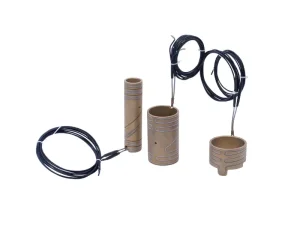
High-Quality (Hot-runner)Spring heater/Coil heater Manufacturers
China Portable Ceramic Heaters from China Suppliers

Best Infrared Ceramic Heaters for Efficient Heating Manufacturers

China Safe and Durable Mica Heaters Factory, Factories
High-Quality Portable Ceramic Heaters for Industry

CE Certification Precise Cooling and Heating System Manufacturers
