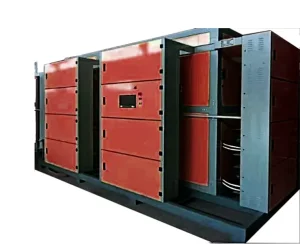
Primary Thermal Extrusion & Element Portfolio
Explore our export-certified modular heating and precision air/liquid cooling systems engineered for severe continuous polymer processing.

China Portable Ceramic Heaters from China Suppliers
View Technical Specs
Best Pipeline Heater Manufacturers, Factory
View Technical Specs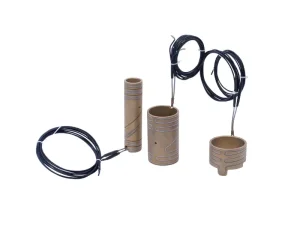
High-Quality Hot-Runner Spring Coil Heater
View Technical Specs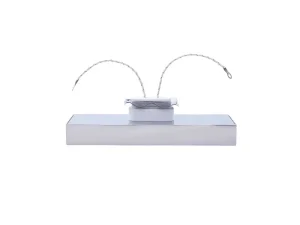
Best Infrared Ceramic Heaters for Industrial Lines
View Technical Specs
High-Quality Portable Ceramic Heaters for Industry
View Technical Specs
High-Quality Heat-Conducting Oil Furnace
View Technical Specs
Efficient Heating Portable Ceramic Heaters Solutions
View Technical Specs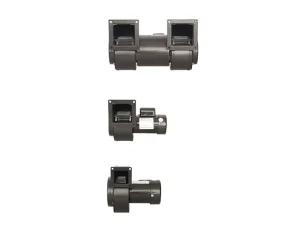
CE Certification Industrial Fan System
View Technical SpecsTechnical Whitepaper: Thermodynamic Precision in Polymer Extrusion
A comprehensive examination of shear friction dissipation, isothermal barrel zone regulation, and CE-compliant integrated heating and cooling dynamics.
In modern continuous polymer extrusion—spanning high-throughput Polyolefin (PO) pelletizing, high-load PVC pipe profile lines, and ultra-engineered resins such as PEEK, PTFE, and fluoropolymers—the extruder barrel acts not merely as a melting chamber, but as a complex, non-linear heat exchanger. At substantial screw velocities, mechanical shear stress imparts upwards of 70% to 85% of total adiabatic enthalpy into the polymer melt. Under continuous operating cycles, unmanaged shear friction triggers spontaneous thermal runaway, causing severe localized molecular degradation, wall thickness variances, melt fracture, and elevated scrap ratios.
To maintain an ultra-tight process window within ±1°C to ±1.5°C across extensive L/D ratios (from 28:1 to 48:1), high-performance processing demands robust dual-response systems: rapid electrical heat dissipation at initial startup and intensive, uniform forced-air or liquid convection cooling during steady-state shearing. As a premier CE-certified Chinese manufacturer and exporter founded in 1986, Yancheng Laier Heating Technology Co., Ltd. (Kangpu Heater) engineers turn-key thermodynamic solutions designed specifically to replace legacy separate band-and-blower arrangements with monolithic, aerodynamically optimized cast-in jackets.
Cast Aluminum / Copper Matrix Metallurgy
Tubular heating elements embedded inside high-purity aluminum (density ~2.7 g/cm³, max 450°C) or brass/bronze alloys (max 700°C) eliminate air gaps, preventing local hot spots and delivering homogeneous circumferential conductance.
Aerodynamic Cooling Shrouds
Computational Fluid Dynamics (CFD)-modeled external fin patterns and aerodynamic air hoods guarantee smooth laminar boundary-layer detachment, preventing stagnant boundary layers and drastically improving thermal extraction rates.
CE & EN 60335-1 Electrical Safety
Engineered for full Low Voltage Directive (LVD) 2014/35/EU and Electromagnetic Compatibility (EMC) 2014/30/EU compliance, verified with dual cold-pin design, high dielectric breakdown isolation (>2000V), and ceramic terminals.
China Factory Advantages & Global Industry Transformation
Why Tier-1 Extrusion Machine OEMs and Global Process Converters Partner with Yancheng Industrial Clusters.
End-to-End Supply Chain Consolidation
Located in Yancheng, Jiangsu—the premier electric thermal component manufacturing base of China—Kangpu integrates high-purity fused magnesium oxide (MgO) processing, automated coil winding, die casting, precision CNC machining, and sheet metal fabrication under one roof. This geographic cluster synergy reduces procurement cycles by 40% and provides structural price-performance superiority over European and North American rebuilders.
Accelerated Customization (7-Stage Protocol)
Rather than off-the-shelf standard dimensions, 90% of global export orders require exact physical adaptations: bespoke thermocouple wells (Type J/K/PT100), barrel cut-outs for side-feeders and degas vents, high-temperature terminal boxes, and special split-half clamping configurations. Our dedicated prototype mold shop delivers production-grade sampling in 5 to 7 business days.
Shift to Decarbonization & Circular Plastics
As the European Union and global regulators enforce PCR (Post-Consumer Recycled) content quotas, extruders face severe viscosity fluctuations and variable melt points. Advanced cast-in heating/cooling jackets provide instantaneous dynamic dampening, ensuring that recycled flake melt flow indices (MFI) remain uniform without degrading delicate polymer chains.
| Thermal Technology | Operating Temperature | Thermal Dissipation Mechanism | Cooling Compatibility | Primary Industrial Use-Case |
|---|---|---|---|---|
| Cast Aluminum Band | Up to 450°C (842°F) | High-contact direct conduction | External fin blower / Cast-in liquid coil | High-speed blown film, polyolefin pipe extrusion |
| Cast Bronze / Brass | Up to 700°C (1292°F) | Heavy-duty thermal saturation | Heavy forced-air shroud or oil-tempering | Engineering resins (PEEK, fluoropolymers, PPS) |
| Insulated Ceramic Band | Up to 650°C (1200°F) | Radiant & conductive ceramic block | External sheet-metal shroud blower | Standard profile extrusion, high-temp barrel retrofits |
| Nano Infrared Band | Up to 500°C (932°F) | Directional electromagnetic IR wave | Perforated radiant cooling casing | Energy-saving retrofits targeting 30%+ power cuts |
| Mica Insulated Band | Up to 350°C (662°F) | Thin-profile surface conduction | Ambient natural air / localized jet | Nozzle zones, small twin-screw compounding blocks |
Localized Application Scenarios & Global Procurement Needs
Matching dynamic thermodynamic engineering across diversified manufacturing sectors worldwide.
1. PVC-O & Ultra-Thick HDPE Pressure Pipes
Molecularly oriented PVC-O pipe manufacturing requires extreme consistency across the circumference before radial expansion. Any 2°C temperature bias results in wall failure under burst tests. Our precision cooling/heating combinations stabilize temperature along large 500mm+ outer-diameter barrels effortlessly.
2. Multi-Layer Barrier Blown Film (EVOH/Polyamide)
Processing co-extruded oxygen barrier films requires zero degradation in the die and transition zones. Thermal stagnation leads to internal carbonization, resulting in optical gel defects. Kangpu's precision ceramic and cast bands provide laminar heat control that keeps barrier resins pristine.
3. Continuous Rubber Vulcanization & Extrusion
Synthetic elastomeric compounds generate high friction. Temperature overshoots trigger pre-curing (scorching) inside the cylinder. Our integrated dual liquid-cooled copper barrel sections flush out excess heat instantaneously through closed-circuit thermochillers.
4. OEM Standardized Supply for Extruder Builders
Major machine builders throughout Germany, Italy, Turkey, the United States, and Japan mandate stable supplier performance: uniform dimensions, standardized IP65 terminal junction enclosures, UL94 flame-retardant internal insulation, and strict batch-to-batch consistency.
Frequently Asked Questions (FAQ) - Engineering & Purchasing
Authoritative technical answers to common questions regarding extruder thermal design, certifications, and international ordering.
What specific CE directives do your extruder heating and cooling systems comply with?
Our heating and cooling assemblies are certified under the European Union Low Voltage Directive (LVD) 2014/35/EU, ensuring electrical insulation integrity, dielectric withstand voltage (>2000V/min), high insulation resistance (>500MΩ in ambient conditions), and the Electromagnetic Compatibility (EMC) Directive 2014/30/EU. All components conform to EN 60335-1 and EN 60519-1 (Safety in electroheat installations).
Why choose cast aluminum over insulated ceramic band heaters for extrusion barrels?
Cast aluminum heaters provide superior mechanical durability, intimate surface contact conforming to the cylinder radius, and 4x higher thermal conductivity than refractory ceramic blocks. Crucially, cast-in heaters allow seamless integration of cooling channels (either external air-cooling fin shrouds or internal stainless steel fluid tubes), whereas ceramic bands rely solely on low-conduction radiant cooling.
Can you manufacture replacements directly from customer drawings or worn samples?
Yes. Over 60% of our production consists of custom OEM replacements. Customers provide 2D/3D CAD models (STEP, DWG), dimensioned sketches, or physically ship old units to our Yancheng facility. Our engineering department reverse-engineers the inner diameter, cutout notches, wattage distribution, clamping mechanism, and lead terminations before manufacturing real-mold prototypes.
How does Kangpu handle quality assurance and the 5-year warranty policy?
Every single heating element undergoes automated helium leak detection (for liquid cooling circuits), X-ray core alignment verification, high-voltage flash dielectric testing, and thermal load endurance verification before dispatch. Every product carries an indelible laser-engraved QR batch code, allowing our ERP system to trace raw material batches, winding tension records, and metallurgical heat treatments for a full 5-year period.
What lead times and logistical packing are standard for transatlantic/intercontinental export?
Sample production takes 5 to 7 working days; bulk container shipments typically require 15 to 25 working days depending on casting schedule. All goods are packed in export-compliant, fumigation-free solid plywood crates with desiccants and vacuum-sealed vapor barrier films to prevent oxidation during sea freight across high-humidity oceanic corridors.
Integrated Systems, Cast-in Elements & Auxiliary Heating Solutions
Direct factory procurement solutions: high-density industrial heating assemblies and specialized thermal equipment.
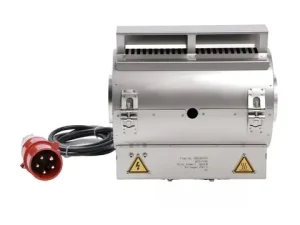
CE Certification Precise Cooling & Heating System
View Technical Specs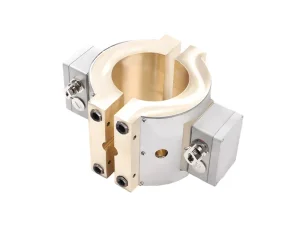
CE Certification Cast Aluminum/Copper Heater
View Technical Specs
Reliable Heating Portable Ceramic Heaters
View Technical Specs
CE Certification Industrial Ovens System
View Technical Specs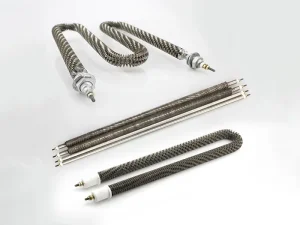
China High Density Heating Elements Factory
View Technical Specs
China Safe and Durable Mica Heaters Factory
View Technical Specs
Best Heating/Cooling Integrated System Exporter
View Technical Specs